John Nemec - Böcker
Visar alla böcker från författaren John Nemec. Handla med fri frakt och snabb leverans.
4 produkter
4 produkter
The Ubiquitous Siva Volume II
Somananda's Sivadrsti and His Philosophical Interlocutors
Inbunden, Engelska, 2021
1 335 kr
Skickas inom 7-10 vardagar
This is a sequel to a volume published in 2011 by OUP under the title The Ubiquitous Śiva: Somānanda's Śivadṛṣṭi and his Tantric Interlocutors. The first volume offered an introduction, critical edition, and annotated translation of the first three chapters of the Śivadṛṣṭi of Somānanda, along with its principal commentary, the Śivadṛṣṭivṛtti, written by Utpaladeva. It dealt primarily with Śaiva theology and the religious views of competing esoteric traditions. The present volume presents the fourth chapter of the Śivadṛṣṭi and Śivadṛṣṭivṛtti and addresses a fresh set of issues that engage a distinct family of opposing schools and authors of mainstream Indian philosophical traditions.In this fourth chapter, Somānanda and Utpaladeva engage logical and philosophical works that exerted tremendous influence in the Indian subcontinent in its premodernity. Among the authors and schools addressed by Somānanda in this chapter are the Buddhist Epistemologists, and Dharmakīrti in particular; the Hindu school of hermeneutics, i.e., the Mīmāṃsā; the Hindu realist schools of the logic- and debate-oriented Nyāya and their ontologically-oriented partners, the Vaiśeṣika; and the Hindu, dualist Sāṃkhya and Yoga schools.Throughout this chapter, Somānanda endeavors to explain his brand of Śaivism philosophically. Somānanda challenges his philosophical interlocutors with a single over-arching argument: he suggests that their views cannot cohere—they cannot be explained logically—unless their authors accept the Śaiva non-duality for which he advocates. The argument he offers, despite its historical influence, remains virtually unstudied. The Ubiquitous Śiva Volume II offers the first English translation of Chapter Four of the Śivadṛṣṭi and Śivadṛṣṭivṛtti along with an introduction and critical edition.
1 224 kr
Skickas inom 5-8 vardagar
Brahmins and Kings examines some of the most well-known and widely circulated narratives in the history of Sanskrit literature, including the Mahābhārata, the Rāmāyaṇa, Viṣṇuśarman's famed animal stories (the Pañcatantra), Somadeva's labyrinthine Ocean of Rivers of Stories (the Kathāsaritsāgara), Kalhaṇa's Chronicle of the Kings of Kashmir (the Rājataraṅgiṇī), and two of the most famous plays in the history of Sanskrit literature, Kālidāsa's Abhijñānaśākuntala and Harṣa's Ratnāvalī. Offering a sustained, close, intertextual reading of these works, John Nemec shows that these texts all share a common frame: they feature stories of the mutual relations of kṣatriya kings with Brahmins, and they depict Brahmins advising political figures. More than this, they not only narrate instances of royal counsel but also are composed in a manner that renders the stories themselves as instances of counsel.Based in the technical literatures on Hindu Law and on statecraft-the Dharmaśāstras and the Arthaśāstra and related works—the counsel in question elaborates a model of action that synthesizes views found in both, recommending a kind of virtue ethic that suggests one may do well in the world by being good. Doing well involves succeeding in both worldly and otherworldly affairs; being good involves following Brahminical teachings and upholding the dharmic norms they regularly articulate in text. This ethic encompasses all human action and practice, defines the counsel offered by these texts, and seeks with it to engage the king, his princes, and queens across the spectrum of their subjective experience: intellectually, emotionally, humorously.Ultimately, this book argues that, just as the rulers in these narratives receive moral instruction, their audiences do, as well. By putting metaphorical flesh on the proverbial bare bones of doctrinal ideals and ideas, these texts seek to shape not just readers' thoughts but also their emotions and cultivated instincts, intending to transform their very way of engaging the world by immersing them in the dreamworld of stories.
877 kr
Skickas inom 5-8 vardagar
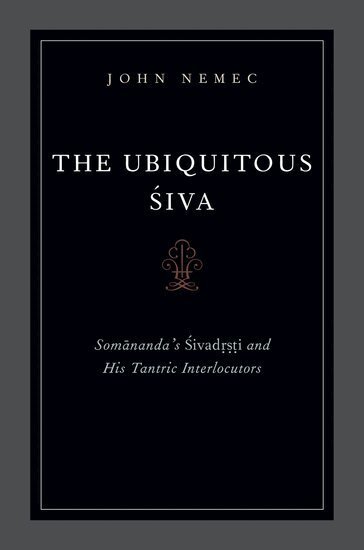
John Nemec examines the beginnings of the non-dual tantric philosophy of the famed Pratyabhijña or "Recognition [of God]" School of tenth-century Kashmir, the tradition most closely associated with Kashmiri Shaivism. In doing so it offers, for the very first time, a critical edition and annotated translation of a large portion of the first Pratyabhijña text ever composed, the Sivadrsti of Somananda. In an extended introduction, Nemec argues that the author presents a unique form of non-dualism, a strict pantheism that declares all beings and entities found in the universe to be fully identical with the active and willful god Siva. This view stands in contrast to the philosophically more flexible panentheism of both his disciple and commentator, Utpaladeva, and the very few other Saiva tantric works that were extant in the author's day. Nemec also argues that the text was written for the author's fellow tantric initiates, not for a wider audience. This can be adduced from the structure of the work, the opponents the author addresses, and various other editorial strategies. Even the author's famous and vociferous arguments against the non-tantric Hindu grammarians may be shown to have been ultimately directed at an opposing Hindu tantric school that subscribed to many of the grammarians' philosophical views. Included in the volume is a critical edition and annotated translation of the first three (of seven) chapters of the text, along with the corresponding chapters of the commentary. These are the chapters in which Somananda formulates his arguments against opposing tantric authors and schools of thought. None of the materials made available in the present volume has ever been translated into English, apart from a brief rendering of the first chapter that was published without the commentary in 1957. None of the commentary has previously been translated into any language at all.
727 kr
Skickas inom 5-8 vardagar
John Nemec examines the beginnings of the non-dual tantric philosophy of the famed Pratyabhijña or "Recognition [of God]" School of tenth-century Kashmir, the tradition most closely associated with Kashmiri Shaivism. In doing so it offers, for the very first time, a critical edition and annotated translation of a large portion of the first Pratyabhijña text ever composed, the Sivadrsti of Somananda. In an extended introduction, Nemec argues that the author presents a unique form of non-dualism, a strict pantheism that declares all beings and entities found in the universe to be fully identical with the active and willful god Siva. This view stands in contrast to the philosophically more flexible panentheism of both his disciple and commentator, Utpaladeva, and the very few other Saiva tantric works that were extant in the author's day. Nemec also argues that the text was written for the author's fellow tantric initiates, not for a wider audience. This can be adduced from the structure of the work, the opponents the author addresses, and various other editorial strategies. Even the author's famous and vociferous arguments against the non-tantric Hindu grammarians may be shown to have been ultimately directed at an opposing Hindu tantric school that subscribed to many of the grammarians' philosophical views. Included in the volume is a critical edition and annotated translation of the first three (of seven) chapters of the text, along with the corresponding chapters of the commentary. These are the chapters in which Somananda formulates his arguments against opposing tantric authors and schools of thought. None of the materials made available in the present volume has ever been translated into English, apart from a brief rendering of the first chapter that was published without the commentary in 1957. None of the commentary has previously been translated into any language at all.