John P. Fackler Jr. - Böcker
Visar alla böcker från författaren John P. Fackler Jr.. Handla med fri frakt och snabb leverans.
6 produkter
6 produkter
1 585 kr
Skickas inom 10-15 vardagar
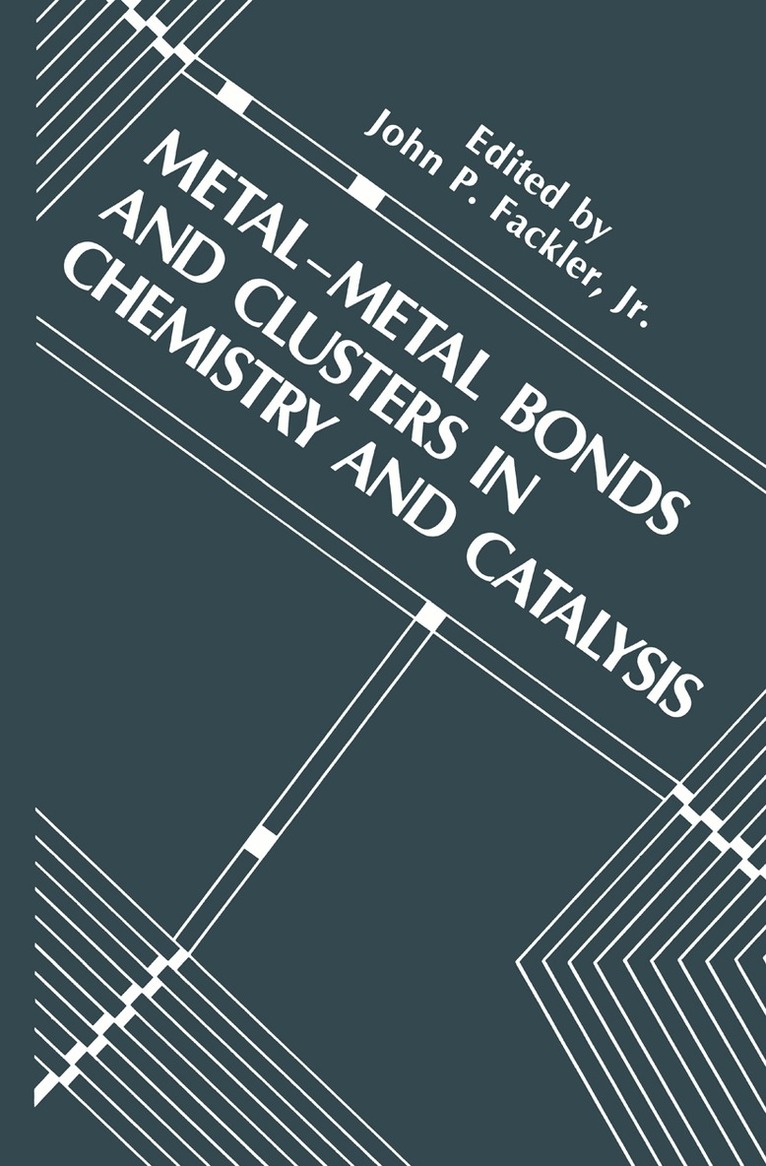
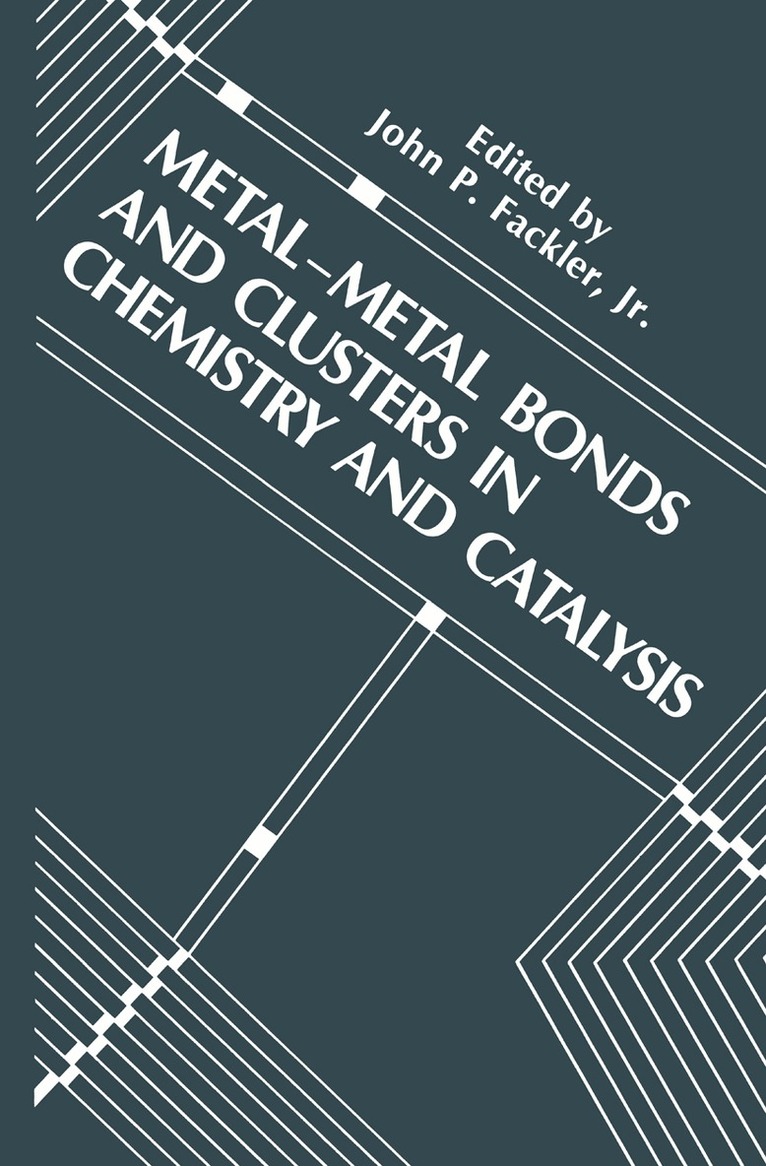
This book contains a series of papers and abstracts from the 7th Industry-University Cooperative Chemistry Program symposium held in the spring of 1989 at Texas A&M University. The symposium was larger than previous IUCCP symposia since it also celebrated the 25 years that had elapsed since the initial discovery by F. A. Cotton and his co-workers of the existence of metal-metal quadruple bonds. Cotton's discovery demonstrated that multiple bonding in inorganic systems is not governed by the same constraints observed in organic chemistry regarding s and p orbital involvement. The d orbitals are involved in the multiple bonding description. The quadruple bond involves considerable d orbital overlap between adjacent metal centers. Part I of this series of papers focuses upon the impact of this discovery and describes further contributions to the development of the field. Multiple metal-metal bonding now is known to permeate broad areas of transition metal chemistry. The understanding of metal-metal bonding that developed as a result of the discovery of multiple metal-metal bonding awakened a new chemistry involving metal clusters. Clusters were defined by Cotton to be species containing metal-metal bonding. Clusters in catalysis therefore seemed a logical grouping of papers in this symposium. Clusters play an every increasing role in the control of chemical reactions. Part II of this book describes some of the interesting new developments in this field. In Part III the papers examine the role clusters play in describing and understanding solid state materials.
1 585 kr
Skickas inom 10-15 vardagar
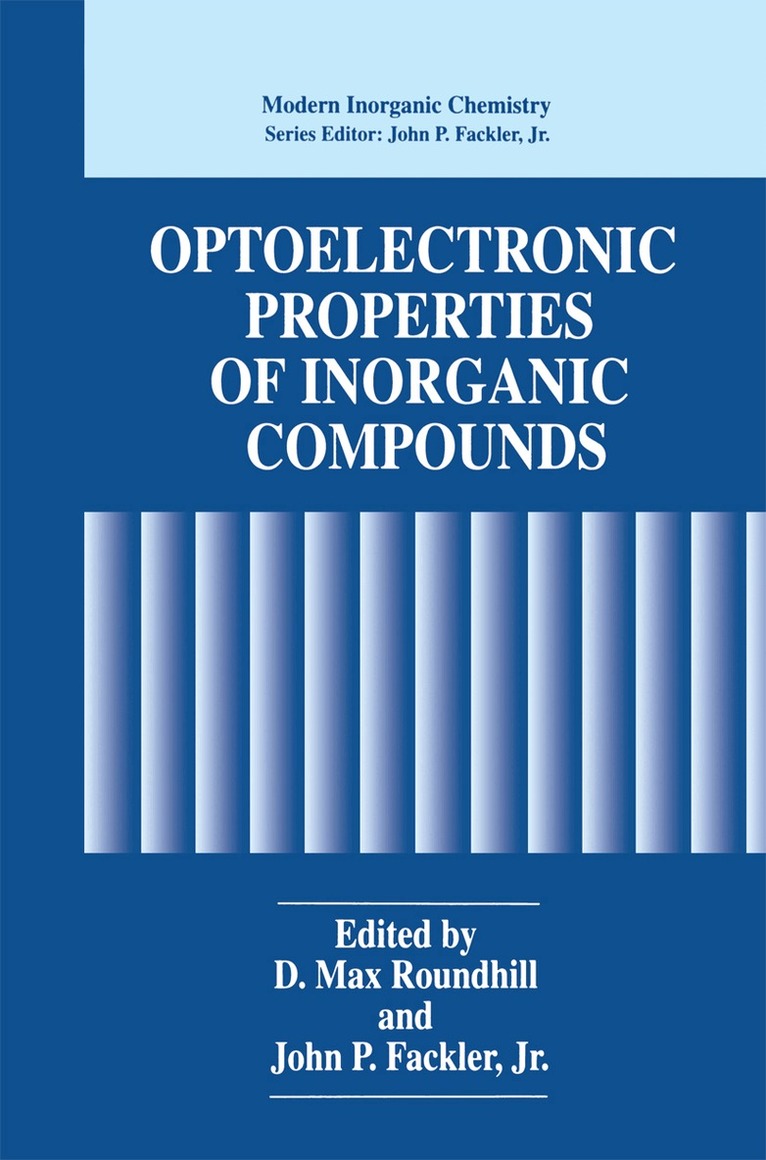
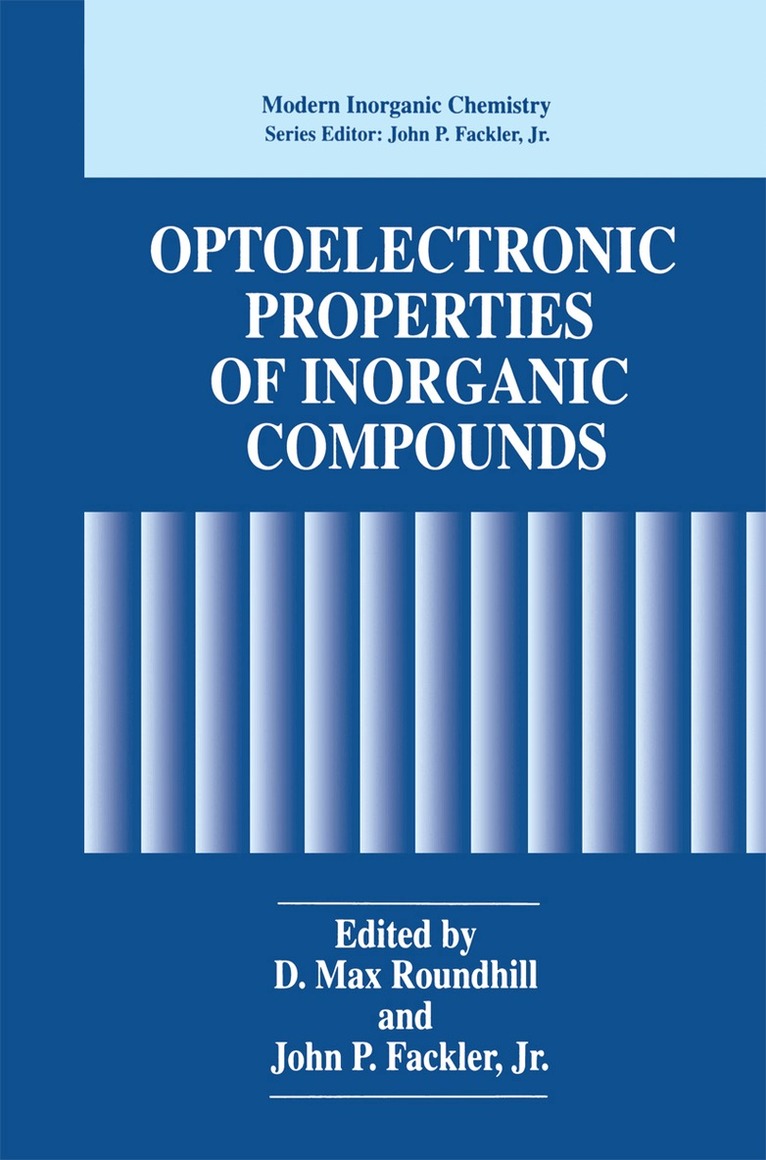
This work is intended for faculty, postdoctoral and graduate student level researchers at universities and research scientists at corporations and national laboratories. The book should be of interest to scientists in the fields of inorganic chemistry, materials science, photophysics and solid state materials. Optoelectronics is a unique, interdisciplinary field that spans many disciplines.
1 139 kr
Skickas inom 10-15 vardagar
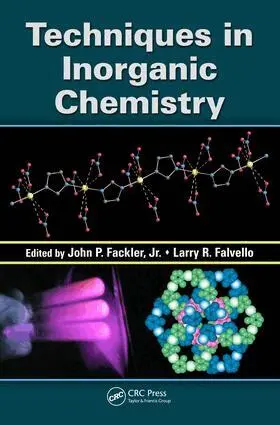
Inorganic chemistry continues to generate much current interest due to its array of applications, ranging from materials to biology and medicine. Techniques in Inorganic Chemistry assembles a collection of articles from international experts who describe modern methods used by research students and chemists for studying the properties and structures of inorganic chemicals.Crystallography and diffraction methodsThe book begins by examining developments in small-molecule x-ray crystallography. It identifies some of the major advances, discusses current attitudes toward crystallography and its uses, and considers challenges and future prospects. It then examines how ab initio x-ray powder diffraction (XRPD) methods are used to determine structure, with discussions on metal pyrazolates, metal imidazolates, and metal pyrimidinolates. This is followed by a description of single crystal neutron diffraction, a powerful structural technique. The text highlights what can presently be achieved in neutron diffraction and discusses future applications of neutron scattering.Quantum chemistryReflecting the popularity of density functional calculations, the book includes a chapter that focuses on quantum chemistry. It examines the latest computational techniques and describes how these techniques can be applied to solve a wide range of real-world problems encountered in the realm of inorganic chemistry and particularly in transition metal chemistry. It also explains the intelligent use of quantum chemical methods for the determination of molecular structure, reactivity, and spectra of coordination and organometallic compounds.SpectroscopyLastly, the text explores important spectroscopic approaches. It first describes intermolecular nuclear Overhauser effect (NOE) NMR experiments and diffusion experiments, offering examples that demonstrate theoretical aspects of the methodology. The final chapter summarizes recent experimental and theoretical work on pressure effects on the d-d and luminescence spectra of transition metal complexes. Derived from select articles in Comments on Inorganic Chemistry, this volume provides a solid background in the array of techniques available in the researcher’s toolkit.
2 972 kr
Skickas inom 10-15 vardagar
Inorganic chemistry continues to generate much current interest due to its array of applications, ranging from materials to biology and medicine. Techniques in Inorganic Chemistry assembles a collection of articles from international experts who describe modern methods used by research students and chemists for studying the properties and structures of inorganic chemicals.Crystallography and diffraction methodsThe book begins by examining developments in small-molecule x-ray crystallography. It identifies some of the major advances, discusses current attitudes toward crystallography and its uses, and considers challenges and future prospects. It then examines how ab initio x-ray powder diffraction (XRPD) methods are used to determine structure, with discussions on metal pyrazolates, metal imidazolates, and metal pyrimidinolates. This is followed by a description of single crystal neutron diffraction, a powerful structural technique. The text highlights what can presently be achieved in neutron diffraction and discusses future applications of neutron scattering.Quantum chemistryReflecting the popularity of density functional calculations, the book includes a chapter that focuses on quantum chemistry. It examines the latest computational techniques and describes how these techniques can be applied to solve a wide range of real-world problems encountered in the realm of inorganic chemistry and particularly in transition metal chemistry. It also explains the intelligent use of quantum chemical methods for the determination of molecular structure, reactivity, and spectra of coordination and organometallic compounds.SpectroscopyLastly, the text explores important spectroscopic approaches. It first describes intermolecular nuclear Overhauser effect (NOE) NMR experiments and diffusion experiments, offering examples that demonstrate theoretical aspects of the methodology. The final chapter summarizes recent experimental and theoretical work on pressure effects on the d-d and luminescence spectra of transition metal complexes. Derived from select articles in Comments on Inorganic Chemistry, this volume provides a solid background in the array of techniques available in the researcher’s toolkit.
1 585 kr
Skickas inom 10-15 vardagar
The involvement of inorganic chemistry in the field of optoelectronics is natural, since the electronic structure of a metal compound that confers novel optical properties is often one that also influences its electron transfer and conductivity characteristics. Two important growth areas for optoelectronics are communications and medicine. The major topics covered in the present book are nonlinear optics of transition meal compounds, inorganic clusters and organometallics, electroluminescence, photovoltaic solar cells, photoluminescence, optical sensors and metallo-organic materials for optical telecommunications. There are also specific chapters on pressure effects on emissive materials and the photophysical and photochemical properties of gold complexes. This book is intended for faculty, postdoctoral and graduate student level researchers at universities and research scientists at corporations and national laboratories. The book should be of interest to scientists in the fields of Inorganic Chemistry, Materials Science, Photophysics and Solid State Materials. Optoelectronics is a unique, interdisciplinary field that spans many disciplines.
1 585 kr
Skickas inom 10-15 vardagar
This book contains a series of papers and abstracts from the 7th Industry-University Cooperative Chemistry Program symposium held in the spring of 1989 at Texas A&M University. The symposium was larger than previous IUCCP symposia since it also celebrated the 25 years that had elapsed since the initial discovery by F. A. Cotton and his co-workers of the existence of metal-metal quadruple bonds. Cotton's discovery demonstrated that multiple bonding in inorganic systems is not governed by the same constraints observed in organic chemistry regarding s and p orbital involvement. The d orbitals are involved in the multiple bonding description. The quadruple bond involves considerable d orbital overlap between adjacent metal centers. Part I of this series of papers focuses upon the impact of this discovery and describes further contributions to the development of the field. Multiple metal-metal bonding now is known to permeate broad areas of transition metal chemistry. The understanding of metal-metal bonding that developed as a result of the discovery of multiple metal-metal bonding awakened a new chemistry involving metal clusters. Clusters were defined by Cotton to be species containing metal-metal bonding. Clusters in catalysis therefore seemed a logical grouping of papers in this symposium. Clusters play an every increasing role in the control of chemical reactions. Part II of this book describes some of the interesting new developments in this field. In Part III the papers examine the role clusters play in describing and understanding solid state materials.