John P. Lizza - Böcker
Visar alla böcker från författaren John P. Lizza. Handla med fri frakt och snabb leverans.
4 produkter
4 produkter
489 kr
Tillfälligt slut
In this riveting and timely work, John P. Lizza presents the first comprehensive analysis of personhood and humanity in the context of defining death. Rejecting the common assumption that human or personal death is simply a biological phenomenon for biologists or physicians to define, Lizza argues that the definition of death is also a matter for metaphysical reflection, moral choice, and cultural acceptance. Lizza maintains that defining death remains problematic because basic ontological, ethical, and cultural issues have never been adequately addressed. Advances in life-sustaining technology and organ transplantation have led to revision of the legal definition of death. It is generally accepted that death occurs when all functions of the brain have ceased. However, legal and clinical cases involving postmortem pregnancy, individuals in permanent vegetative state, those with anencephaly, and those with severe dementia challenge the neurological criteria. Is "brain death" really death? Should the neurological criteria be expanded to include individuals in permanent vegetative state, with anencephaly, and those with severe dementia?What metaphysical, ethical, and cultural considerations are relevant to answering such questions? Although Lizza accepts a pluralistic approach to the legal definition of death, he proposes a nonreductive, substantive view in which persons are understood as "constituted by" human organisms. This view, he argues, provides the best account of human nature as biological, moral, and cultural and supports a consciousness-related formulation of death. Through an analysis of legal and clinical cases and a discussion of alternative concepts of personhood, Lizza casts greater light on the underlying themes of a complex debate.
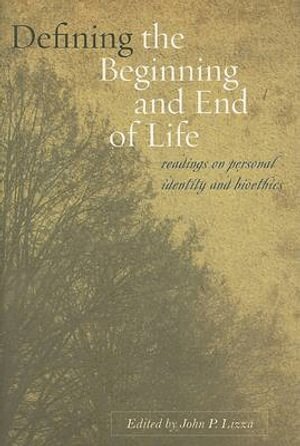
Defining the Beginning and End of Life
Readings on Personal Identity and Bioethics
Inbunden, Engelska, 2009
672 kr
Tillfälligt slut
This collection of essays examines alternative theories about persons and personal identity at the beginning and end of life. The contributions seek to answer the important question, When does a person begin and cease to exist? While the concept of personhood has figured prominently in contemporary debates over abortion and stem cell research, this is the first anthology to combine in a single volume both various theoretical perspectives and consideration of the more practical, bioethical issues. These essays are gathered from a rich tradition of philosophical and religious readings on the subject, from Rene Descartes's Meditations on First Philosophy and John Locke's Essay concerning Human Understanding to more modern discussions on persons living with dementia and on the definition of death. Organized chronologically, these works address three broad topics: theories of persons, persons at the beginning of life, and persons at the end of life. The first section offers differing views on the nature of persons that have influenced ontological and bioethical discussions of the subject. Essays in the next section track the debate over abortion and the moral status of embryos.The last section explores alternative definitions and determinations of death. Defining the Beginning and End of Life is a useful resource for examining the connection between theoretical and bioethical considerations about persons. It will engage bioethicists and philosophers as well as inform policy and law regarding issues at the beginning and end of life.
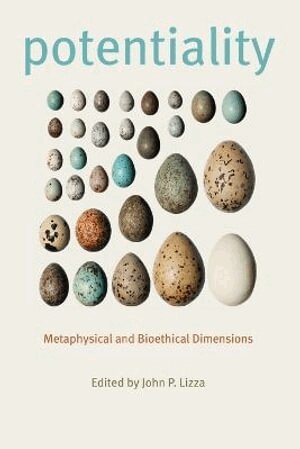
Defining the Beginning and End of Life
Readings on Personal Identity and Bioethics
Häftad, Engelska, 2009
495 kr
Skickas inom 5-8 vardagar
This collection of essays examines alternative theories about persons and personal identity at the beginning and end of life. The contributions seek to answer the important question, When does a person begin and cease to exist? While the concept of personhood has figured prominently in contemporary debates over abortion and stem cell research, this is the first anthology to combine in a single volume both various theoretical perspectives and consideration of the more practical, bioethical issues. These essays are gathered from a rich tradition of philosophical and religious readings on the subject, from Rene Descartes's Meditations on First Philosophy and John Locke's Essay concerning Human Understanding to more modern discussions on persons living with dementia and on the definition of death. Organized chronologically, these works address three broad topics: theories of persons, persons at the beginning of life, and persons at the end of life. The first section offers differing views on the nature of persons that have influenced ontological and bioethical discussions of the subject. Essays in the next section track the debate over abortion and the moral status of embryos.The last section explores alternative definitions and determinations of death. Defining the Beginning and End of Life is a useful resource for examining the connection between theoretical and bioethical considerations about persons. It will engage bioethicists and philosophers as well as inform policy and law regarding issues at the beginning and end of life.
681 kr
Skickas inom 5-8 vardagar
What is the moral status of humans lacking the potential for consciousness? The concept of potentiality often tips the scales in life-and-death medical decisions. Some argue that all human embryos have the potential to develop characteristics - such as consciousness, intellect, and will - that we normally associate with personhood. Individuals with total brain failure or in a persistent vegetative state are thought to lack the potential for consciousness or any other mental function. Or do they? In Potentiality John Lizza gathers classic articles alongside newly commissioned chapters from leading thinkers who analyze the nature of potentiality in bioethics, a concept central to a number of important debates. The contributors illustrate how considerations of potentiality and potential persons complicate the analysis of the moral consideration of persons at the beginning and end of life. A number of works explicitly uncover the Aristotelian background of the concept, while others explore philosophical issues about persons, dispositions, and possibility.The common assumption that potentiality is intrinsic to whatever has the potentiality is challenged by a relational view of persons, an extrinsic account of dispositions, and attention to how extrinsic factors affect realistic possibilities. Although potentiality has figured prominently in bioethical literature, it has not received a great deal of logical, semantic, and metaphysical analysis in contemporary philosophical literature. This collection will bring these thorny philosophical issues to the fore. Incorporating cutting-edge research on the topic of potentiality, this thought-provoking collection will interest bioethicists, philosophers, health care professionals, attorneys engaged in medical and health issues, and hospital and governmental committees who advise on policy and law concerning issues at the beginning and end of life.