John R. Lampe – författare
Visar alla böcker från författaren John R. Lampe. Handla med fri frakt och snabb leverans.
16 produkter
Balkan Economic History, 1550-1950
From Imperial Borderlands to Developing Nations
Inbunden, 1982
647 kr
Lägg i varukorg
Western economic historians have traditionally concentrated on the success stories of major developed economies, while development economists have given most of their attnetion to the problems of the Third World. The authors of this pioneering work study a part of Europe neglected by both …
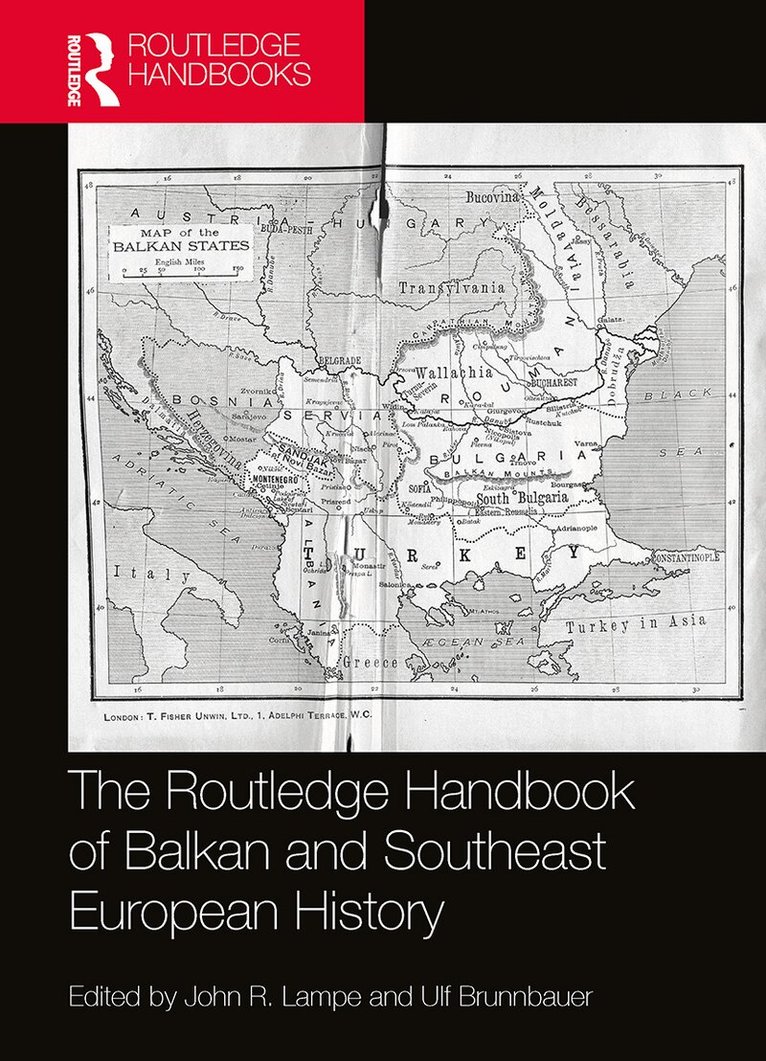
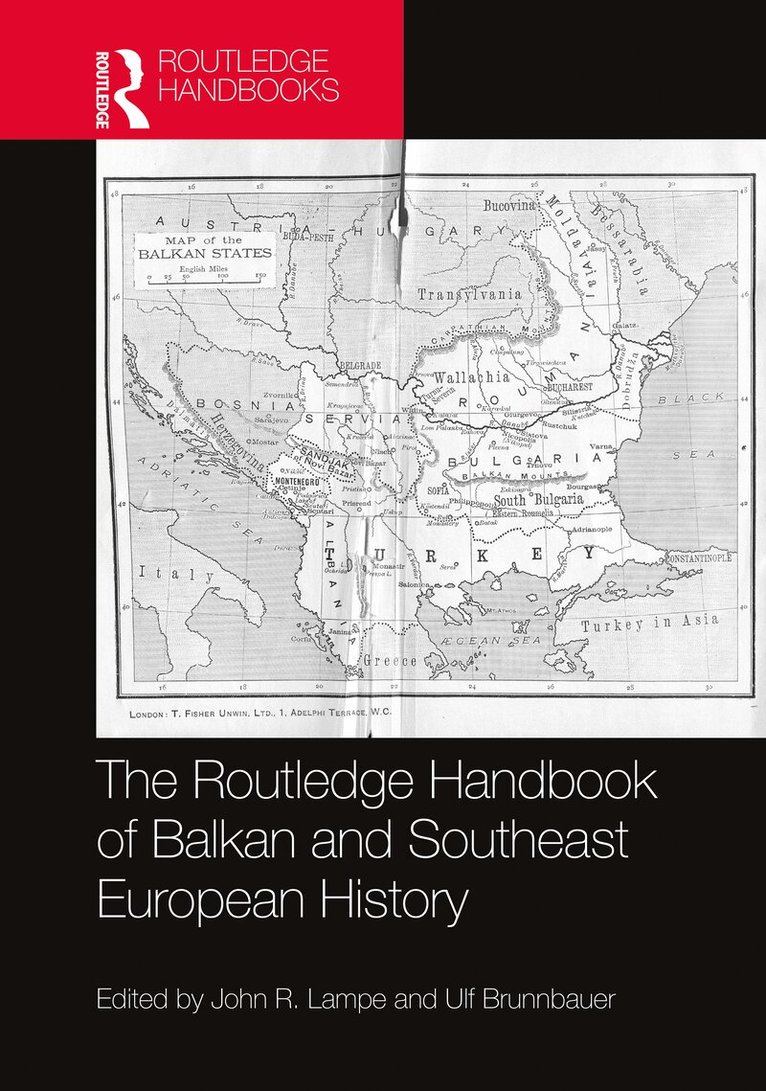
Routledge Handbook of Balkan and Southeast European History
Av John R. Lampe, Ulf Brunnbauer
Häftad, 2022
753 kr
Lägg i varukorg
Disentangling a controversial history of turmoil and progress, this Handbook provides essential guidance through the complex past of a region that was previously known as the Balkans but is now better known as Southeastern Europe. It gathers 47 international scholars and researchers from the …
Routledge Handbook of Balkan and Southeast European History
Av Ulf Brunnbauer, John R. Lampe
E-bok, 2020
820 kr
Lägg i varukorg
Disentangling a controversial history of turmoil and progress, this Handbook provides essential guidance through the complex past of a region that was previously known as the Balkans but is now better known as Southeastern Europe. It gathers 47 international scholars and researchers from the …
Routledge Handbook of Balkan and Southeast European History
Av Ulf Brunnbauer, John R. Lampe
E-bok, 2020
820 kr
Lägg i varukorg
Disentangling a controversial history of turmoil and progress, this Handbook provides essential guidance through the complex past of a region that was previously known as the Balkans but is now better known as Southeastern Europe. It gathers 47 international scholars and researchers from the …
Yugoslavia as History
Twice There Was a Country
Inbunden, 2000
1777 kr
Lägg i varukorg
Yugoslavia as History, first published in 2000, examines the bloody demise of the former Yugoslavia in the full light of its history. It provides a balanced understanding of the common hopes and fears which held its ethnic mosaic together, and the ethnic conflicts which broke it apart. This book …
Yugoslavia as History
Twice There Was a Country
Häftad, 2000
838 kr
Lägg i varukorg
Yugoslavia as History, first published in 2000, examines the bloody demise of the former Yugoslavia in the full light of its history. It provides a balanced understanding of the common hopes and fears which held its ethnic mosaic together, and the ethnic conflicts which broke it apart. This book …
Bulgarian Economy
In the Twentieth Century
Inbunden, 2024
1566 kr
Lägg i varukorg
First published in 1986, The Bulgarian Economy (now with a new preface by the author) traces the rapid growth of the Bulgarian economy throughout the twentieth century. It also notes the obstacles Bulgaria has faced in bringing about industrial development in a small relatively poor country where, …
Bulgarian Economy
In the Twentieth Century
Häftad, 2026
487 kr
Lägg i varukorg
First published in 1986, The Bulgarian Economy (now with a new preface by the author) traces the rapid growth of the Bulgarian economy throughout the twentieth century. It also notes the obstacles Bulgaria has faced in bringing about industrial development in a small relatively poor country where, …
Bulgarian Economy
In the Twentieth Century
E-bok, 2024
1030 kr
Lägg i varukorg
First published in 1986, The Bulgarian Economy (now with a new preface by the author) traces the rapid growth of the Bulgarian economy throughout the twentieth century. It also notes the obstacles Bulgaria has faced in bringing about industrial development in a small relatively poor country where, …
Bulgarian Economy
In the Twentieth Century
E-bok, 2024
1030 kr
Lägg i varukorg
First published in 1986, The Bulgarian Economy (now with a new preface by the author) traces the rapid growth of the Bulgarian economy throughout the twentieth century. It also notes the obstacles Bulgaria has faced in bringing about industrial development in a small relatively poor country where, …
Routledge Handbook of Balkan and Southeast European History
Av John R. Lampe, Ulf Brunnbauer
Inbunden, 2020
3904 kr
Lägg i varukorg
Disentangling a controversial history of turmoil and progress, this Handbook provides essential guidance through the complex past of a region that was previously known as the Balkans but is now better known as Southeastern Europe. It gathers 47 international scholars and researchers from the …
Battling over the Balkans
Historiographical Questions and Controversies
Av Constantin Iordachi, John R. Lampe
Inbunden, 2020
1926 kr
Lägg i varukorg
The tumultuous history of the Balkans has been subject to a plethora of conflicting interpretations, both local and external. In an attempt to help overcome the stereotypes that still pervade Balkan history, Battling over the Balkans concentrates on a set of five principal controversies from the …
Ideologies and National Identities
The Case of Twentieth-Century Southeastern Europe
Av Mark Mazower, John R. Lampe
Inbunden, 2004
1836 kr
Lägg i varukorg
Twentieth-century Southeastern Europe endured three, separate decades of international and civil war, and was marred in forced migration and wrenching systematic changes. This book is the result of a year-long project by the Open Society Institute to examine and reappraise this tumultuous century. …
Ideologies and National Identities
The Case of Twentieth-Century Southeastern Europe
Av Mark Mazower, John R. Lampe
Häftad, 2004
690 kr
Lägg i varukorg
Twentieth-century Southeastern Europe endured three, separate decades of international and civil war, and was marred in forced migration and wrenching systematic changes. This book is the result of a year-long project by the Open Society Institute to examine and reappraise this tumultuous century. …
Yugoslav-American Economic Relations Since World War II
Av John R. Lampe, Russell O. Prickett m. fl.
Inbunden, 1990
1350 kr
Tillfälligt slut
Yugoslav-American Economic Relations Since World War II provides a comprehensive study of the economic relations between the United States and Yugoslavia over the past four decades. The authors recount how Yugoslavia and the United States, despite great differences in size, wealth, and ideology, …
Embracing Democracy in the Western Balkans
From Postconflict Struggles toward European Integration
Av Lenard J. Cohen, John R. Lampe
Häftad, 2012
302 kr
Tillfälligt slut
Embracing Democracy in the Western Balkans offers a comparative, cross-regional study of the politics and economics of Serbia, Croatia, Bosnia, Macedonia, Montenegro, Kosovo, and Albania from 1999 to the present. It was during this period that the first wave of post-communist regime transition …