Ulf Brunnbauer – författare
Visar alla böcker från författaren Ulf Brunnbauer. Handla med fri frakt och snabb leverans.
12 produkter
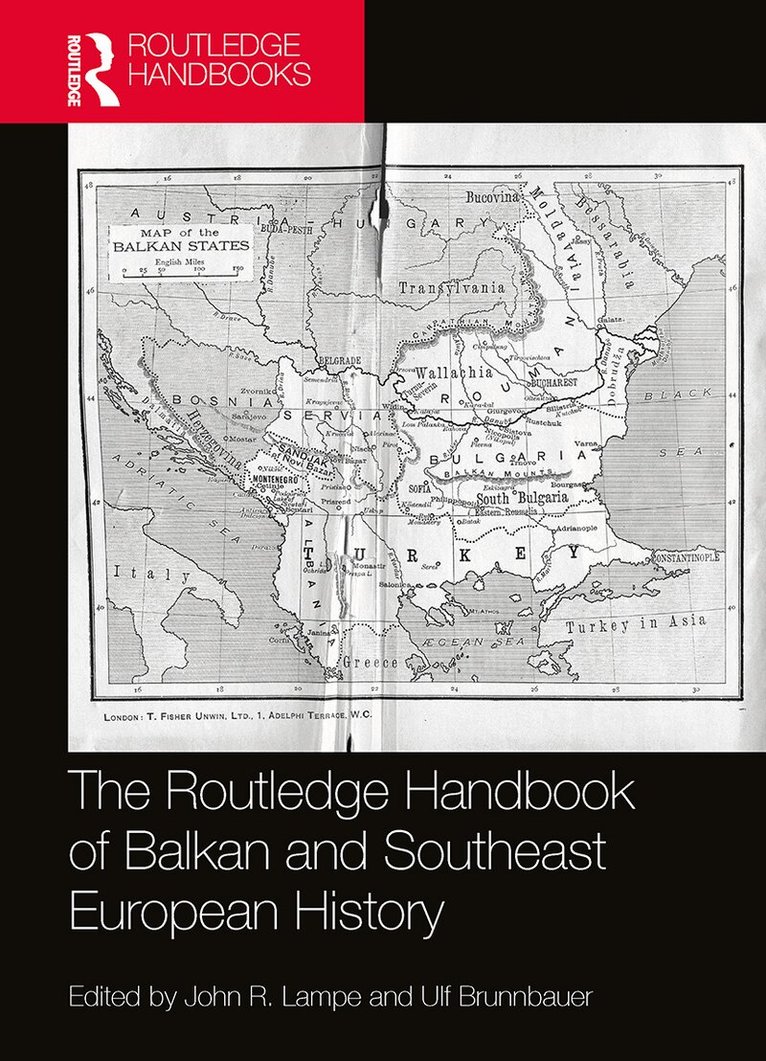
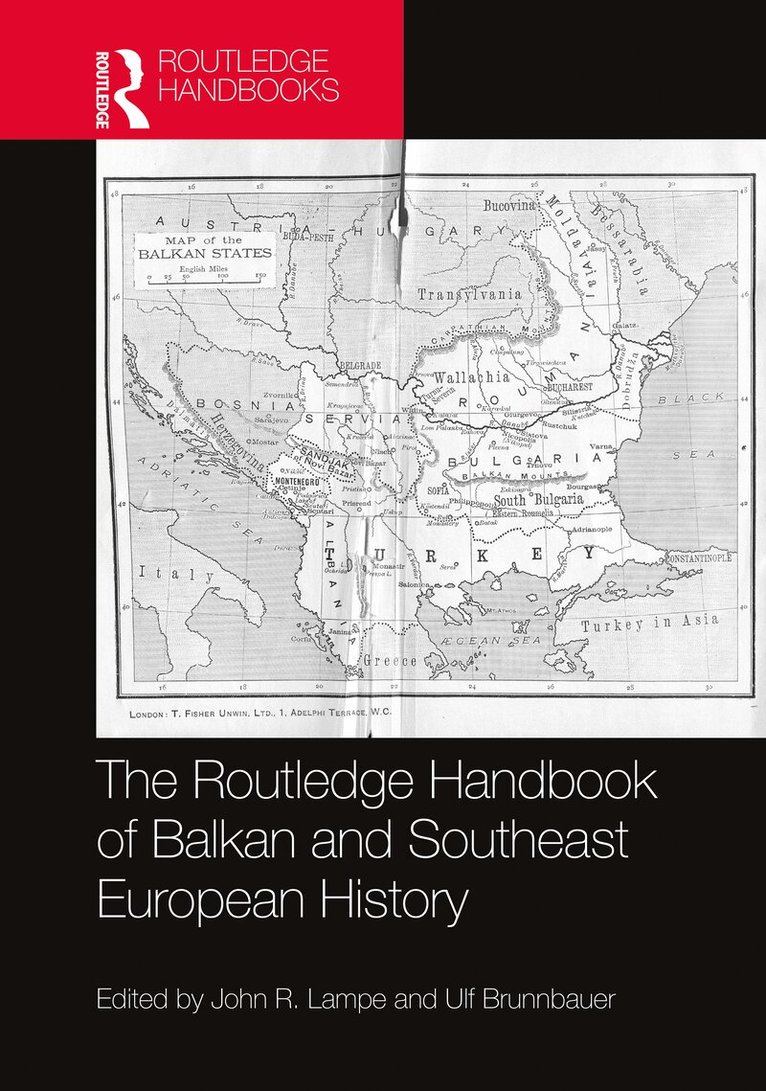
Routledge Handbook of Balkan and Southeast European History
Av John R. Lampe, Ulf Brunnbauer
Häftad, 2022
752 kr
Lägg i varukorg
Disentangling a controversial history of turmoil and progress, this Handbook provides essential guidance through the complex past of a region that was previously known as the Balkans but is now better known as Southeastern Europe. It gathers 47 international scholars and researchers from the …
Routledge Handbook of Balkan and Southeast European History
Av Ulf Brunnbauer, John R. Lampe
E-bok, 2020
820 kr
Lägg i varukorg
Disentangling a controversial history of turmoil and progress, this Handbook provides essential guidance through the complex past of a region that was previously known as the Balkans but is now better known as Southeastern Europe. It gathers 47 international scholars and researchers from the …
Routledge Handbook of Balkan and Southeast European History
Av Ulf Brunnbauer, John R. Lampe
E-bok, 2020
820 kr
Lägg i varukorg
Disentangling a controversial history of turmoil and progress, this Handbook provides essential guidance through the complex past of a region that was previously known as the Balkans but is now better known as Southeastern Europe. It gathers 47 international scholars and researchers from the …
Routledge Handbook of Balkan and Southeast European History
Av John R. Lampe, Ulf Brunnbauer
Inbunden, 2020
3898 kr
Lägg i varukorg
Disentangling a controversial history of turmoil and progress, this Handbook provides essential guidance through the complex past of a region that was previously known as the Balkans but is now better known as Southeastern Europe. It gathers 47 international scholars and researchers from the …
In the Storms of Transformation
Two Shipyards Between Socialism and the EU
Av Ulf Brunnbauer, Philipp Ther m. fl.
Inbunden, 2024
769 kr
Lägg i varukorg
In the 1990s, states in what would become the eastern edge of the European Union transformed their political systems and economies, leaving state socialism behind for liberal democracies and free markets. In the ensuing decades, two shipyards that were once the pride of their cities – in Gdynia, …
In the Storms of Transformation
Two Shipyards Between Socialism and the EU
Av Ulf Brunnbauer, Philipp Ther m. fl.
Häftad, 2024
367 kr
Lägg i varukorg
In the 1990s, states in what would become the eastern edge of the European Union transformed their political systems and economies, leaving state socialism behind for liberal democracies and free markets. In the ensuing decades, two shipyards that were once the pride of their cities – in Gdynia, …
In the Storms of Transformation
Two Shipyards Between Socialism and the EU
Av Ulf Brunnbauer, Philipp Ther m. fl.
E-bok, 2024
427 kr
Lägg i varukorg
In the 1990s, states in what would become the eastern edge of the European Union transformed their political systems and economies, leaving state socialism behind for liberal democracies and free markets. In the ensuing decades, two shipyards that were once the pride of their cities – in Gdynia, …
In the Storms of Transformation
Two Shipyards Between Socialism and the EU
Av Ulf Brunnbauer, Philipp Ther m. fl.
E-bok, 2024
437 kr
Lägg i varukorg
In the 1990s, states in what would become the eastern edge of the European Union transformed their political systems and economies, leaving state socialism behind for liberal democracies and free markets. In the ensuing decades, two shipyards that were once the pride of their cities – in Gdynia, …
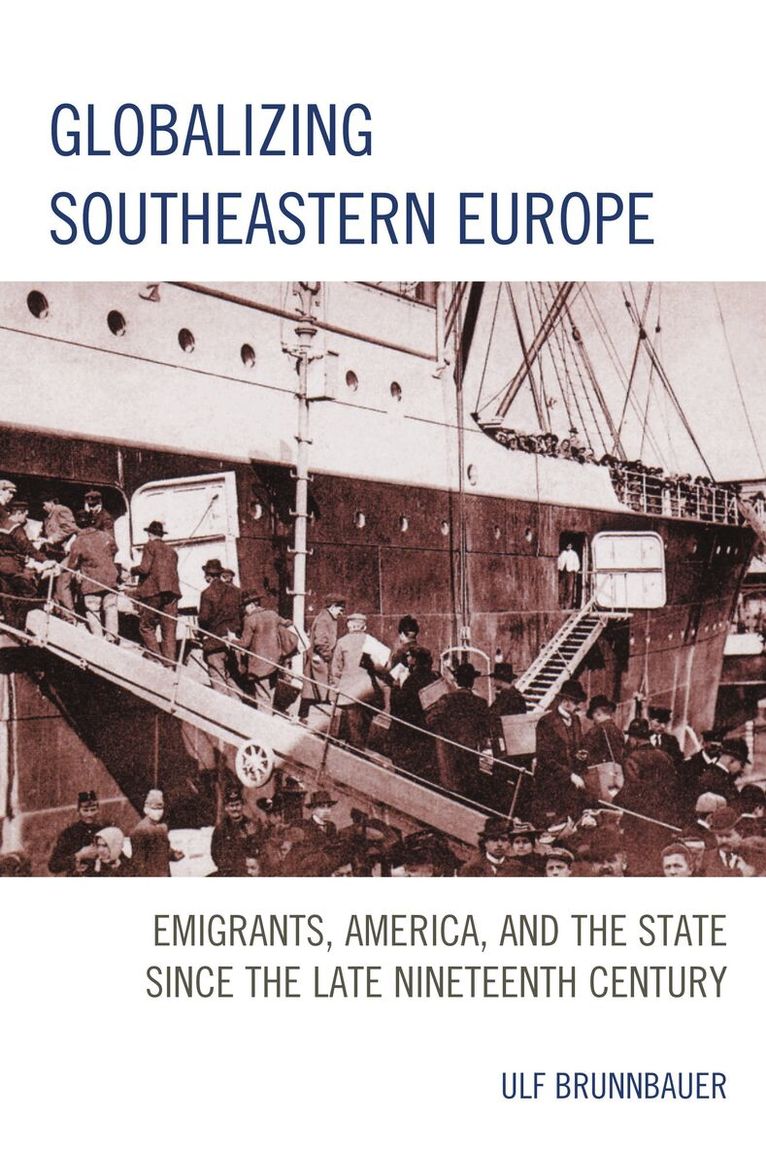
Globalizing Southeastern Europe
Emigrants, America, and the State since the Late Nineteenth Century
Häftad, 2017
733 kr
Lägg i varukorg
At the end of the nineteenth century, Southeastern Europe became a prime sending region of emigrants to overseas countries, in particular the United States. This massive movement of people ended in 1914 but remained consequential long thereafter, as emigration had created networks, memories, and …
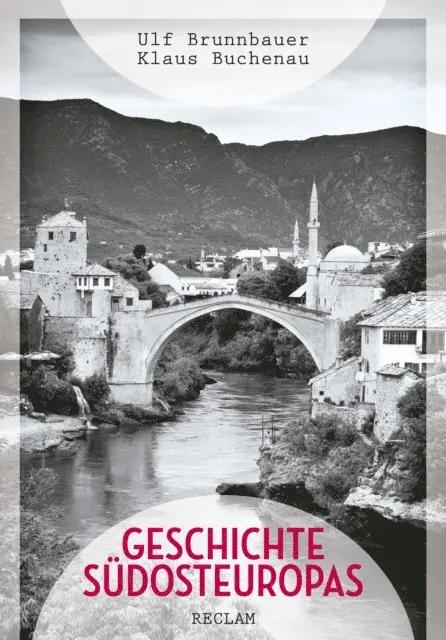
Geschichte Südosteuropas
Reclam Sachbuch premium
Av Klaus Buchenau, Ulf Brunnbauer
E-bok, 2018
159 kr
Lägg i varukorg
Wohl keine europäische Region ist so in sich unterschiedlich wie Südosteuropa, das erst zu Byzanz, dann zum Osmanischen Reich, zur österreichisch-ungarischen Monarchie und schließlich in großen Teilen zum Einflussbereich der Sowjetunion gehörte. Das Zusammenleben von Muslimen und Christen …
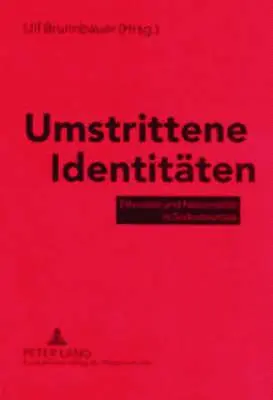
Umstrittene Identitaeten
Ethnizitaet Und Nationalitaet in Suedosteuropa
Häftad, 2002
649 kr
Tillfälligt slut
Der Band Umstrittene Identitäten untersucht aus einer historischen und anthropologischen Perspektive ethnische und nationale Identitäten in Südosteuropa im 20. Jahrhundert. Einerseits wird analysiert, wie ethnische und nationale Identitäten konstruiert werden. Andererseits geht es darum, wie …