John R. Peteet - Böcker
Visar alla böcker från författaren John R. Peteet. Handla med fri frakt och snabb leverans.
15 produkter
15 produkter
2 201 kr
Skickas inom 5-8 vardagar
The Handbook of Religion and Health has become the seminal research text on religion, spirituality, and health, outlining a rational argument for the connection between religion and health. For the past two decades, this handbook has been the most cited of all references on religion and health. This Third Edition is the most scientifically rigorous edition to date, covering the best research published through 2021 with an emphasis on prospective studies and randomized controlled trials.This volume examines research on the relationship between religion and health outcomes, surveys the historical connections between religion and health, and discusses the distinction between the terms ''religion'' and ''spirituality'' in research and clinical practice. It reviews research on religion and mental health, literature on the mind-body relationship, and develops a model to explain how religious involvement may impact physical health through the mind-body mechanisms. It also explores the direct relationships between religion and physical health, covering such topics as immune and endocrine function, heart disease, hypertension and stroke, neurological disorders, cancer, and infectious diseases; and examines the consequences of illness including chronic pain, disability, and quality of life. Additionally, most of its 34 chapters conclude with clinical and community applications making this text relevant to both health care professionals and clergy.This book is the most insightful and authoritative resource available to anyone who wants to understand the relationship between religion and health.
541 kr
Skickas inom 5-8 vardagar
There is growing recognition of the value dimension in psychiatric practice, from the contributions of positive psychology, of documenting the role of virtues in human flourishing and in the medical practice. However, the place of virtues in psychiatric treatment remains largely unexplored. How does a need for virtues fit into the processes of diagnosis, formulation, and treatment? What patient problems and factors should influence the therapist to promote forgiveness, gratitude, humility, or accountability? What is the relationship between the therapist's and the patient's virtues? What is the relevance of religious or spiritual resources to the formation of virtue? How does the cultivation of a particular virtue relate to psychodynamic, behavioral, existential, or spiritual approaches? What ethical questions does it raise, and what are its implications for psychiatric education?The Virtues in Psychiatric Practice explores the role of the virtues in promoting human flourishing within the context of psychiatric practice. Chapters uses case examples to consider the incentives of fostering particular virtues; the place of this approach among psychodynamic, behavioral, existential, or spiritual approaches; and the relationship between the therapist's and the patient's values. Virtues highlighted include forgiveness, gratitude, accountability, self-transcendence, defiance, humility, compassion, love, and practical wisdom. This discussion is organized according to four basic capacities relevant to moral enhancement - self-control, niceness, intelligence, and positivity - which correspond to the four cardinal virtues according to Plato and Aquinas - temperance, justice, prudence, and courage.Edited by psychiatrist and scholar John R. Peteet and written for psychiatrists, psychologists, and medical ethicists, this book will connect recent scientific research on virtue with clinical practice. It therefore aims to give readers a fuller appreciation of the importance of virtue in the therapeutic encounter, a clearer understanding of clinical indications for focusing on particular virtues, and enhanced practical ways of promoting human growth.
603 kr
Skickas inom 5-8 vardagar
Spirituality and Religion Within the Culture of Medicine provides a comprehensive evaluation of the relationship between spirituality, religion, and medical practice. The authors, all leading clinician-researchers in their fields, assess the strengths and weaknesses of the most recent empirical research of religion and spirituality within many distinct fields of medicine. Recognizing the interdisciplinary aspects of spirituality, religion, and health, the book also turns to scholarship throughout a multitude of academic fields-including psychology, sociology, anthropology, law, history, philosophy, and theology-to consider cultural dimensions of clinical practice. This is the first time in a single volume that readers can reflect on these multi-dimensional, complex issues with contributions from leading scholars, as well as the first collection that assesses how the medical context interacts with patient spirituality recognizing crucial differences between contexts from obstetrics and family medicine, to nursing, to gerontology and the ICU.The book concludes with a synthesis, identifying the best studies in the field of religion and health, ongoing weaknesses in research, and highlighting what can be confidently believed based on prior studies. The synthesis also considers relations between the empirical literature on religion and health and the theological and religious traditions, discussing places of convergence and tension, as well as remaining open questions for further reflection and research.Spirituality and Religion within the Culture of Medicine provides trainees and clinicians introductory information for newcomers to the field of spirituality, religion, and medicine, and provides researchers and scholars familiar with field critical and up-to-date analysis from a multi-disciplinary approach.
1 943 kr
Skickas inom 10-15 vardagar
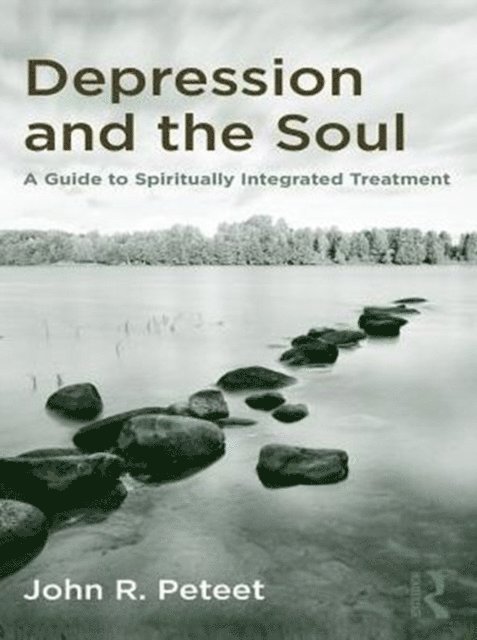
In Depression and the Soul, John Peteet proves the old adage that the best physician is also a philosopher. He considers how to approach the problem of depression within a larger context, and reviews current concepts of successful living relative to the heart (emotion and volition), the mind (cognition and coping), and the soul (the self in relation to transcendent reality). Each chapter goes on to further explore the relationship between depression and the context of a patient’s entire life. This is done through consideration of how the existential struggles of depressed individuals engage their spiritual lives, by reviewing current empirical literature on depression and spirituality, comparing the perspectives of various spiritual traditions or world views, and summarizing ways that spirituality and depression interact.
Religious and Spiritual Issues in Psychiatric Diagnosis
A Research Agenda for DSM-V
Häftad, Engelska, 2010
759 kr
Skickas inom 7-10 vardagar
Religious and Spiritual Issues in Psychiatric Diagnosis: A Research Agenda for DSM-V gathers for the first time the collective contributions of the prominent clinicians and researchers who participated in the 2006 Corresponding Committee on Religion, Spirituality and Psychiatry of the American Psychiatric Association.
705 kr
Skickas inom 10-15 vardagar
In Depression and the Soul, John Peteet proves the old adage that the best physician is also a philosopher. He considers how to approach the problem of depression within a larger context, and reviews current concepts of successful living relative to the heart (emotion and volition), the mind (cognition and coping), and the soul (the self in relation to transcendent reality). Each chapter goes on to further explore the relationship between depression and the context of a patient’s entire life. This is done through consideration of how the existential struggles of depressed individuals engage their spiritual lives, by reviewing current empirical literature on depression and spirituality, comparing the perspectives of various spiritual traditions or world views, and summarizing ways that spirituality and depression interact.
593 kr
Skickas inom 7-10 vardagar
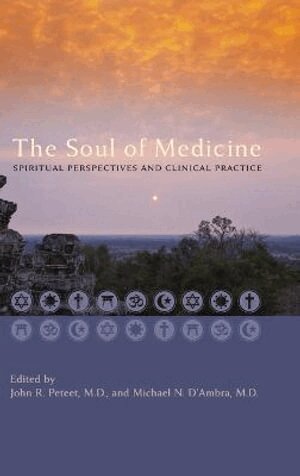
To what extent should spiritual information be part of patients' medical assessments? How should physicians respond when patients refuse life-saving care on religious grounds? Should doctors pray with their patients? Questions such as these raise deeper ones about the goals of medicine and the nature of healing. In a set of engaging and candid essays, The Soul of Medicine explores the role and influence of spirituality in clinical practice, professionalism, and medical education. The contributors to this volume approach this topic from their own spiritual perspectives-Jewish, Christian, Muslim, Buddhist, Hindu, New Age/Eclectic, secular, Jehovah's Witnesses, and Christian Scientist. Their thought-provoking essays produce rich insights not only into the needs of patients who share these same world views but also into how spirituality influences the practice of medicine. When their own spiritual issues arise in medical practice, physicians rely on their professionalism, ethics, and education.To better understand how various world views are incorporated into clinical work, doctors must ask themselves-as these contributors have-a series of important questions: What insights about life and healing does your faith provide? How does it challenge or reinforce contemporary medicine? How do you assess and address spirituality in clinical practice? How do your own beliefs influence your interactions with patients? The Soul of Medicine encourages medical students and practitioners to recognize the spiritual dimensions of medicine, to consider how these dimensions inform their own education and practice, and to be compassionate about their patients'-and their own-religious beliefs.
474 kr
Skickas inom 7-10 vardagar
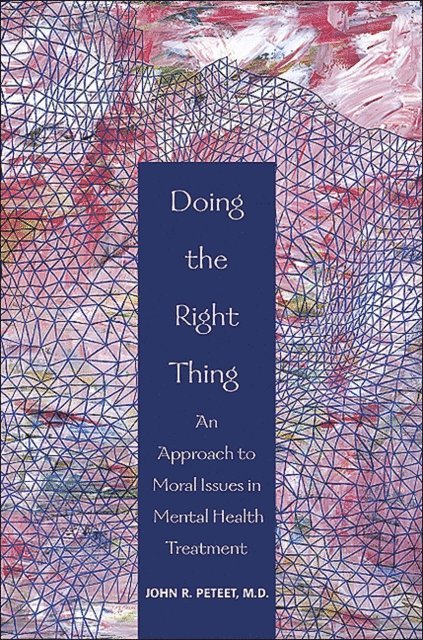
Here is the first practical guide for dealing with the moral issues that regularly confront clinicians in their work. Written for all mental health professionals, Doing the Right Thing: An Approach to Moral Issues in Mental Health Treatment offers a framework both for making moral decisions concerning the treatment of patients and for helping patients deal with their own moral concerns. Drawing on current thinking in several disciplines, Doing the Right Thing introduces the concept of moral functioning as a basis for therapeutic influence. Numerous case examples illustrate how to ; Assess patients' ability to function morally - Learn how six basic capacities needed for moral functioning develop, and how identifying problems in an individual's moral functioning can help guide the formulation of a treatment plan. Treat patients with problems functioning morally - Appreciate when it is time to set aside neutrality as a therapeutic stance in favor of a more direct approach to helping patients make moral commitments, decisions and self-assessments and develop moral character. Deal with the moral aspects of clinical decision-making - Develop a framework for making moral choices in planning the direction of treatment, confronting resistance and addressing problems in caring effectively. Help patients address moral challenges - Learn how to take into account your own and the patient's values in reasoning through moral dilemmas. Understand more clearly how to help patients deal with unfair pain caused by others, as well as the guilt and shame caused by their own moral failures. Employ the therapeutic potential of moral growth, transformation, and integration - Discover the role of a clinician in helping demoralized patients reformulate their ideals for better outcomes. Recognize where a moral paradigm is useful in improving the delivery of mental health care. Concise, clear, and clinically relevant, Doing the Right Thing is a valuable, thought-provoking guide for both new and seasoned mental health practitioners who live and work in a morally complex environment. It is also an excellent supplementary text for courses dealing with the practice of psychotherapy and the ethical aspects of mental health care.
752 kr
Skickas inom 7-10 vardagar
This refreshing new work is a practical overview of religious and spiritual issues in psychiatric assessment and treatment. Eleven distinguished contributors assert that everyone has a worldview and that these religious and spiritual variables can be collaborative partners of science, bringing critical insight to assessment and healing to treatment. Unlike other works in this field, which focus primarily on spiritual experience, this clearly written volume focuses on the cognitive aspects of belief - and how personal worldview affects the behavior of both patient and clinician. Informative case vignettes and discussions illustrate how assessment, formulation, and treatment principles can be incorporated within different worldviews, including practical clinical information on major faith traditions and on atheist and agnostic worldviews.The book's four main sections give concise yet comprehensive coverage of varying aspects of worldview: Conceptual Foundation - The Introduction explains the significance of worldview and its context in the development of psychiatry; reviews misunderstandings about spirituality and worldview and how they can be resolved in contemporary practice; and discusses Freud's significant influence on psychiatry's approach to religion and spirituality. Clinical Foundations - Three chapters review how clinicians can integrate spiritual and religious perspectives in the basic clinical processes of assessment (gathering a religious or spiritual history); diagnosis and case formulation (including religious and spiritual factors); and treatment (including a review of ethical issues). Patients and Their Traditions - Six chapters discuss Catholic and Protestant Christians, Hindus, Buddhists, Muslims, Jews, and secularists (atheists and agnostics), including a brief history, clinical implications of core beliefs, and variations of therapeutic encounters (both where patient and clinician share the same faith and where they do not) for each faith tradition. Worldview and Culture - A concluding chapter reviews issues of a global culture where faiths once rarely encountered in North America are increasingly seen in clinical practice. This well-organized text sheds much-needed light on an area too often obscure to many clinicians, fostering a balanced integration of religion and spirituality in mental health training and practice. Bridging several disciplines in a novel way, this thought-provoking volume will find a diverse audience among mental health care students, educators, and professionals everywhere who seek to better integrate the religious and spiritual aspects of their patients' lives into assessment and treatment.
286 kr
Skickas inom 5-8 vardagar
1 095 kr
Skickas inom 10-15 vardagar
Following World War II and the exposure of the concentration camps, psychiatry turned its attention to a vast range of cultural concerns with results that seemed to indicate a decline of stigma over time. However, it is now clear that whatever drives prejudices, especially in the case of anti-Semitism, was just dormant and perhaps not fully understood. Hate crimes and anti-Semitism broad recently re-emerged in Europe, and the United States followed shortly thereafter. The US Federal Bureau of investigation reports that New York City, which is still considered the most Jewish-friendly region in the US, experienced a 22% spike in anti-Semitic hate crimes in 2018 alone, with more extremes in other regions of the country. Neo-Nazi groups have grown stronger in the United States and abroad, often resulting in organized acts of violence. The recent Tree of Life synagogue shooting in Pittsburgh, PA demonstrated that these acts are not limited to one-on-one interactions, butsometimes as prolific, large-scale act. The medical community is not immune from biases either. The Cleveland Clinic recently fired a young doctor after she publicly declared her wishes to inject Jewish patients with lethal substances, which is only one of many hateful comments she made on social media over the course of several years. Psychiatrists in particular grapple with this as they try to serve patients of both Jewish and non-Jewish descent who struggle to process these acts of hate. Despite all of this, there is no training and no resource to guide medical professionals through these challenges. The editors of the recent Springer book, Islamophobia and Psychiatry, recognize this gap in the literature and seek to develop another high-quality text to meet this need. Written by expert clinicians in global regions where these incidents are mostprevalent, the book seeks to be neither political nor opinion-based; instead, the text takes an innovative cross-cultural psychiatric interaction, similar to what was done with Springer’s new Islamophobia book. Coverage will range from foci on the social psychiatric aspects of anti-Semitism to how it may in turn infuse clinical encounters between patients and clinicians. Written by experts in this area, the insight and expertise of psychiatrists from a variety of cultural and religious backgrounds will focus on what psychiatrists need to know to combat the negative mental health impact that increasingly rise out of this particular phenomenon. Such a multi-cultural psychiatric approach has never been taken before for this topic. This discourse is the foundation for the primary goal of this book: to develop the tools needed to improve clinical outcomes for patients. Hence, this book aims to present an updated, comprehensive bio-psychosocial perspective on anti-Semitism at the interface of clinical psychiatry.
1 204 kr
Skickas inom 10-15 vardagar
Finally, thereare chapters by a mental health professional who has been a patient, a Jewish psychiatrist, a Muslim psychiatrist knowledgeable about Christianity and psychiatry in the Muslim majority world, and a Christian psychiatrist.
Eastern Religions, Spirituality, and Psychiatry
An Expansive Perspective on Mental Health and Illness
Inbunden, Engelska, 2024
1 472 kr
Skickas inom 7-10 vardagar
This book provides a thorough, comprehensive, and accessible reference for all the major Eastern faith traditions and their intersection with psychiatry. Understanding Eastern religion is of paramount value to all mental health professionals, as there is a growing emphasis on religion and spirituality as a part of clinical cultural competence interventions, predominantly in North America and Europe. Additionally, there is rising membership in Eastern, Asian, and non-Semitic faith traditions in North America and Europe. Hence, more patients and clinicians belong to these non-Western faiths than ever before.The volume is divided into five parts. Part 1 covers general issues, including principles of culture, religion, and spirituality in psychiatry, spirituality across the lifespan, child rearing, practice and faith, and how death and dying is approached in these Eastern traditions. Part 2 covers specific Eastern religions and spiritual traditions, including basic principles and research-based clinical aspects of Hinduism, Buddhism, Sikhism, Taoism, Zoroastrianism, Jainism, as well as Confucian philosophical ideas. Part 3 attempts to apply the importance of cultural humility to perspectives on the Eastern Traditions from Western Psychiatry. These include Christian, Muslim, and Jewish perspectives, not of expertise, but of explorations in learning. Part 4 covers specific social psychiatric perspectives, including the psychiatric harm that can come from caste divisions and cults posing as religions, but closes with a perspective on the Eastern connections to the relatively unknown, but unifying, Omnist perspective.All mental health professionals seeking to expand their understanding of the essential belief systems of various Eastern religions and their connection with mental health will find Eastern Religions, Spirituality, and Psychiatry an invaluable resource.
Eastern Religions, Spirituality, and Psychiatry
An Expansive Perspective on Mental Health and Illness
Häftad, Engelska, 2025
1 095 kr
Skickas inom 7-10 vardagar
This book provides a thorough, comprehensive, and accessible reference for all the major Eastern faith traditions and their intersection with psychiatry. Understanding Eastern religion is of paramount value to all mental health professionals, as there is a growing emphasis on religion and spirituality as a part of clinical cultural competence interventions, predominantly in North America and Europe. Additionally, there is rising membership in Eastern, Asian, and non-Semitic faith traditions in North America and Europe. Hence, more patients and clinicians belong to these non-Western faiths than ever before.The volume is divided into five parts. Part 1 covers general issues, including principles of culture, religion, and spirituality in psychiatry, spirituality across the lifespan, child rearing, practice and faith, and how death and dying is approached in these Eastern traditions. Part 2 covers specific Eastern religions and spiritual traditions, including basic principles and research-based clinical aspects of Hinduism, Buddhism, Sikhism, Taoism, Zoroastrianism, Jainism, as well as Confucian philosophical ideas. Part 3 attempts to apply the importance of cultural humility to perspectives on the Eastern Traditions from Western Psychiatry. These include Christian, Muslim, and Jewish perspectives, not of expertise, but of explorations in learning. Part 4 covers specific social psychiatric perspectives, including the psychiatric harm that can come from caste divisions and cults posing as religions, but closes with a perspective on the Eastern connections to the relatively unknown, but unifying, Omnist perspective.All mental health professionals seeking to expand their understanding of the essential belief systems of various Eastern religions and their connection with mental health will find Eastern Religions, Spirituality, and Psychiatry an invaluable resource.
2 163 kr
Skickas inom 10-15 vardagar
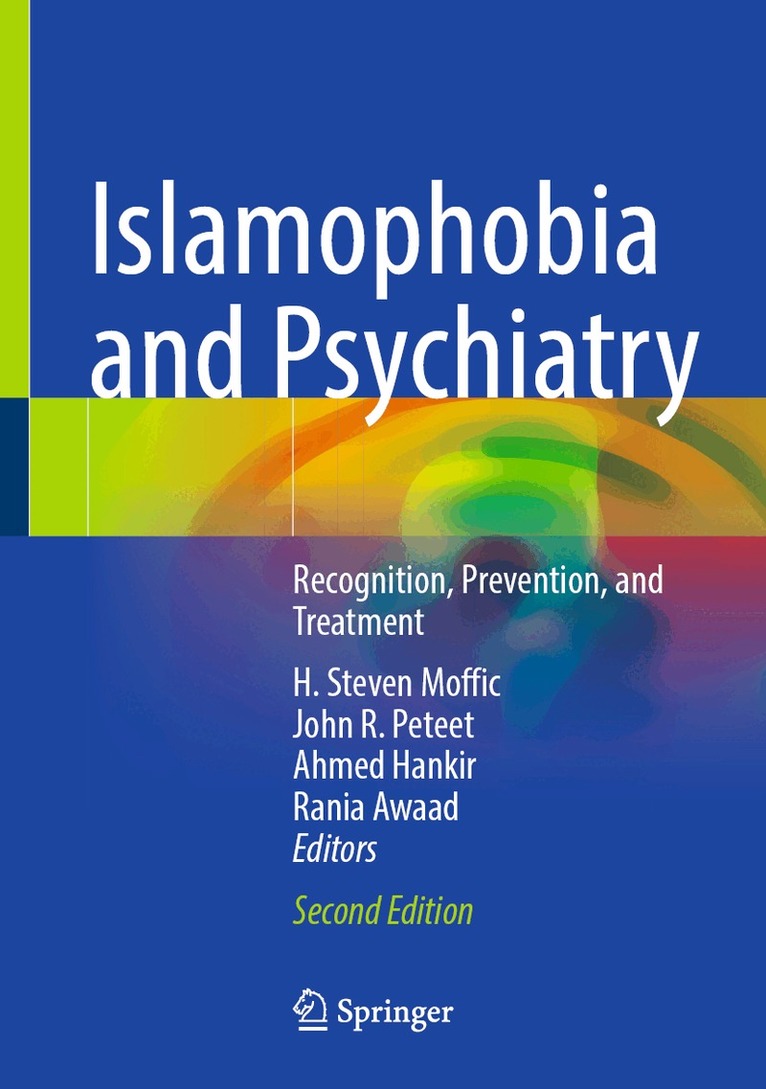
This book is a second edition of the 2019 volume of Islamophobia and Psychiatry. This necessary update conveys how important and challenging the subject matter remains. The first edition of this book came at a time when Islamophobia was rising in the United States and elsewhere, and the adverse mental health repercussions were significant: disparagement of Muslims, Muslim fears of asking for help from psychiatry, undue fear of Muslims by others, and increased anxiety for Muslims, amongst others. Since then, Islamophobia has waxed and waned. Islamophobia plays a major role in the ongoing conflict between Israel and Hamas, and the psychological trauma ripples out into the world.Attention to Islamophobia in this volume is thereby applied to different countries and from different religious perspectives. The focus is on psychiatric aspects, including new topics such as a Hindu psychiatrist’s perspective, burnout in Muslims, learning the clinical influence of religion, a new psychiatric process to negotiate international conflict, and a unique dialogue between a Muslim psychiatrist and a Jewish psychiatrist, moderated by a Christian psychiatrist. Notably, the editors were also able to secure a rare, but needed Palestinian perspective on collective trauma from a psychiatrist with lived experiences in the West Bank. Valued chapters from the first edition have been retained, and revised where deemed necessary.First and foremost, this is a vital expert resource for all clinicians and clinicians in training who may encounter patients and colleagues struggling with Islamophobia, including for adults and child psychiatrists, psychologists, primary care physicians, counselors, social workers, nurses, administrators, and others. Also important is that it should be useful for anyone concerned with the adverse repercussions of Islamophobia. It is the fifth volume, following volumes on Islamophobia, Antisemitism, Christianity, and the Eastern traditions, in an unprecedented series on religions, spirituality and psychiatry. Taken all together, they present a model process and guideline for a comprehensive interfaith consideration of our various mental health challenges and elusive solutions. This particular volume is designed to address our ethical principle of helping to improve the mental health of the community, in this case, Muslim communities in particular. There is hardly a more cogent, potent, and urgent global social psychiatric issue.