
John S. Gilkeson - Böcker
Visar alla böcker från författaren John S. Gilkeson. Handla med fri frakt och snabb leverans.
4 produkter
4 produkter
1 160 kr
Skickas inom 7-10 vardagar
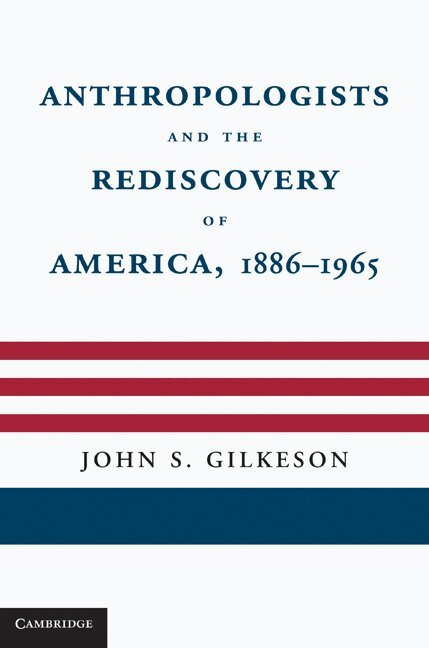
This book examines the intersection of cultural anthropology and American cultural nationalism from 1886, when Franz Boas left Germany for the United States, until 1965, when the National Endowment for the Humanities was established. Five chapters trace the development within academic anthropology of the concepts of culture, social class, national character, value, and civilization, and their dissemination to non-anthropologists. As Americans came to think of culture anthropologically, as a 'complex whole' far broader and more inclusive than Matthew Arnold's 'the best which has been thought and said', so, too, did they come to see American communities as stratified into social classes distinguished by their subcultures; to attribute the making of the American character to socialization rather than birth; to locate the distinctiveness of American culture in its unconscious canons of choice; and to view American culture and civilization in a global perspective.

1 056 kr
Skickas inom 3-6 vardagar
This book inquires into what Americans mean when they call the United States a middle-class nation and why the vast majority of Americans identify themselves as middle class. Originally published in 1986. The Princeton Legacy Library uses the latest print-on-demand technology to again make available previously out-of-print books from the distinguished backlist of Princeton University Press. These editions preserve the original texts of these important books while presenting them in durable paperback and hardcover editions. The goal of the Princeton Legacy Library is to vastly increase access to the rich scholarly heritage found in the thousands of books published by Princeton University Press since its founding in 1905.

2 643 kr
Skickas inom 3-6 vardagar
This book inquires into what Americans mean when they call the United States a middle-class nation and why the vast majority of Americans identify themselves as middle class. Originally published in 1986. The Princeton Legacy Library uses the latest print-on-demand technology to again make available previously out-of-print books from the distinguished backlist of Princeton University Press. These editions preserve the original texts of these important books while presenting them in durable paperback and hardcover editions. The goal of the Princeton Legacy Library is to vastly increase access to the rich scholarly heritage found in the thousands of books published by Princeton University Press since its founding in 1905.
428 kr
Skickas inom 7-10 vardagar
This book examines the intersection of cultural anthropology and American cultural nationalism from 1886, when Franz Boas left Germany for the United States, until 1965, when the National Endowment for the Humanities was established. Five chapters trace the development within academic anthropology of the concepts of culture, social class, national character, value, and civilization, and their dissemination to non-anthropologists. As Americans came to think of culture anthropologically, as a 'complex whole' far broader and more inclusive than Matthew Arnold's 'the best which has been thought and said', so, too, did they come to see American communities as stratified into social classes distinguished by their subcultures; to attribute the making of the American character to socialization rather than birth; to locate the distinctiveness of American culture in its unconscious canons of choice; and to view American culture and civilization in a global perspective.