John Skorupski - Böcker
Visar alla böcker från författaren John Skorupski. Handla med fri frakt och snabb leverans.
14 produkter
14 produkter
660 kr
Skickas inom 7-10 vardagar
From the end of the Enlightenment to the middle of the twentieth century philosophy took fascinating and controversial paths whose relevance to contemporary post-modernist thought is becoming increasingly clear. This volume traces the English-language side of the period, while also taking into account those continental thinkers who deeply influenced twentieth-century English-language philosophy.
1 886 kr
Skickas inom 3-6 vardagar
John Skorupski develops in these essays a distinctive and systematic moral philosophy, examining fundamental questions in ethics, and then applying the results to issues of culture and politics. The first three parts of the book focus on central ethical concepts: reasons, the good, and morality. Skorupski examines normative claims about what we have reason to think, feel, or do. He then presents a conception of the good which differs significantly from the utilitarianism of Mill while maintaining its important insights. Drawing on Kant and Hegel, his account of morality relates it to autonomy and the emotions involved in blame and recognition. The final part of the book is a liberal critique of the forms of liberalism which dominate contemporary culture. Ethical Explorations firmly links liberal politics to its ethical ideal, and links that ideal to modern morality and modern ideas of the good.
1 757 kr
Skickas inom 5-8 vardagar
Being and Freedom is a panoramic account of ethics in Europe from the French Revolution to the end of the nineteenth century. In this period the influence of ethics ran far beyond philosophy, eventually dominating politics and religion in the West. Developments came from France, Germany, and Britain: this is the first book to treat them together as a Europe-wide phenomenon, paying attention to the context of events and ideas from which they emerged. Skorupski begins by examining the philosophical conflict at the heart of the French revolution, between the individualism of the Enlightenment and two very different forms of holistic ethics: the old regime's ethic of service and the radical-democracy of the Rousseauian left. Responses analysing freedom and modern social relations came from a series of French liberal thinkers. In Germany the reaction was to two revolutions seen as inaugurating modernity: the political revolution in France and the philosophical revolution of Kant. Here, the fate of religion was critical, and with it the metaphysics of being and freedom. Skorupski traces this story from Kant to Hegel's idealist version of ethical holism. In Britain, Enlightenment naturalism remained the prevailing framework. It took different forms: 'common sense' and the theory of the sentiments in Scotland, utilitarianism in England. From all these elements came a synthesis of European themes by John Stuart Mill, comparable in range but opposed to that of Hegel. The final chapter is an assessment of this period's ethical ideas. They remain the core of late modern ethics and the contested ground on which ethical disagreements take place today.
434 kr
Skickas inom 5-8 vardagar
Being and Freedom is a panoramic account of ethics in Europe from the French Revolution to the end of the nineteenth century. In this period the influence of ethics ran far beyond philosophy, eventually dominating politics and religion in the West. Developments came from France, Germany, and Britain: this is the first book to treat them together as a Europe-wide phenomenon, paying attention to the context of events and ideas from which they emerged. Skorupski begins by examining the philosophical conflict at the heart of the French revolution, between the individualism of the Enlightenment and two very different forms of holistic ethics: the old regime's ethic of service and the radical-democracy of the Rousseauian left. Responses analysing freedom and modern social relations came from a series of French liberal thinkers. In Germany the reaction was to two revolutions seen as inaugurating modernity: the political revolution in France and the philosophical revolution of Kant. Here, the fate of religion was critical, and with it the metaphysics of being and freedom. Skorupski traces this story from Kant to Hegel's idealist version of ethical holism. In Britain, Enlightenment naturalism remained the prevailing framework. It took different forms: 'common sense' and the theory of the sentiments in Scotland, utilitarianism in England. From all these elements came a synthesis of European themes by John Stuart Mill, comparable in range but opposed to that of Hegel. The final chapter is an assessment of this period's ethical ideas. They remain the core of late modern ethics and the contested ground on which ethical disagreements take place today.
1 548 kr
Skickas inom 5-8 vardagar
This book is about normativity and reasons. By the end, however, the subject becomes the relation between self, thought, and world. If we understand normativity, we are on the road to understanding this relation. John Skorupski argues that all normative properties are reducible to reason relations, so that the sole normative ingredient in any normative concept is the concept of a reason. This is a concept fundamental to all thought. It is pervasive (actions, beliefs, and sentiments all fall within its range), primitive (all other normative concepts are reducible to it), and constitutive of the idea of thought itself. Thinking is sensitivity to reasons. Thought in the full sense of autonomous cognition is possible only for a being sensitive to reasons and capable of deliberating about them. In Part II of the book Skorupski examines epistemic reasons, and shows that aprioricity, necessity, evidence, and probability, which may not seem to be normative at all, are in fact normative concepts analysable in terms of the concept of a reason. In Part III he shows the same for the concept of a person's good, and for moral concepts including the concept of a right. Part IV moves to the epistemology and metaphysics of reasons. When we make claims about reasons to believe, reasons to feel, or reasons to act we are asserting genuine propositions: judgeable, truth-apt contents. But these normative propositions must be distinguished from factual propositions, for they do not represent states of affairs.So Skorupski's ambitious theory of normativity has broad and deep implications for philosophy. It shows how reflection on the logic, epistemology, and ontology of reasons finally leads us to an account of the interplay of self, thought, and world.
642 kr
Skickas inom 5-8 vardagar
This book is about normativity and reasons. By the end, however, the subject becomes the relation between self, thought, and world. If we understand normativity, we are on the road to understanding this relation. John Skorupski argues that all normative properties are reducible to reason relations, so that the sole normative ingredient in any normative concept is the concept of a reason. This is a concept fundamental to all thought. It is pervasive (actions, beliefs, and sentiments all fall within its range), primitive (all other normative concepts are reducible to it), and constitutive of the idea of thought itself. Thinking is sensitivity to reasons. Thought in the full sense of autonomous cognition is possible only for a being sensitive to reasons and capable of deliberating about them. In Part II of the book Skorupski examines epistemic reasons, and shows that aprioricity, necessity, evidence, and probability, which may not seem to be normative at all, are in fact normative concepts analysable in terms of the concept of a reason. In Part III he shows the same for the concept of a person's good, and for moral concepts including the concept of a right. Part IV moves to the epistemology and metaphysics of reasons. When we make claims about reasons to believe, reasons to feel, or reasons to act we are asserting genuine propositions: judgeable, truth-apt contents. But these normative propositions must be distinguished from factual propositions, for they do not represent states of affairs. So Skorupski's ambitious theory of normativity has broad and deep implications for philosophy. It shows how reflection on the logic, epistemology, and ontology of reasons finally leads us to an account of the interplay of self, thought, and world.
6 033 kr
Skickas inom 10-15 vardagar
First Published in 1999. John Skorupski's book is a comprehensive revaluation of Mill as a philosopher. The opening chapters outline Mill's main doctrines and attitudes and provide an up-to-date account of his views on language, logic and the mind. Skorupski carefully examines Mill's analysis of connotation and denotation and brings out the affinities between Mill's naturalistic view of logic, mathematics and science and important themes in current philosophy. Mill's standing as a political philosopher rests on his insights into the bases of liberalism, and on the power and eloquence with which he grounds them in an appeal to general human good. His views on social science, on utilitarianism and on liberty are examined in the final three chapters. This book aims to re-establish Mill as a major philosopher whose ideas on issues as different as the nature of mathematics and the foundations of liberal democracy are strikingly relevant to today's philosophical debates and inquiries. This book should be of interest to students and lecturers in political/social philosophy.
573 kr
Skickas inom 10-15 vardagar
John Stuart Mill is one of the greatest thinkers of the nineteenth century. But does he have anything to teach us today? His deep concern for freedom of the individual is thought by some to be outdated and inadequate to the cultural and religious complexities of twenty first century life.In this succinct and shrewd book, John Skorupski argues that Mill is a profound and inspiring social and political thinker from whom we still have much to learn. He reflects on Mill's central arguments in his most famous works, including Utilitarianism and On Liberty, and traces their implications for democratic politics. With the use of topical and controversial examples, including privacy, religious intolerance, and freedom of speech, he makes Mill's concerns our own at a time when what liberalism means, and why it matters, is once again in dispute.He concludes that Mill's place in the pantheon of 'great thinkers' rests not only on his specific political and social doctrines, but above all on his steadfastly generous and liberal vision of human beings, their relations to one another, and what makes life worth living.
400 kr
Skickas inom 10-15 vardagar
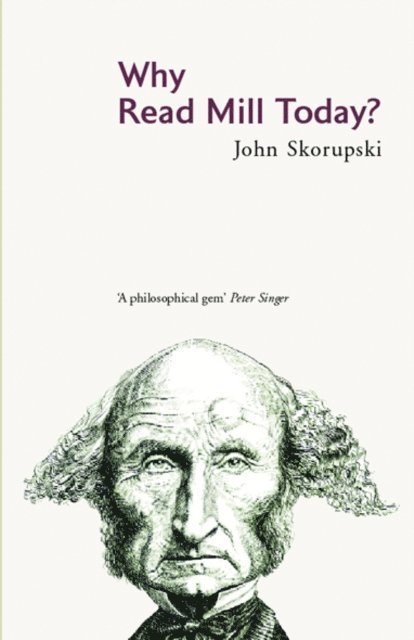
John Stuart Mill is one of the greatest thinkers of the nineteenth century. But does he have anything to teach us today? His deep concern for freedom of the individual is thought by some to be outdated and inadequate to the cultural and religious complexities of twenty first century life. In this succinct and shrewd book, John Skorupski argues that Mill is a profound and inspiring social and political thinker from whom we still have much to learn. He reflects on Mill's central arguments in his most famous works, including "Utilitarianism" and "On Liberty", and traces their implications for democratic politics. With the use of topical and controversial examples, including privacy, religious intolerance, and freedom of speech, he makes Mill's concerns our own at a time when what liberalism means, and why it matters, is once again in dispute. He concludes that Mill's place in the pantheon of 'great thinkers' rests not only on his specific political and social doctrines, but above all on his steadfastly generous and liberal vision of human beings, their relations to one another, and what makes life worth living.
3 185 kr
Skickas inom 10-15 vardagar
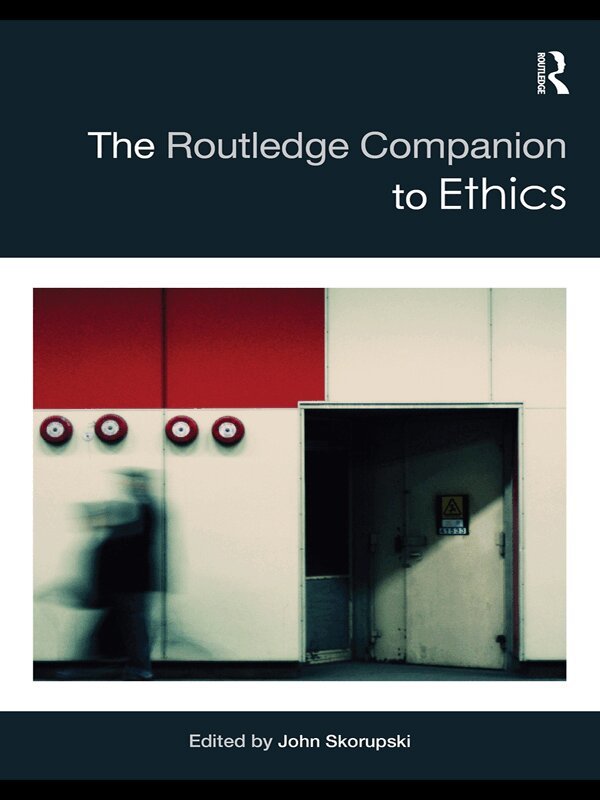
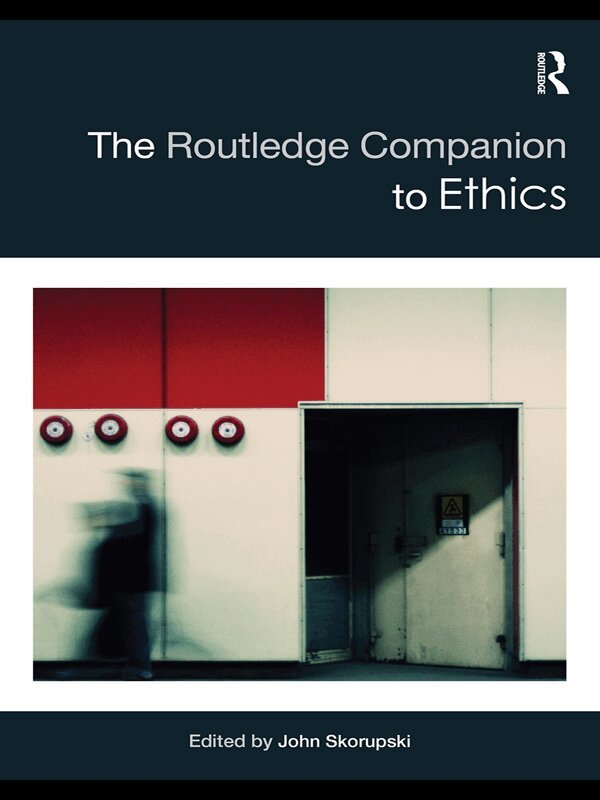
The Routledge Companion to Ethics is an outstanding survey of the whole field of ethics by a distinguished international team of contributors. Over 60 chapters are divided into six clear sections: the history of ethicsmeta-ethicsperspectives from outside ethicsethical perspectivesmoralitydebates in ethics. The Companion opens with a comprehensive historical overview of ethics, including chapters on Plato, Aristotle, Hume, and Kant, and ethical thinking in China, India and the Arabic tradition. The second part covers the domain of meta-ethics. The third part covers important challenges to ethics from the fields of anthropology, psychology, sociobiology and economics. The fourth and fifth sections cover competing theories of ethics and the nature of morality respectively, with entries on consequentialism, Kantian morality, virtue ethics, relativism, evil, and responsibility amongst many others. A comprehensive final section includes the most important topics and controversies in applied ethics, such as rights, justice and distribution, the end of life, the environment, poverty, war and terrorism.The Routledge Companion to Ethics is a superb resource for anyone interested in the subject, whether in philosophy or related disciplines such as politics, education, or law. Fully indexed and cross-referenced, with helpful further reading sections at the end of each chapter, it is ideal for those coming to the field of ethics for the first time as well as readers already familiar with the subject.
799 kr
Skickas inom 10-15 vardagar
The Routledge Companion to Ethics is an outstanding survey of the whole field of ethics by a distinguished international team of contributors. Over 60 chapters are divided into six clear sections: the history of ethicsmeta-ethicsperspectives from outside ethicsethical perspectivesmoralitydebates in ethics.The Companion opens with a comprehensive historical overview of ethics, including chapters on Plato, Aristotle, Hume, and Kant, and ethical thinking in China, India and the Arabic tradition. The second part covers the domain of meta-ethics. The third part covers important challenges to ethics from the fields of anthropology, psychology, sociobiology and economics. The fourth and fifth sections cover competing theories of ethics and the nature of morality respectively, with entries on consequentialism, Kantian morality, virtue ethics, relativism, evil, and responsibility amongst many others. A comprehensive final section includes the most important topics and controversies in applied ethics, such as rights, justice and distribution, the end of life, the environment, poverty, war and terrorism.The Routledge Companion to Ethics is a superb resource for anyone interested in the subject, whether in philosophy or related disciplines such as politics, education, or law. Fully indexed and cross-referenced, with helpful further reading sections at the end of each chapter, it is ideal for those coming to the field of ethics for the first time as well as readers already familiar with the subject.
826 kr
Skickas inom 10-15 vardagar
First Published in 1999. John Skorupski's book is a comprehensive revaluation of Mill as a philosopher. The opening chapters outline Mill's main doctrines and attitudes and provide an up-to-date account of his views on language, logic and the mind. Skorupski carefully examines Mill's analysis of connotation and denotation and brings out the affinities between Mill's naturalistic view of logic, mathematics and science and important themes in current philosophy. Mill's standing as a political philosopher rests on his insights into the bases of liberalism, and on the power and eloquence with which he grounds them in an appeal to general human good. His views on social science, on utilitarianism and on liberty are examined in the final three chapters. This book aims to re-establish Mill as a major philosopher whose ideas on issues as different as the nature of mathematics and the foundations of liberal democracy are strikingly relevant to today's philosophical debates and inquiries. This book should be of interest to students and lecturers in political/social philosophy.
Symbol and Theory
A Philosophical Study of Theories of Religion in Social Anthropology
Häftad, Engelska, 1983
428 kr
Skickas inom 7-10 vardagar
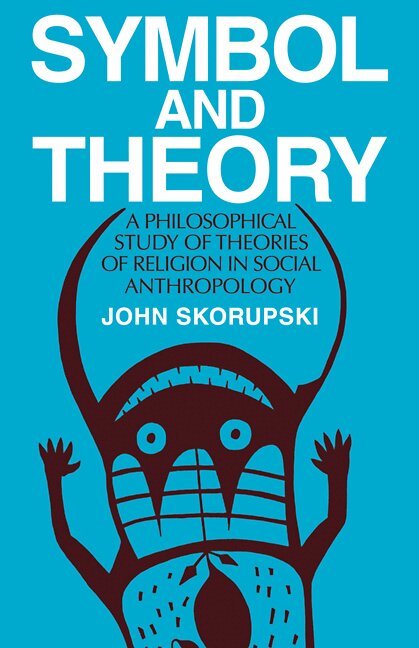
Anthropologists have always been concerned with the difference between traditional (or 'primitive') and scientific modes of thought and with the relationships between magic, religion and science. John Skorupski distinguishes two broadly opposed approaches to these problems: the 'intellectualist' regards primitive systems of thought and actions as cosmologies, comparable to scientific theory, which emerge and persist as attempts to control the natural world; the 'symbolist' regards them as essentially representative or expressive of the pattern of social relations in the culture in which they exist. Dr Skorupski considers in particular the notions of ritual, ceremony and symbol. He shows how their understanding involves and suggests more general philosophical problems of relativism, interpretation, translation, and the connections between belief and action. These are difficult and important problems and require an unusual combination of imagination and interdisciplinary exercise. This book is intended especially for philosophers, social anthropologists, social theorists and students of comparative religion.
460 kr
Skickas inom 7-10 vardagar
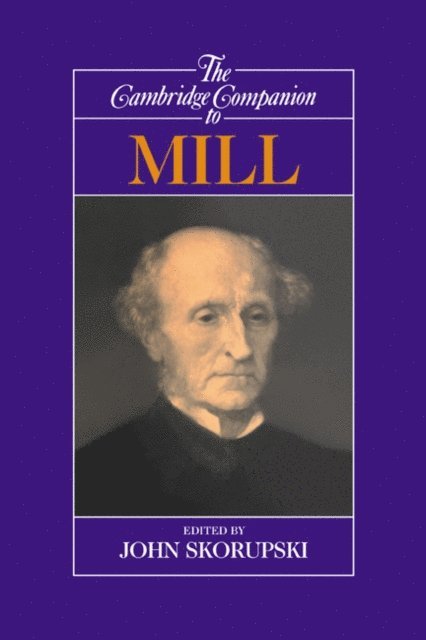
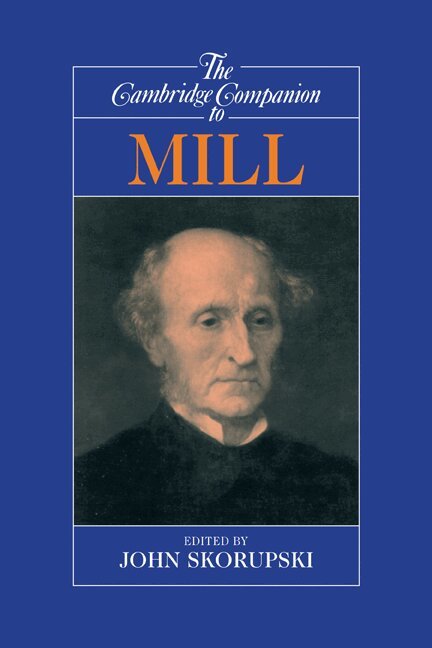
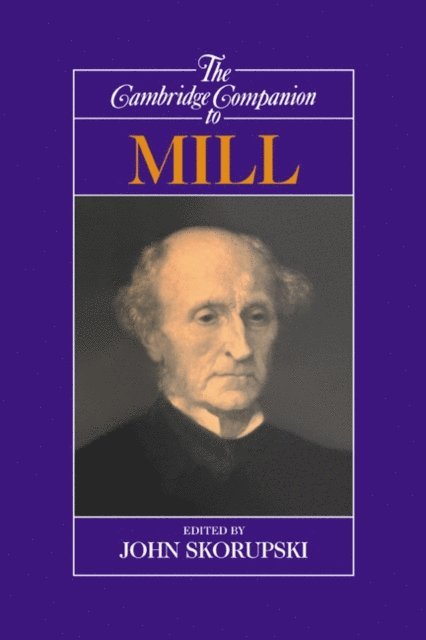
John Stuart Mill (1806-73) ranks among the very greatest thinkers of the nineteenth century. His impact through his books, journalism, correspondence, and political activity on modern culture and thought has been immense, and his continuing importance for contemporary philosophy and social thought is widely recognised. This Companion furnishes the reader with a systematic and fully up-to-date account of the many facets of Mill's thought and influence. New readers will find this the most convenient and accessible guide to Mill currently available. Advanced students and specialists will find a conspectus of recent developments in the interpretation of Mill.