John Viega – författare
631 kr
Skickas inom 3-6 vardagar
Publisher's Note: Products purchased from Third Party sellers are not guaranteed by the publisher for quality, authenticity, or access to any online entitlements included with the product.
Eradicate the Most Notorious Insecure Designs and Coding Vulnerabilities
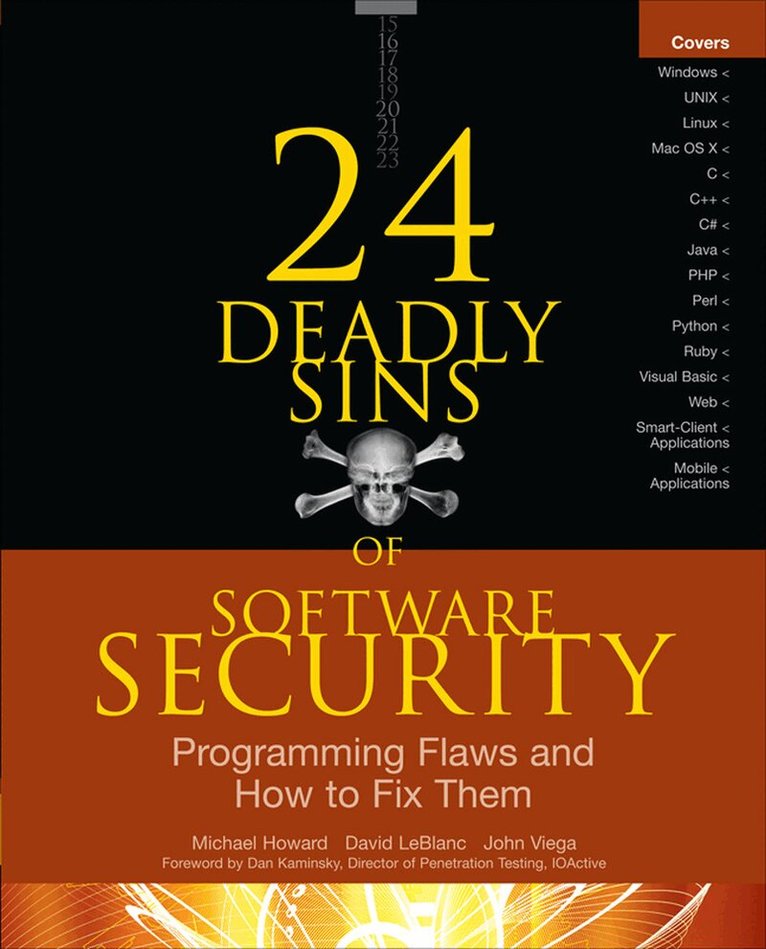
Fully updated to cover the latest security issues, 24 Deadly Sins of Software Security reveals the most common design and coding errors and explains how to fix each one-or better yet, avoid them from the start. Michael Howard and David LeBlanc, who teach Microsoft employees and the world how to secure code, have partnered again with John Viega, who uncovered the original 19 deadly programming sins. They have completely revised the book to address the most recent vulnerabilities and have added five brand-new sins. This practical guide covers all platforms, languages, and types of applications. Eliminate these security flaws from your code:
SQL injection Web server- and client-related vulnerabilitiesUse of magic URLs, predictable cookies, and hidden form fieldsBuffer overrunsFormat string problemsInteger overflowsC++ catastrophesInsecure exception handlingCommand injectionFailure to handle errorsInformation leakageRace conditionsPoor usabilityNot updating easilyExecuting code with too much privilegeFailure to protect stored dataInsecure mobile codeUse of weak password-based systemsWeak random numbersUsing cryptography incorrectlyFailing to protect network trafficImproper use of PKITrusting network name resolution831 kr
Läs direkt efter köp
"What makes this book so important is that it reflects the experiences of two of the industry''s most experienced hands at getting real-world engineers to understand just what they''re being asked for when they''re asked to write secure code. The book reflects Michael Howard''s and David LeBlanc''s experience in the trenches working with developers years after code was long since shipped, informing them of problems." --From the Foreword by Dan Kaminsky, Director of Penetration Testing, IOActive
Eradicate the Most Notorious Insecure Designs and Coding Vulnerabilities
Fully updated to cover the latest security issues, 24 Deadly Sins of Software Security reveals the most common design and coding errors and explains how to fix each one-or better yet, avoid them from the start. Michael Howard and David LeBlanc, who teach Microsoft employees and the world how to secure code, have partnered again with John Viega, who uncovered the original 19 deadly programming sins. They have completely revised the book to address the most recent vulnerabilities and have added five brand-new sins. This practical guide covers all platforms, languages, and types of applications. Eliminate these security flaws from your code:
SQL injection Web server- and client-related vulnerabilitiesUse of magic URLs, predictable cookies, and hidden form fieldsBuffer overrunsFormat string problemsInteger overflowsC++ catastrophesInsecure exception handlingCommand injectionFailure to handle errorsInformation leakageRace conditionsPoor usabilityNot updating easilyExecuting code with too much privilegeFailure to protect stored dataInsecure mobile codeUse of weak password-based systemsWeak random numbersUsing cryptography incorrectlyFailing to protect network trafficImproper use of PKITrusting network name resolution568 kr
339 kr
Läs direkt efter köp
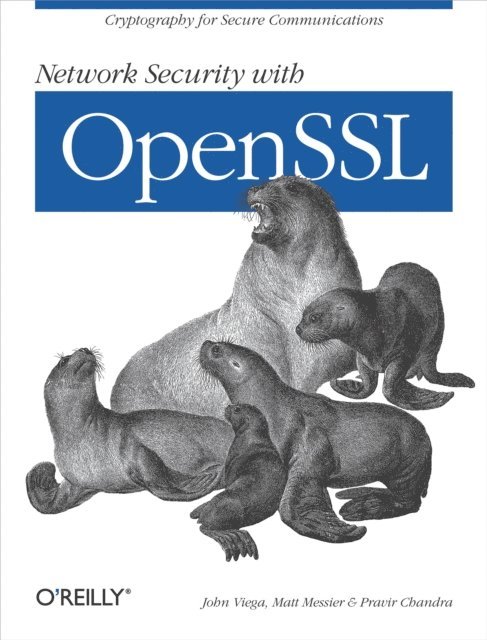
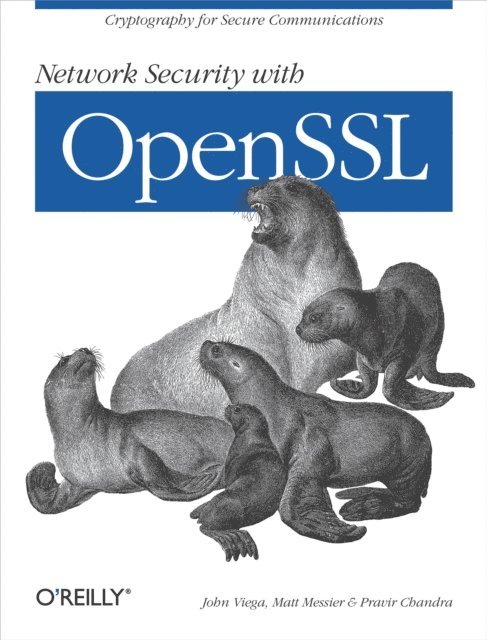
Most applications these days are at least somewhat network aware, but how do you protect those applications against common network security threats? Many developers are turning to OpenSSL, an open source version of SSL/TLS, which is the most widely used protocol for secure network communications.The OpenSSL library is seeing widespread adoption for web sites that require cryptographic functions to protect a broad range of sensitive information, such as credit card numbers and other financial transactions. The library is the only free, full-featured SSL implementation for C and C++, and it can be used programmatically or from the command line to secure most TCP-based network protocols.Network Security with OpenSSL enables developers to use this protocol much more effectively. Traditionally, getting something simple done in OpenSSL could easily take weeks. This concise book gives you the guidance you need to avoid pitfalls, while allowing you to take advantage of the library?s advanced features. And, instead of bogging you down in the technical details of how SSL works under the hood, this book provides only the information that is necessary to use OpenSSL safely and effectively. In step-by-step fashion, the book details the challenges in securing network communications, and shows you how to use OpenSSL tools to best meet those challenges.As a system or network administrator, you will benefit from the thorough treatment of the OpenSSL command-line interface, as well as from step-by-step directions for obtaining certificates and setting up your own certification authority. As a developer, you will further benefit from the in-depth discussions and examples of how to use OpenSSL in your own programs. Although OpenSSL is written in C, information on how to use OpenSSL with Perl, Python and PHP is also included.OpenSSL may well answer your need to protect sensitive data. If that?s the case, Network Security with OpenSSL is the only guide available on the subject.
634 kr
Läs direkt efter köp
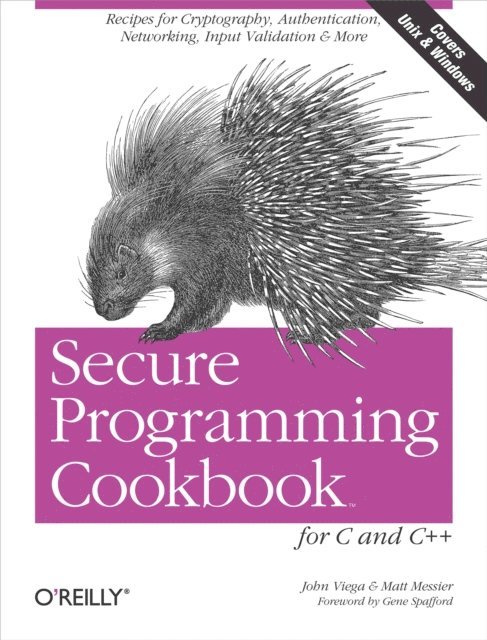
Password sniffing, spoofing, buffer overflows, and denial of service: these are only a few of the attacks on today''s computer systems and networks. At the root of this epidemic is poorly written, poorly tested, and insecure code that puts everyone at risk. Clearly, today''s developers need help figuring out how to write code that attackers won''t be able to exploit. But writing such code is surprisingly difficult.Secure Programming Cookbook for C and C++ is an important new resource for developers serious about writing secure code. It contains a wealth of solutions to problems faced by those who care about the security of their applications. It covers a wide range of topics, including safe initialization, access control, input validation, symmetric and public key cryptography, cryptographic hashes and MACs, authentication and key exchange, PKI, random numbers, and anti-tampering. The rich set of code samples provided in the book''s more than 200 recipes will help programmers secure the C and C++ programs they write for both Unix® (including Linux®) and Windows® environments. Readers will learn:
How to avoid common programming errors, such as buffer overflows, race conditions, and format string problemsHow to properly SSL-enable applicationsHow to create secure channels for client-server communication without SSLHow to integrate Public Key Infrastructure (PKI) into applicationsBest practices for using cryptography properlyTechniques and strategies for properly validating input to programsHow to launch programs securelyHow to use file access mechanisms properlyTechniques for protecting applications from reverse engineeringThe book''s web site supplements the book by providing a place to post new recipes, including those written in additional languages like Perl, Java, and Python. Monthly prizes will reward the best recipes submitted by readers.Secure Programming Cookbook for C and C++ is destined to become an essential part of any developer''s library, a code companion developers will turn to again and again as they seek to protect their systems from attackers and reduce the risks they face in today''s dangerous world.231 kr
Skickas inom 5-8 vardagar
251 kr
Läs direkt efter köp
If you think computer security has improved in recent years, The Myths of Security will shake you out of your complacency. Longtime security professional John Viega, formerly Chief Security Architect at McAfee, reports on the sorry state of the industry, and offers concrete suggestions for professionals and individuals confronting the issue. Why is security so bad? With many more people online than just a few years ago, there are more attackers -- and they''re truly motivated. Attacks are sophisticated, subtle, and harder to detect than ever. But, as Viega notes, few people take the time to understand the situation and protect themselves accordingly. This book tells you:
Why it''s easier for bad guys to "own" your computer than you thinkWhy anti-virus software doesn''t work well -- and one simple way to fix itWhether Apple OS X is more secure than WindowsWhat Windows needs to do betterHow to make strong authentication pervasiveWhy patch management is so badWhether there''s anything you can do about identity theftFive easy steps for fixing application security, and moreProvocative, insightful, and always controversial, The Myths of Security not only addresses IT professionals who deal with security issues, but also speaks to Mac and PC users who spend time online.
339 kr
Läs direkt efter köp
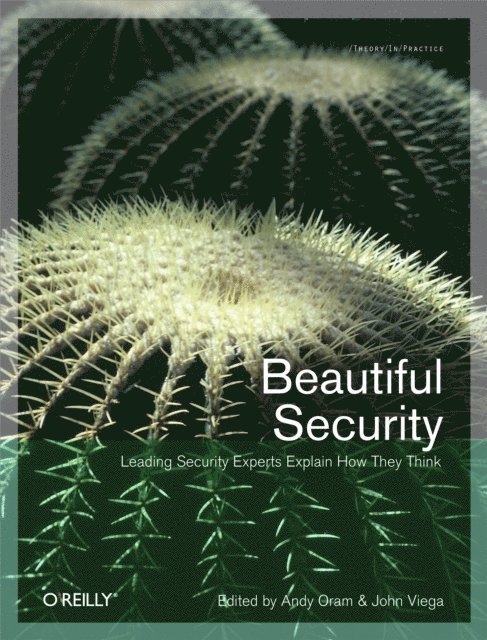
Although most people don''t give security much attention until their personal or business systems are attacked, this thought-provoking anthology demonstrates that digital security is not only worth thinking about, it''s also a fascinating topic. Criminals succeed by exercising enormous creativity, and those defending against them must do the same. Beautiful Security explores this challenging subject with insightful essays and analysis on topics that include:
The underground economy for personal information: how it works, the relationships among criminals, and some of the new ways they pounce on their preyHow social networking, cloud computing, and other popular trends help or hurt our online securityHow metrics, requirements gathering, design, and law can take security to a higher levelThe real, little-publicized history of PGPThis book includes contributions from:
Peiter "Mudge" ZatkoJim StickleyElizabeth NicholsChenxi WangEd BellisBen EdelmanPhil Zimmermann and Jon CallasKathy WangMark CurpheyJohn McManusJames RouthRandy V. SabettAnton ChuvakinGrant Geyer and Brian DunphyPeter WaynerMichael Wood and Fernando FranciscoAll royalties will be donated to the Internet Engineering Task Force (IETF).
317 kr
Läs direkt efter köp
Most applications these days are at least somewhat network aware, but how do you protect those applications against common network security threats? Many developers are turning to OpenSSL, an open source version of SSL/TLS, which is the most widely used protocol for secure network communications.The OpenSSL library is seeing widespread adoption for web sites that require cryptographic functions to protect a broad range of sensitive information, such as credit card numbers and other financial transactions. The library is the only free, full-featured SSL implementation for C and C++, and it can be used programmatically or from the command line to secure most TCP-based network protocols.Network Security with OpenSSL enables developers to use this protocol much more effectively. Traditionally, getting something simple done in OpenSSL could easily take weeks. This concise book gives you the guidance you need to avoid pitfalls, while allowing you to take advantage of the library?s advanced features. And, instead of bogging you down in the technical details of how SSL works under the hood, this book provides only the information that is necessary to use OpenSSL safely and effectively. In step-by-step fashion, the book details the challenges in securing network communications, and shows you how to use OpenSSL tools to best meet those challenges.As a system or network administrator, you will benefit from the thorough treatment of the OpenSSL command-line interface, as well as from step-by-step directions for obtaining certificates and setting up your own certification authority. As a developer, you will further benefit from the in-depth discussions and examples of how to use OpenSSL in your own programs. Although OpenSSL is written in C, information on how to use OpenSSL with Perl, Python and PHP is also included.OpenSSL may well answer your need to protect sensitive data. If that?s the case, Network Security with OpenSSL is the only guide available on the subject.
317 kr
Läs direkt efter köp
Although most people don''t give security much attention until their personal or business systems are attacked, this thought-provoking anthology demonstrates that digital security is not only worth thinking about, it''s also a fascinating topic. Criminals succeed by exercising enormous creativity, and those defending against them must do the same. Beautiful Security explores this challenging subject with insightful essays and analysis on topics that include:
The underground economy for personal information: how it works, the relationships among criminals, and some of the new ways they pounce on their preyHow social networking, cloud computing, and other popular trends help or hurt our online securityHow metrics, requirements gathering, design, and law can take security to a higher levelThe real, little-publicized history of PGPThis book includes contributions from:
Peiter "Mudge" ZatkoJim StickleyElizabeth NicholsChenxi WangEd BellisBen EdelmanPhil Zimmermann and Jon CallasKathy WangMark CurpheyJohn McManusJames RouthRandy V. SabettAnton ChuvakinGrant Geyer and Brian DunphyPeter WaynerMichael Wood and Fernando FranciscoAll royalties will be donated to the Internet Engineering Task Force (IETF).
280 kr
Läs direkt efter köp
If you think computer security has improved in recent years, The Myths of Security will shake you out of your complacency. Longtime security professional John Viega, formerly Chief Security Architect at McAfee, reports on the sorry state of the industry, and offers concrete suggestions for professionals and individuals confronting the issue. Why is security so bad? With many more people online than just a few years ago, there are more attackers -- and they''re truly motivated. Attacks are sophisticated, subtle, and harder to detect than ever. But, as Viega notes, few people take the time to understand the situation and protect themselves accordingly. This book tells you:
Why it''s easier for bad guys to "own" your computer than you thinkWhy anti-virus software doesn''t work well -- and one simple way to fix itWhether Apple OS X is more secure than WindowsWhat Windows needs to do betterHow to make strong authentication pervasiveWhy patch management is so badWhether there''s anything you can do about identity theftFive easy steps for fixing application security, and moreProvocative, insightful, and always controversial, The Myths of Security not only addresses IT professionals who deal with security issues, but also speaks to Mac and PC users who spend time online.