John W. Hessler - Böcker
Visar alla böcker från författaren John W. Hessler. Handla med fri frakt och snabb leverans.
3 produkter
3 produkter
387 kr
Tillfälligt slut
'The Naming of America' features a facsimile of the 1507 World Map by Martin Waldseemuller - the first map ever to display the name America - and tells the fascinating story behind its creation and rediscovery. It also includes a completely new translation and commentary to the 'Cosmographiae Introductio', the seminal cartographic text which originally accompanied the World Map. 'A Renaissance Globemaker's Toolbox' is the first scholarly publication and English translation of the Schoner Sammelband, a collection of maps and notes made by the Nuremberg astronomer and mathematician Johannes Schoner (d. 1543), which included the Waldseemuller World Maps and a set of celestial globe gores of Schoner's design. Author John Hessler discusses the history of these materials, some of the most important in the history of cartography, and reveals the concerns that fuelled cartographic development during this critical period in the history of science and exploration.
306 kr
Skickas inom 7-10 vardagar
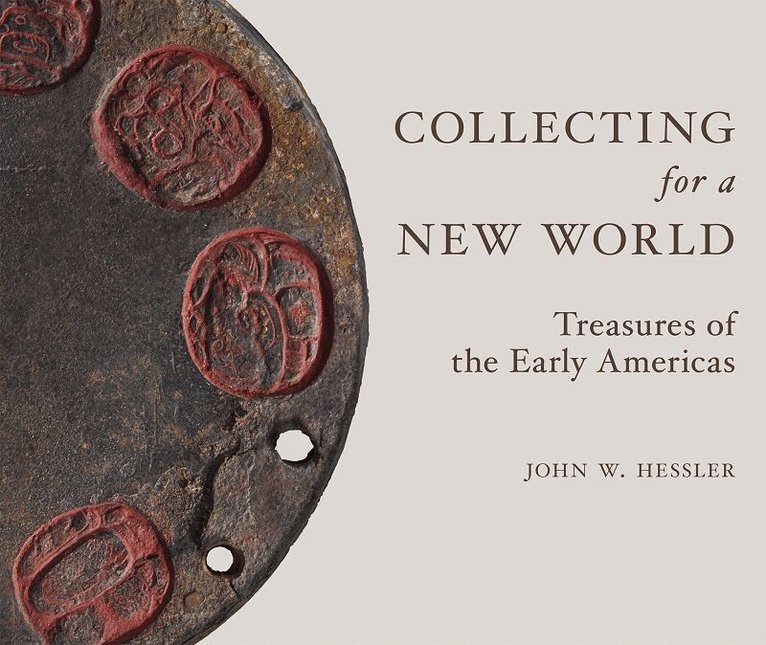
A completely new and revealing story of Pre- and Post-Columbian art as told through over sixty extraordinary artefacts now in the Jay I. Kislak Collection at the Library of Congress. The history of the early Americas is a story of before and after, defined and divided by a pivotal moment of contact between two distinct cultures. On the European side it is a tale of exploration, high-stakes treasure-seeking, and conquest. For indigenous Americans - including the Maya, the Nahua, the Taino, and the Wari - it is the beginning of the end, a violent saga of disease, enslavement, and the loss of languages and rituals. This collision of cultures comes to life in the manuscripts, maps, archaeological objects, and rare books that make up the collection of early American treasures in the Library of Congress in Washington, DC. Collecting for a New World: Treasures of the Early Americas relates these encounters through vivid illustrations and interpretive descriptions of more than sixty rare and priceless items. In describing for the first time the journeys of the objects themselves - via African shipwrecks, secret meetings on airstrips, discoveries in castle libraries, and journeys into unknown archaeological sites hidden deep in the jungles of Guatemala - curator John Hessler reveals the role played by private collectors, whose knowledge, vision, and - in many cases, philanthropy - contribute so significantly to the collective understanding and interpretation of history and culture. AUTHOR: When not searching through Maya ruins in Central America, climbing in the Alps or mountain biking through some jungle, John Hessler is the Curator of the Jay I. Kislak Collection of the Archaeology and History of the Early Americas at the Library of Congress and a Lecturer in Quantum Materials, Mechanics and Computing, in the Graduate School of Advanced Studies at Johns Hopkins University. Founder of the Archeo/LAB, his current teaching and research focuses on the theoretical materials science of archaeological remains, the topological structure of ancient DNA, and the quantum properties of ancient nano-materials like Maya Blue. A Fellow of the Royal Geographical Society in London, he is the co-director of the Mesoamerican Language, Theory and Decipherment Seminars, and is also on the faculty of the Rare Book School at the University of Virginia where he teaches a seminar called the History & Construction of the Mesoamerican Codex. The author of more than 100 books and articles, including, The New York Times bestseller MAP: Exploring the World, his research and writing has been featured in many national media outlets including Discover, Wired, CBS News, The New York Times, The Washington Post and most recently on NPRs All Things Considered. 100 colour illustrations
366 kr
Skickas inom 7-10 vardagar
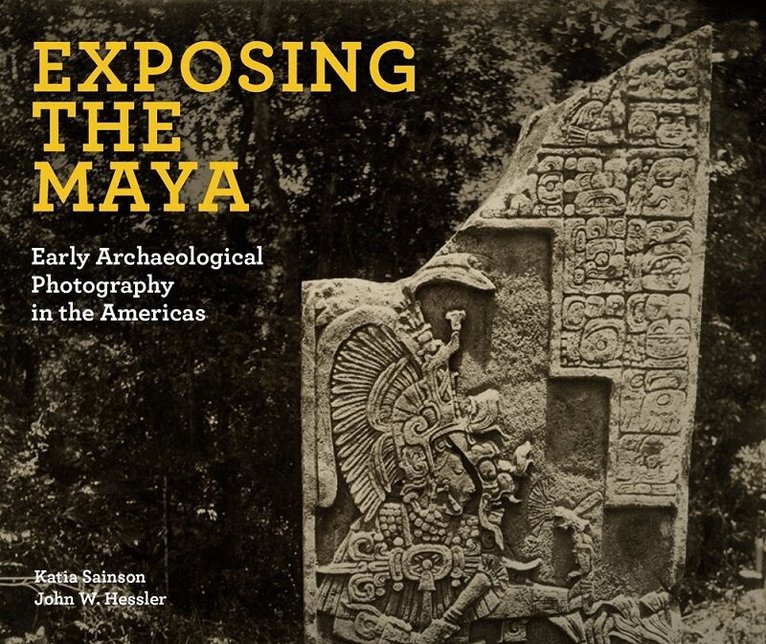
Exposing the Maya focuses on the works of 19th-century photographers Désiré Charnay, Alice and Augustus Le Plongeon, Teobert Maler, Alfred Maudslay and Adela Breton, all of whom were masters of their craft and travelled extensively to sites in Mexico and Central America. The over 100 selected images in this volume, together with nearly 40 additional contextual images featuring sketches from travel journals, hand-coloured drawings, prints, and maps, are combined with the photographers’ own words found in their published writings, journals and letters to provide insight into their methods, context for their images, and capture the realities of field work in Mesoamerica. Accessible and highly illustrated, Exposing the Maya features rare and important early photographs of the archaeological ruins and remains of the great Mayan and Aztec civilizations of Mesoamerica, from an age that witnessed the evolution of photographic techniques and brought to life the long-faded murals and decoration of these ruins. This is an absorbing story of incredible journeys, the challenging conditions under which these pioneering photographers produced their images, and how they perceived the remnants of these ancient indigenous cultures in modern-day Mexico, Guatemala, and Honduras.