Jon Cowans - Böcker
Visar alla böcker från författaren Jon Cowans. Handla med fri frakt och snabb leverans.
7 produkter
7 produkter
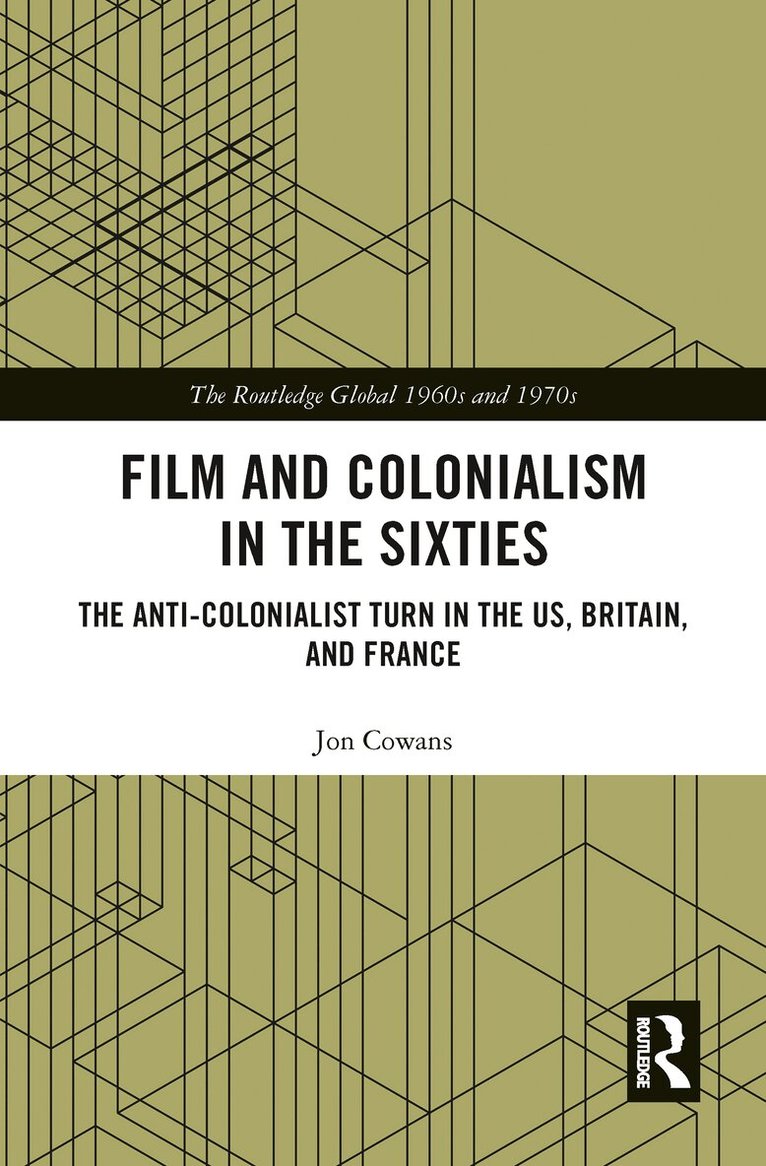
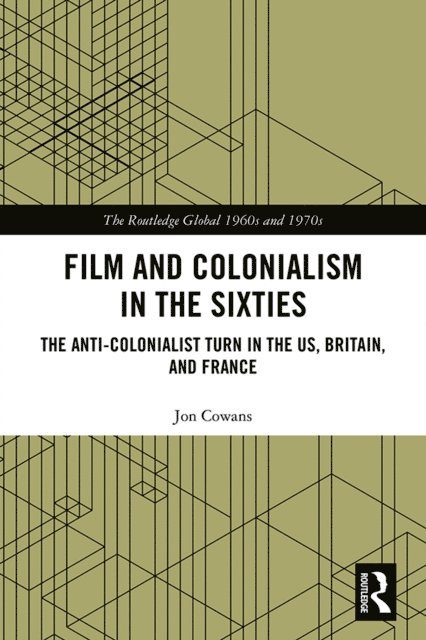
Film and Colonialism in the Sixties
The Anti-Colonialist Turn in the US, Britain, and France
Inbunden, Engelska, 2018
2 176 kr
Skickas inom 10-15 vardagar
Relations between Western nations and their colonial subjects changed dramatically in the second half of the twentieth century. As nearly all of the West’s colonies gained their independence by 1975, attitudes toward colonialism in the West also changed, and terms such as empire and colonialism, once used with pride, became strongly negative. While colonialism has become discredited, precisely when or how that happened remains unclear. This book explores changing Western attitudes toward colonialism and decolonization by analyzing American, British, and French popular cinema and its reception from 1960 to 1973.
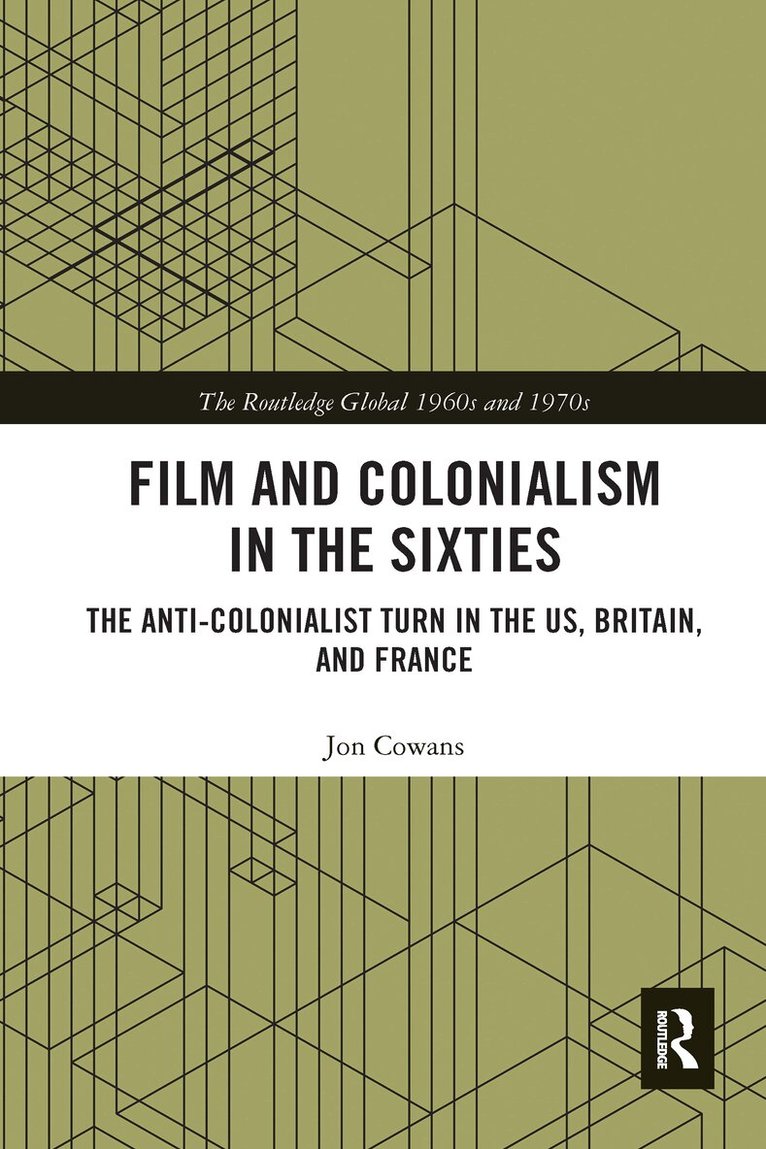
Film and Colonialism in the Sixties
The Anti-Colonialist Turn in the US, Britain, and France
Häftad, Engelska, 2020
651 kr
Skickas inom 10-15 vardagar
Relations between Western nations and their colonial subjects changed dramatically in the second half of the twentieth century. As nearly all of the West’s colonies gained their independence by 1975, attitudes toward colonialism in the West also changed, and terms such as empire and colonialism, once used with pride, became strongly negative. While colonialism has become discredited, precisely when or how that happened remains unclear. This book explores changing Western attitudes toward colonialism and decolonization by analyzing American, British, and French popular cinema and its reception from 1960 to 1973.
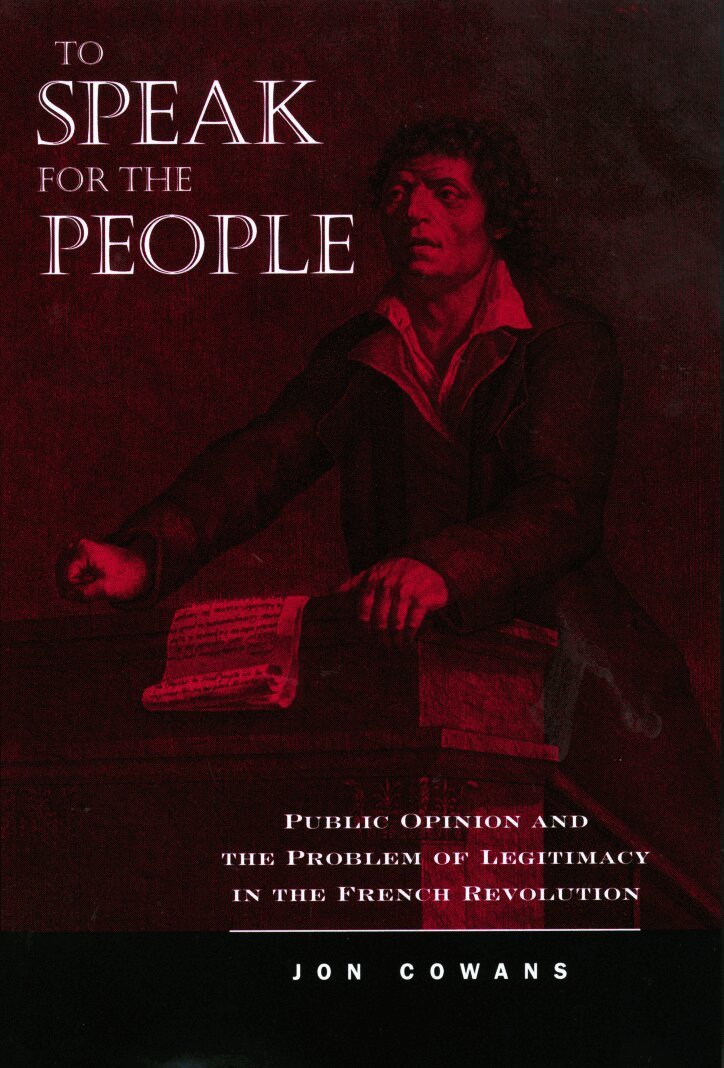
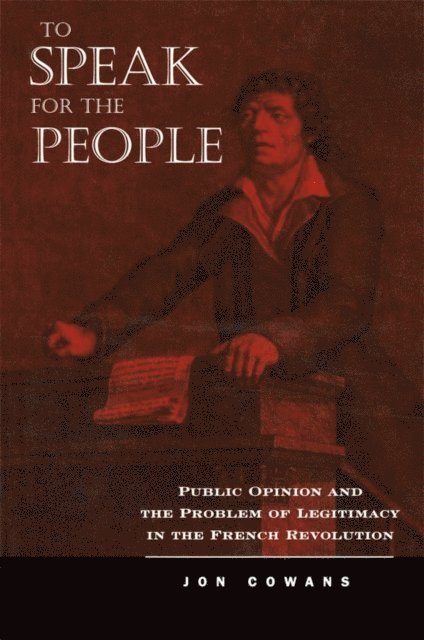
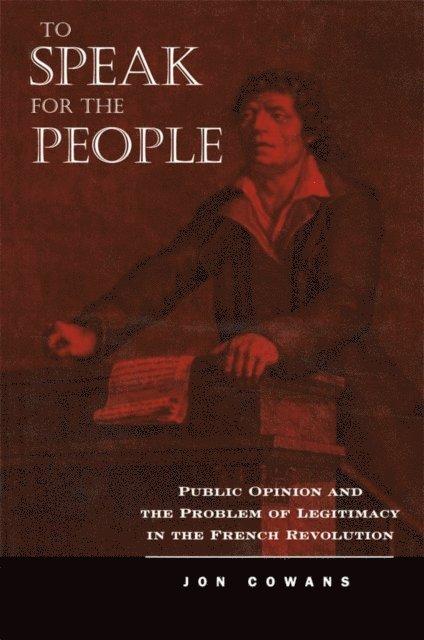
To Speak for the People
Public Opinion and the Problem of Legitimacy in the French Revolution
Inbunden, Engelska, 2001
2 176 kr
Skickas inom 10-15 vardagar
Although there is now a great deal of literature on the concept of public opinion in the 18th century France, it is almost entirely devoted to the pre-revolutionary years. No book has tackled the concept of public opinion in the French Revolution itself. To Speak for the People is a lucid and innovative study that finally fills this gap. Historian Jon Cowans adds a strong and genuinely original voice to the historical debate over the problem of legitimacy during the Revolution drawing on the works of such luminaries as Jürgen Habermas, Keith Baker, François Furet, and Nancy Fraser. He then examines the uses of terms such as public opinion, 'the public, and the people in political debates during the Revolution and analyzes those terms' changing meaning and the role they played in attempts to secure political authority. While shedding new light on the Revolution itself, the book raises broader issues by addressing the problem of legitimacy that has haunted all revolutionary and democratic governments throughout the modern period. Jon Cowans is a graduate of Georgetown University's School of Foreign Service. He received his Ph.D. in History at Stanford University. He has published articles on French political culture, cultural politics, and memory in French Historical Studies , the Journal of Contemporary History , and History and Memory . He teaches in the History Department of Rutgers University and lives in Brooklyn, New York.
To Speak for the People
Public Opinion and the Problem of Legitimacy in the French Revolution
Häftad, Engelska, 2001
595 kr
Skickas inom 10-15 vardagar
Although there is now a great deal of literature on the concept of public opinion in the 18th century France, it is almost entirely devoted to the pre-revolutionary years. No book has tackled the concept of public opinion in the French Revolution itself. To Speak for the People is a lucid and innovative study that finally fills this gap. Historian Jon Cowans adds a strong and genuinely original voice to the historical debate over the problem of legitimacy during the Revolution drawing on the works of such luminaries as Jürgen Habermas, Keith Baker, François Furet, and Nancy Fraser. He then examines the uses of terms such as public opinion, 'the public, and the people in political debates during the Revolution and analyzes those terms' changing meaning and the role they played in attempts to secure political authority. While shedding new light on the Revolution itself, the book raises broader issues by addressing the problem of legitimacy that has haunted all revolutionary and democratic governments throughout the modern period. Jon Cowans is a graduate of Georgetown University's School of Foreign Service. He received his Ph.D. in History at Stanford University. He has published articles on French political culture, cultural politics, and memory in French Historical Studies , the Journal of Contemporary History , and History and Memory . He teaches in the History Department of Rutgers University and lives in Brooklyn, New York.
324 kr
Skickas inom 10-15 vardagar
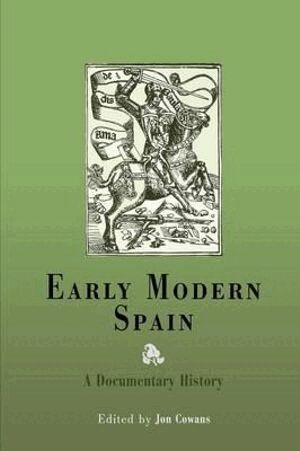
Spain as a political entity can be traced to the joining of the two largest Iberian kingdoms through the marriage of Ferdinand of Aragon and Isabella of Castile in 1469. Over the course of the next centuries, Spain rose to European dominance, presided over the world's largest empire, and saw its power and wealth decline until it was finally conquered and occupied by Napoleon in the early nineteenth century. Early Modern Spain: A Documentary History, the first broad-ranging collection in English of writings from the entire period from 1469 to the end of the eighteenth century, comprises 61 documents carefully selected and introduced by Jon Cowans.Beginning with the marriage contract of Ferdinand and Isabella, the volume unveils the rich and turbulent history of early modern Spain through contemporary writings, including documents on the expulsion of the Jews in 1492, a narrative of the conquest of Mexico, accounts of the Inquisition, a profile of King Philip II, a cleric's primer on "the perfect wife," a sermon on the defeat of the "Invincible Armada" in 1588, reports of a bread riot in Seville, a royal investigation of the painter VelÁzquez, Benito FeijÓo's "defense of women" of 1737, a 1790 denunciation of bullfighting, and Charles IV's declaration of war on revolutionary France in 1793.Covering political, cultural, social, and economic history, Early Modern Spain: A Documentary History provides a valuable opportunity to explore the history of Spain through primary sources, revealing the problems and experiences of Spain's empire, tensions among ethnic groups and across regions, the place of women and minorities in Spanish society, and the outlooks and roles of Spanish artists.
379 kr
Skickas inom 10-15 vardagar
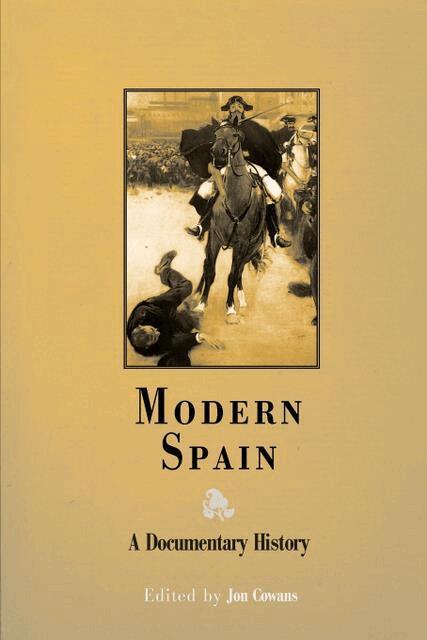
While the Civil War of 1936-39 dominated Spain's twentieth-century history, the country's fateful and bloody division into left and right had its roots in the events of the Napoleonic era. In Modern Spain: A Documentary History, the first broad-ranging collection in English of writings from this entire period, Jon Cowans presents 76 documents to trace the history of Spain as it struggled for political and social stability and justice through the nineteenth and twentieth centuries.Beginning with Napoleon's occupation of Spain in 1808, the selections include decrees of the liberal CÁdiz Cortes of 1810-14, an 1841 plea for the revival of the Catalan culture and language, an 1873 anarchist manifesto, an 1892 argument for the education of women, a Basque nationalist's 1895 diatribe against Spaniards, JosÉ Ortega y Gasset's Invertebrate Spain, General Francisco Franco's 1936 manifesto and his 1940 letter to Hitler, the Spanish bishops' 1950 press release on immorality and indecency in the mass media, King Juan Carlos's speech on the attempted coup d'État of 1981, and a 1999 report by SOS Racismo on immigration and xenophobia in contemporary Spain.Covering political, cultural, social, and economic history, Modern Spain: A Documentary History provides a valuable opportunity to explore the history of Spain through primary sources from the Second Republic, the Civil War, and the Franco dictatorship, as well as from the period of Spain's profound transformation following the ascension of King Juan Carlos in 1975.
628 kr
Skickas
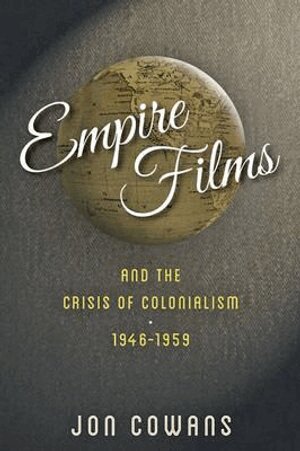
Using popular cinema from the United States, Britain, and France, Empire Films and the Crisis of Colonialism, 1946- 1959, examines postwar Western attitudes toward colonialism and race relations. Historians have written much about the high politics of decolonization but little about what ordinary citizens thought about losing their empires. Popular cinema provided the main source of images of the colonies, and, according to Jon Cowans in this far-reaching book, films depicting the excesses of empire helped Westerners come to terms with decolonization and even promoted the dismantling of colonialism around the globe. Examining more than one hundred British, French, and American films from the post-World War II era, Cowans concentrates on movies that depict interactions between white colonizers and nonwhite colonial subjects, including sexual and romantic relations.Although certain conservative films eagerly supported colonialism, Cowans argues that the more numerous "liberal colonialist" productions undermined support for key aspects of colonial rule, while a few more provocative films openly favored anticolonial movements and urged "internal decolonization" for people of color in Britain, France, and the United States. Combining new archival research on the films' production with sharp analysis of their imagery and political messages, the book also assesses their reception through box-office figures and newspaper reviews. It examines both high-profile and lesser-known films on overseas colonialism, including The King and I, Bhowani Junction, and Island in the Sun, and tackles treatments of miscegenation and "internal colonialism" that appeared in Westerns and American films like Pinky and Giant. The first truly transnational history of cinema's role in decolonization, this powerful book weaves a unified historical narrative out of the experiences of three colonial powers in diverse geographic settings.