Jon Wilson – författare
Visar alla böcker från författaren Jon Wilson. Handla med fri frakt och snabb leverans.
12 produkter
12 produkter
Inbunden, Engelska, 2026
272 kr
Kommande
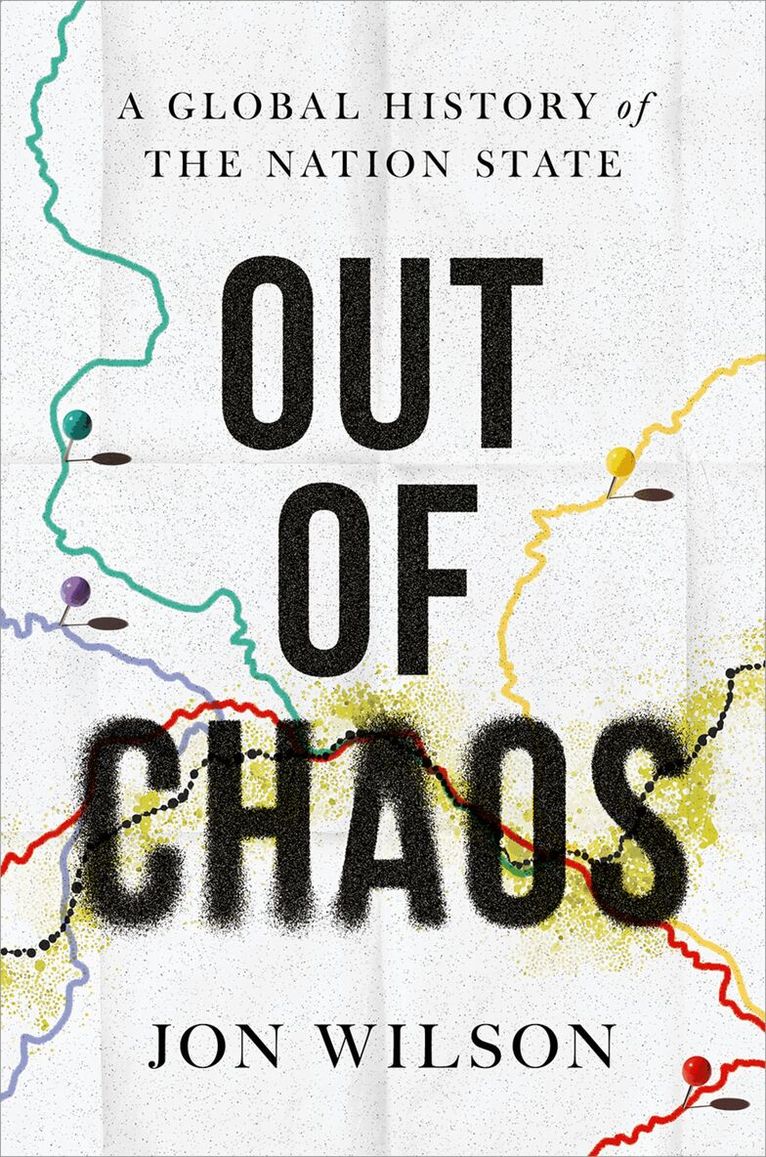
Our present-day world of nation states was born by accident. Nation-states haven't been ever present; nor were they the inevitable outcome of nationalism. Instead, from Indonesia to Iran to the United Kingdom—all new nation states in the late 1940s—they emerged out of the chaos which followed World War II.The nation state, we are told, was created in the West hundreds of years ago. It grew, so the story goes, from the steady development of national identities and as a triumphant product of Western political order and progress. Such oft-told stories are wrong. They are based on a fundamental misunderstanding of nations and nationalism, and the way in which the world we live in is organized today. In fact, our present global political order, with the nation state as its fundamental unit, is only as old as the postwar world: it emerged everywhere in the world at the same time, as the unplanned response to a moment of global crisis.Before the 1940s the world was organized into empires or federations. Few thought nations could be the basis of political order. Acclaimed historian Jon Wilson shows how the crises which followed the end of World War II up-ended common-sense ideas about how the world should be organized. In a truly global story with as much to say about what happened in Montevideo, Yogyakarta, New Delhi, and Jerusalem as New York or London, Out of Chaos shows how political leaders debating the postwar order ended up with an unexpected compromise: the partition of the people, territory, and economies of the world into nation states. It traces a truly global tale; of how ideas from Latin America were picked up in Indonesia; or of how Indian military officials shaped the fate of central Africa.Out of Chaos shows how the nation state emerged as the only form of organization political leaders from different ideological positions, from every continent, could agree on to manage the fractured, impoverished post-war world. This was not a political order created by any one power or ideology; there was never, for example, a US-led world order. The nation state was agreed by capitalist and communist states alike. The postwar world was multipolar from the start.From the middle of the twentieth century to now, nation states have been sustained by peoples' affection for the communities they live in. But the chaotic process of their emergence, with limited agreement about ideas, means other ideas about how to organize the world survive. Out of Chaos radically reframes how we think about the history of the twentieth century, showing that the conflicts of the present day are rooted in the process by which nation-states emerged from the postwar crisis.
E-bok
Engelska, 2016117 kr
Läs direkt efter köp
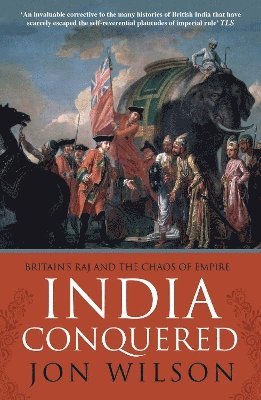
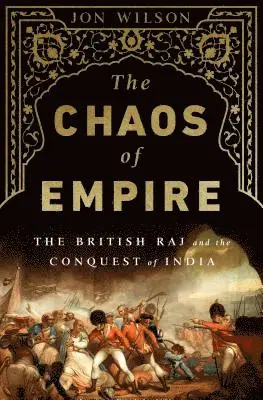
For the century and a half before the Second World War, Britain dominated the Indian subcontinent. Britain’s East India Company ruled enclaves of land in South Asia for a century and a half before that. For these 300 years, conquerors and governors projected themselves as heroes and improvers. The British public were sold an image of British authority and virtue. But beneath the veneer of pomp and splendour, British rule in India was anxious, fragile and fostered chaos. Britain’s Indian empire was built by people who wanted to make enough money to live well back in Britain, to avoid humiliation and danger, to put their narrow professional expertise into practice. The institutions they created, from law courts to railway lines, were designed to protect British power without connecting with the people they ruled. The result was a precarious regime that provided Indian society with no leadership, and which oscillated between paranoid paralysis and occasional moments of extreme violence. The lack of affection between rulers and ruled finally caused the system’s collapse. But even after its demise, the Raj lives on in the false idea of the efficacy of centralized, authoritarian power. Indians responded to the peculiar nature of British power by doing things for themselves, creating organisations and movements that created an order and prosperity of its own. India Conquered revises the way we think about nation-building as much as empire, showing how many of the institutions that shaped twentieth century India, Pakistan and Bangladesh were built in response to British power. The result is an engaging story vital for anyone who wants to understand the history of empires and the origins of contemporary South Asian society.
Inbunden, Engelska, 2024
401 kr
Skickas inom 3-6 vardagar
Inbunden, Engelska
369 kr
Skickas inom 3-6 vardagar
Inbunden, Engelska, 2008
412 kr
Skickas inom 3-6 vardagar
Inbunden, Engelska, 2026
387 kr
Kommande
Häftad, Engelska, 1999
134 kr
Skickas inom 5-8 vardagar
Häftad, Engelska, 2006
261 kr
Skickas inom 3-6 vardagar
Häftad, Engelska, 2008
312 kr
Skickas inom 3-6 vardagar
Inbunden, Engelska, 2000
270 kr
Skickas inom 5-8 vardagar
Häftad, Engelska, 2023
183 kr
Skickas inom 5-8 vardagar
Häftad, Engelska, 2025
198 kr
Skickas inom 5-8 vardagar