Jonas Cope - Böcker
Visar alla böcker från författaren Jonas Cope. Handla med fri frakt och snabb leverans.
4 produkter
4 produkter
2 169 kr
Skickas inom 3-6 vardagar
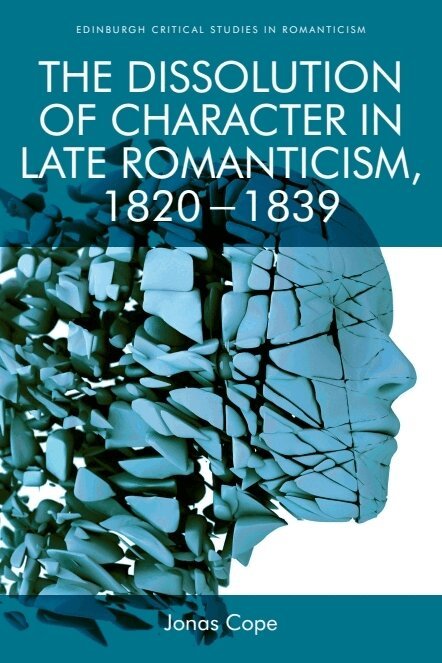
Restructures and revitalises late Romantic literature as a movement fascinated with competing claims about the reality and knowability of characterThe idea of character that many of us still take for granted whether considered in print as an object of representation, or in life as a congenital 'bias' or an acquirable moral possession is the shared concern of a multidisciplinary debate in reform-era Britain. This book argues for the independent merits of several lesser-known works written in England and Scotland during the 1820s and 1830s, recovering in these works a sustained ideological engagement with the ever-slippery concept of character. 'The Dissolution of Character in Late Romanticism' studies texts written by contemporary poets, novelists, essayists, journalists, philosophers, phrenologists, sociologists, gossip-mongers and anonymous correspondents. Its main authors of interest include David Hume, Walter Scott, Charles Lamb, William Hazlitt, Hartley Coleridge, Letitia Landon, Thomas Love Peacock and Thomas Lovell Beddoes.With a fresh, interdisciplinary approach, this original intervention in Romantic-era scholarship throws character into relief as an especially problematic concept, not only for the poststructuralist critics who study late Romantic writers, but also for the writers themselves. It changes the ways in which literary scholarship has thought about the development of character discourse in the first half of the nineteenth century.Key FeaturesDescribes a synthesis by which debates in many disciplines (novel-writing, periodical-writing, philosophy, phrenology, sociology, medicine, ethics) are distilled into the concept of character associated with literary realismMoves a relatively eclectic group of writers to the forefront of a literary culture traditionally narrowed to focus on Lord Byron, Percy Shelley, John Keats and their legaciesEstablishes a more comprehensive understanding of late Romantic literary networks by pairing authors rarely studied together (such as William Hazlitt and Letitia Landon)
635 kr
Skickas inom 3-6 vardagar
Restructures and revitalises late Romantic literature as a movement fascinated with competing claims about the reality and knowability of characterThe idea of character that many of us still take for granted – whether considered in print as an object of representation, or in life as a congenital ‘bias’ or an acquirable moral possession – is the shared concern of a multidisciplinary debate in reform-era Britain. This book argues for the independent merits of several lesser-known works written in England and Scotland during the 1820s and 1830s, recovering in these works a sustained ideological engagement with the ever-slippery concept of character. The Dissolution of Character in Late Romanticism studies texts written by contemporary poets, novelists, essayists, journalists, philosophers, phrenologists, sociologists, gossip-mongers and anonymous correspondents. Its main authors of interest include David Hume, Walter Scott, Charles Lamb, William Hazlitt, Hartley Coleridge, Letitia Landon, Thomas Love Peacock and Thomas Lovell Beddoes.With a fresh, interdisciplinary approach, this original intervention in Romantic-era scholarship throws character into relief as an especially problematic concept, not only for the poststructuralist critics who study late Romantic writers, but also for the writers themselves. It changes the ways in which literary scholarship has thought about the development of character discourse in the first half of the nineteenth century.Key FeaturesDescribes a synthesis by which debates in many disciplines (novel-writing, periodical-writing, philosophy, phrenology, sociology, medicine, ethics) are distilled into the concept of character associated with literary realismMoves a relatively eclectic group of writers to the forefront of a literary culture traditionally narrowed to focus on Lord Byron, Percy Shelley, John Keats and their legaciesEstablishes a more comprehensive understanding of late Romantic literary networks by pairing authors rarely studied together (such as William Hazlitt and Letitia Landon)
582 kr
Skickas inom 7-10 vardagar
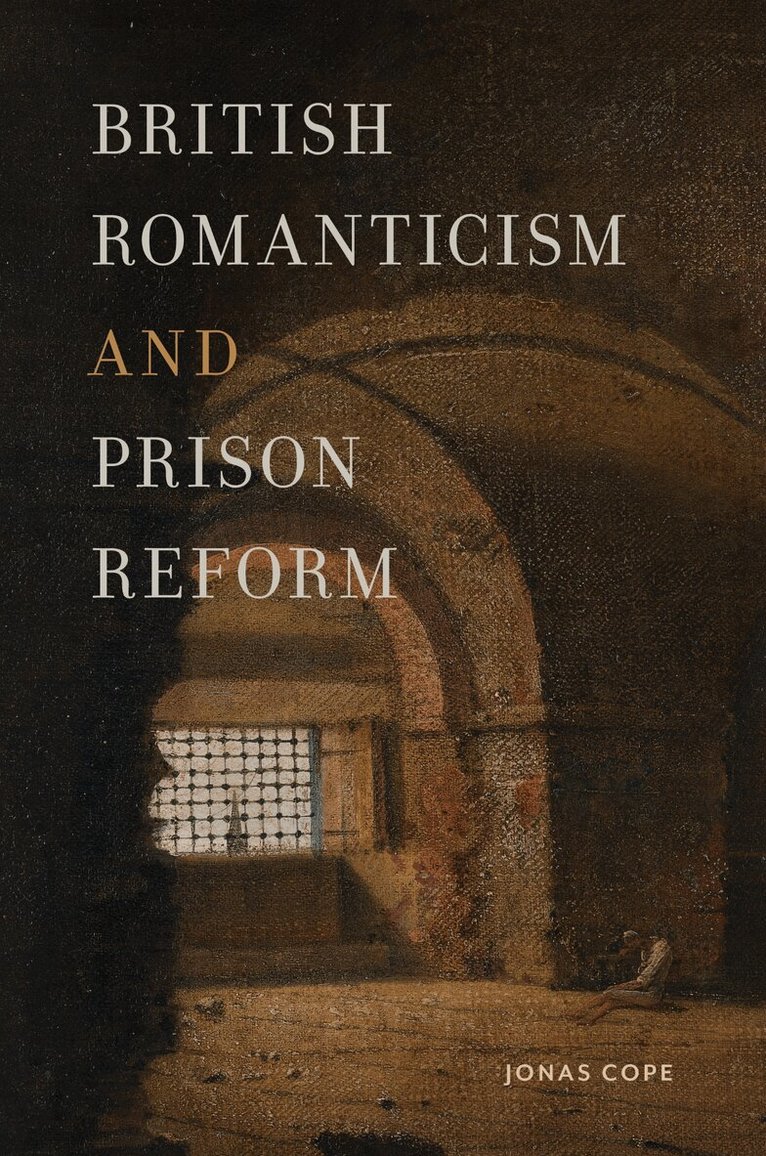
In eighteenth-century Britain, criminals were routinely whipped, branded, hanged, or transported to America. Only in the last quarter of the century-with the War of American Independence and legal and sociopolitical challenges to capital punishment-did the criminal justice system change, resulting in the reformed prison, or penitentiary, meant to educate, rehabilitate, and spiritualize even hardened felons. This volume is the first to explore the relationship between historical penal reform and Romantic-era literary texts by luminaries such as Godwin, Keats, Byron, and Austen. The works examined here treat incarceration as ambiguous: prison walls oppress and reinforce the arbitrary power of legal structures but can also heighten meditation, intensify the imagination, and awaken the conscience. Jonas Cope skillfully traces the important ideological work these texts attempt: to reconcile a culture devoted to freedom with the birth of the modern prison system that presents punishment as a form of rehabilitation. Published by Bucknell University Press. Distributed worldwide by Rutgers University Press.
1 820 kr
Skickas inom 7-10 vardagar
In eighteenth-century Britain, criminals were routinely whipped, branded, hanged, or transported to America. Only in the last quarter of the century-with the War of American Independence and legal and sociopolitical challenges to capital punishment-did the criminal justice system change, resulting in the reformed prison, or penitentiary, meant to educate, rehabilitate, and spiritualize even hardened felons. This volume is the first to explore the relationship between historical penal reform and Romantic-era literary texts by luminaries such as Godwin, Keats, Byron, and Austen. The works examined here treat incarceration as ambiguous: prison walls oppress and reinforce the arbitrary power of legal structures but can also heighten meditation, intensify the imagination, and awaken the conscience. Jonas Cope skillfully traces the important ideological work these texts attempt: to reconcile a culture devoted to freedom with the birth of the modern prison system that presents punishment as a form of rehabilitation. Published by Bucknell University Press. Distributed worldwide by Rutgers University Press.