Jonas Pontusson – författare
Visar alla böcker från författaren Jonas Pontusson. Handla med fri frakt och snabb leverans.
10 produkter
10 produkter
E-bok
PDF, Engelska, 2022333 kr
Läs direkt efter köp
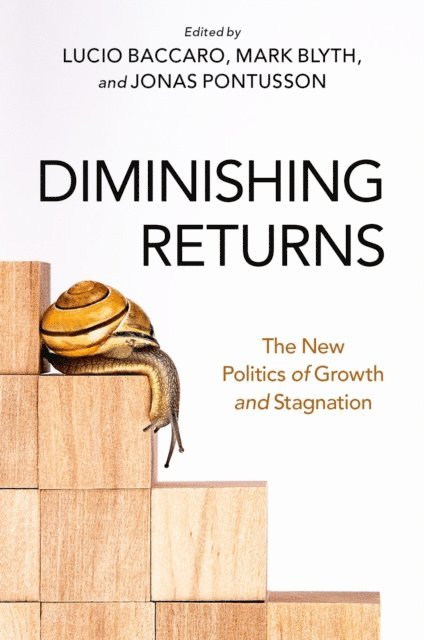
A set of state of the art empirical analyses at the country, regional, and global level that work from a new theoretical framework that analyzes the politics of growth and stagnation. As highlighted by the recent debate on ''secular stagnation,'' economic growth has slowed down considerably, and this has given rise to a host of new problems, from financial instability to the collapse of mainstream parties. What happens when growth?the main mechanism of capitalist legitimation?is harder to come by and less broadly shared? And how should we think about capitalist diversity in the context of global stagnation? In Diminishing Returns, Lucio Baccaro, Mark Blyth, and Jonas Pontusson address these questions by bringing together a number of comparative and international political economists with expertise across many different countries and regions. Going beyond the methodological nationalism common in most comparative research, each author departs from a common theoretical framework, the Growth Model Perspective, and contributes to develop it further. The outcome is a new theoretical framework to help social scientists, policymakers, and opinion makers, understand the politics of growth and stagnation, which offers state of the art empirical analyses at the country, regional, and global level.
E-bok
Engelska, 2022333 kr
Läs direkt efter köp
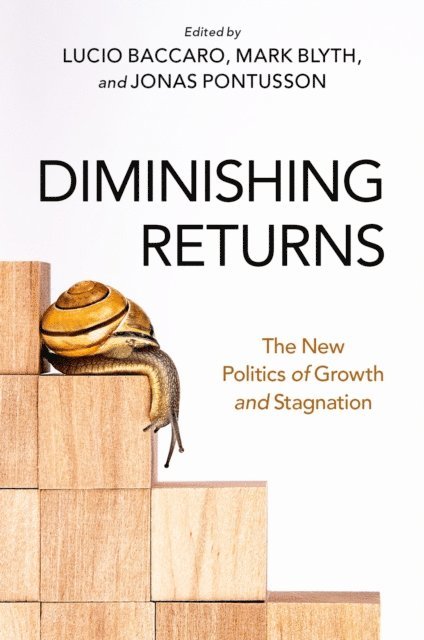
A set of state of the art empirical analyses at the country, regional, and global level that work from a new theoretical framework that analyzes the politics of growth and stagnation. As highlighted by the recent debate on ''secular stagnation,'' economic growth has slowed down considerably, and this has given rise to a host of new problems, from financial instability to the collapse of mainstream parties. What happens when growth?the main mechanism of capitalist legitimation?is harder to come by and less broadly shared? And how should we think about capitalist diversity in the context of global stagnation? In Diminishing Returns, Lucio Baccaro, Mark Blyth, and Jonas Pontusson address these questions by bringing together a number of comparative and international political economists with expertise across many different countries and regions. Going beyond the methodological nationalism common in most comparative research, each author departs from a common theoretical framework, the Growth Model Perspective, and contributes to develop it further. The outcome is a new theoretical framework to help social scientists, policymakers, and opinion makers, understand the politics of growth and stagnation, which offers state of the art empirical analyses at the country, regional, and global level.
Häftad, Engelska, 2000
391 kr
Skickas inom 7-10 vardagar
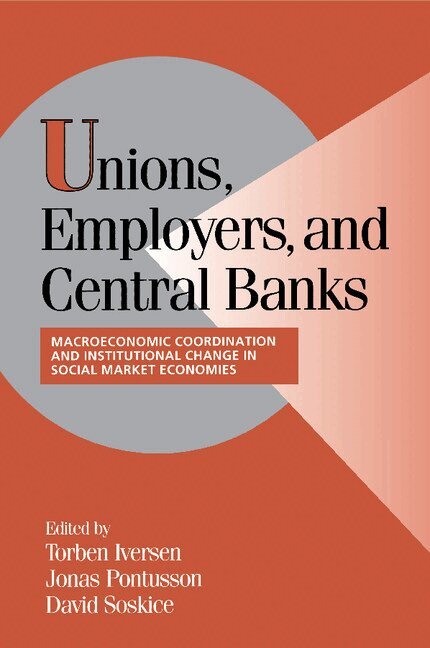
This book focuses on some of the most important political-economic changes in advanced industrialized countries over the past two decades, namely, the sharp rise in unemployment in some countries and the growth of inequality in others. Using a variety of methodological approaches, the essays provide different pieces to this puzzle and explain how economic outcomes may be linked to macroeconomic policies and wage bargaining practices. Focusing on the experiences of northern European countries, the book also explores the intersection of partisan politics, the international economy, and nationally specific institutions.
Inbunden, Engelska, 2006
897 kr
Skickas inom 10-15 vardagar
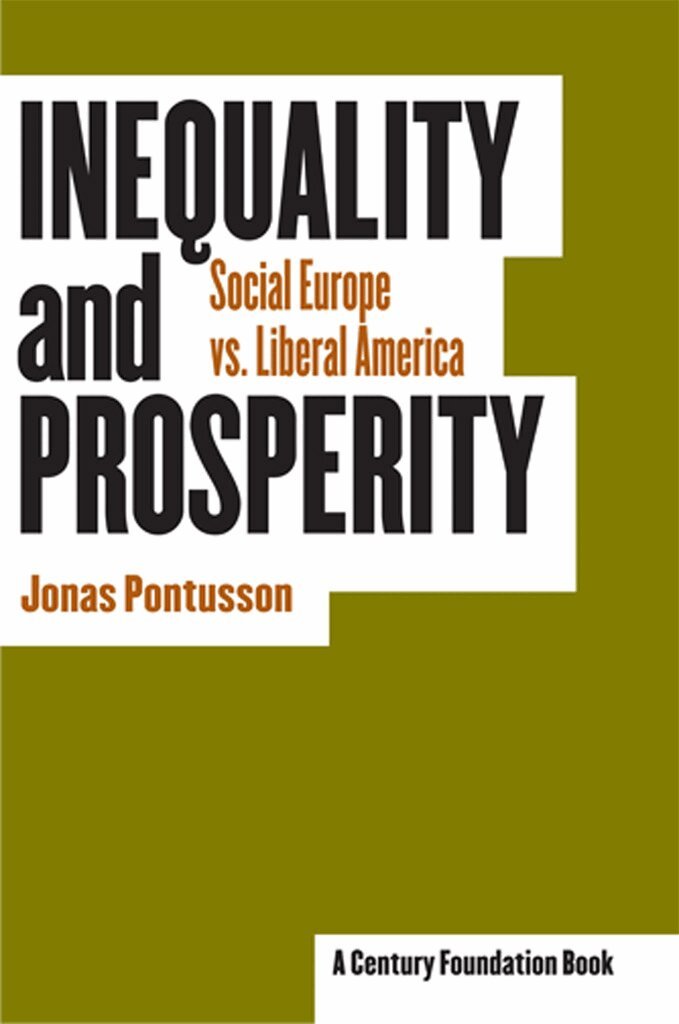
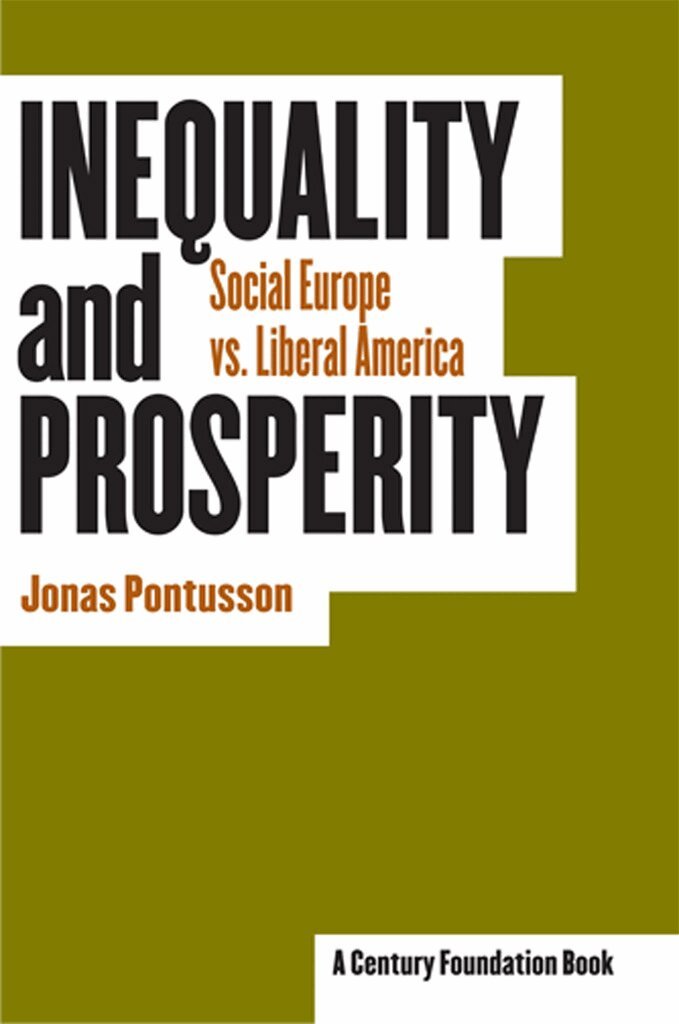
What are the relative merits of the American and European socioeconomic systems? Long-standing debates have heated up in recent years with the expansion of the European Union and increasingly sharp political and cultural differences between the United States and Europe. In Inequality and Prosperity, Jonas Pontusson provides a comparative overview of the two major models of labor markets and welfare systems in the advanced industrial world: the "liberal capitalist" system of the United States and Britain and the "social market" capitalism of northern Europe. These two models balance concerns of efficiency and equity in fundamentally different ways. In the 1990s the much-heralded forces of globalization (together with demographic changes and attendant political pressures) seemed to threaten the very existence of the social-market economies of Europe. Were the social compacts of Sweden and Germany outmoded? Would varieties of capitalism remain possible, or were labor-market and social-welfare arrangements converging on the U.S. norm? Pontusson opposes the notion of inevitable convergence: he believes that social-market economies can survive and indeed flourish in the contemporary world economy. He bases his argument on an enormous amount of highly specialized research on eighteen countries, using national-level data for the last thirty years. Among the areas he explores are labor-market dynamics, income distribution, employment performance, wage bargaining, firm-level performance, and the changing possibilities for the welfare state.
Häftad, Engelska, 2006
382 kr
Skickas inom 10-15 vardagar
What are the relative merits of the American and European socioeconomic systems? Long-standing debates have heated up in recent years with the expansion of the European Union and increasingly sharp political and cultural differences between the United States and Europe. In Inequality and Prosperity, Jonas Pontusson provides a comparative overview of the two major models of labor markets and welfare systems in the advanced industrial world: the "liberal capitalist" system of the United States and Britain and the "social market" capitalism of northern Europe. These two models balance concerns of efficiency and equity in fundamentally different ways. In the 1990s the much-heralded forces of globalization (together with demographic changes and attendant political pressures) seemed to threaten the very existence of the social-market economies of Europe. Were the social compacts of Sweden and Germany outmoded? Would varieties of capitalism remain possible, or were labor-market and social-welfare arrangements converging on the U.S. norm? Pontusson opposes the notion of inevitable convergence: he believes that social-market economies can survive and indeed flourish in the contemporary world economy. He bases his argument on an enormous amount of highly specialized research on eighteen countries, using national-level data for the last thirty years. Among the areas he explores are labor-market dynamics, income distribution, employment performance, wage bargaining, firm-level performance, and the changing possibilities for the welfare state.
Häftad, Engelska, 2023
406 kr
Skickas inom 7-10 vardagar
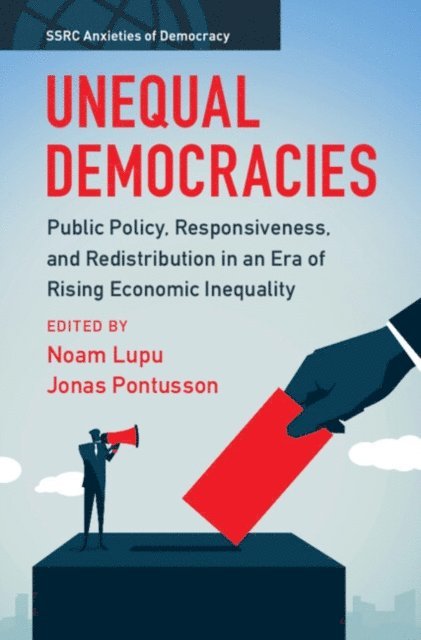
While economic inequality has risen in every affluent democracy in North America and Western Europe, the last three decades have also been characterized by falling or stagnating levels of state-led economic redistribution. Why have democratically accountable governments not done more to distribute top-income shares to citizens with low- and middle-income? Unequal Democracies offers answers to this question, bringing together contributions that focus on voters and their demands for redistribution with contributions on elites and unequal representation that is biased against less-affluent citizens. While large and growing bodies of research have developed around each of these perspectives, this volume brings them into rare dialogue. Chapters also incorporate analyses that center exclusively on the United States and those that examine a broader set of advanced democracies to explore the uniqueness of the American case and its contribution to comparative perspectives. This book is also available as Open Access on Cambridge Core.
Inbunden, Engelska, 2023
1 285 kr
Skickas inom 7-10 vardagar
While economic inequality has risen in every affluent democracy in North America and Western Europe, the last three decades have also been characterized by falling or stagnating levels of state-led economic redistribution. Why have democratically accountable governments not done more to distribute top-income shares to citizens with low- and middle-income? Unequal Democracies offers answers to this question, bringing together contributions that focus on voters and their demands for redistribution with contributions on elites and unequal representation that is biased against less-affluent citizens. While large and growing bodies of research have developed around each of these perspectives, this volume brings them into rare dialogue. Chapters also incorporate analyses that center exclusively on the United States and those that examine a broader set of advanced democracies to explore the uniqueness of the American case and its contribution to comparative perspectives. This book is also available as Open Access on Cambridge Core.
E-bok
Engelska, 2023491 kr
Läs direkt efter köp
E-bok
PDF, Engelska, 2023491 kr
Läs direkt efter köp
Häftad, Engelska, 2018
243 kr
Skickas inom 10-15 vardagar
During the most idealistic years of John F. Kennedy's Alliance for Progress development program, Bolivia was the highest per capita recipient of U.S. foreign aid in Latin America. Nonetheless, Washington's modernization programs in early 1960s' Bolivia ended up on a collision course with important sectors of the country's civil society, including radical workers, rebellious students, and a plethora of rightwing and leftwing political parties. In From Development to Dictatorship, Thomas C. Field Jr. reconstructs the untold story of USAID's first years in Bolivia, including the country's 1964 military coup d'état.Field draws heavily on local sources to demonstrate that Bolivia's turn toward anticommunist, development-oriented dictatorship was the logical and practical culmination of the military-led modernization paradigm that provided the liberal underpinnings of Kennedy's Alliance for Progress. In the process, he explores several underappreciated aspects of Cold War liberal internationalism: the tendency of "development" to encourage authoritarian solutions to political unrest, the connection between modernization theories and the rise of Third World armed forces, and the intimacy between USAID and CIA covert operations. Challenging the conventional dichotomy between ideology and strategy in international politics, From Development to Dictatorship engages with a growing literature on development as a key rubric for understanding the interconnected processes of decolonization and the Cold War.