Jonathan Bach - Böcker
Visar alla böcker från författaren Jonathan Bach. Handla med fri frakt och snabb leverans.
7 produkter
7 produkter
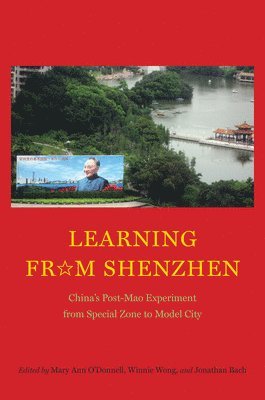
Learning from Shenzhen
China's Post-Mao Experiment from Special Zone to Model City
Inbunden, Engelska, 2017
985 kr
Tillfälligt slut
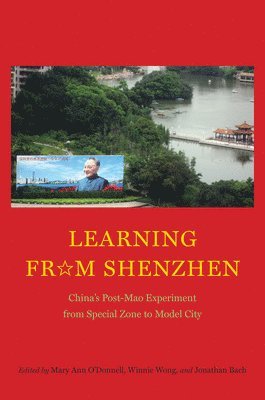
This multidisciplinary volume, the first of its kind, presents an account of China's contemporary transformation via one of its most important yet overlooked cities: Shenzhen, located just north of Hong Kong. In recent decades, Shenzhen has transformed from an experimental site for economic reform into a dominant city at the crossroads of the global economy. The first of China's special economic zones, Shenzhen is today a UNESCO City of Design and the hub of China's emerging technology industries. Bringing China studies into dialogue with urban studies, the contributors explore how the post-Mao Chinese appropriation of capitalist logic led to a dramatic remodeling of the Chinese city and collective life in China today. These essays show how urban villages and informal institutions enabled social transformation through cases of public health, labor, architecture, gender, politics, education, and more. Offering scholars and general readers alike an unprecedented look at one of the world's most dynamic metropolises, this collective history uses the urban case study to explore critical problems and possibilities relevant for modern-day China and beyond.
Learning from Shenzhen
China's Post-Mao Experiment from Special Zone to Model City
Häftad, Engelska, 2017
306 kr
Skickas inom 7-10 vardagar
This multidisciplinary volume, the first of its kind, presents an account of China's contemporary transformation via one of its most important yet overlooked cities: Shenzhen, located just north of Hong Kong. In recent decades, Shenzhen has transformed from an experimental site for economic reform into a dominant city at the crossroads of the global economy. The first of China's special economic zones, Shenzhen is today a UNESCO City of Design and the hub of China's emerging technology industries. Bringing China studies into dialogue with urban studies, the contributors explore how the post-Mao Chinese appropriation of capitalist logic led to a dramatic remodeling of the Chinese city and collective life in China today. These essays show how urban villages and informal institutions enabled social transformation through cases of public health, labor, architecture, gender, politics, education, and more. Offering scholars and general readers alike an unprecedented look at one of the world's most dynamic metropolises, this collective history uses the urban case study to explore critical problems and possibilities relevant for modern-day China and beyond.
1 142 kr
Skickas inom 7-10 vardagar
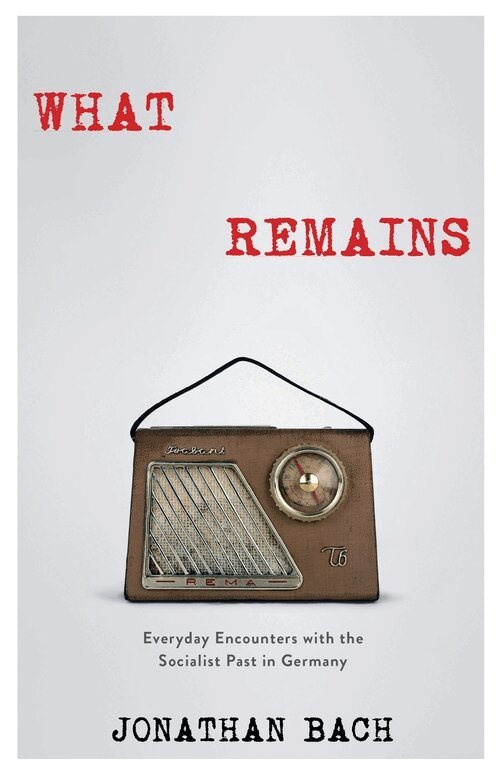
What happens when an entire modern state's material culture becomes abruptly obsolete? How do ordinary people encounter what remains? In this ethnography, Jonathan Bach examines the afterlife of East Germany following the fall of the Berlin Wall, as things and places from that vanished socialist past continue to circulate and shape the politics of memory. What Remains traces the unsettling effects of these unmoored artifacts on the German present, arguing for a rethinking of the role of the everyday as a site of reckoning with difficult pasts. Bach juxtaposes four sites where the stakes of the everyday appear: products commodified as nostalgia, amateur museums dedicated to collecting everyday life under socialism, the "people's palace" that captured the national imagination through its destruction, and the feared and fetishized Berlin Wall. Moving from the local, the intimate, and small to the national, the impersonal, and large, this book's interpenetrating chapters show the unexpected social and political force of the ordinary in the production of memory.What Remains offers a unique vantage point on the workings of the everyday in situations of radical discontinuity, contributing to new understandings of postsocialism and the intricate intersection of material remains and memory.
291 kr
Skickas inom 7-10 vardagar
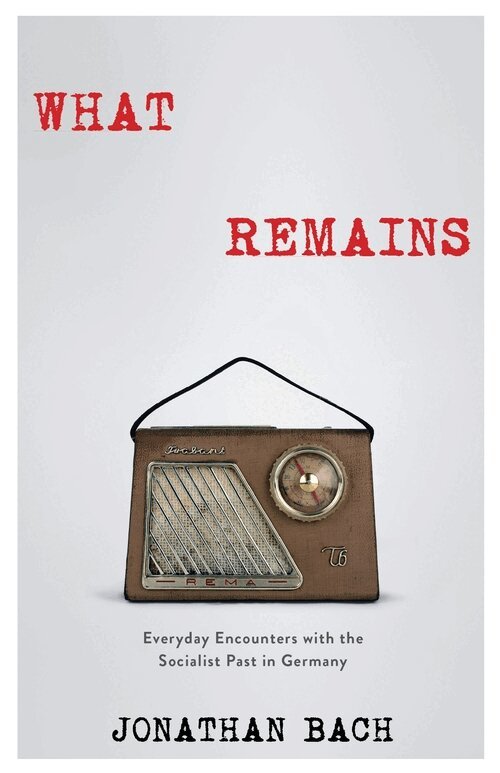
What happens when an entire modern state's material culture becomes abruptly obsolete? How do ordinary people encounter what remains? In this ethnography, Jonathan Bach examines the afterlife of East Germany following the fall of the Berlin Wall, as things and places from that vanished socialist past continue to circulate and shape the politics of memory.What Remains traces the unsettling effects of these unmoored artifacts on the German present, arguing for a rethinking of the role of the everyday as a site of reckoning with difficult pasts. Bach juxtaposes four sites where the stakes of the everyday appear: products commodified as nostalgia, amateur museums dedicated to collecting everyday life under socialism, the "people's palace" that captured the national imagination through its destruction, and the feared and fetishized Berlin Wall. Moving from the local, the intimate, and the small to the national, the impersonal, and the large, this book's interpenetrating chapters show the unexpected social and political force of the ordinary in the production of memory. What Remains offers a unique vantage point on the workings of the everyday in situations of radical discontinuity, contributing to new understandings of postsocialism and the intricate intersection of material remains and memory.
461 kr
Skickas inom 5-8 vardagar
516 kr
Skickas inom 5-8 vardagar
264 kr
Skickas inom 7-10 vardagar
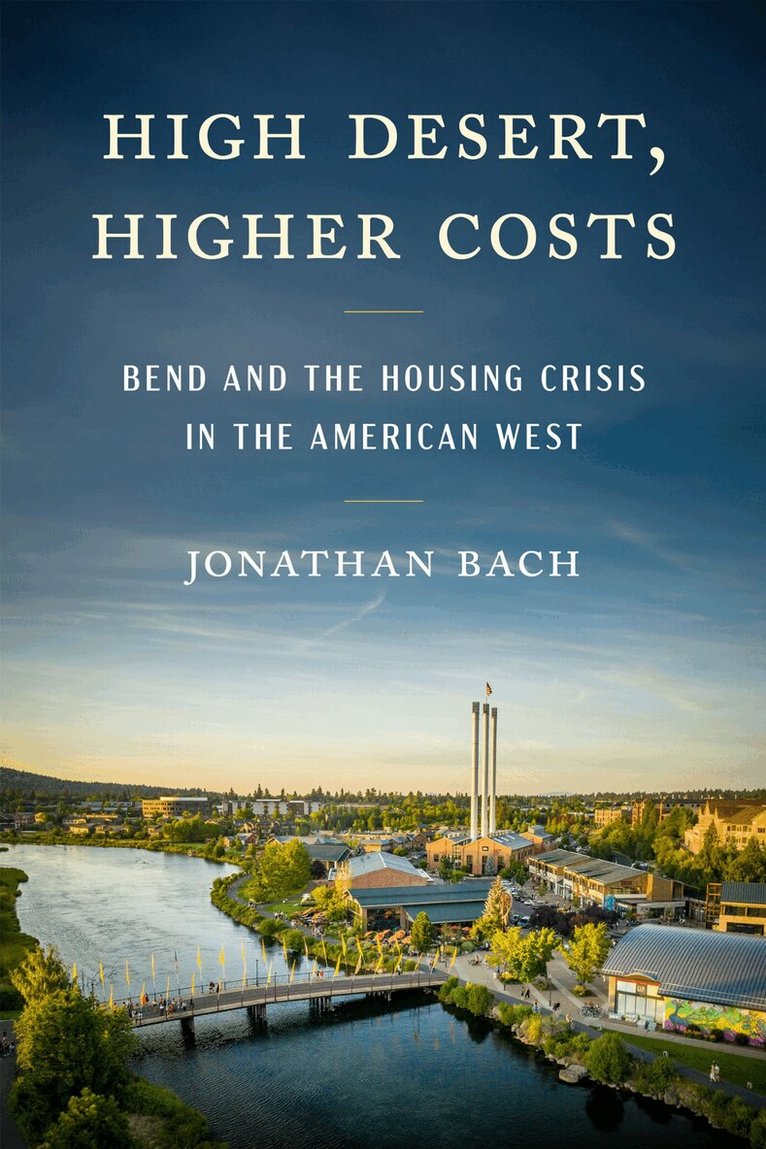
Nestled against the Cascade Mountains, former lumber town Bend, Oregon, entices residents who long to live in a wonderland of sagebrush and forests. But like so many other communities across the West, Bend has too few homes for everyone clambering for access. In High Desert, Higher Costs, Jonathan Bach takes a closer look at the housing crisis in this mid-sized city that is both the population center for rural Central Oregon and a major recreation area. Bach uses Bend as a lens into the growing housing crisis in the region, where residents and tourists alike prize access to outdoor recreation, and housing issues have been brewing for decades. Like other cities in Montana, Idaho, and Colorado, Bend serves as a gateway to popular natural areas while also suffering from a limited amount of new housing, increasing populations, amenity migrants in the age of remote work, depressed or stagnating wages, and a widening gulf between homeowners and renters. High Desert, Higher Costs introduces us to regular people—from the former political candidate evicted during COVID-19 to the nonprofit worker hoping to build apartments for the houseless—who struggle to call Bend home. Bach explores the causes of these issues and the political, legal, economic, and cultural factors influencing them, and also offers potential solutions for current and future residents to build their lives now, and in the years to come, in Bend and throughout the American West.