Jonathan C. Brown - Böcker
Visar alla böcker från författaren Jonathan C. Brown. Handla med fri frakt och snabb leverans.
9 produkter
9 produkter
380 kr
Skickas inom 10-15 vardagar
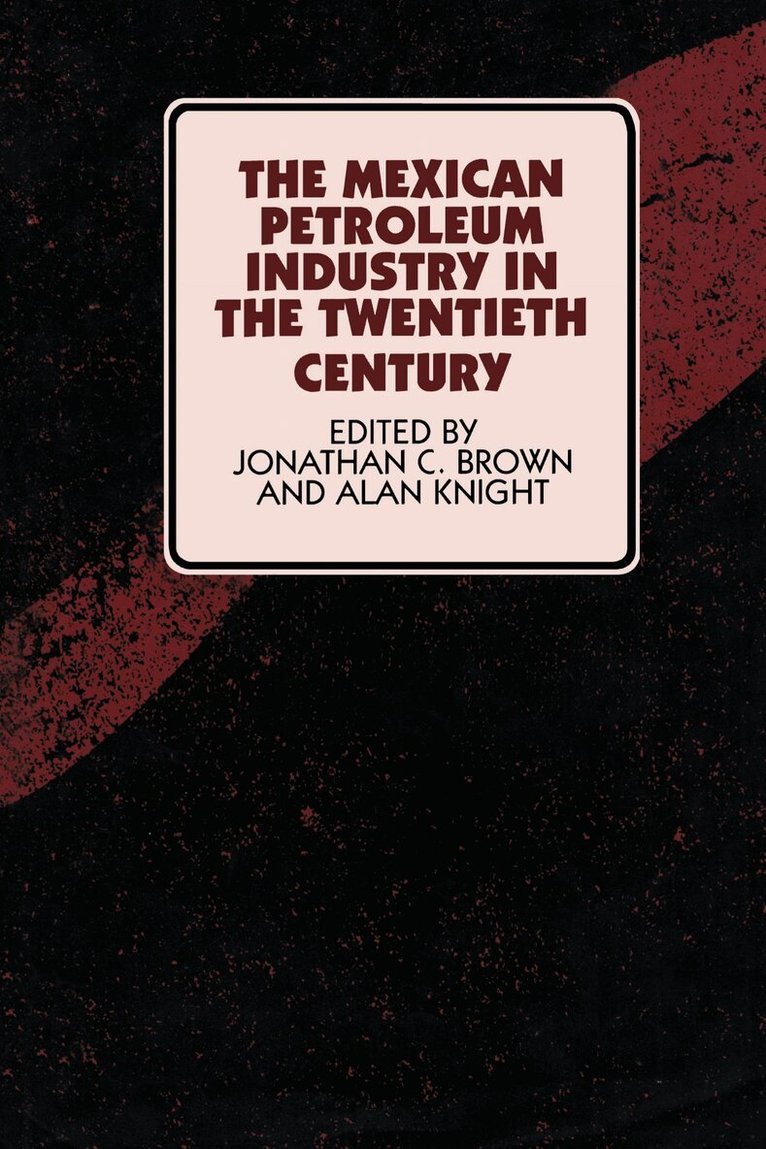
Mexico's petroleum industry has come to symbolize the very sovereignty of the nation itself. Politicians criticize Pemex, the national oil company, at their peril, and President Salinas de Gortari has made clear that the free trade negotiations between Mexico and the United States will not affect Pemex's basic status as a public enterprise. How and why did the petroleum industry gain such prominence and, some might say, immunity within Mexico's political economy?The Mexican Petroleum Industry in the Twentieth Century, edited by Jonathan C. Brown and Alan Knight, seeks to explain the impact of the oil sector on the nation's economic, political, and social development. The book is a multinational effort-one author is Australian, two British, three North American, and five Mexican. Each contributing scholar has researched and written extensively about Mexico and its oil industry.
835 kr
Skickas inom 3-6 vardagar
Oil and Revolution in Mexico offers a compelling analysis of the transformative yet fraught relationship between foreign capital and domestic development during the late 19th and early 20th centuries. Focusing on the role of American and British oil companies in shaping Mexico's economic, political, and social landscapes, this work uncovers the ambivalence at the heart of modernization. While foreign investments brought infrastructure, industry, and technology that modernized Mexico’s economy, they also introduced deep-seated tensions by exacerbating social inequality, destabilizing political systems, and marginalizing the local labor force. Through rich historical detail, the book navigates the complexities of Mexico’s struggle to integrate modern capitalist frameworks while preserving its unique cultural and social identity.This interdisciplinary history situates Mexico's oil industry within broader global economic contexts while delving into its profound domestic consequences. From the boom of foreign entrepreneurship to the revolutionary fervor that sought to wrest control of national resources, the narrative captures the dual forces of progress and resistance. The book challenges simplistic narratives, examining the social, cultural, and political implications of foreign exploitation and economic nationalism. With chapters dedicated to labor militancy, the interplay of foreign and local politics, and the persistent influence of preindustrial values, Oil and Revolution in Mexico provides a nuanced perspective on how a nation grapples with the promises and perils of modernity.This title is part of UC Press's Voices Revived program, which commemorates University of California Press’s mission to seek out and cultivate the brightest minds and give them voice, reach, and impact. Drawing on a backlist dating to 1893, Voices Revived makes high-quality, peer-reviewed scholarship accessible once again using print-on-demand technology. This title was originally published in 1993.
780 kr
Skickas inom 7-10 vardagar
Oil and Revolution in Mexico offers a compelling analysis of the transformative yet fraught relationship between foreign capital and domestic development during the late 19th and early 20th centuries. Focusing on the role of American and British oil companies in shaping Mexico's economic, political, and social landscapes, this work uncovers the ambivalence at the heart of modernization. While foreign investments brought infrastructure, industry, and technology that modernized Mexico’s economy, they also introduced deep-seated tensions by exacerbating social inequality, destabilizing political systems, and marginalizing the local labor force. Through rich historical detail, the book navigates the complexities of Mexico’s struggle to integrate modern capitalist frameworks while preserving its unique cultural and social identity.This interdisciplinary history situates Mexico's oil industry within broader global economic contexts while delving into its profound domestic consequences. From the boom of foreign entrepreneurship to the revolutionary fervor that sought to wrest control of national resources, the narrative captures the dual forces of progress and resistance. The book challenges simplistic narratives, examining the social, cultural, and political implications of foreign exploitation and economic nationalism. With chapters dedicated to labor militancy, the interplay of foreign and local politics, and the persistent influence of preindustrial values, Oil and Revolution in Mexico provides a nuanced perspective on how a nation grapples with the promises and perils of modernity.This title is part of UC Press's Voices Revived program, which commemorates University of California Press’s mission to seek out and cultivate the brightest minds and give them voice, reach, and impact. Drawing on a backlist dating to 1893, Voices Revived makes high-quality, peer-reviewed scholarship accessible once again using print-on-demand technology. This title was originally published in 1993.
Del 35 - Cambridge Latin American Studies
A Socioeconomic History of Argentina, 1776-1860
Häftad, Engelska, 2008
441 kr
Skickas inom 7-10 vardagar
This book surveys Argentina's development from the establishment of the Viceroyalty of the Rio de la Plata within the Spanish-American empire to the building of the first railways in the independent nation. Two aspects of Argentina's development receive special attention. First, the author examines the international markets for Argentina's products, taking into account the industrial revolution then under way in Europe and the United States. Second, he discusses the influence of traditional native technology on Argentine production and transport. In addition to describing commercial development at the port of Buenos Aires, the study discusses the expansion of ranching and farming onto the virgin pampas. Although the prosperity of Buenos Aires was not duplicated in the interior provinces, the export trade did permit commercial recovery from depression and civil war throughout Argentina. The author concludes that the conventional dependent or neo-colonial theory of Latin American development does not apply to Argentina's economic expansion. The staple theory of economic growth proves to be more accurate, for the linkages produced by the export trade actually diversified domestic economic activity and broadened entrepreneurial and labour opportunities in Argentina.
408 kr
Skickas inom 10-15 vardagar
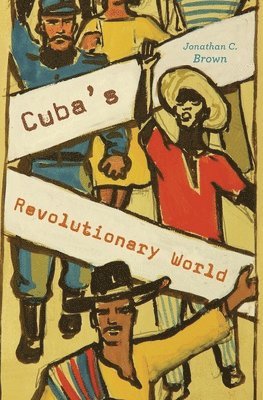
On January 2, 1959, Fidel Castro, the rebel comandante who had just overthrown Cuban dictator Fulgencio Batista, addressed a crowd of jubilant supporters. Recalling the failed popular uprisings of past decades, Castro assured them that this time “the real Revolution” had arrived. As Jonathan Brown shows in this capacious history of the Cuban Revolution, Castro’s words proved prophetic not only for his countrymen but for Latin America and the wider world.Cuba’s Revolutionary World examines in forensic detail how the turmoil that rocked a small Caribbean nation in the 1950s became one of the twentieth century’s most transformative events. Initially, Castro’s revolution augured well for democratic reform movements gaining traction in Latin America. But what had begun promisingly veered off course as Castro took a heavy hand in efforts to centralize Cuba’s economy and stamp out private enterprise. Embracing the Soviet Union as an ally, Castro and his lieutenant Che Guevara sought to export the socialist revolution abroad through armed insurrection.Castro’s provocations inspired intense opposition. Cuban anticommunists who had fled to Miami found a patron in the CIA, which actively supported their efforts to topple Castro’s regime. The unrest fomented by Cuban-trained leftist guerrillas lent support to Latin America’s military castes, who promised to restore stability. Brazil was the first to succumb to a coup in 1964; a decade later, military juntas governed most Latin American states. Thus did a revolution that had seemed to signal the death knell of dictatorship in Latin America bring about its tragic opposite.
518 kr
Skickas inom 10-15 vardagar
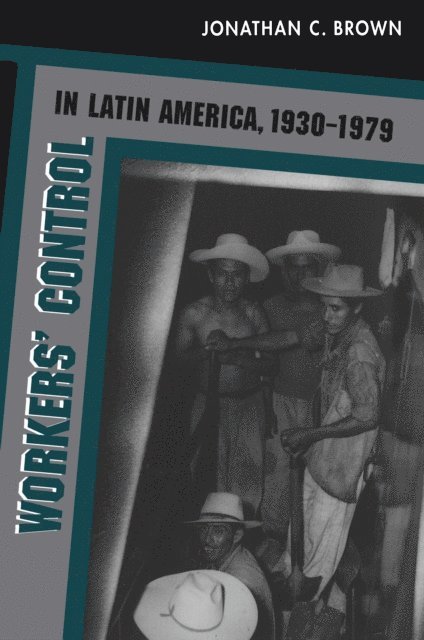
The years between 1930 and 1979 witnessed a period of intense labor activity in Latin America as workers participated in strikes, unionization efforts, and populist and revolutionary movements. The ten original essays AEMDNMOin this volume examine sugar mill seizures in Cuba, oil nationalization and railway strikes in Mexico, the attempted revolution in Guatemala, railway nationalization and Peronism in Argentina, Brazil's textile strikes, the Bolivian revolution of 1952, Peru's copper strikes, and the copper nationalization in Chile--all important national events in which industrial laborers played critical roles. Demonstrating an illuminating, bottom-up approach to Latin American labor history, these essays investigate the everyday acts through which workers attempted to assert more control over the work process and thereby add dignity to their lives. Working together, they were able to bring shop floor struggles to public attention and--at certain critical junctures--to influence events on a national scale. The contributors are Andrew Boeger, Michael Marconi Braga, Jonathan C. Brown, Josh DeWind, Marc Christian McLeod, Michael Snodgrass, Andrea Spears, Joanna Swanger, Maria Celina Tuozzo, and Joel Wolfe.
552 kr
Skickas inom 7-10 vardagar
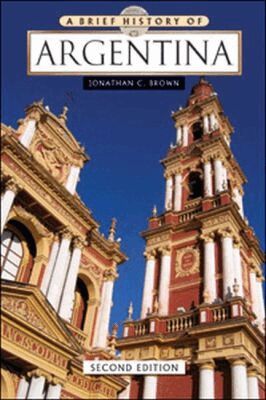
The Brief History series introduces readers to the dramatic events, notable people, and special customs and traditions that have shaped many of the world's countries. Each engaging volume covers a specific country and offers a concise history of the struggles and triumphs of the people and cultures that have called that country home. Touching on factors as diverse as the development of the economy to the role of women in society to changes in the political landscape, these comprehensive volumes provide the key background information readers need to put current global events in historical perspective.
388 kr
Skickas inom 3-6 vardagar
The book provides an unusual and noteworthy blend of narrative detail with a broad analytical framework...Recommended...—Choice Argentina has a population that ranks among the most educated and skilled in Latin America. Illiteracy scarcely exists among even the poor and working-class citizens, and Argentina's middle class has historically been large and politically engaged. Yet this country remains mired in economic instability, chronic unemployment, strict class divisions, and political corruption. Juan Perón's attempts to establish a democracy were all but erased during the militaristic Dirty War, and the last three elected presidents did little to raise the morale of their country. Still, Argentine citizens refuse to accept their current conditions. Prosecutors, victims, and families of victims remain determined to address the injustices and tyranny that occurred during the Dirty War and the two-decade silence that followed. Additionally, in a significant demonstration of progress, Argentines elected a woman president for the first time in October 2007. Spanning more than 12,000 years of history, A Brief History of Argentina, Second Edition thoroughly and comprehensively explores these issues and discusses how they will affect Argentina's future. Coverage includes: A comprehensive summary of Argentina's diverse geography and its varied natural resources The origins of the deep-seated practices of discrimination, which continue today The effects of neoliberalism on Argentina's large working class and urban poor, culminating in the caserola movement, the piqueteros movement, and the birth of the cartoneros The impact a changing global economy has had within Argentina's borders The rich culture of Argentina, which has created five Nobel laureates, vibrant cities that draw millions of tourists annually, and sports teams that have won multiple world championships.|The book provides an unusual and noteworthy blend of narrative detail with a broad analytical framework...Recommended...—Choice
308 kr
Skickas inom 5-8 vardagar