
Jonathan Gienapp - Böcker
Visar alla böcker från författaren Jonathan Gienapp. Handla med fri frakt och snabb leverans.
3 produkter
3 produkter
545 kr
Tillfälligt slut
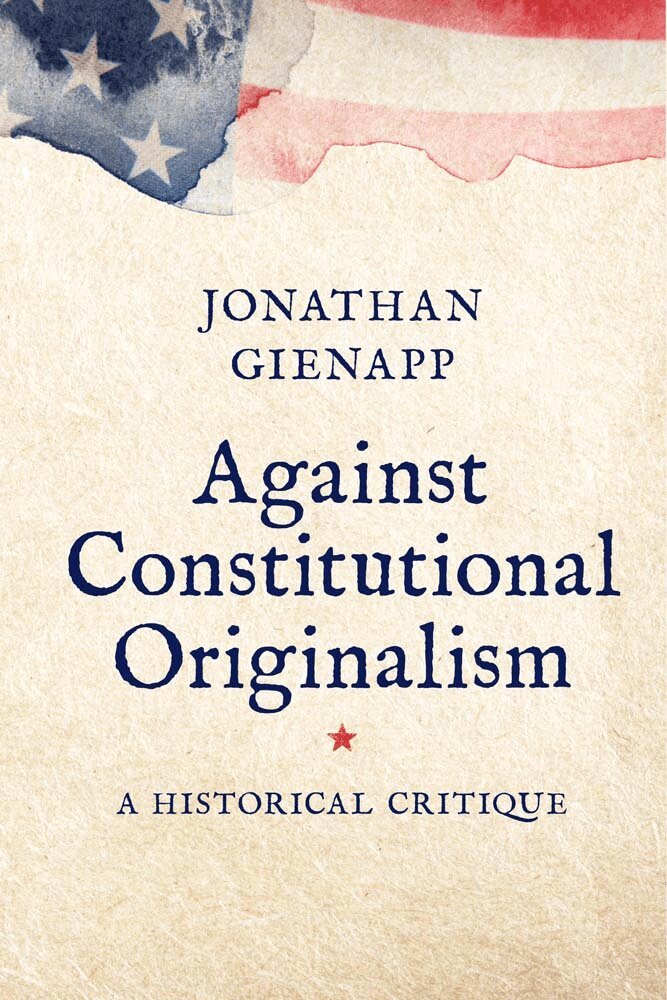
A detailed and compelling examination of how the legal theory of originalism ignores and distorts the very constitutional history from which it derives interpretive authority “What are the chances that, in 2024, a new book could fundamentally reorient how we understand America’s founding? Jonathan Gienapp . . . has written such a book. . . . You read it, and you get vertigo. . . . Gienapp’s book comes as a thunderclap.”—Cass Sunstein, Washington Post Longlisted for the Cundill History Prize, 2025 • History Today Book of the Year, 2024 Constitutional originalism stakes law to history. The theory’s core tenet—that the U.S. Constitution should be interpreted according to its original meaning—has us decide questions of modern constitutional law by consulting the distant constitutional past. Yet originalist engagement with history is often deeply problematic. And now that a majority of justices on the U.S. Supreme Court champion originalism, the task of scrutinizing originalists’ use and abuse of history has never been more urgent. In this comprehensive and novel critique of originalism, Jonathan Gienapp targets originalists’ unspoken assumptions about the Constitution and its history. Originalists are committed to recovering the Constitution laid down at the American Founding, yet they often assume that the Constitution is fundamentally modern. Rather than recovering the original Constitution, they project their own understandings onto it, assuming that eighteenth-century constitutional thinking was no different than their own. They take for granted what it meant to write a constitution down, what law was, how it worked, and where it came from, and how a constitution’s meaning was fixed. In the process, they erase the Constitution that eighteenth-century Americans in fact created. By understanding how originalism fails, we can better understand the Constitution that we have.
195 kr
Skickas inom 7-10 vardagar
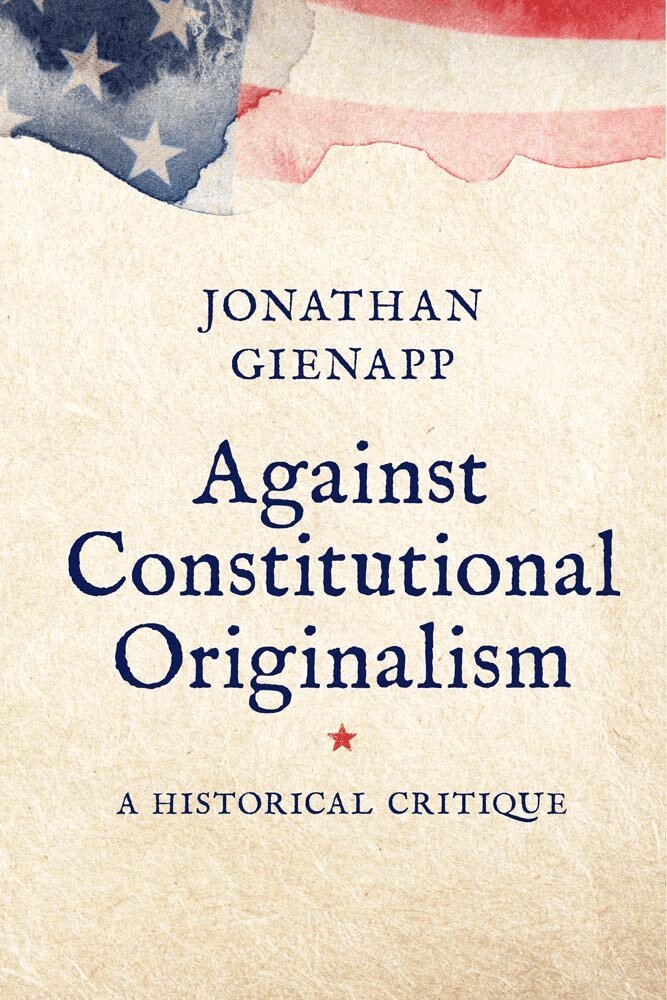
A detailed and compelling examination of how the legal theory of originalism ignores and distorts the very constitutional history from which it derives interpretive authority “What are the chances that, in 2024, a new book could fundamentally reorient how we understand America’s founding? Jonathan Gienapp . . . has written such a book. . . . You read it, and you get vertigo. . . . Gienapp’s book comes as a thunderclap.”—Cass Sunstein, Washington Post Winner of the Order of the Coif Book Award, 2025 • Longlisted for the Cundill History Prize, 2025 • History Today Book of the Year, 2024 Constitutional originalism stakes law to history. The theory’s core tenet—that the U.S. Constitution should be interpreted according to its original meaning—has us decide questions of modern constitutional law by consulting the distant constitutional past. Yet originalist engagement with history is often deeply problematic. And now that a majority of justices on the U.S. Supreme Court champion originalism, the task of scrutinizing originalists’ use and abuse of history has never been more urgent. In this comprehensive and novel critique of originalism, Jonathan Gienapp targets originalists’ unspoken assumptions about the Constitution and its history. Originalists are committed to recovering the Constitution laid down at the American Founding, yet they often assume that the Constitution is fundamentally modern. Rather than recovering the original Constitution, they project their own understandings onto it, assuming that eighteenth-century constitutional thinking was no different than their own. They take for granted what it meant to write a constitution down, what law was, how it worked, and where it came from, and how a constitution’s meaning was fixed. In the process, they erase the Constitution that eighteenth-century Americans in fact created. By understanding how originalism fails, we can better understand the Constitution that we have.
339 kr
Skickas inom 10-15 vardagar
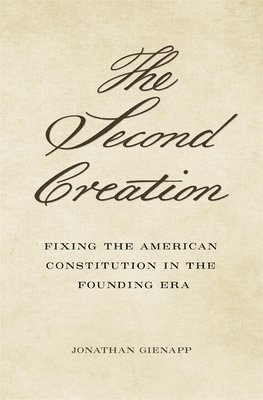
A stunning revision of our founding document’s evolving history that forces us to confront anew the question that animated the founders so long ago: What is our Constitution?Americans widely believe that the United States Constitution was created when it was drafted in 1787 and ratified in 1788. But in a shrewd rereading of the Founding era, Jonathan Gienapp upends this long-held assumption, recovering the unknown story of American constitutional creation in the decade after its adoption—a story with explosive implications for current debates over constitutional originalism and interpretation.When the Constitution first appeared, it was shrouded in uncertainty. Not only was its meaning unclear, but so too was its essential nature. Was the American Constitution a written text, or something else? Was it a legal text? Was it finished or unfinished? What rules would guide its interpretation? Who would adjudicate competing readings? As political leaders put the Constitution to work, none of these questions had answers. Through vigorous debates they confronted the document’s uncertainty, and—over time—how these leaders imagined the Constitution radically changed. They had begun trying to fix, or resolve, an imperfect document, but they ended up fixing, or cementing, a very particular notion of the Constitution as a distinctively textual and historical artifact circumscribed in space and time. This means that some of the Constitution’s most definitive characteristics, ones which are often treated as innate, were only added later and were thus contingent and optional.