Jonathan H. Fink - Böcker
Visar alla böcker från författaren Jonathan H. Fink. Handla med fri frakt och snabb leverans.
2 produkter
2 produkter
687 kr
Tillfälligt slut
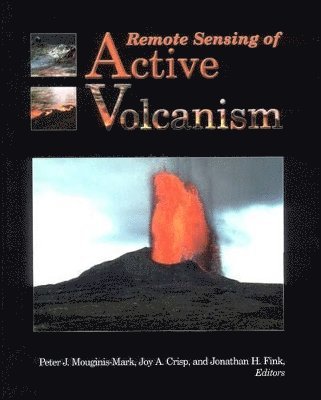
Published by the American Geophysical Union as part of the Geophysical Monograph Series, Volume 116.Remote sensing is an essential tool for many Earth and planetary scientists. When studying the atmosphere, the land, the ocean floor, or for that matter the surfaces of other planets, remote sensing has deepened and expanded our understanding in immediate and dramatic ways. This is especially true for volcanologists concerned with active volcanic processes. Technological advances in collecting data from a satellite or an aircraft, however, also require human skills specific to the medium, and nowhere more so than in processing and interpreting data in ways that are different from those skills needed with a field-oriented approach. In this volume on the remote sensing of active volcanoes, we clarify and address those differences. At the same time, we seek to stimulate greater interaction between remote sensing specialists and field volcanologists, aided by the tutorials and background information we have included.
Del 2 - IAVCEI Proceedings in Volcanology
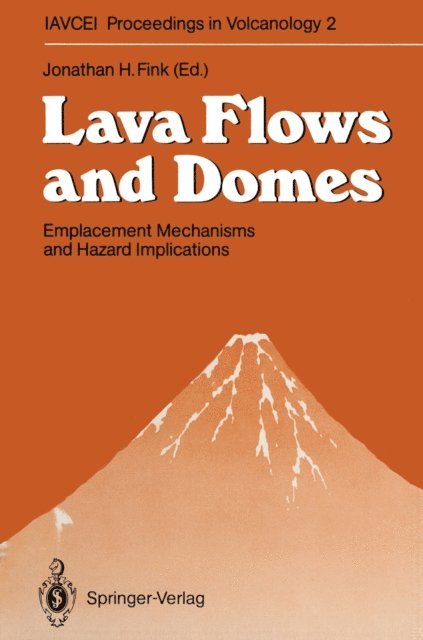
Lava Flows and Domes
Emplacement Mechanisms and Hazard Implications
Häftad, Engelska, 2011
534 kr
Skickas inom 10-15 vardagar
This collection of papers is based on a symposium held in 1987 at the Interna tional Union of Geology and Geodesy Congress in Vancouver, British Colum bia. The Symposium was planned as a follow-up to a session at the 1984 Geo logical Society of America Annual Meeting in Reno, Nevada, which dealt with the emplacement of silicic lava domes. In both cases, emphasis was placed on the physical and mechanical rather than chemical aspects of lava flow. The IUGG Symposium consisted of two lecture sessions, a poster session, and two discussion periods, and had 22 participants. The contributions to this volume are all based on papers presented in the various parts of the Sym posium. The motivation for studying lava flow mechanics is both practical and scientific. Scientists and government agencies seek to more effectively predict the hazards associated with active lavas. Recovering mineral resources found in lava flows and domes also requires an understanding of their emplacement. From a more theoretical standpoint, petrologists view lava studies as a way to directly observe the rheologic consequences of mixing crystals, bubbles, and solid blocks of country rock with silicate liquids. This information can then be used to constrain processes occurring in the concealed conduits, dikes, and chambers that feed flows and domes on the surface.