Jonathan Karam Skaff – författare
Visar alla böcker från författaren Jonathan Karam Skaff. Handla med fri frakt och snabb leverans.
6 produkter
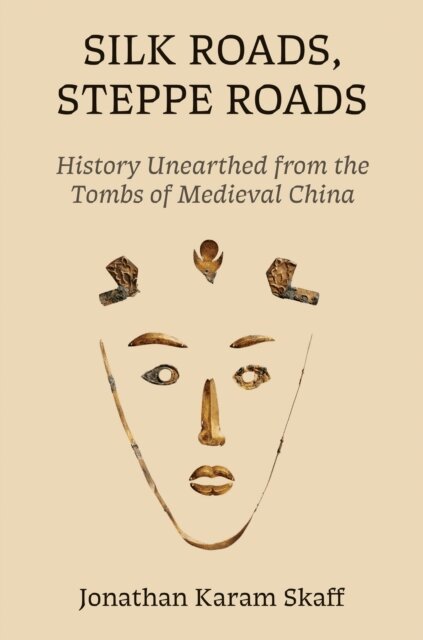
Silk Roads, Steppe Roads
History Unearthed from the Tombs of Medieval China
E-bok, 2026
546 kr
Lägg i varukorg
An innovative study of medieval Chinese tombs that provides new insights into the history of Eurasian cultural contact and exchangeSilk Roads, Steppe Roads takes the reader on a journey to three sites in northwestern China and Mongolia to investigate medieval Chinese tombs containing evidence of …
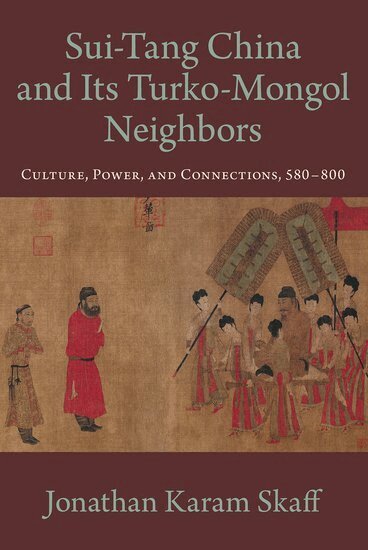
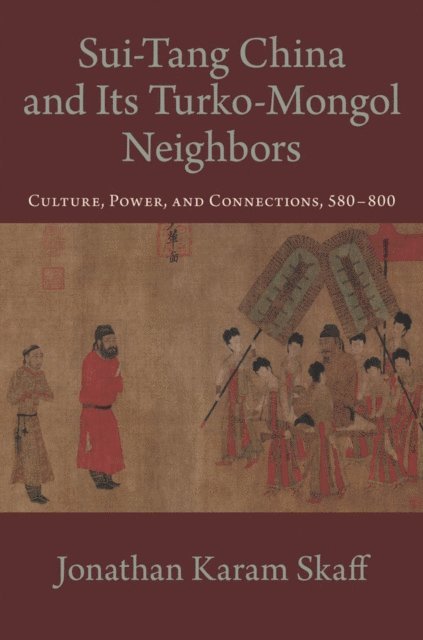
Sui-Tang China and Its Turko-Mongol Neighbors
Häftad, 2018
1013 kr
Lägg i varukorg
Sui-Tang China and Its Turko-Mongol Neighbors challenges readers to reconsider China's relations with the rest of Eurasia. Investigating interstate competition and cooperation between the successive Sui and Tang dynasties and Turkic states of Mongolia from 580 to 800, Jonathan Skaff upends the …
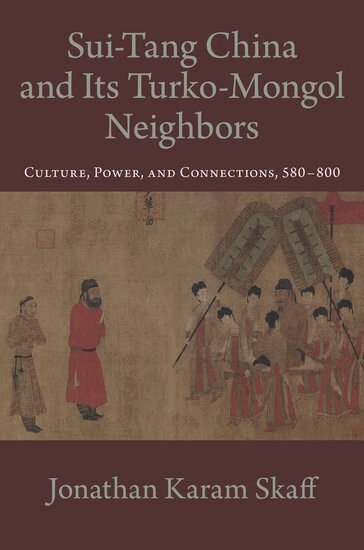
Sui-Tang China and Its Turko-Mongol Neighbors
Culture, Power, and Connections, 580-800
Inbunden, 2012
2422 kr
Lägg i varukorg
Sui-Tang China and Its Turko-Mongol Neighbors challenges readers to reconsider China's relations with the rest of Eurasia. Investigating interstate competition and cooperation between the successive Sui and Tang dynasties and Turkic states of Mongolia from 580 to 800, Jonathan Skaff upends the …
Sui-Tang China and Its Turko-Mongol Neighbors
Culture, Power, and Connections, 580-800
E-bok, 2012
718 kr
Lägg i varukorg
A comparative history that reconsiders China''s relations with the rest of Eurasia, Sui-Tang China and Its Turko-Mongol Neighbors challenges the notion that inhabitants of medieval China and Mongolia were irreconcilably different from each other.
Sui-Tang China and Its Turko-Mongol Neighbors
Culture, Power, and Connections, 580-800
E-bok, 2012
718 kr
Lägg i varukorg
A comparative history that reconsiders China''s relations with the rest of Eurasia, Sui-Tang China and Its Turko-Mongol Neighbors challenges the notion that inhabitants of medieval China and Mongolia were irreconcilably different from each other.
Silk Roads, Steppe Roads
History Unearthed from the Tombs of Medieval China
Inbunden, 2026
404 kr
Lägg i varukorg
An innovative study of medieval Chinese tombs that provides new insights into the history of Eurasian cultural contact and exchangeSilk Roads, Steppe Roads takes the reader on a journey to three sites in northwestern China and Mongolia to investigate medieval Chinese tombs containing evidence of …