Jonathan M. Woodham - Böcker
Visar alla böcker från författaren Jonathan M. Woodham. Handla med fri frakt och snabb leverans.
2 produkter
2 produkter
250 kr
Skickas
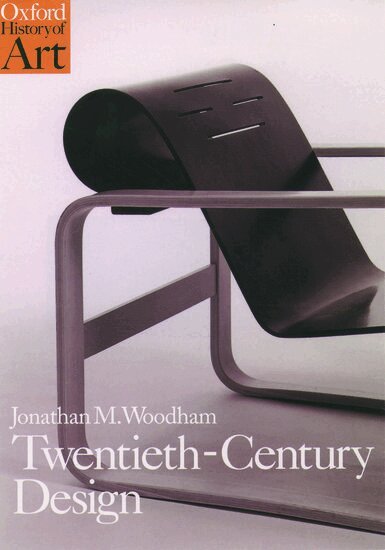
The most famous designs of the twentieth century are not those in museums, but in the marketplace. The Coca-Cola bottle and the McDonald's logo are known all over the world, and designs like the modernistic `Frankfurt Kitchen' of 1926, or the 1954 streamlined and tail-finned Oldsmobile, or `Blow', the inflatable chair ubiquitous in the late sixties, tell us more about our culture than a narrowly-defined canon of classics. Drawing on the most up-to-date scholarship (not only in design history but also in social anthropology and women's history), Jonathan Woodham takes a fresh look at the wider issues of design and industrial culture throughout Europe, Scandinavia, North America, and the Far East. He explores themes such as national identity, the `Americanisation' of ideology and business methods, the rise of the multi-nationals, Pop and Postmodernism, and contemporary ideas of nostalgia and heritage, and sets the proliferation of everyday design against the writing of critics as different as Nikolaus Pevsner, the champion of Modernism, and Vance Packard, author of The Hidden Persuaders. In the history which emerges design is clearly seen for what it is: the powerful and complex expression of aesthetic, social, economic, political, and technological forces.
Design and Cultural Politics in Postwar Britain
Britain Can Make it Exhibition of 1946
Häftad, Engelska, 1998
1 407 kr
Skickas inom 3-6 vardagar
Marking the 50th anniversary of the Britain Can Make It (BCMI) exhibition, this collection of essays, documents and commentaries is a re-examination of a major design initiative in the immediate post-war period. BCMI encapsulated many of the problems which the newly-founded Council of Industrial Design was to face over the following decades: the tensions between a state-funded body, with its metropolitan bias, and British manufacturing industry located in the industrial regions; persuading the public that "good" modern design had a key role in everyday life; and the manifestation of a particular set of social and cultural values in the selection of exhibits and the means of design propaganda. The book draws on the documentary sources in the Design Council Archive.