Jonathan Quong - Böcker
Visar alla böcker från författaren Jonathan Quong. Handla med fri frakt och snabb leverans.
5 produkter
5 produkter
353 kr
Skickas inom 5-8 vardagar
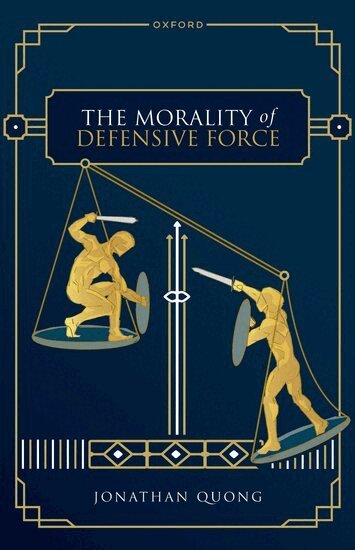
When is it morally permissible to engage in self-defense or the defense of others? Jonathan Quong defends a variety of novel ideas in this book about the morality of defensive force, providing an original philosophical account of the central moral principles that should regulate its use. We cannot understand the morality of defensive force, he reasons, until we ask and answer deeper questions about how the use of defensive force fits with a more general account of justice and moral rights. In developing this stance, Quong presents new views on liability, proportionality, and necessity. He argues that self-defense can sometimes be justified on the basis of an agent-relative prerogative to give greater weight to one's own life and interests, contrary to the dominant view in the literature. Additionally Quong develops a novel conception of individual rights against harm. Unlike some, who believe that our rights against harm are fact-relative, he argues that our rights against being harmed by others must, in certain respects, be sensitive to the evidence that others can reasonably be expected to possess. The book concludes with Quong's extended defense of the means principle, a principle that prohibits harmfully using other persons' bodies or other rightful property unless those persons are duty bound to permit this use or have otherwise waived their claims against such use.
733 kr
Skickas inom 3-6 vardagar
A growing number of political philosophers favour a view called liberal perfectionism. According to this view, liberal political morality is characterised by a commitment to helping individuals lead autonomous lives and making other valuable choices. In this book Jonathan Quong rejects this widely held view and offers an alternative account of liberal political morality. Quong argues that the liberal state should not be engaged in determining what constitutes a valuable or worthwhile life nor trying to make sure that individuals live up to this ideal. Instead, it should remain neutral on the issue of the good life, and restrict itself to establishing the fair terms within which individuals can pursue their own beliefs about what gives value to their lives. The book thus defends a position known as political liberalism. In the first part of the book Quong subjects the liberal perfectionist position to critical scrutiny, advancing three major objections that raise serious doubts about the liberal perfectionist position with regard to autonomy, paternalism, and political legitimacy. In the second part of the book Quong presents and defends a distinctive version of political liberalism. In particular, Quong clarifies and develops political liberalism's central thesis: that political principles, in order to be legitimate, must be publicly justifiable to reasonable people. Drawing on the work of John Rawls, Quong offers his own interpretation of this idea, and rebuts some of the main objections that have been pressed against it. In doing so, Quong provides novel arguments regarding the nature of an overlapping consensus, the structure of political justification, the idea of public reason, and the status of unreasonable persons.
1 146 kr
Skickas inom 7-10 vardagar
When is it morally permissible to engage in self-defense or the defense of others? Jonathan Quong defends a variety of novel ideas in this book about the morality of defensive force, providing an original philosophical account of the central moral principles that should regulate its use. We cannot understand the morality of defensive force, he reasons, until we ask and answer deeper questions about how the use of defensive force fits with a more general account of justice and moral rights. In developing this stance, Quong presents new views on liability, proportionality, and necessity. He argues that self-defense can sometimes be justified on the basis of an agent-relative prerogative to give greater weight to one's own life and interests, contrary to the dominant view in the literature. Additionally Quong develops a novel conception of individual rights against harm. Unlike some, who believe that our rights against harm are fact-relative, he argues that our rights against being harmed by others must, in certain respects, be sensitive to the evidence that others can reasonably be expected to possess. The book concludes with Quong's extended defense of the means principle, a principle that prohibits harmfully using other persons' bodies or other rightful property unless those persons are duty bound to permit this use or have otherwise waived their claims against such use.
1 635 kr
Skickas inom 5-8 vardagar
A growing number of political philosophers favour a view called liberal perfectionism. According to this view, liberal political morality is characterised by a commitment to helping individuals lead autonomous lives and making other valuable choices. In this book Jonathan Quong rejects this widely held view and offers an alternative account of liberal political morality. Quong argues that the liberal state should not be engaged in determining what constitutes a valuable or worthwhile life nor trying to make sure that individuals live up to this ideal. Instead, it should remain neutral on the issue of the good life, and restrict itself to establishing the fair terms within which individuals can pursue their own beliefs about what gives value to their lives. The book thus defends a position known as political liberalism. The first part of the book subjects the liberal perfectionist position to critical scrutiny, advancing three major objections that raise serious doubts about the liberal perfectionist position with regard to autonomy, paternalism, and political legitimacy. The latter chapters then present and defend a distinctive version of political liberalism. In particular, Quong clarifies and develops political liberalism's central thesis: that political principles, in order to be legitimate, must be publicly justifiable to reasonable people. Drawing on the work of John Rawls, Quong offers his own interpretation of this idea, and rebuts some of the main objections that have been pressed against it. In doing so, the book offers novel arguments regarding the nature of an overlapping consensus, the structure of political justification, the idea of public reason, and the status of unreasonable persons.
312 kr
Skickas
How to understand a long-standing puzzle in political philosophy: the relationship between justice and legitimacyCan laws be unjust and yet remain, in some sense, morally legitimate? In this book, Jonathan Quong considers central issues in political philosophy through the lens of this single question. He explores and evaluates recent influential work on this topic and then proposes a novel approach of his own. The puzzle at the heart of his account is the phenomenon of legitimate injustice—laws and policies that are substantively unjust yet may be legitimately imposed by government officials. How can such laws be legitimate if, as some have argued, justice is the first virtue of social institutions?Quong analyzes the work of those who deny that injustice committed by states can be legitimate simply by virtue of its democratic or procedural pedigree; the Kantian account of legitimate institutions and justice; instrumental approaches to political legitimacy; and the recent wave of work in democratic theory focused on its egalitarian character. Arguing that these analyses do not offer an adequate solution to the puzzle and that there are compelling reasons to revise or reject them, Quong lays out his view and explains the implications for more general theories of political morality. He argues that we can explain legitimate injustice by appeal to distributive justice. If political disagreement is inevitable, then unjust legislation is largely unavoidable; it constitutes a burden that must be distributed according to just principles. Quong’s novel and illuminating framework offers a unique introduction to crucial questions in political philosophy.