Jonathan Silberstein-Loeb - Böcker
Visar alla böcker från författaren Jonathan Silberstein-Loeb. Handla med fri frakt och snabb leverans.
4 produkter
4 produkter
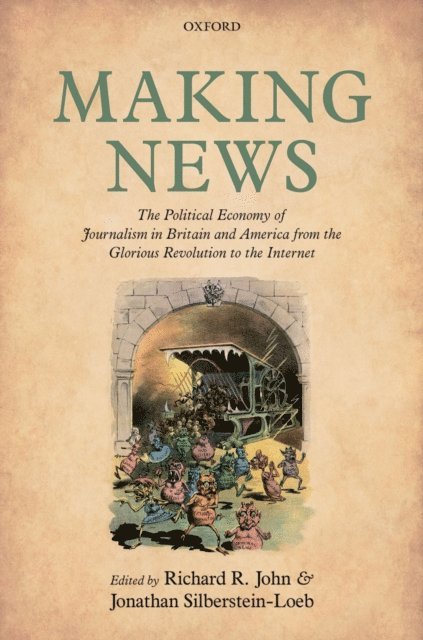
Making News
The Political Economy of Journalism in Britain and America from the Glorious Revolution to the Internet
Häftad, Engelska, 2018
468 kr
Skickas inom 7-10 vardagar
This book charts the rise and fall of the newspaper as the primary medium for the conveyance of news. The book focuses on two of the most influential media markets in the modern world-Great Britain and the United States between 1688 and 1995.In 1688, Parliament created institutional arrangements that would hasten the rise of the newspaper as the dominant medium for the circulation of news. In 1995, the National Science Foundation commercialized the Internet, encouraging an astonishing proliferation of information on all manner of topics, including the news. Per capita newspaper circulation had been declining for decades, partly due to shifting social norms, and partly due to the rise of broadcast news. The Internet exacerbated this trend, partly because it provided a cheaper news source, and partly because it quickly became a superior vehicle for advertising, a major source of revenue for newspaper publishers for over two-hundred-years.However, only rarely has advertising revenue and direct sales covered costs. Almost never has the demand for news generated the revenue necessary for its supply. Non-market institutional arrangements have ranged from direct government subsidies to organizational forms that enabled news organizations to cooperate. From a historical perspective, the large profits reaped by a handful of newspaper publishers in the post-Second World War era were anomalous, and in no sense a baseline for public policy. Never again will the newspaper be the dominant news medium. To guarantee an informed citizenry in the future, it is necessary to understand how the news business worked in the past.This book is organized around eight essays-each written by a distinguished specialist, and each explicitly comparative. Its theme is the indispensability in both Great Britain and the United States of non-market institutional arrangements in the provisioning of news.
Making News
The Political Economy of Journalism in Britain and America from the Glorious Revolution to the Internet
Inbunden, Engelska, 2015
1 543 kr
Skickas inom 7-10 vardagar
How can the news business be re-envisioned in a rapidly changing world? Can market incentives and technological imperatives provide a way forward? How important have been the institutional arrangements that protected the production and distribution of news in the past? Making News charts the institutional arrangements that news providers in Britain and America have relied on since the late seventeenth century to facilitate the production and distribution of news. It is organized around eight original essays: each written by a distinguished specialist, and each explicitly comparative. Seven chapters survey the shifting institutional arrangements that facilitated the production and distribution of news in Britain and America in the period between 1688 and 1995. An eighth chapter surveys the news business following the commercialization of the Internet, while the epilogue links past, present, and future. Its theme is the indispensability in both Great Britain and the United States of non-market institutional arrangements in the provisioning of news. Only rarely has advertising revenue and direct sales covered costs. Almost never has the demand for news generated the revenue necessary for its supply. The presumption that the news business can flourish in a marketplace of ideas has long been a civic ideal. In practice, however, the emergence of a genuinely competitive marketplace for the production and distribution of news has limited the resources for high-quality news reporting. For the production of high-quality journalism is a byproduct less of the market, than of its supersession. And, in particular, it has long depended on the acquiescence of lawmakers in market-limiting business strategies that have transformed journalism in the past, and that will in all likelihood transform it once again in the future.
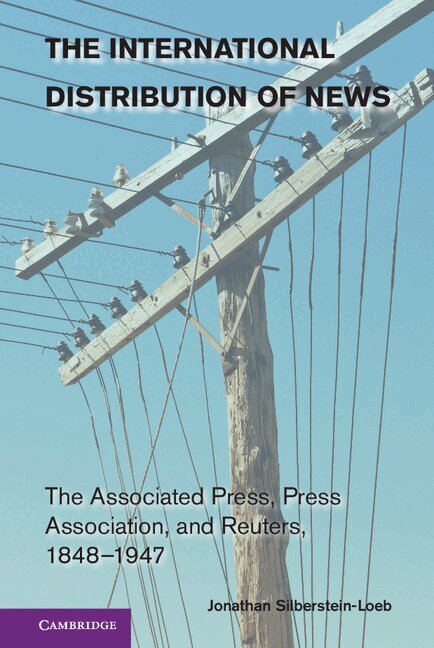
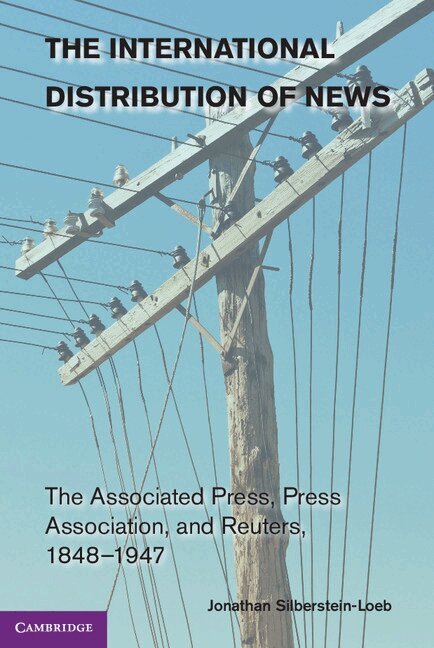
The International Distribution of News
The Associated Press, Press Association, and Reuters, 1848-1947
Inbunden, Engelska, 2014
1 065 kr
Skickas inom 7-10 vardagar
Based on newly available and extensive archival evidence, this book traces the history of international news agencies and associations around the world from 1848 to 1947. Jonathan Silberstein-Loeb argues that newspaper publishers formed news associations and patronized news agencies to cut the costs of news collection and exclude competitors from gaining access to the news. In this way, cooperation facilitated the distribution of news. The extent to which state regulation permitted cooperation, or prohibited exclusivity, determined the benefit newspaper publishers derived from these organizations. This book revises our understanding of the operation and organization of the Associated Press, the BBC, the Press Association, Reuters, and the United Press. It also sheds light on the history of competition policy respecting the press, intellectual property, and the regulation of telecommunications.
The International Distribution of News
The Associated Press, Press Association, and Reuters, 1848-1947
Häftad, Engelska, 2014
318 kr
Skickas inom 7-10 vardagar
Based on newly available and extensive archival evidence, this book traces the history of international news agencies and associations around the world from 1848 to 1947. Jonathan Silberstein-Loeb argues that newspaper publishers formed news associations and patronized news agencies to cut the costs of news collection and exclude competitors from gaining access to the news. In this way, cooperation facilitated the distribution of news. The extent to which state regulation permitted cooperation, or prohibited exclusivity, determined the benefit newspaper publishers derived from these organizations. This book revises our understanding of the operation and organization of the Associated Press, the BBC, the Press Association, Reuters, and the United Press. It also sheds light on the history of competition policy respecting the press, intellectual property, and the regulation of telecommunications.