Jonathon Grasse - Böcker
Visar alla böcker från författaren Jonathon Grasse. Handla med fri frakt och snabb leverans.
5 produkter
5 produkter
1 216 kr
Skickas inom 10-15 vardagar
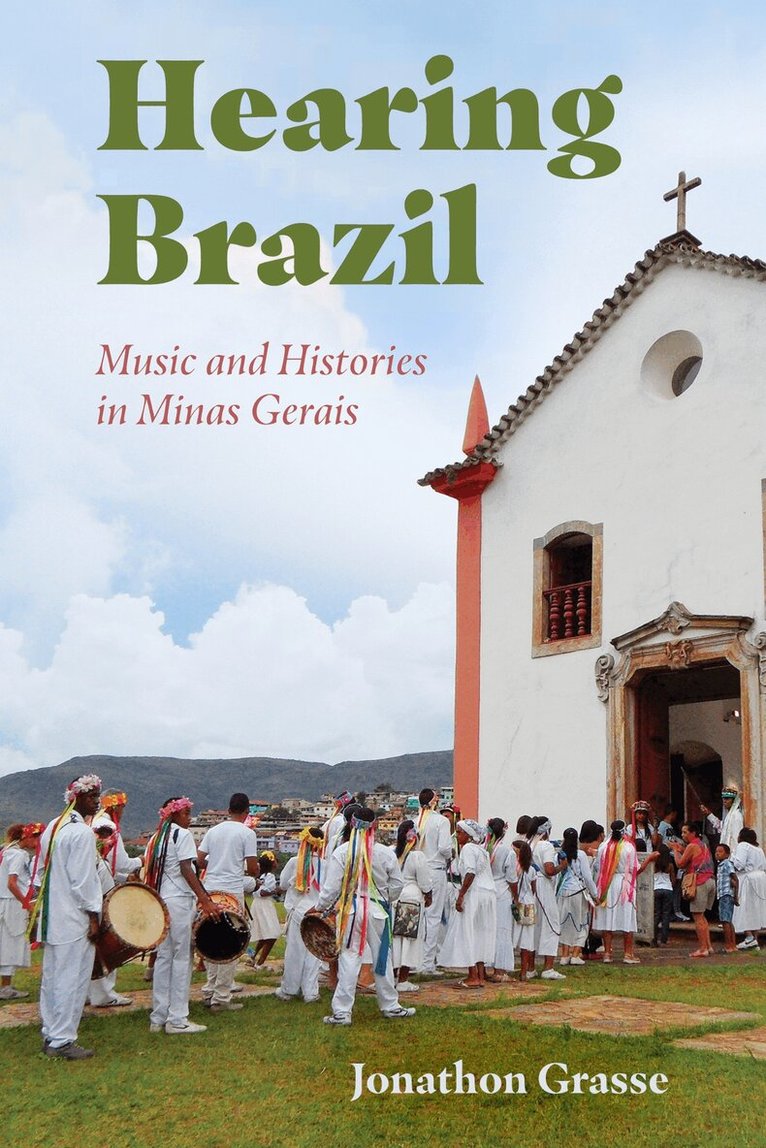
Minas Gerais is a state in southeastern Brazil deeply connected to the nation’s slave past and home to many traditions related to the African diaspora. Addressing a wide range of traditions helping to define the region, ethnomusicologist Jonathon Grasse examines the complexity of Minas Gerais by exploring the intersections of its history, music, and culture.Instruments, genres, social functions, and historical accounts are woven together to form a tapestry revealing a cultural territory’s development. The deep pool of Brazilian scholarship referenced in the book, with original translations by the author, cites over two hundred Portuguese-language publications focusing on Minas Gerais. This research was augmented by fieldwork, observations, and interviews completed over a twenty-five-year period and includes original photographs, many taken by the author.Hearing Brazil: Music and Histories in Minas Gerais surveys the colonial past, the vast hinterland countryside, and the modern, twenty-first-century state capital of Belo Horizonte, the metropolitan region of which is today home to over six million. Diverse legacies are examined, including an Afro-Brazilian heritage, eighteenth- and nineteenth-century liturgical music of the region’s "Minas Baroque," the instrument known as the viola, a musical profile of Belo Horizonte, and a study of the regionalist themes developed by the popular music collective the Clube da Esquina (Corner Club) led by Milton Nascimento with roots in the 1960s. Hearing Brazil champions the notion that Brazil’s unique role in the world is further illustrated by regionalist studies presenting details of musical culture.
378 kr
Skickas inom 10-15 vardagar
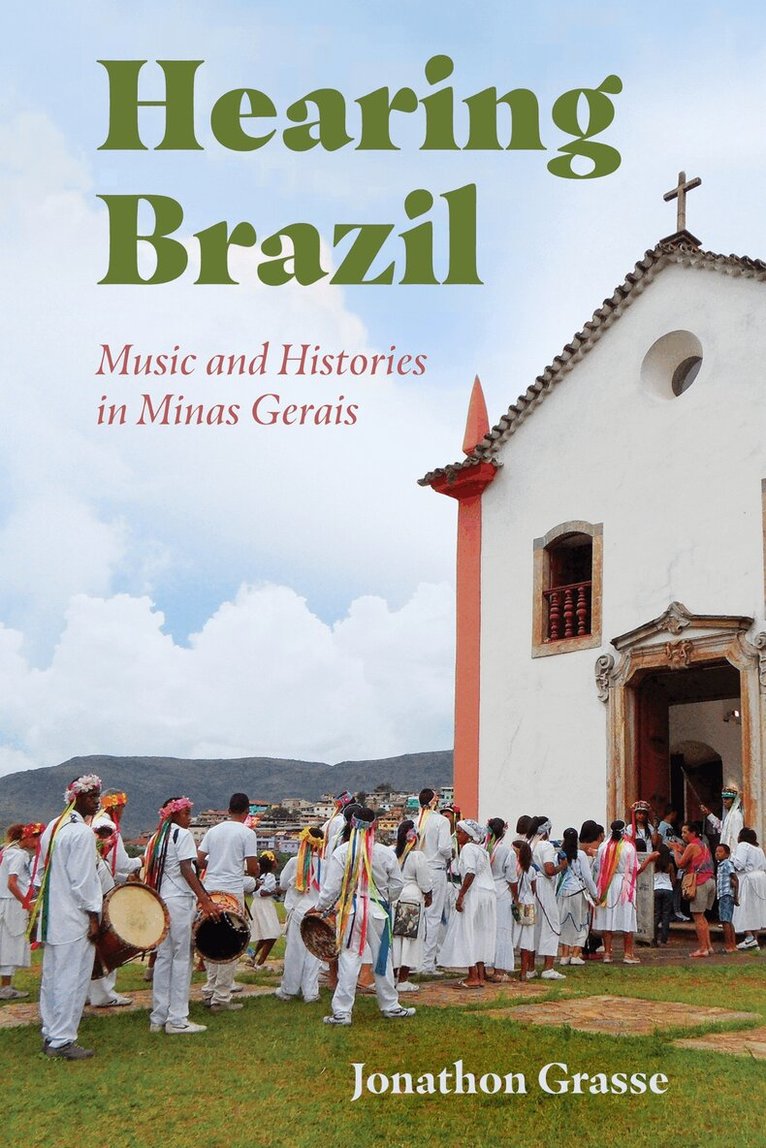
Minas Gerais is a state in southeastern Brazil deeply connected to the nation’s slave past and home to many traditions related to the African diaspora. Addressing a wide range of traditions helping to define the region, ethnomusicologist Jonathon Grasse examines the complexity of Minas Gerais by exploring the intersections of its history, music, and culture.Instruments, genres, social functions, and historical accounts are woven together to form a tapestry revealing a cultural territory’s development. The deep pool of Brazilian scholarship referenced in the book, with original translations by the author, cites over two hundred Portuguese-language publications focusing on Minas Gerais. This research was augmented by fieldwork, observations, and interviews completed over a twenty-five-year period and includes original photographs, many taken by the author.Hearing Brazil: Music and Histories in Minas Gerais surveys the colonial past, the vast hinterland countryside, and the modern, twenty-first-century state capital of Belo Horizonte, the metropolitan region of which is today home to over six million. Diverse legacies are examined, including an Afro-Brazilian heritage, eighteenth- and nineteenth-century liturgical music of the region’s "Minas Baroque," the instrument known as the viola, a musical profile of Belo Horizonte, and a study of the regionalist themes developed by the popular music collective the Clube da Esquina (Corner Club) led by Milton Nascimento with roots in the 1960s. Hearing Brazil champions the notion that Brazil’s unique role in the world is further illustrated by regionalist studies presenting details of musical culture.
264 kr
Skickas inom 7-10 vardagar
In 1972, a group of creative Brazilian musicians and poets informally led by singer-songwriter Milton Nascimento recorded a landmark double-LP titled Clube da Esquina (Corner Club). The album saw highly original songs by Milton, already an award-winning international star, sharing vinyl with those of Lô Borges, an unknown eighteen-year-old from Belo Horizonte, the capital of the state of Minas Gerais. There, where the street "corner" still exists, grew their collective also known as the Corner Club, as the artists collaborated on many subsequent albums boasting innovative blends of pop, jazz, rock, folk, classical influences, and, before Brazil’s return to civilian rule in 1985, poignant protest songs aimed at a cruel dictatorship. Drawing on a thirty-year relationship with Minas Gerais that includes interviews with Corner Club members and extensive research of Portuguese language sources, Jonathon Grasse presents an analysis of the artists, songs, and ideas comprising the LP that helps define this Brazilian generation.33 1/3 Global, a series related to but independent from 33 1/3, takes the format of the original series of short, music-based books and brings the focus to music throughout the world. With initial volumes focusing on Japanese and Brazilian music, the series will also include volumes on the popular music of Australia/Oceania, Europe, Africa, the Middle East, and more.
901 kr
Skickas inom 10-15 vardagar
In 1972, a group of creative Brazilian musicians and poets informally led by singer-songwriter Milton Nascimento recorded a landmark double-LP titled Clube da Esquina (Corner Club). The album saw highly original songs by Milton, already an award-winning international star, sharing vinyl with those of Lô Borges, an unknown eighteen-year-old from Belo Horizonte, the capital of the state of Minas Gerais. There, where the street "corner" still exists, grew their collective also known as the Corner Club, as the artists collaborated on many subsequent albums boasting innovative blends of pop, jazz, rock, folk, classical influences, and, before Brazil’s return to civilian rule in 1985, poignant protest songs aimed at a cruel dictatorship. Drawing on a thirty-year relationship with Minas Gerais that includes interviews with Corner Club members and extensive research of Portuguese language sources, Jonathon Grasse presents an analysis of the artists, songs, and ideas comprising the LP that helps define this Brazilian generation.33 1/3 Global, a series related to but independent from 33 1/3, takes the format of the original series of short, music-based books and brings the focus to music throughout the world. With initial volumes focusing on Japanese and Brazilian music, the series will also include volumes on the popular music of Australia/Oceania, Europe, Africa, the Middle East, and more.
183 kr
Skickas
Jazz Revolutionary is the first full biography of Eric Dolphy, passionately tracing his creative life from Los Angeles clubs of the late 1940s and 50s, to New York in the early 1960s, and on to Paris, where sixty years ago he died from the complications of undiagnosed diabetes. It presents an engaging examination of this innovative musician and composer, from his family background to posthumous memorials, and provides insight into his recordings both as sideman and leader. Dolphy emerged at the frontiers of post-bop and free jazz, collaborating with John Coltrane, Charles Mingus, Ornette Coleman, and Gunther Schuller, among others, during the early 1960s. This book accounts for his successes, trials, and tribulations. His critical reception is presented as an element of his career s ups and downs, ultimately leading to an attempt at a new life in Paris. The albums on which he appears are interpreted title by title, track by track, without unnecessary musical terminology or musical examples; instead of cold discographic charts, readers are brought into each recording with a descriptive prose framework reflecting Dolphy s performances on alto saxophone, flute, and bass clarinet. Eric Dolphy was perhaps jazz s first true multi-instrumentalist and a pioneer of avant-garde technique. He is also widely remembered by those who knew him as a kind, gracious human being. In Jazz Revolutionary, his artistic accomplishments, his friendships and family life, and his timeless music are brought together in one place for the first time.