Jordan T. Cash - Böcker
Visar alla böcker från författaren Jordan T. Cash. Handla med fri frakt och snabb leverans.
4 produkter
4 produkter
739 kr
Skickas inom 5-8 vardagar
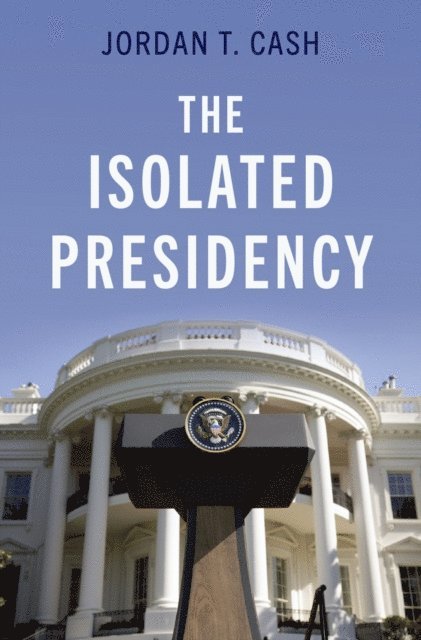
Since before the ratification of the Constitution, students, scholars, and statesmen in American politics have grappled with an important question: how powerful is the President of the United States? For many scholars, it is a question that can be answered only by considering factors outside the office itself, such as the president's popularity, personal clout, political talents, or institutional relationships.In The Isolated Presidency, Jordan T. Cash re-frames this question to instead ask what authority is available to all presidents. Drawing on the Constitution itself, Cash argues that the presidency possesses an internal logic derived from its structure, duties, and powers which not only grants the president a unique institutional perspective, but also provides the president with considerable agency and discretion in pursuing agendas.To gain a clear view of how the Constitution creates a baseline of authority that is available to all presidents, Cash examines the "isolated presidents"--presidents who were unelected, faced divided government, and were opposed by major factions of their own political parties. Stripped of all external supports, these presidents were left with nothing but their constitutional authority to rely on. Yet despite their disadvantageous circumstances, these presidents were able to achieve major policy successes solely by use of their constitutional powers. Through three case studies of isolated presidents, Cash illustrates how the Constitution creates an empowering logic within the presidency which orients presidential behavior and grants every president significant power and agency. As American politics remains polarized and divided, The Isolated Presidency provides lessons and examples of what constitutionally derived actions a president can take when confronted with the recurring issues of divided government and political gridlock.
322 kr
Skickas inom 10-15 vardagar
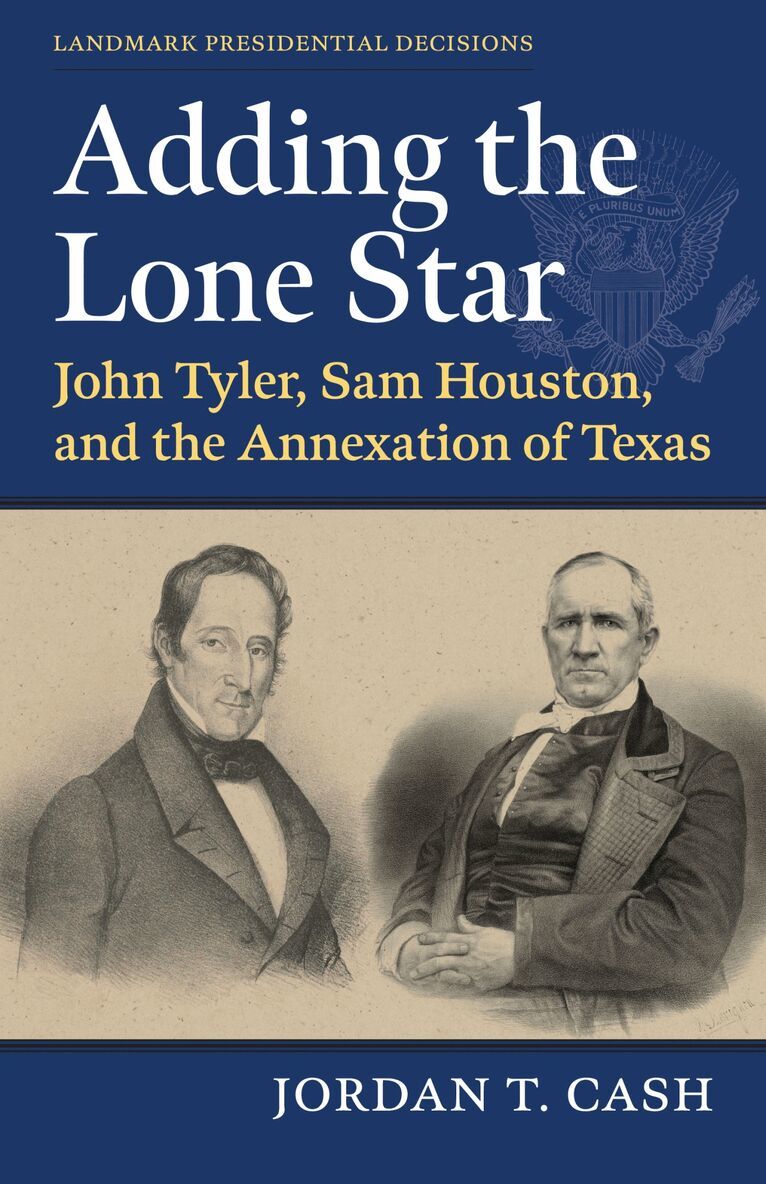
The annexation of Texas was one of the most momentous actions the United States government took in the antebellum period. Apart from adding what was the largest state in the Union at that time, it expedited further avenues for westward expansion, exacerbated tensions with Mexico resulting in the Mexican-American War, and accelerated the sectional conflict over slavery.While the familiar concept of Manifest Destiny gives the impression that Texas joining the United States was inevitable, the history is much more complicated. In Adding the Lone Star, Jordan Cash explores how the decisions and actions of a cast of political actors in the United States, Texas, Mexico, and Great Britain contributed to the addition of Texas to the Union.Cash focuses on the annexation of Texas as a two-president decision while examining the administrations of American President John Tyler and Texian President Sam Houston, providing a comparative case study of the American and Texian presidencies to better comprehend how executive authority may be used in a system of separation of powers.Tyler’s ability to push his agenda on Texas despite the lack of institutional support shows the strength of premodern presidential power. Houston’s actions give an alternative view of executive authority, since the Texian Republic, including the powers bestowed on the presidency, was structured on the model of its American counterpart. Tyler viewed the decision to annex Texas as beneficial for the United States as a whole while Houston considered it to be beneficial for Texas and proponents of slavery; Tyler’s secretary of state, John C. Calhoun, saw the decision as a victory for the South and the expansion of slavery.The examination of how these two presidents worked on the same issue at the same time but in largely different constitutional, institutional, political, and geographical contexts provides not only a better understanding of the history and politics of annexation but also an investigation of the nuances of presidential power in a constitutional system of checks and balances and separation of powers.
1 104 kr
Skickas inom 10-15 vardagar
The annexation of Texas was one of the most momentous actions the United States government took in the antebellum period. Apart from adding what was the largest state in the Union at that time, it expedited further avenues for westward expansion, exacerbated tensions with Mexico resulting in the Mexican-American War, and accelerated the sectional conflict over slavery.While the familiar concept of Manifest Destiny gives the impression that Texas joining the United States was inevitable, the history is much more complicated. In Adding the Lone Star, Jordan Cash explores how the decisions and actions of a cast of political actors in the United States, Texas, Mexico, and Great Britain contributed to the addition of Texas to the Union.Cash focuses on the annexation of Texas as a two-president decision while examining the administrations of American President John Tyler and Texian President Sam Houston, providing a comparative case study of the American and Texian presidencies to better comprehend how executive authority may be used in a system of separation of powers.Tyler’s ability to push his agenda on Texas despite the lack of institutional support shows the strength of premodern presidential power. Houston’s actions give an alternative view of executive authority, since the Texian Republic, including the powers bestowed on the presidency, was structured on the model of its American counterpart. Tyler viewed the decision to annex Texas as beneficial for the United States as a whole while Houston considered it to be beneficial for Texas and proponents of slavery; Tyler’s secretary of state, John C. Calhoun, saw the decision as a victory for the South and the expansion of slavery.The examination of how these two presidents worked on the same issue at the same time but in largely different constitutional, institutional, political, and geographical contexts provides not only a better understanding of the history and politics of annexation but also an investigation of the nuances of presidential power in a constitutional system of checks and balances and separation of powers.
1 343 kr
Skickas inom 10-15 vardagar
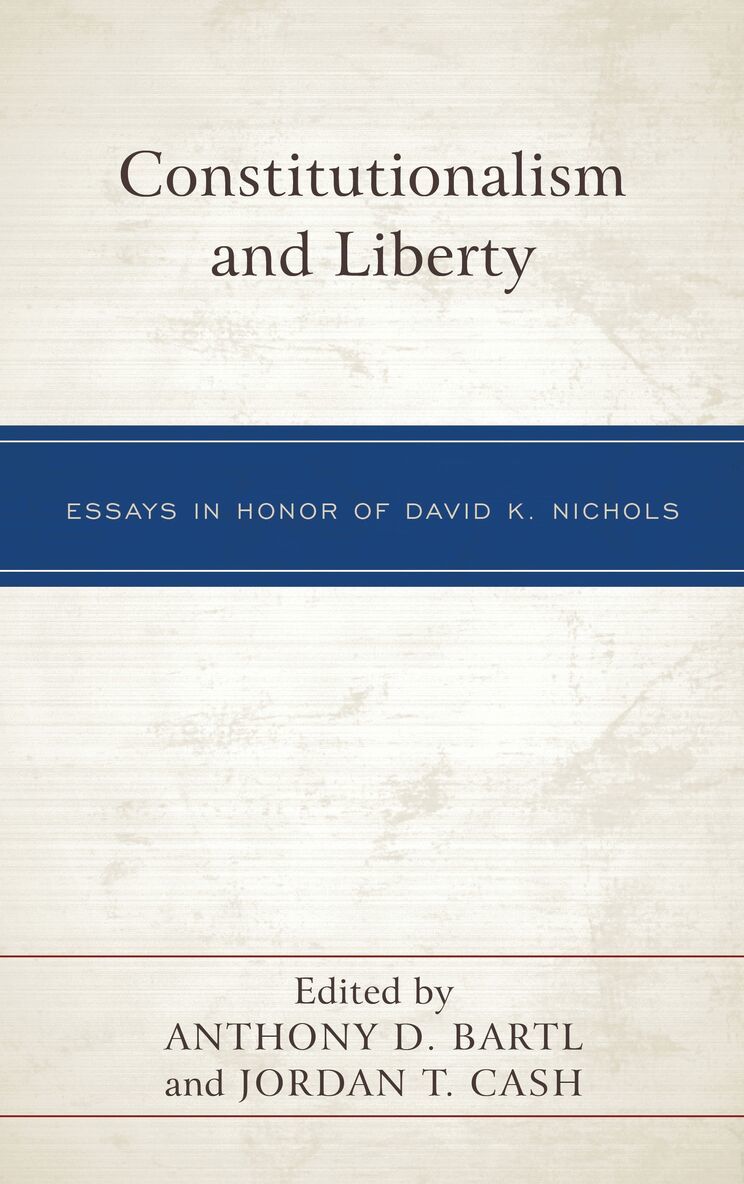
Constitutionalism and Liberty: Essays in Honor of David K. Nichols explores the relationship between liberty and constitutionalism in American politics and political theory, and is organized around the question of how human liberty is preserved and advanced while empowering government to have the necessary authority to effectively govern society. The essays themselves are divided into three areas reflecting the breadth and diversity of David K. Nichols’s scholarship. The first assesses how we should understand separation of powers and checks and balances in the American constitutional system. The second area treats different aspects of American legal practice and jurisprudence, including the powers and role of the American judiciary philosophically and institutionally as well as questions of administrative power, civil rights, parental rights, and symbolic speech. The final section examines a range of issues in political philosophy and theory, including two chapters on the intersection of political theory with literature and art. The array of subjects covered by these chapters is a testament to the broad influence of Nichols’ teaching and scholarship, and to the widening interest in aspects of American politics, constitutional law, and political theory that cross traditional barriers in political science.