Jorge F. Pérez-López - Böcker
Visar alla böcker från författaren Jorge F. Pérez-López. Handla med fri frakt och snabb leverans.
4 produkter
4 produkter
313 kr
Skickas inom 10-15 vardagar
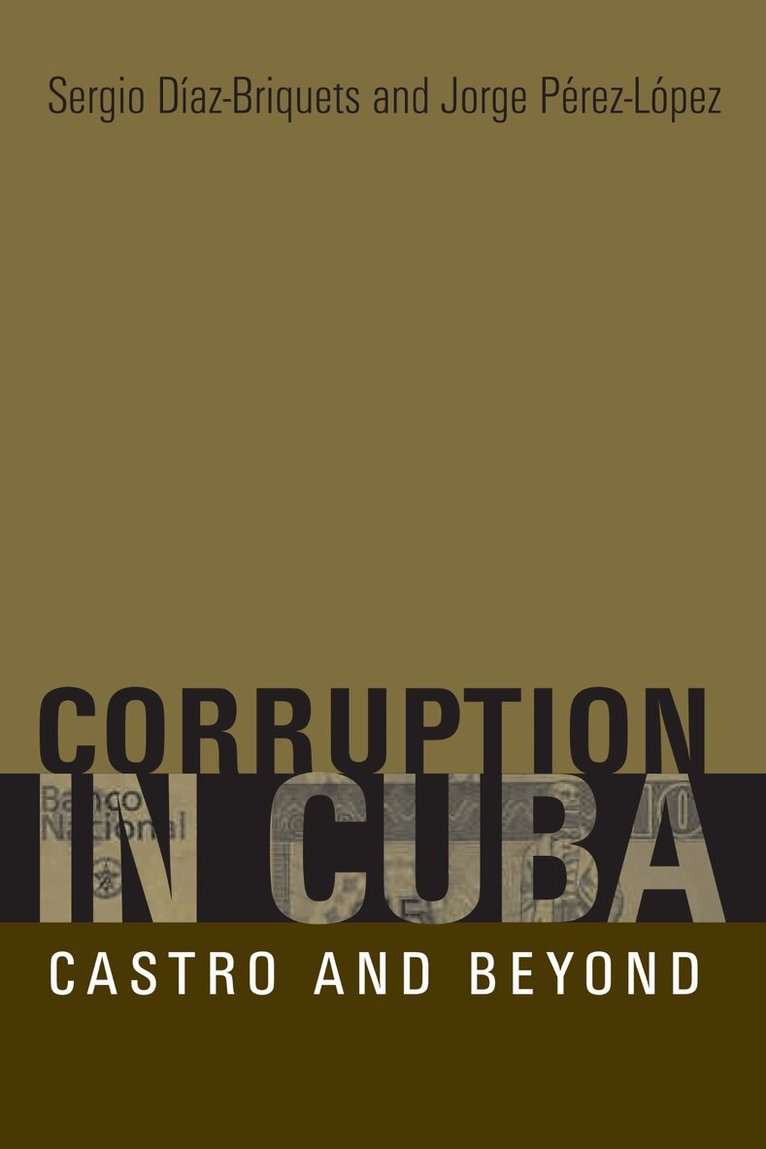
While Fidel Castro maintained his longtime grip on Cuba, revolutionary scholars and policy analysts turned their attention from how Castro succeeded (and failed), to how Castro himself would be succeeded-by a new government. Among the many questions to be answered was how the new government would deal with the corruption that has become endemic in Cuba. Even though combating corruption cannot be the central aim of post-Castro policy, Sergio DÍaz-Briquets and Jorge PÉrez-LÓpez suggest that, without a strong plan to thwart it, corruption will undermine the new economy, erode support for the new government, and encourage organized crime. In short, unless measures are taken to stem corruption, the new Cuba could be as messy as the old Cuba. Fidel Castro did not bring corruption to Cuba; he merely institutionalized it. Official corruption has crippled Cuba since the colonial period, but Castro's state-run monopolies, cronyism, and lack of accountability have made Cuba one of the world's most corrupt states. The former communist countries in Eastern Europe were also extremely corrupt, and analyses of their transitional periods suggest that those who have taken measures to control corruption have had more successful transitions, regardless of whether the leadership tilted toward socialism or democracy. To that end, DÍaz-Briquets and PÉrez-LÓpez, both Cuban Americans, do not advocate any particular system for Cuba's next government, but instead prescribe uniquely Cuban policies to minimize corruption whatever direction the country takes after Castro. As their work makes clear, averting corruption may be the most critical obstacle in creating a healthy new Cuba.
1 719 kr
Skickas inom 5-8 vardagar
One of the key issues that faces Cuban policymakers today, and will continue to face them, is what steps to take in order to ensure the future of the sugar industry. In 2002, nearly one-half of the country's cultivated land was occupied by the 156 fully functional sugar mills, more than a dozen plants and refineries, and the complex transportation infrastructure brought about by the commerce. The loss of preferential markets for Cuban sugar that arose from the demise of the international socialist community constitutes a crisis that the Cuban government has only begun to address, with a radical restructuring plan that would foresee the reduction of sugar land and the elimination of about 100,000 jobs, for increased economic emphasis on tourism. The radical premise of this volume is that there is a future in the twenty-first century for a reinvented Cuban sugar agroindustry, responsive to market signals, organized around smaller and more agile production units, producing raw sugar as well as high value-added outputs, and using some of the facilities to produce ethanol and generate electricity. The editors have asked over a dozen recognized world experts on Cuban agroindustry to analyze specific topics and make recommendations that would not only reinvent an industry for effective transition to a free-market environment but that has the potential to reinvigorate the Cuban economy, providing employment opportunities and generating wealth for generations of Cubans to come.
701 kr
Skickas inom 5-8 vardagar
One of the key issues that faces Cuban policymakers today, and will continue to face them, is what steps to take in order to ensure the future of the sugar industry. In 2002, nearly one-half of the country's cultivated land was occupied by the 156 fully functional sugar mills, more than a dozen plants and refineries, and the complex transportation infrastructure brought about by the commerce. The loss of preferential markets for Cuban sugar that arose from the demise of the international socialist community constitutes a crisis that the Cuban government has only begun to address, with a radical restructuring plan that would foresee the reduction of sugar land and the elimination of about 100,000 jobs, for increased economic emphasis on tourism. The radical premise of this volume is that there is a future in the twenty-first century for a reinvented Cuban sugar agroindustry, responsive to market signals, organized around smaller and more agile production units, producing raw sugar as well as high value-added outputs, and using some of the facilities to produce ethanol and generate electricity. The editors have asked over a dozen recognized world experts on Cuban agroindustry to analyze specific topics and make recommendations that would not only reinvent an industry for effective transition to a free-market environment but that has the potential to reinvigorate the Cuban economy, providing employment opportunities and generating wealth for generations of Cubans to come.
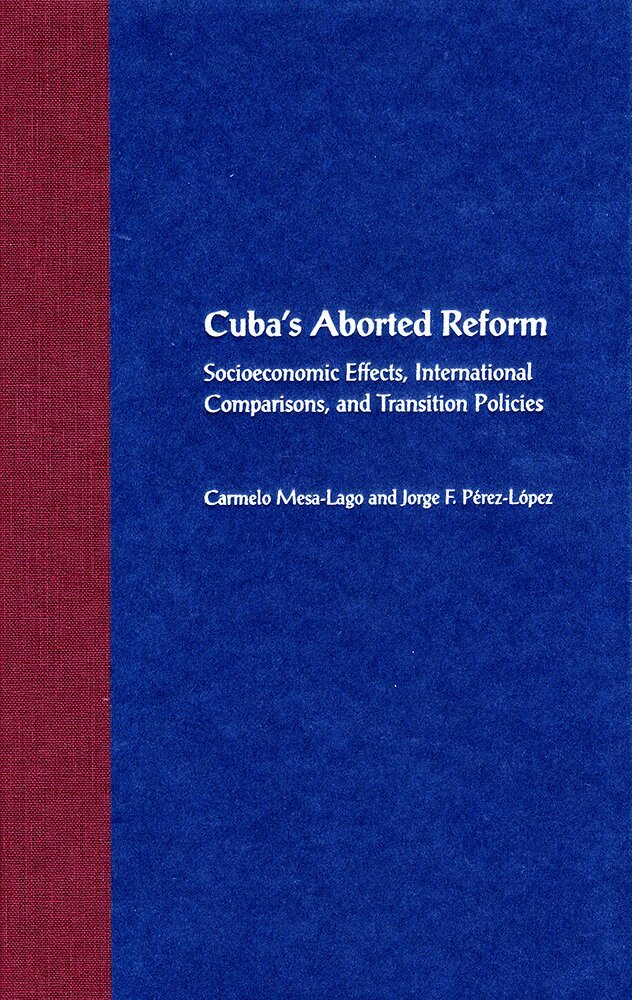
Cuba's Aborted Reform
Socioeconomic Effects, International Comparisons, and Transition Policies
Inbunden, Engelska, 2005
665 kr
Skickas inom 10-15 vardagar
This volume analyzes Cuban socioeconomic policies and evaluates their performance since the collapse of the Soviet Union and the socialist camp. It provides a brief historical background to the crisis and analyzes in detail the deterioration and incomplete recovery since 1990. Comparing Cuba's performance with that of other Latin American and former socialist countries, it summarizes the views of noted Cuban economists and proposes policies that architects of the Cuban transition might wish to put in place after the passing of Castro. Focusing on economic and social policies and performance during the ""Special Period in Time of Peace"" (1990-2004), the authors draw on an impressive array of statistics to show that in 2005 Cuba has yet to return to economic levels of the late 1980s, and the access and quality of many of the highly touted social services - education, health care, social security, housing - also have not been restored to the levels achieved prior to the economic crisis triggered by the collapse of the Soviet Union. The authors demonstrate that governmental concerns about a strengthening private sector resulting in loss of political control finally prompted the Cuban leadership to prioritize political over economic ends. Centralized economic control has been fully restored, even though it will undoubtedly result in further deterioration of economic conditions and declining standards of living.