José María Maravall - Böcker
Visar alla böcker från författaren José María Maravall. Handla med fri frakt och snabb leverans.
6 produkter
6 produkter
995 kr
Skickas inom 7-10 vardagar
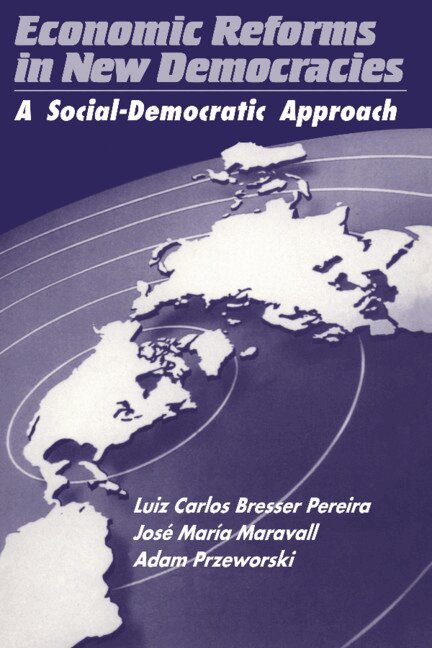
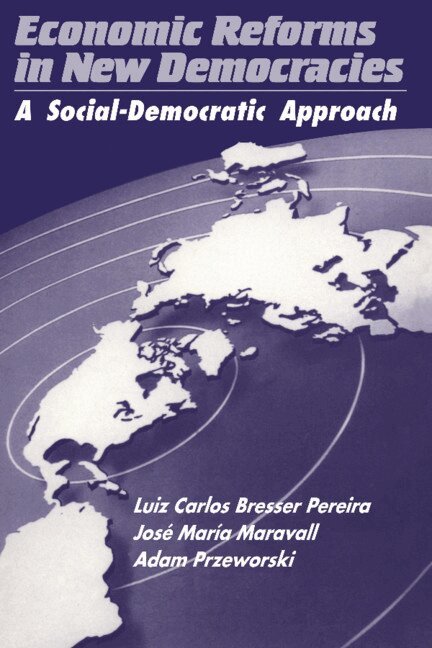
This 1993 book assesses differing experiences of the transition to democracy in the countries of Southern Europe, Latin America and Eastern Europe. The authors try to determine what the conditions for successful transitions are. They argue against the 'big bang' approach, espoused by many advisors to reforming countries, on the grounds that this approach bypasses the newly formed institutions of democracy and, ultimately, may undermine the necessary consensus to support painful economic reforms. The most successful reforms, they argue, have been those agreed upon through a process of democratic negotiation. A new democracy must offer politically important groups incentives to process their demands within the democratic institutional framework; otherwise, their support will be tenuous and the system may collapse under the strains incurred by painful economic reforms.
322 kr
Skickas inom 7-10 vardagar
This 1993 book assesses differing experiences of the transition to democracy in the countries of Southern Europe, Latin America and Eastern Europe. The authors try to determine what the conditions for successful transitions are. They argue against the 'big bang' approach, espoused by many advisors to reforming countries, on the grounds that this approach bypasses the newly formed institutions of democracy and, ultimately, may undermine the necessary consensus to support painful economic reforms. The most successful reforms, they argue, have been those agreed upon through a process of democratic negotiation. A new democracy must offer politically important groups incentives to process their demands within the democratic institutional framework; otherwise, their support will be tenuous and the system may collapse under the strains incurred by painful economic reforms.
Del 5 - Cambridge Studies in the Theory of Democracy
Democracy and the Rule of Law
Häftad, Engelska, 2003
366 kr
Skickas inom 7-10 vardagar
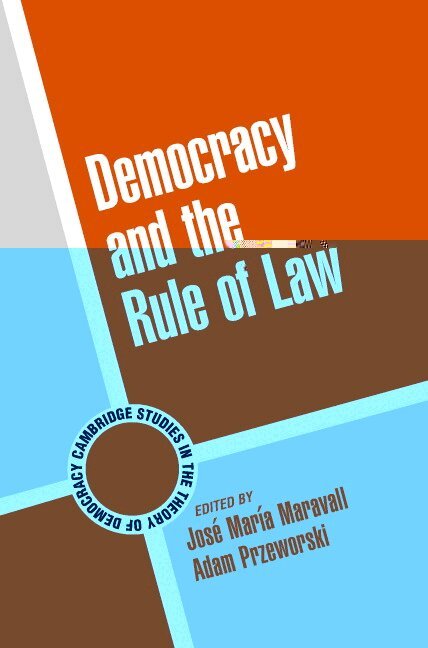
This book addresses the question of why governments sometimes follow the law and other times choose to evade the law. The traditional answer of jurists has been that laws have an autonomous causal efficacy: law rules when actions follow anterior norms; the relation between laws and actions is one of obedience, obligation, or compliance. Contrary to this conception, the authors defend a positive interpretation where the rule of law results from the strategic choices of relevant actors. Rule of law is just one possible outcome in which political actors process their conflicts using whatever resources they can muster: only when these actors seek to resolve their conflicts by recourse to la, does law rule. What distinguishes 'rule-of-law' as an institutional equilibrium from 'rule-by-law' is the distribution of power. The former emerges when no one group is strong enough to dominate the others and when the many use institutions to promote their interest.
Del 7 - Cambridge Studies in the Theory of Democracy
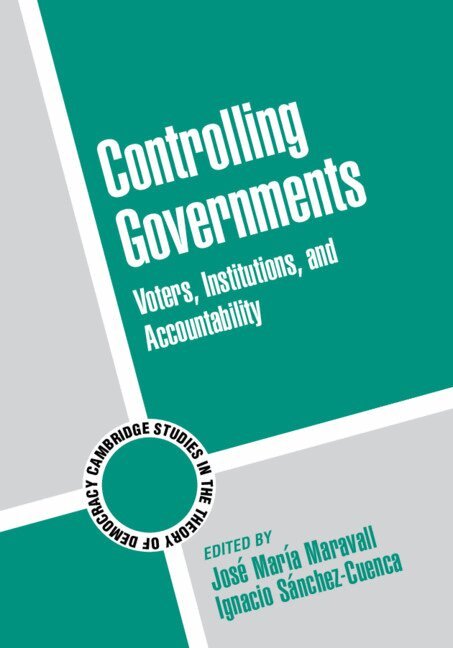
Controlling Governments
Voters, Institutions, and Accountability
Häftad, Engelska, 2007
322 kr
Skickas inom 7-10 vardagar
How much influence do citizens have to control the government? What guides voters at election time? Why do governments survive? How do institutions modify the power of the people over politicians? The book combines academic analytical rigor with comparative analysis to identify how much information voters must have to select a politician for office, or for holding a government accountable; whether parties in power can help voters to control their governments; how different institutional arrangements influence voters' control; why politicians choose particular electoral systems; and what economic and social conditions may undermine not only governments, but democracy. Arguments are backed by vast macro and micro empirical evidence. There are cross-country comparisons and survey analyses of many countries. In every case there has been an attempt to integrate analytical arguments and empirical research. The goal is to shed new light on perplexing questions of positive democratic theory.
Del 5 - Cambridge Studies in the Theory of Democracy
Democracy and the Rule of Law
Inbunden, Engelska, 2003
1 085 kr
Skickas inom 7-10 vardagar
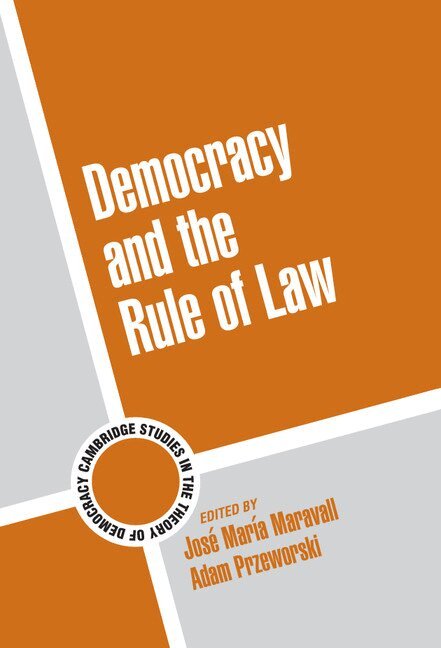
This book addresses the question of why governments sometimes follow the law and other times choose to evade the law. The traditional answer of jurists has been that laws have an autonomous causal efficacy: law rules when actions follow anterior norms; the relation between laws and actions is one of obedience, obligation, or compliance. Contrary to this conception, the authors defend a positive interpretation where the rule of law results from the strategic choices of relevant actors. Rule of law is just one possible outcome in which political actors process their conflicts using whatever resources they can muster: only when these actors seek to resolve their conflicts by recourse to la, does law rule. What distinguishes 'rule-of-law' as an institutional equilibrium from 'rule-by-law' is the distribution of power. The former emerges when no one group is strong enough to dominate the others and when the many use institutions to promote their interest.
Del 7 - Cambridge Studies in the Theory of Democracy
Controlling Governments
Voters, Institutions, and Accountability
Inbunden, Engelska, 2007
1 034 kr
Skickas inom 7-10 vardagar
How much influence do citizens have to control the government? What guides voters at election time? Why do governments survive? How do institutions modify the power of the people over politicians? The book combines academic analytical rigor with comparative analysis to identify how much information voters must have to select a politician for office, or for holding a government accountable; whether parties in power can help voters to control their governments; how different institutional arrangements influence voters' control; why politicians choose particular electoral systems; and what economic and social conditions may undermine not only governments, but democracy. Arguments are backed by vast macro and micro empirical evidence. There are cross-country comparisons and survey analyses of many countries. In every case there has been an attempt to integrate analytical arguments and empirical research. The goal is to shed new light on perplexing questions of positive democratic theory.