José E. Alvarez - Böcker
Visar alla böcker från författaren José E. Alvarez. Handla med fri frakt och snabb leverans.
7 produkter
7 produkter
1 204 kr
Skickas inom 5-8 vardagar
The gender gap with respect to wealth and property is a chasm. For over 40 years, the leading international treaty body on women's rights, the Committee on the Elimination of All Forms of Discrimination Against Women (the CEDAW Committee), has been generating jurisprudence interpreting CEDAW's obligations that states protect the equal rights of women in relationships; family rights, including inheritance; rights to land, adequate housing, financial credit, social benefits, intellectual property, and other economic rights dependent on equal access to justice.This book uses the CEDAW Committee's own texts: its General Recommendations, Views in response to communications, Concluding Observations in response to State reports, and Reports on Inquiries. The book finds that CEDAW's vision of what it means for women to have equal rights to property is dramatically different from what many scholars consider to be the leading source of "the international law of property," namely the case law generated on behalf of foreign investors' property under the international investment regime. CEDAW's vision is also more far-reaching and nuanced than the gender equality approaches followed by international financial institutions like the World Bank, whose gender equality rhetoric exceeds its actual on-the-ground development efforts.While CEDAW's property rights converge with those protected under other international human rights regimes, they remain unique in addressing the underlying patriarchal structures, stereotypes, and forms of intersectional discrimination that have undermined the fundamental rights of women and girls and led to their continued impoverishment all around the world. This book concludes that CEDAW's re-engendering of property--although a flawed and evolving work in progress--has the potential to be transformative for the half of the planet who is more likely to be treated as property than to have any.
2 338 kr
Skickas inom 5-8 vardagar
International Organizations as Law-makers addresses how international organizations with a global reach, such as the UN and the WTO, have changed the mechanisms and reasoning behind the making, implementation, and enforcement of international law. Alvarez argues that existing descriptions of international law and international organizations do not do justice to the complex changes resulting from the increased importance of these institutions after World War II, and especially from changes after the end of the Cold War. In particular, this book examines the impact of the institutions on international law through the day to day application and interpretation of institutional law, the making of multilateral treaties, and the decisions of a proliferating number of institutionalized dispute settlers. The introductory chapters synthesize and challenge the existing descriptions and theoretical frameworks for addressing international organizations. Part I re-examines the law resulting from the activity of political organs, such as the UN General Assembly and Security Council, technocratic entities within UN specialized agencies, and international financial institutions such as the IMF, and considers their impact on the once sacrosanct 'domestic jurisdiction' of states, as well as on traditional conceptions of the basic sources of international law. Part II assesses the impact of the move towards institutions on treaty-making. It addresses the interplay between negotiating venues and procedures and interstate cooperation and asks whether the involvement of international organizations has made modern treaties 'better'. Part III examines the proliferation of institutionalized dispute settlers, from the UN Secretary General to the WTO's dispute settlement body, and re-examines their role as both settlers of disputes and law-makers. The final chapter considers the promise and the perils of the turn to formal institutions for the making of the new kinds of 'soft' and 'hard' global law, including the potential for forms of hegemonic international law.
726 kr
Skickas inom 5-8 vardagar
International Organizations as Law-makers addresses how international organizations with a global reach, such as the UN and the WTO, have changed the mechanisms and reasoning behind the making, implementation, and enforcement of international law. Alvarez argues that existing descriptions of international law and international organizations do not do justice to the complex changes resulting from the increased importance of these institutions after World War II, and especially from changes after the end of the Cold War. In particular, this book examines the impact of the institutions on international law through the day to day application and interpretation of institutional law, the making of multilateral treaties, and the decisions of a proliferating number of institutionalized dispute settlers. The introductory chapters synthesize and challenge the existing descriptions and theoretical frameworks for addressing international organizations. Part I re-examines the law resulting from the activity of political organs, such as the UN General Assembly and Security Council, technocratic entities within UN specialized agencies, and international financial institutions such as the IMF, and considers their impact on the once sacrosanct 'domestic jurisdiction' of states, as well as on traditional conceptions of the basic sources of international law. Part II assesses the impact of the move towards institutions on treaty-making. It addresses the interplay between negotiating venues and procedures and interstate cooperation and asks whether the involvement of international organizations has made modern treaties 'better'. Part III examines the proliferation of institutionalized dispute settlers, from the UN Secretary General to the WTO's dispute settlement body, and re-examines their role as both settlers of disputes and law-makers. The final chapter considers the promise and the perils of the turn to formal institutions for the making of the new kinds of 'soft' and 'hard' global law, including the potential for forms of hegemonic international law.
The Evolving International Investment Regime
Expectations, Realities, Options
Inbunden, Engelska, 2011
1 585 kr
Skickas inom 5-8 vardagar
With the growth of the global economy over the past two decades, foreign direct investment (FDI) laws, at both the national and international levels, have undergone rapid development in order to strengthen the protection standards for foreign investors. In terms of international investment law, a network of international investment agreements has arisen as a way to address FDI growth. FDI backlash, reflective of more restrictive regulation, has also emerged. The Evolving International Investment Regime analyzes the existing challenges to the international investment regime, and addresses these challenges going forward. It also examines the dynamics of the international regime, as well as a broader view of the changing global economic reality both in the United States and in other countries. The content for the book is a compendium of articles by leading thinkers, originating from the International Investment Conference "What's New in International Investment Law and Policy?"
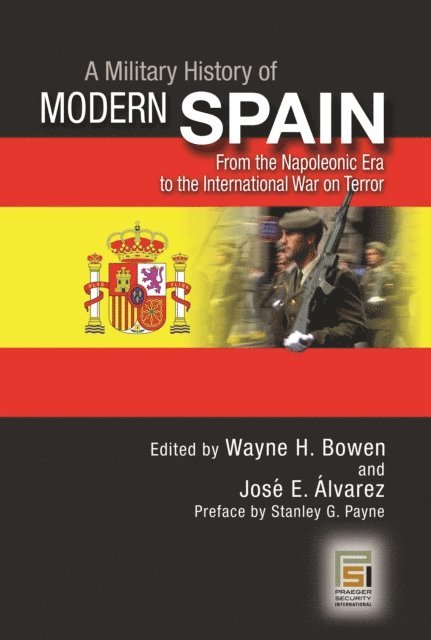
Military History of Modern Spain
From the Napoleonic Era to the International War on Terror
Inbunden, Engelska, 2007
1 212 kr
Skickas inom 5-8 vardagar
In the 19th and 20th centuries, Spain was a key player in the military conflagrations that created modern Europe. From the Napoleonic Wars, through the dress rehearsal for World War II that was the Spanish Civil War, to the grim struggle against terrorism today, the military history of modern Spain has both shaped and reflected larger forces beyond its borders.This volume traces the course of Spanish military history, primarily during the 20th century. Chapter 1 provides the foundation for the role of the Spanish Army at home (the War of Independence [Napoleonic War], the Carlist Wars, and pronunciamientos), abroad (Morocco, 1859-60), and as an instrument for Liberal reforms in Spain. Chapter 2 covers the period following the Spanish-American War as the Army redirected its focus to the Spanish Protectorate in northern Morocco. This chapter covers the Rif Rebellion (1921-27), the dictatorship of Miguel Primo de Rivera (1923-30) and concludes with the end of the monarchy and the establishment of the 2nd Republic in 1931. Chapters 3 and 4 present the two armies of the Spanish Civil War, as well as their relationship to the warring factions of Nationalists and Republicans. Chapter 5 looks at the Spanish Army during World War II on the Eastern Front (Russia), in its overseas colonies, as well as in Spain. De-colonialism is covered in chapter 6 as Spain, following the lead of the other European powers, began to shed itself of its African empire. Chapter 8 charts Spain's integration into the Western defense community in the 1950s, its membership in NATO, and its participation in peacekeeping and humanitarian missions in the Balkans and the Middle East. Chapter 9 focuses on Spain's struggle against terrorism, both the domestic Basques of ETA (Fatherland and Liberty) and the newer conflict against al-Qaeda and radical Islamic fundamentalism.
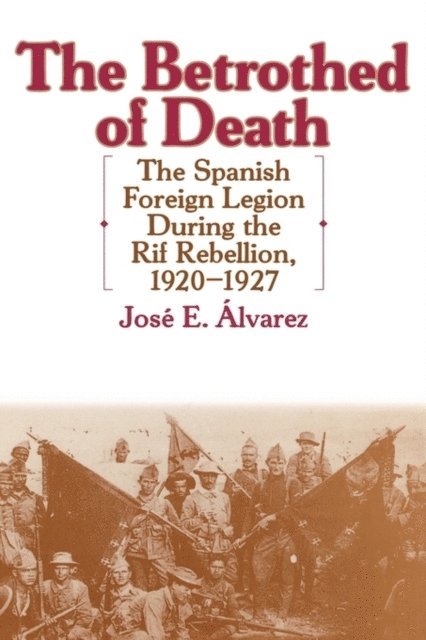
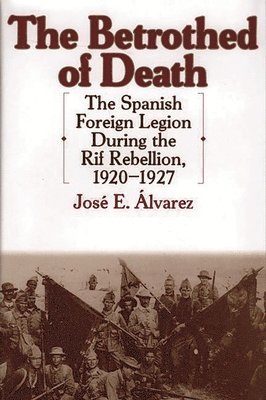
Betrothed of Death
The Spanish Foreign Legion During the Rif Rebellion, 1920-1927
Inbunden, Engelska, 2001
1 039 kr
Skickas inom 10-15 vardagar
Following her defeat in the Spanish-American War of 1898, Spain shifted her colonial focus to her Protectorate in northern Morocco. When Spanish conscripts began to fight and to die by the thousands, political fallout forced the government to create a new unit of professional soldiers. This unit would serve the dual function of providing fighting men for Moroccan service, while sparing the lives of conscripted men. Under its founder, José Millán Astray, and his deputy, Francisco Franco, the Spanish Foreign Legion would quickly become the spearhead for Spain's army in Africa. This is the story of the creation, organization, and combat role of the Legion in its formative years from 1919 to 1927.Based upon archival sources in Madrid, Segovia, and Ceuta, this is the first and most complete history in English or Spanish of the early years of the Spanish Foreign Legion. The unit was instrumental in crushing Abd-el-Krim's rebellion against Spanish colonial authority. When the Riffians annihilated the army of General Silvestre at Annual in 1921 and were poised to attack the Spanish enclave of Melilla, it was the arrival of the Legion that pacified its panic-stricken citizens. The force would be in the vanguard of all major offensives undertaken in recapturing the territory lost in 1921, and its amphibious landing at Alhucemas Bay in 1925 marked the beginning of the end for the Rif Rebellion.
1 097 kr
Skickas inom 5-8 vardagar
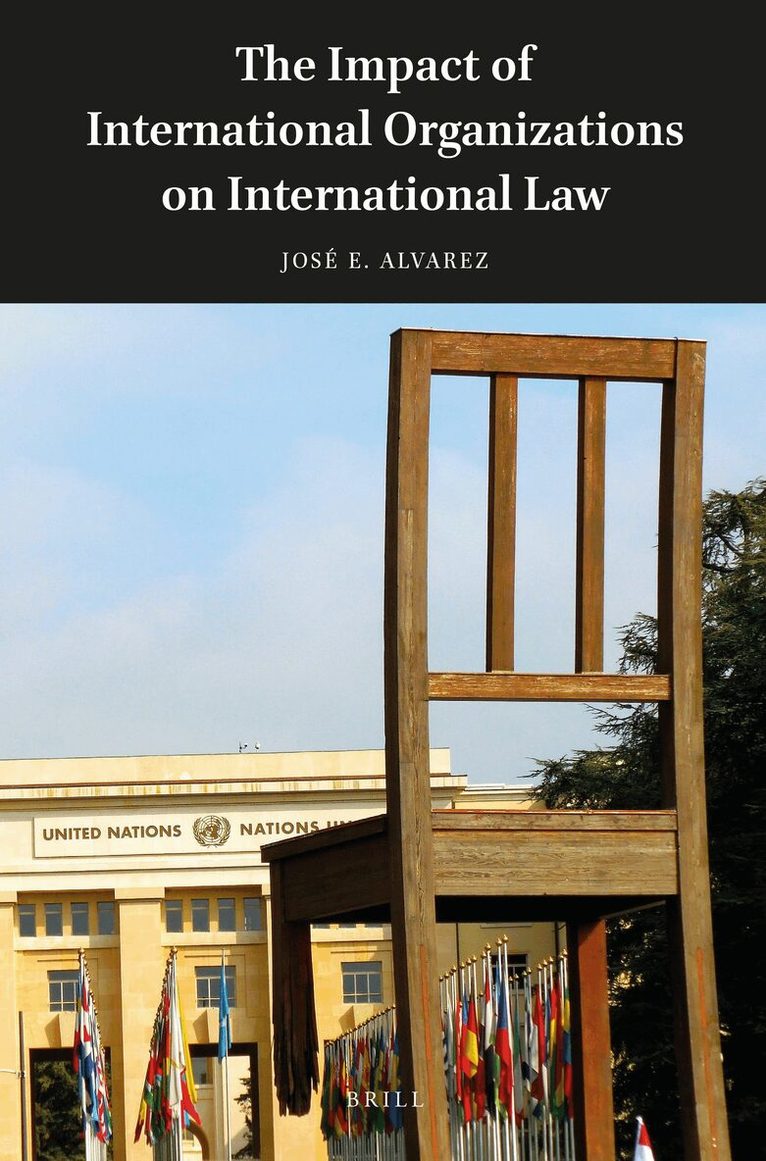
The Impact of International Organizations on International Law addresses how international organizations, particularly those within the UN system, have changed the forms, contents, and effects of international law. Professor Jose Alvarez considers the impact on sovereigns and actions taken by the contemporary Security Council, the UN General Assembly, and UN Specialized Agencies such as the World Health Organization. He considers the diverse functions performed by adjudicators – from judges of the International Criminal Court to arbitrators within the international investment regime. This text raises fundamental questions concerning the future of international law given the challenges international organizations pose to legal positivism, to traditional conceptions of sovereignty, and to the rule of law itself.