José Pinheiro - Böcker
Visar alla böcker från författaren José Pinheiro. Handla med fri frakt och snabb leverans.
4 produkter
4 produkter
2 380 kr
Skickas inom 10-15 vardagar
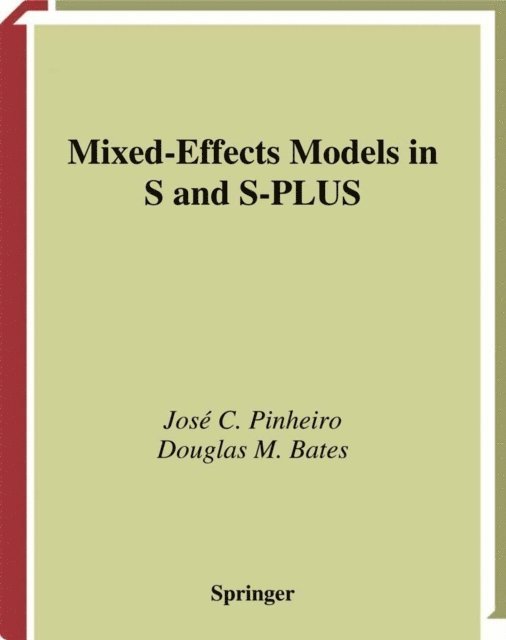
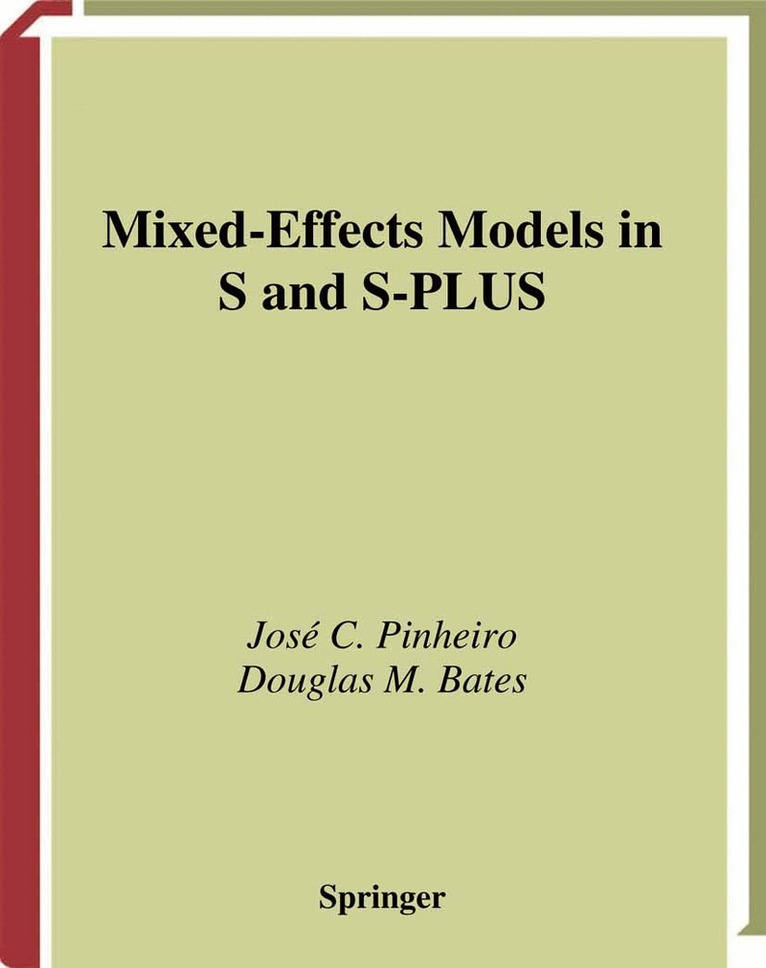
This book provides an overview of the theory and application of linearand nonlinear mixed-effects models in the analysis of grouped data,such as longitudinal data, repeated measures, and multilevel data. Aunified model-building strategy for both linear and nonlinear modelsis presented and applied to the analysis of over 20 real datasets froma wide variety of areas, including pharmacokinetics, agriculture, andmanufacturing. A strong emphasis is placed on the use of graphicaldisplays at the various phases of the model-building process, startingwith exploratory plots of the data and concluding with diagnosticplots to assess the adequacy of a fitted model. Over 170 figures areincluded in the book.The NLME library for analyzing mixed-effects models in S andS-PLUS, developed by the authors, provides the underlyingsoftware for implementing the methods presented in the text, beingdescribed and illustrated in detail throughout the book.The balanced mix of real data examples, modeling software, and theorymakes this book a useful reference for practitioners using mixed-effects models in their data analyses.It can also be used as a text for a one-semester graduate-level applied course in mixed-effects models. Researchers in statistical computing will also find this book appealing for its presentation of novel andefficient computational methods for fitting linear and nonlinearmixed-effects models.Jose C. Pinheiro has been a member of the technical staff instatistics research at Bell Laboratories since 1996. He received hisPh.D. in Statistics from and worked for two years in the Department of Biostatistics at the University of Wisconsin-Madison. The author of several articles in mixed-effects models, he is a member of the American Statistical Association and the Biometric Society. Douglas M. Bates is Professor of Statistics at the University of Wisconsin-Madison. He is the author, with Donald G. Watts, of Nonlinear Regression Analysis and Its Applications, aFellow of the American Statistical Association, and a former chair ofits Statistical Computing Section.
2 311 kr
Skickas inom 10-15 vardagar
“Over 170 figures are included in the book. … the material covered in the book is self-contained … . The balanced mix of real data examples, modeling software, and theory makes this book a useful reference for practitioners who use, or intend to use, mixed-effects models in their data analyses.
1 841 kr
Skickas inom 10-15 vardagar
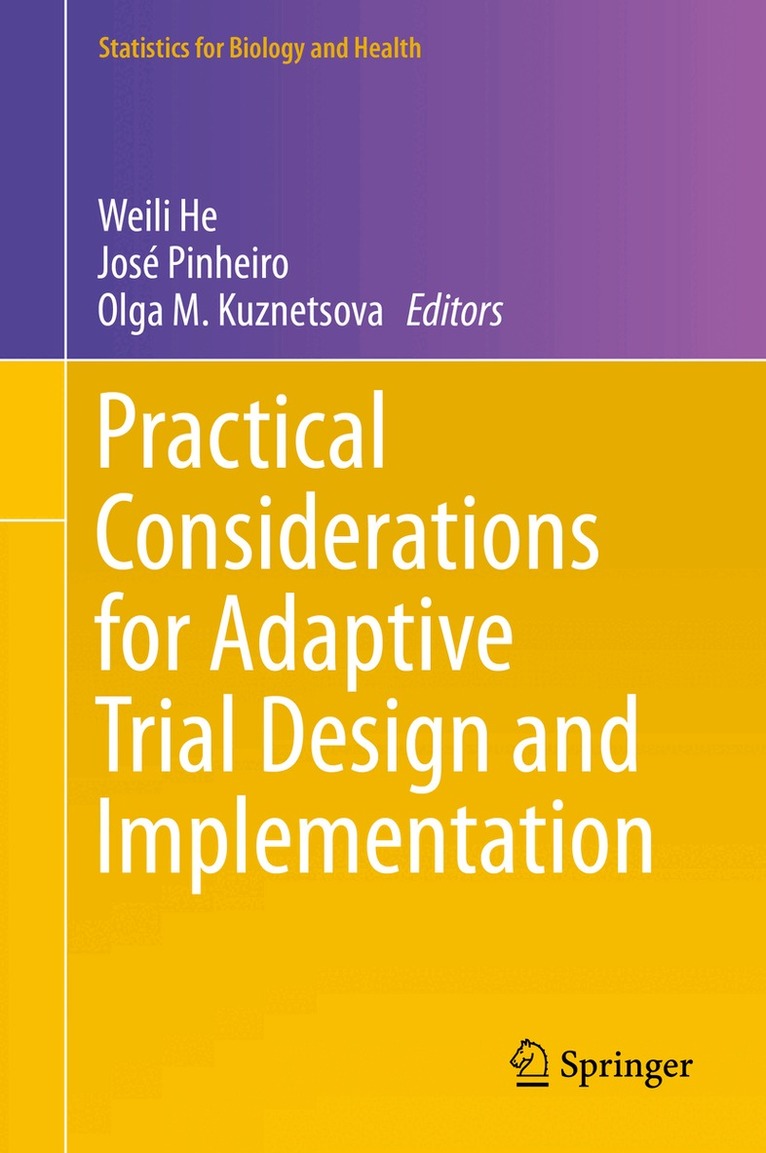
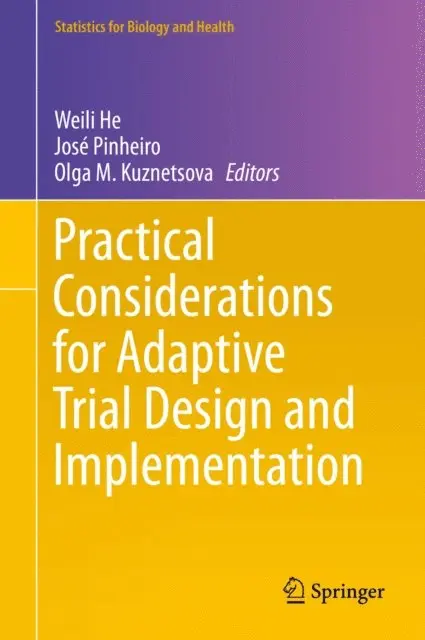
This edited volume is a definitive text on adaptive clinical trial designs from creation and customization to utilization. As this book covers the full spectrum of topics involved in the adaptive designs arena, it will serve as a valuable reference for researchers working in industry, government and academia. The target audience is anyone involved in the planning and execution of clinical trials, in particular, statisticians, clinicians, pharmacometricians, clinical operation specialists, drug supply managers, and infrastructure providers. In spite of the increased efficiency of adaptive trials in saving costs and time, ultimately getting drugs to patients sooner, their adoption in clinical development is still relatively low. One of the chief reasons is the higher complexity of adaptive design trials as compared to traditional trials. Barriers to the use of clinical trials with adaptive features include the concerns about the integrity of study design and conduct, the risk of regulatory non-acceptance, the need for an advanced infrastructure for complex randomization and clinical supply scenarios, change management for process and behavior modifications, extensive resource requirements for the planning and design of adaptive trials and the potential to relegate key decision makings to outside entities. There have been limited publications that address these practical considerations and recommend best practices and solutions. This book fills this publication gap, providing guidance on practical considerations for adaptive trial design and implementation. The book comprises three parts: Part I focuses on practical considerations from a design perspective, whereas Part II delineates practical considerations related to the implementation of adaptive trials. Putting it all together, Part III presents four illustrative case studies ranging from description and discussion of specific adaptive trial design considerations to the logistic and regulatory issues facedin trial implementation.Bringing together the expertise of leading key opinion leaders from pharmaceutical industry, academia, and regulatory agencies, this book provides a balanced and comprehensive coverage of practical considerations for adaptive trial design and implementation.
1 841 kr
Skickas inom 10-15 vardagar
This edited volume is a definitive text on adaptive clinical trial designs from creation and customization to utilization. As this book covers the full spectrum of topics involved in the adaptive designs arena, it will serve as a valuable reference for researchers working in industry, government and academia. The target audience is anyone involved in the planning and execution of clinical trials, in particular, statisticians, clinicians, pharmacometricians, clinical operation specialists, drug supply managers, and infrastructure providers. In spite of the increased efficiency of adaptive trials in saving costs and time, ultimately getting drugs to patients sooner, their adoption in clinical development is still relatively low. One of the chief reasons is the higher complexity of adaptive design trials as compared to traditional trials. Barriers to the use of clinical trials with adaptive features include the concerns about the integrity of study design and conduct, the risk of regulatory non-acceptance, the need for an advanced infrastructure for complex randomization and clinical supply scenarios, change management for process and behavior modifications, extensive resource requirements for the planning and design of adaptive trials and the potential to relegate key decision makings to outside entities. There have been limited publications that address these practical considerations and recommend best practices and solutions. This book fills this publication gap, providing guidance on practical considerations for adaptive trial design and implementation. The book comprises three parts: Part I focuses on practical considerations from a design perspective, whereas Part II delineates practical considerations related to the implementation of adaptive trials. Putting it all together, Part III presents four illustrative case studies ranging from description and discussion of specific adaptive trial design considerations to the logistic and regulatory issues facedin trial implementation.Bringing together the expertise of leading key opinion leaders from pharmaceutical industry, academia, and regulatory agencies, this book provides a balanced and comprehensive coverage of practical considerations for adaptive trial design and implementation.