Joseph A. Amato - Böcker
Visar alla böcker från författaren Joseph A. Amato. Handla med fri frakt och snabb leverans.
7 produkter
7 produkter
381 kr
Skickas inom 10-15 vardagar
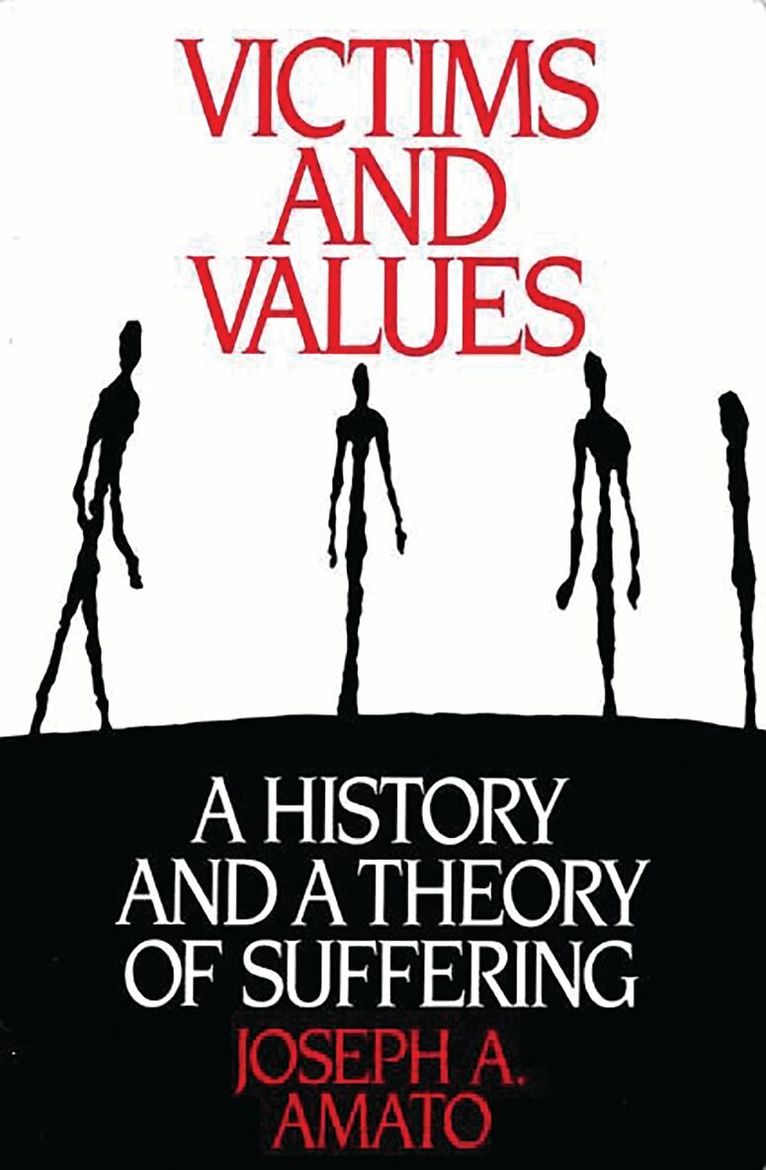
Victims and Values joins history and ethics, conducting a timely inquiry into conscience and politics. Mindful of William James's notion that ethics must be grounded in the historical situation, this book examines fundamental ambiquities, dichotomies, and contradictions that we experience about the worth of our own suffering and that of others. In particular, it analyzes how victims make a powerful claim upon contemporary conscience and politics. Amato distances himself equally from those who deny suffering all substantive meaning and those who fashionably transform it into self-righteous identities and political rhetorics and ideologies. Amato's hope is that each person will be able to take measure of the suffering of others, while still remaining able to value his own suffering.After distinguishing pain from suffering, Amato starts his work with the assumption that humanity must interpret and give meaning to its pains and sufferings. Amato examines the fundamental place of suffering, sacrifice, and victims in Greek and Christian cultures. Reaching the central object of his study, the modern mind, Amato shows how the reformist world view of the eighteenth century philosopher sought to reduce suffering to a matter of rational calculation and how the progressive views of the nineteenth century dedicated the most profound energies of society and state to the elimination of human suffering. Ironically, in the twentieth century this resulted in an increasingly hedonistic society that is preoccupied with suffering and its rights, victims and their claims. Historians, philosophers, political scientists, theologians, and lay people will all find a lively forum in Amato's work.
1 009 kr
Skickas inom 10-15 vardagar
Victims and Values joins history and ethics, conducting a timely inquiry into conscience and politics. Mindful of William James's notion that ethics must be grounded in the historical situation, this book examines fundamental ambiquities, dichotomies, and contradictions that we experience about the worth of our own suffering and that of others. In particular, it analyzes how victims make a powerful claim upon contemporary conscience and politics. Amato distances himself equally from those who deny suffering all substantive meaning and those who fashionably transform it into self-righteous identities and political rhetorics and ideologies. Amato's hope is that each person will be able to take measure of the suffering of others, while still remaining able to value his own suffering.After distinguishing pain from suffering, Amato starts his work with the assumption that humanity must interpret and give meaning to its pains and sufferings. Amato examines the fundamental place of suffering, sacrifice, and victims in Greek and Christian cultures. Reaching the central object of his study, the modern mind, Amato shows how the reformist world view of the eighteenth century philosopher sought to reduce suffering to a matter of rational calculation and how the progressive views of the nineteenth century dedicated the most profound energies of society and state to the elimination of human suffering. Ironically, in the twentieth century this resulted in an increasingly hedonistic society that is preoccupied with suffering and its rights, victims and their claims. Historians, philosophers, political scientists, theologians, and lay people will all find a lively forum in Amato's work.
234 kr
Skickas inom 7-10 vardagar
Joseph A. Amato proposes a bold and innovative approach to writing local history in this imaginative, wide-ranging, and deeply engaging exploration of the meaning of place and home. Arguing that people of every place and time deserve a history, Amato draws on his background as a European cultural historian and a prolific writer of local history to explore such topics as the history of cleanliness, sound, anger, madness, the clandestine, and the environment in southwestern Minnesota. While dedicated to the unique experiences of a place, his lively work demonstrates that contemporary local history provides a vital link for understanding the relation between immediate experience and the metamorphosis of the world at large. In an era of encompassing forces and global sensibilities, Rethinking Home advocates the power of local history to revivify the individual, the concrete, and the particular. This singular book offers fresh perspectives, themes, and approaches for energizing local history at a time when the very notion of place is in jeopardy. Amato explains how local historians shape their work around objects we can touch and institutions we have directly experienced.For them, theory always gives way to facts. His vivid portraits of individual people, places, situations, and cases (which include murders, crop scams, and taking custody of the law) are joined to local illustrations of the use of environmental and ecological history. This book also puts local history in the service of contemporary history with the examination of recent demographic, social, and cultural transformations. Critical concluding chapters on politics and literature--especially Sinclair Lewis's Main Street and Longfellow's Hiawatha--show how metaphor and myth invent, distort, and hold captive local towns, peoples, and places.
402 kr
Skickas inom 3-6 vardagar
169 kr
Skickas inom 5-8 vardagar
144 kr
Skickas inom 5-8 vardagar
292 kr
Skickas inom 3-6 vardagar