Joseph A. Conforti - Böcker
Visar alla böcker från författaren Joseph A. Conforti. Handla med fri frakt och snabb leverans.
7 produkter
7 produkter
791 kr
Skickas inom 7-10 vardagar
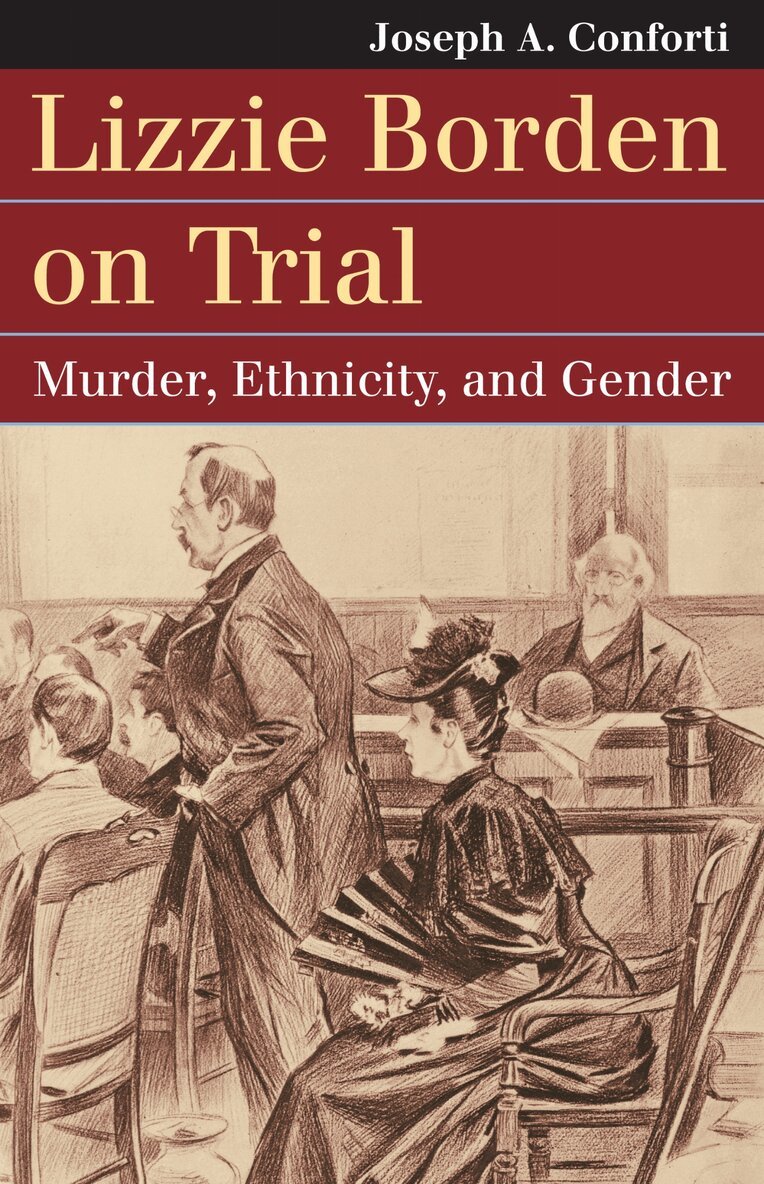
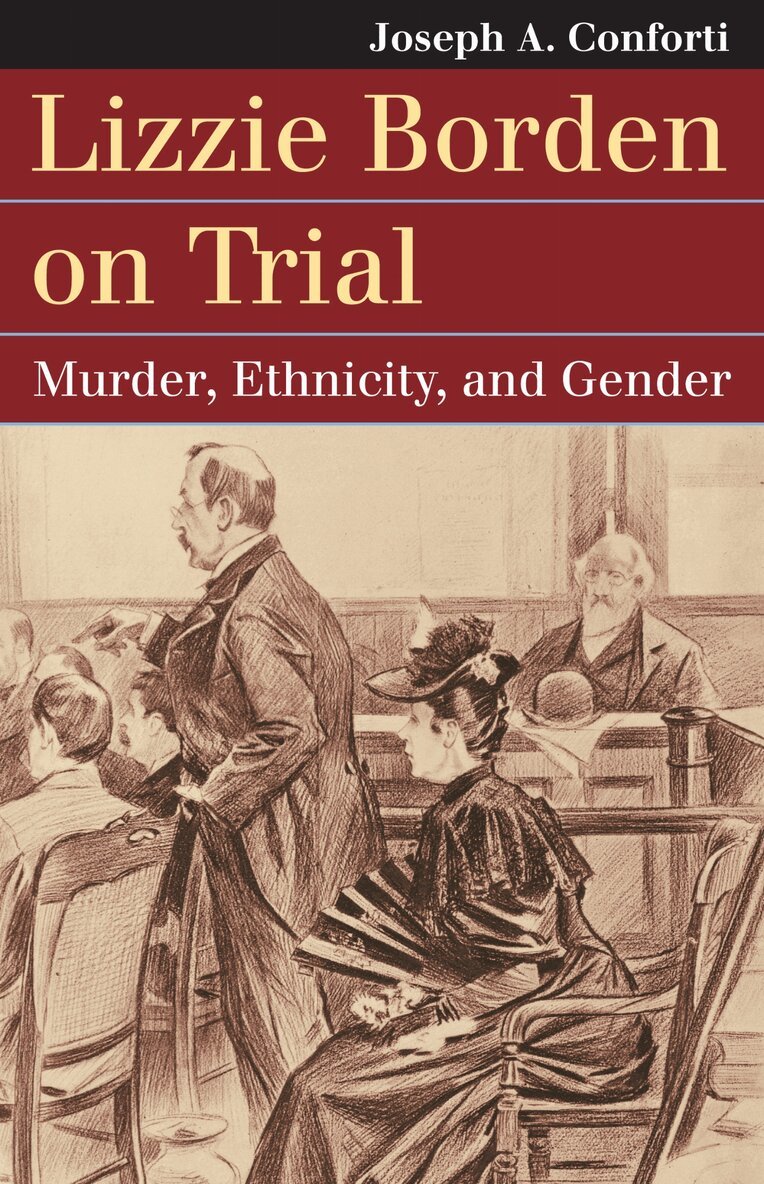
Most people could probably tell you that Lizzie Borden “took an axe and gave her mother forty whacks,” but few could say that, when tried, Lizzie Borden was acquitted, and fewer still, why. In Joseph A. Conforti’s engrossing retelling, the case of Lizzie Borden, sensational in itself, also opens a window on a time and place in American history and culture.Surprising for how much it reveals about a legend so ostensibly familiar, Conforti’s account is also fascinating for what it tells us about the world that Lizzie Borden inhabited. As Conforti—himself a native of Fall River, the site of the infamous murders—introduces us to Lizzie and her father and step-mother, he shows us why who they were matters almost as much to the trial’s outcome as the actual events of August 4, 1892. Lizzie, for instance, was an unmarried woman of some privilege, a prominent religious woman who fit the profile of what some characterized as a “Protestant nun.” She was also part of a class of moneyed women emerging in the late 19th century who had the means but did not marry, choosing instead to pursue good works and at times careers in the helping professions. Many of her contemporaries, we learn, particularly those of her class, found it impossible to believe that a woman of her background could commit such a gruesome murder.As he relates the details, known and presumed, of the murder and the subsequent trial, Conforti also fills in that background. His vividly written account creates a complete picture of the Fall River of the time, as Yankee families like the Bordens, made wealthy by textile factories, began to feel the economic and cultural pressures of the teeming population of native and foreign-born who worked at the spindles and bobbins. Conforti situates Lizzie’s austere household, uneasily balanced between the well-to-do and the poor, within this social and cultural milieu—laying the groundwork for the murder and the trial, as well as the outsize reaction that reverberates to our day. As Peter C. Hoffer remarks in his preface, there are many popular and fictional accounts of this still-controversial case, “but none so readable or so wellbalanced as this.”
334 kr
Skickas inom 10-15 vardagar
Most people could probably tell you that Lizzie Borden ""took an axe and gave her mother forty whacks,"" but few could say that, when tried, Lizzie Borden was acquitted, and fewer still, why. In Joseph A. Conforti's engrossing retelling, the case of Lizzie Borden, sensational in itself, also opens a window on a time and place in American history and culture.Surprising for how much it reveals about a legend so ostensibly familiar, Conforti's account is also fascinating for what it tells us about the world that Lizzie Borden inhabited. As Conforti—himself a native of Fall River, the site of the infamous murders—introduces us to Lizzie and her father and step-mother, he shows us why who they were matters almost as much to the trial's outcome as the actual events of August 4, 1892. Lizzie, for instance, was an unmarried woman of some privilege, a prominent religious woman who fit the profile of what some characterized as a ""Protestant nun."" She was also part of a class of moneyed women emerging in the late 19th century who had the means but did not marry, choosing instead to pursue good works and at times careers in the helping professions. Many of her contemporaries, we learn, particularly those of her class, found it impossible to believe that a woman of her background could commit such a gruesome murder.As he relates the details, known and presumed, of the murder and the subsequent trial, Conforti also fills in that background. His vividly written account creates a complete picture of the Fall River of the time, as Yankee families like the Bordens, made wealthy by textile factories, began to feel the economic and cultural pressures of the teeming population of native and foreign-born who worked at the spindles and bobbins. Conforti situates Lizzie's austere household, uneasily balanced between the well-to-do and the poor, within this social and cultural milieu—laying the groundwork for the murder and the trial, as well as the outsize reaction that reverberates to our day. As Peter C. Hoffer remarks in his preface, there are many popular and fictional accounts of this still-controversial case, ""but none so readable or so well-balanced as this.
853 kr
Skickas inom 5-8 vardagar
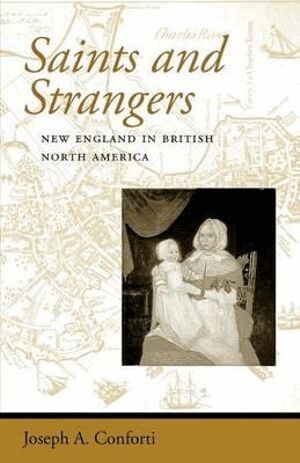
In the first general history of colonial New England to be published in over twenty-five years, Joseph A. Conforti synthesizes current and classic scholarship to explore how Puritan saints and "strangers" to Puritanism participated in the making of colonial New England. Massachusetts Governor John Winthrop's famous description of New England as a "city upon a hill" has tended to reduce the region's history to an exclusively Pilgrim-Puritan drama, a world of narrow-minded founders, the First Thanksgiving, steepled churches, and the Salem witchcraft trials. In a concise volume aimed at general readers and college students as well as historians, Conforti shows that New England was neither as Puritan nor as insular as most familiar stories imply. As the region evolved into British America's preeminent maritime region, the Atlantic Ocean served as a highway of commercial and cultural encounter, connecting white English settlers to different races and religious communities of the transatlantic world. The Puritan elect-but also Natives, African slaves, and non-Puritan white settlers-became active participants in the creation of colonial New England.Conforti discusses how these subcommunities of white, red, and black strangers to Protestant piety retained their own cultures, coexisted, and even thrived within and beyond the domains of Puritan settlement, creating tensions and pressure points in the later development of early America.
311 kr
Skickas inom 7-10 vardagar
In the first general history of colonial New England to be published in over twenty-five years, Joseph A. Conforti synthesizes current and classic scholarship to explore how Puritan saints and "strangers" to Puritanism participated in the making of colonial New England. Massachusetts Governor John Winthrop's famous description of New England as a "city upon a hill" has tended to reduce the region's history to an exclusively Pilgrim-Puritan drama, a world of narrow-minded founders, the First Thanksgiving, steepled churches, and the Salem witchcraft trials. In a concise volume aimed at general readers and college students as well as historians, Conforti shows that New England was neither as Puritan nor as insular as most familiar stories imply. As the region evolved into British America's preeminent maritime region, the Atlantic Ocean served as a highway of commercial and cultural encounter, connecting white English settlers to different races and religious communities of the transatlantic world. The Puritan elect-but also Natives, African slaves, and non-Puritan white settlers-became active participants in the creation of colonial New England.Conforti discusses how these subcommunities of white, red, and black strangers to Protestant piety retained their own cultures, coexisted, and even thrived within and beyond the domains of Puritan settlement, creating tensions and pressure points in the later development of early America.
515 kr
Skickas inom 10-15 vardagar
As the charismatic leader of the wave of religious revivals known as the Great Awakening, Jonathan Edwards (1703-58) is one of the most important figures in American religious history. However, by the end of the eighteenth century, his writings were generally dismissed as remnants of a moribund Puritan tradition. Focusing on the publishing history and appropriation of Edwards's works by succeeding generations, Joseph Conforti explores the construction and manipulation of the Edwards legacy and demonstrates its central place in American cultural and religious history. Most of Edwards's writings were not regularly republished or widely read until the early nineteenth century, when he emerged as a prominent thinker both in academic circles and in the new popular religious culture of the Second Great Awakening. Even after the Civil War, Edwards remained a popular figure from the Puritan past for colonial revivalists. But by the early twentieth century, scholars had again reinvented Edwards, this time deemphasizing his influence. These contrasting constructions of the one man, Conforti says, reveal the dynamic process of cultural change.
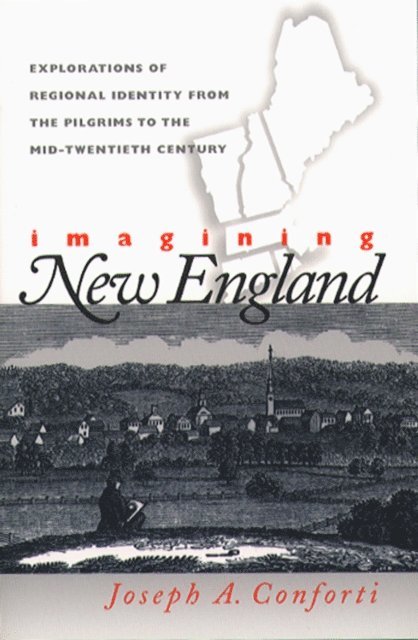
Imagining New England
Explorations of Regional Identity from the Pilgrims to the Mid-Twentieth Century
Häftad, Engelska, 2001
462 kr
Skickas inom 10-15 vardagar
New England as a cultural invention; Say ""New England"" and you likely conjure up an image in the mind of your listener: the snowy woods or stone wall of a Robert Frost poem, perhaps, or that quintessential icon of the region - the idyllic white village. Such images remind us that, as Joseph Conforti notes, a region is not just a territory on the ground. It is also a place in the imagination. This ambitious work investigates New England as a cultural invention, tracing the region's changing identity across more than three centuries. Incorporating insights from history, literature, art, material culture, and geography, it shows how succeeding generations of New Englanders created and broadcast a powerful collective identity for their region through narratives about its past. Whether these stories were told in the writings of Frost or Harriet Beecher Stowe, enacted in historical pageants or at colonial revival museums, or conveyed in the pages of a geography textbook or Yankee magazine, New Englanders used them to sustain their identity, revising them as needed to respond to the shifting regional landscape.
360 kr
Skickas inom 3-6 vardagar