Joseph Bottum - Böcker
Visar alla böcker från författaren Joseph Bottum. Handla med fri frakt och snabb leverans.
6 produkter
6 produkter
675 kr
Skickas inom 10-15 vardagar
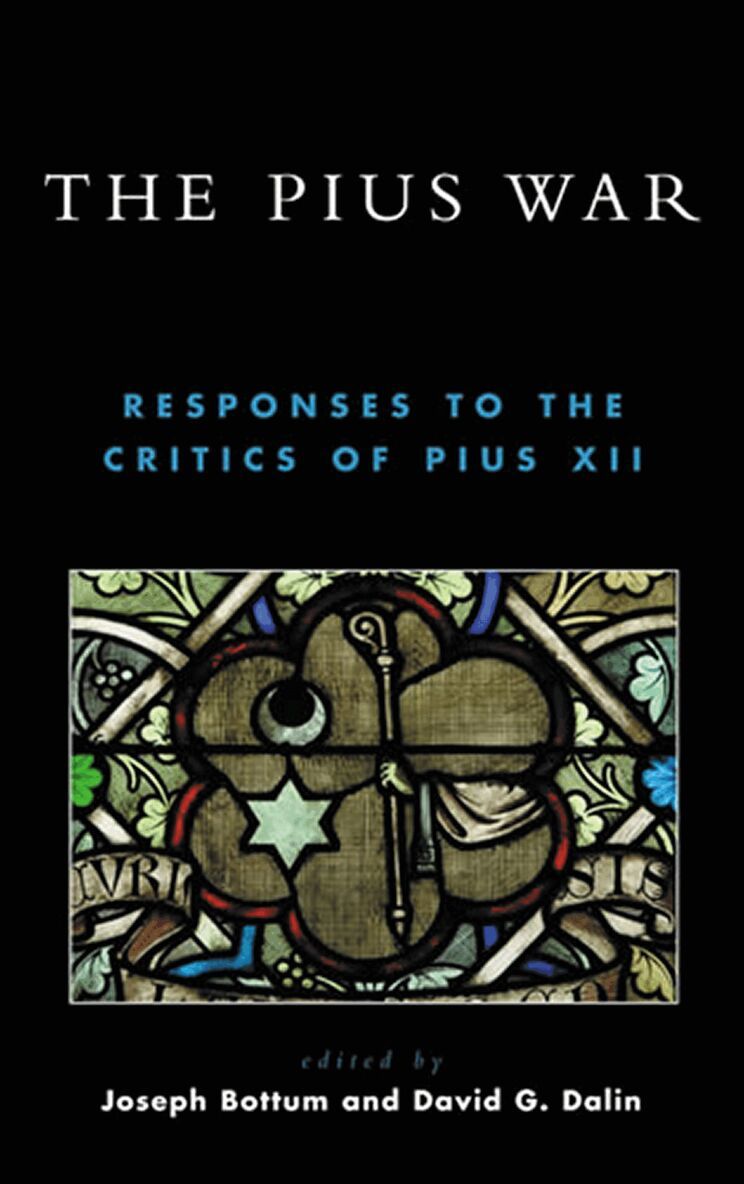
In the brutal fight that has raged in recent years over the reputation of Pope Pius XII—leader of the Catholic Church during World War II, the Holocaust, and the early years of the Cold War—the task of defending the Pope has fallen primarily to reviewers. These reviewers formulated a brilliant response to the attack on Pius, but their work was scattered in various newspapers, magazines, and scholarly journals—making it nearly impossible for the average reader to gauge the results. In The Pius War, Weekly Standard's Joseph Bottum has joined with Rabbi David G. Dalin to gather a representative and powerful sample of these reviews, deliberately chosen from a wide range of publications. Together with a team of professors, historians, and other experts, the reviewers conclusively investigate the claims attacking Pius XII. The Pius War, and a detailed annotated bibliography that follows, will prove to be a definitive tool for scholars and students—destined to become a major resource for anyone interested in questions of Catholicism, the Holocaust, and World War II.
100 kr
Skickas inom 5-8 vardagar
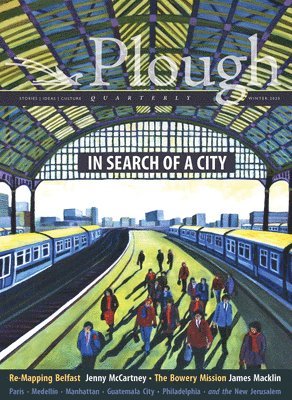
The future of humanity is urban.It might seem a bad move for a magazine named after a farm tool to bring out an issue on cities. Especially if that magazine is published by an Anabaptist community that originated in a back-to-the-land movement and still has the whiff of hayfield and woodlot to it. Why not stick to what you’re good at? Why jump lanes?Because the future of humanity, pretty clearly, is urban. Urbanization is arguably the biggest change of habitat our species has ever undergone. For anyone who cares about the common good of humanity, then, cities need to matter.The modern city is an electrifying concentration of creativity, energy, and cultural dynamism. It’s also still the “cauldron of unholy loves” that Saint Augustine discovered in Carthage one and a half millennia ago. It’s the place where the cruelties of mammon, the hubris of power, and the perversions of lust manifest themselves most crassly. But cities have also given birth to culture and community and to remarkable movements of revival and renewal.In this issue, visit:- Belfast with Jenny McCartney- New York City with James Macklin- Medellín with Adriano Cirino - Pittsburgh with Brandon McGinley- Guatemala City with José Corpas- Philadelphia with Clare Coffey- Chicago with John Thornton Jr. - Paris with Jason LandselYou’ll also find:- Insights on cities from Jane Jacobs, Eberhard Arnold, Augustine, and Philip Britts- reviews of books by Jonathan Foiles, Bethany McKinney Fox, J. Malcolm Garcia, Tatiana Schlossberg, Tim Gautreaux, Philip Bess, and Frederic Morton- art by Gail Brodholt, Michelangelo Buonarroti, Ben Ibebe, Brian Peterson, Chota, Raphael, Gertrude Hermes, Valentino Belloni, Tony Taj, and Aristarkh LentulovPlough Quarterly features stories, ideas, and culture for people eager to put their faith into action. Each issue brings you in-depth articles, interviews, poetry, book reviews, and art to help you put Jesus’ message into practice and find common cause with others.
342 kr
Skickas inom 11-20 vardagar
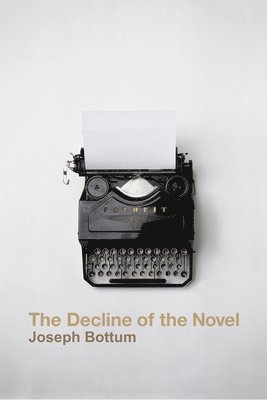
The novel has lost its purpose, Joseph Bottum argues in this fascinating new look at the history of fiction. We have not transcended our need for what novels provide, but we have grown to distrust the culture that allowed novels to flourish. “For almost three hundred years,” Bottum writes, “the novel was a major art form, perhaps the major art form, of the modern world—the device by which, more than any other, we tried to explain ourselves to ourselves.” But now we no longer “read novels the way we used to.”In a historical tour de force—the kind of sweeping analysis almost lost to contemporary literary criticism—Bottum traces the emergence of the novel from the modern religious crisis of the individual soul and the atomized self. In chapters on such figures as Sir Walter Scott, Charles Dickens, and Thomas Mann, he examines the enormous ambitions once possessed by novels and finds in these older works a rebuke of our current failure of nerve.“We walk with our heads down,” Bottum writes. “Without a sense of the old goals and reasons––a sense of the good achieved, understood as progress––all that remains are the crimes the culture committed in the past to get where it is now. uncompensated by achievement, unexplained by purpose, these unameliorated sins must now seem overwhelming: the very definition of a failed culture.” In readings of everything from genre fiction to children’s books, Bottum finds a lack of faith in the ability of art to respond to the deep problems of existence. “the decline of the novel’s prestige reflects and confirms a genuine cultural crisis,” he writes.Linking the novel to its religious origins, Bottum describes the urgent search for meaning in the new conditions of the modern age: “If the natural world is imagined by modernity as empty of purpose, then the hunt for nature’s importance is supernatural, by definition.” the novel became a fundamental device by which culture pursued the supernatural—facilitated by modernity’s confidence in science and cultural progress. Losing that confidence, Bottum says, we lost the purpose of the art: “the novel didn’t fail us. We failed the novel.”Told in fast-paced, wide-ranging prose, Bottum’s The Decline of the Novel is a succinct critique of classical and contemporary fiction, providing guidelines for navigating the vast genre. this book is a must-read for those who hunger for grand accounts of literature, students of literary form, critics of contemporary art, and general readers who wish to learn, finally, what we all used to know: the deep moral purpose of reading novels.
189 kr
Skickas inom 7-10 vardagar
For over thirty years, Joseph Bottum has been writing widely acclaimed Christmas essays, columns, short stories, and carols for American magazines and newspapers. Now, for the first time, St. Augustine’s Press has gathered a selection of these classic pieces—with a vast range across the Christmas spectrum. There’s the comic: “Tinsel. No one needs tinsel. Even the word is a tinselly kind of word.” There’s the sentimental: “Her hair was the same thin shade of gray as the weather-beaten pickets of the fence around her frozen garden.” There’s the reminiscent: “Christmas was books, and books Christmas, in those days now mostly washed down to the cold sea.” Along the way, there’s the theological, the learned, the mystical, and the musical.“Tastefulness is just small-mindedness pretending to be art,” he writes in praise of mad and cluttered holidays. “Christmas will not be defined by our failures to apply its lessons and carols,” he explains about Yuletide poetry. To see these essays and short stories gathered in one place—in a beautiful illustrated edition from St. Augustine’s Press—is to see the whole of the vision that Joseph Bottum has been painting for decades: a picture of Christmas as a thin place in the wall between the natural and the numinous, where a burning grace slips into a cold winter world.
161 kr
Skickas inom 7-10 vardagar
126 kr
Skickas inom 7-10 vardagar
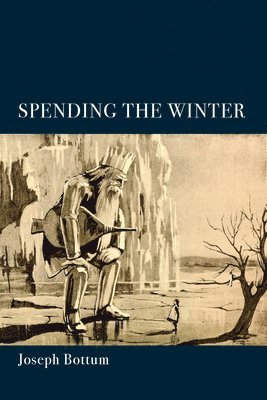
The poetry of Spending the Winter is musical and structured, whimsical and piercing, begging to be read aloud when one is not laughing or arrested by an image that hooks the heart. “Poems so severely beautiful that they become unforgettable after one reading,” writes one poet. “A throwback to a time when lovers of poetry…looked for poetry of depth, wit, and craft from the likes of Auden and Larkin,” adds another. With sections of comedy that show his wit, translations that echo his vast reading, and formalist poetry that reveal his craft, Bottum aims, in the way few poets these days do, at memorable lines and heart-stopping images as he seeks the deep stuff of human experience: God and birth and death—the beautiful and terrifying finitude of life. “We do with words what little words can do,” he writes. But in Spending the Winter, Joseph Bottum shows that words can do far more than a little.“Poems so severely beautiful that they become unforgettable after one reading. . . . If you’re a reader who loves poetry whatever mood it’s in, just open Spending the Winter anywhere to find poems that hurt, enlighten, and delight.” —Rhina P. Espaillat, author of Rehearsing Absence and winner of the T.S. Eliot Prize“Joseph Bottum is a brilliant formalist, and to read him is to enter the world of the tried-and-true classics, all achieved with an amazingly contemporary ring. His Spending the Winter is a delight. Here is a poetry of elegy, humor, wit, political savvy, and vast learning.” —Paul Mariani, author The Great Wheel and winner of the John Ciardi Award“Joseph Bottum’s Spending the Winter is a throwback to a time when lovers of poetry outside the literary establishment looked for poetry of depth, wit, and craft from the likes of Auden and Larkin. This is poetry from another age—an age when we expected intellectual, religious, and literary significance from our verse.” —A.M. Juster, author of Wonder and Wrath and winner of the Willis Barnstone Translation Prize“Spending the Winter is a word-lover’s dream: Joseph Bottum’s poems pierce, probe, dazzle, and delight. They will open the eyes of your soul.” —Karen Swallow Prior, author of On Reading Well“When reading Spending the Winter, I recalled C.S. Lewis’s description of joy as a wanting for something that is beyond this world. There’s a sense in these poems that things around us are fleeting, yet for that reason, the poems ask us to pay all the more attention.” —Jessica Hooten Wilson, author of Giving the Devil his Due