Joseph Earp - Böcker
Visar alla böcker från författaren Joseph Earp. Handla med fri frakt och snabb leverans.
5 produkter
5 produkter
189 kr
Skickas inom 11-20 vardagar
The City of Nottingham as we know it today began life as an Anglo-Saxon settlement. By the late nineteenth century, Nottingham had developed into a thriving city. Through photographs, documents and other images, Nottingham From Old Photographs reflects the change from the early settlement of Tigguo Cobauc (a place of cave dwellings) to one of the leading cities in England. Most of the photographs and research within these pages have come from the collection of the late Paul Nix of the Nottingham Hidden History Team (NHHT). The work of the NHHT exceeds well over forty years. Combined with the author's own collection and never-before-published documents, images and photographs from the Paul Nix Collection, we see a new side to Nottingham, an ever-changing city.
172 kr
Skickas
Every corner of Nottingham is rich in history, and if the streets could talk they might tell of the people and events they have witnessed. Many ancient secrets have remained untold, such as the purpose of the great Viking ‘long-house’ found beneath the site of a demolished Victorian factory, and who built the ancient mound that once marked the site of the spot where a king of England raised his standard.Perhaps the city’s greatest secret of all lies beneath its streets – a labyrinth of over 500 man-made caves. Visitors to Nottingham are often told not to stamp their feet too hard as they never quiet know where they will end up. Father and son authors Frank and Joe Earp are privy to these and many more of Nottingham’s secrets. Come with them as they share their knowledge within the pages of this book.
178 kr
Skickas inom 11-20 vardagar
In 1897, Nottingham was granted a city charter to coincide with the celebrations accompanying Queen Victoria’s Diamond Jubilee. By then Nottingham already had a history going back to at least the ninth century when the settlement was referred to as ‘Tigguo Cobauc’, which literally translates as the ‘House of Caves’. The Victorian and Edwardian era saw great changes to Nottingham. Rapid growth in its population meant the town had to adapt. Once known as the ‘Garden Town’, Nottingham quickly saw an urban transformation in areas such as housing, industry and transport.Much of Nottingham’s heritage was lost to make way for progress, even more so with the Enclosure Act of 1845. This book, through photographs, postcards, documents and other images, reflects the changes Nottingham has seen from a beautiful garden town to one of the Britain’s leading cities. We can trace both the architectural development and the social impact brought about by these changes. This book records the historical changes by comparing Victorian and Edwardian photographs with their modern-day counterparts.
178 kr
Skickas inom 11-20 vardagar
The Nottinghamshire town of Beeston as we know it today began life as an Anglo-Saxon settlement close to the banks of the River Trent. By the late eighteenth century the town had developed into a thriving textile centre. The nineteenth century saw a new mix of other industries, including famous names like the Humber Works and Boots the Chemist. Over the last decade Beeston has witnessed its greatest change with the introduction of an extension of Nottingham city’s tram network.Local authors and historians Frank E. Earp and Joseph Earp delve into the town’s murkier past in this unique approach to its history, blending the serious with the not so serious, and seeking out its hidden secrets.
173 kr
Skickas
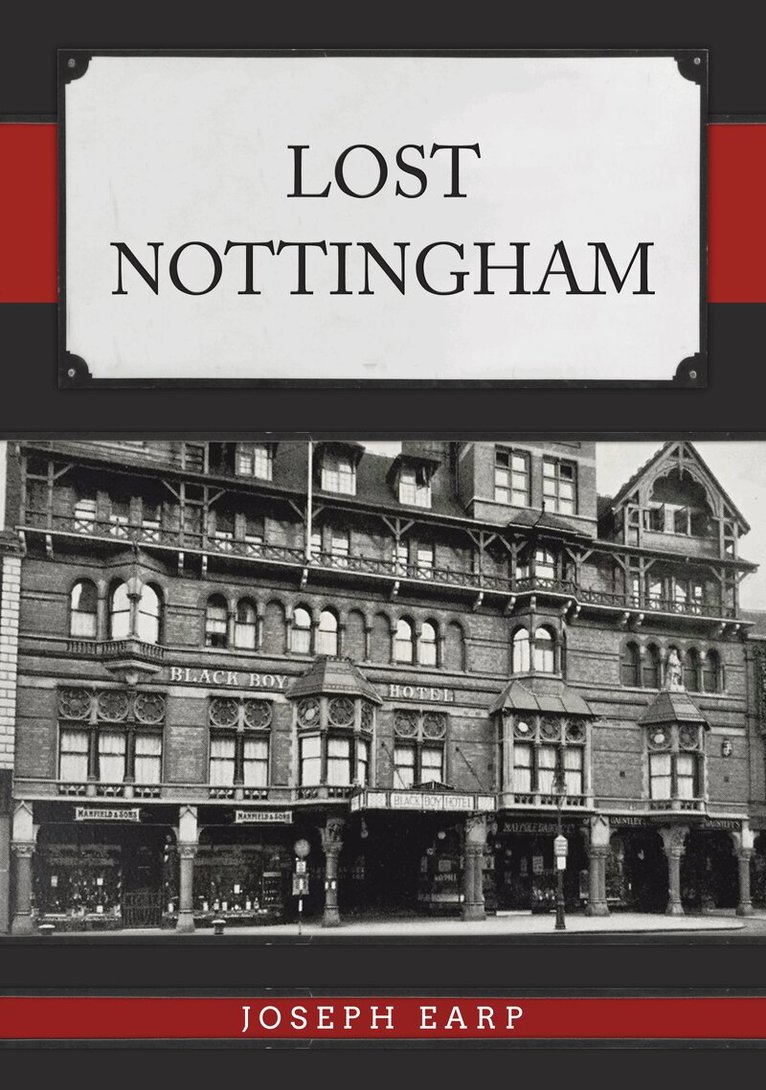
The city of Nottingham has been an important centre of trade and industry in the East Midlands since the Middle Ages. Famous particularly for lace-making, centred on the preserved Lace Market area, it was also home to the household names of Boots the chemists and Raleigh bicycles. Since the Norman period the layout of Nottingham and its streets remained virtually the same until the mid-twentieth century. In the 1950s, ‘60s and ‘70s, Nottingham began to see many historic quarters of the city disappear. Large areas were demolished; centuries-old streets disappeared, particularly around the Broadmarsh Shopping Centre where numerous ancient caves under buildings were also destroyed; and famous old buildings such as the Black Boy hotel, Holy Trinity Church and Victoria train station fell victim to the bulldozers. This book sets out to explore what has been lost in the city over the years through photographs, slides, postcards, documents and illustrations from the Paul Nix Collection, the Nottingham Hidden History Team archive and the author’s own photographs.Lost Nottingham presents a portrait of a city and a way of life that has radically changed or disappeared today, often in the name of progress and development, showing not just the industries and buildings that have gone, people and street scenes, but also many popular places of entertainment and much more. This fascinating photographic history of lost Nottingham will appeal to all those who live in the city or know it well, as well as those who remember it from previous decades.