Joseph Lepgold - Böcker
Visar alla böcker från författaren Joseph Lepgold. Handla med fri frakt och snabb leverans.
5 produkter
5 produkter
Beyond the Ivory Tower: International Relations Theory and the Issue of Policy Relevance
Inbunden, Engelska
728 kr
Tillfälligt slut
557 kr
Skickas inom 5-8 vardagar
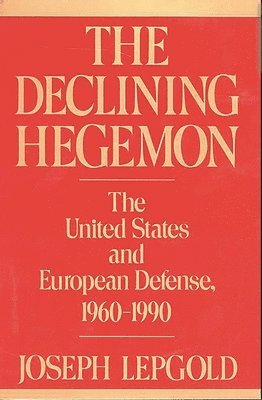
Joseph Lepgold's book examines the substance of and rationale for the American defense commitment to Europe between 1960 and 1990, a period marked by change in the U.S. world position, and continues into the 1990s, in light of the recent changes in Europe. Lepgold explores how and why political leaders have adapted to this change. His volume is the analysis of a hegemonic state's foreign policy adaption. His study probes such questions as: If policymakers do not adjust basic policy priorities, what other tradeoffs are made? Do these constitute meaningful patterns? Do commitments resist change or are they context-dependent and supple? The focus of this provocative study is on U.S. policy toward Europe, rather than NATO and its European members.Chapter one of The Declining Hegemon provides the background for Chapters two and three's analytic discussion of policy adaption. It examines four policy debates of the late 1970s and 1980s; these discuss past adaption as well as future choices. These debates question the decline of U.S. power; the future U.S. role in Europe--whether any of the 1950 commitments should be adjusted; and the relationship of foreign policy commitments and resources--whether they should grow and decline in tandem. Chapters four through six provide a decade by decade case study of U.S. policy. The last chapter of Lepgold's timely study draws conclusions and suggests future implications in light of recent developments in Europe.
1 009 kr
Skickas inom 10-15 vardagar
Joseph Lepgold's book examines the substance of and rationale for the American defense commitment to Europe between 1960 and 1990, a period marked by change in the U.S. world position, and continues into the 1990s, in light of the recent changes in Europe. Lepgold explores how and why political leaders have adapted to this change. His volume is the analysis of a hegemonic state's foreign policy adaption. His study probes such questions as: If policymakers do not adjust basic policy priorities, what other tradeoffs are made? Do these constitute meaningful patterns? Do commitments resist change or are they context-dependent and supple? The focus of this provocative study is on U.S. policy toward Europe, rather than NATO and its European members.Chapter one of The Declining Hegemon provides the background for Chapters two and three's analytic discussion of policy adaption. It examines four policy debates of the late 1970s and 1980s; these discuss past adaption as well as future choices. These debates question the decline of U.S. power; the future U.S. role in Europe--whether any of the 1950 commitments should be adjusted; and the relationship of foreign policy commitments and resources--whether they should grow and decline in tandem. Chapters four through six provide a decade by decade case study of U.S. policy. The last chapter of Lepgold's timely study draws conclusions and suggests future implications in light of recent developments in Europe.
675 kr
Skickas inom 10-15 vardagar
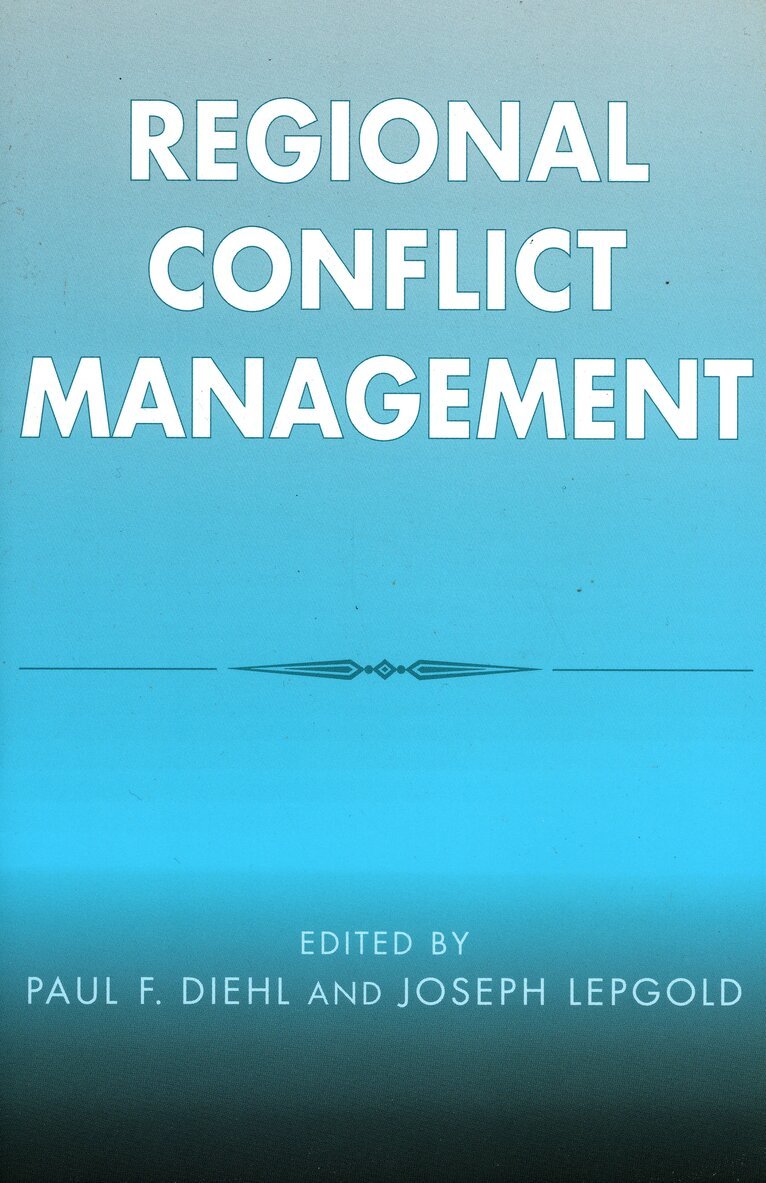
Since the 1990s, the international security environment has shifted radically. Leading states no longer play as great a role in regional conflicts, and thus a new opportunity for regional conflict management has opened. This collection of original essays is one of the first to examine the implications and efficacy of regional conflict management in the new world order. The editors' general overview provides a framework for analyzing regional conflict management efforts and the kinds of threats faced by actors in different regions of the world. Case studies from every major world region then place these factors into specific regional contexts and address a variety of challenges. Drawing together a diverse group of scholars from around the world, Regional Conflict Management provides key lessons for understanding conflict management over the globe.
382 kr
Tillfälligt slut
Examines the prospects for collective management of international conflict, identifying the international and domestic conditions under which it will and will not tend to work and exploring whether the end of the Cold War will make its success more or less likely than before.For several decades the debate over collective security-the idea that alliances are problematic and that all nations should pledge to come to the aid of any nation that is a victim of aggression-has been polarized. Collective Conflict Management and Changing World Politics probes the international and domestic conditions under which collective security tends to work or not, and questions if the end of the Cold War makes success more or less likely than before. The contributors conclude that collective conflict management is possible under specific situations, as they enumerate various domestic and international requisites that circumscribe such possibilities.