• Fri frakt över 249 kr
  • •
  • Snabba leveranser
  • •
  • Billiga böcker
Kundservice

Du är på sajten för privatpersoner.

Företag, bibliotek eller offentlig verksamhet?

Du handlar på classic.bokus.com, där alla dina funktioner finns intakta.
Till classic.bokus.com
Bokus logotyp. Gå till startsidan.
  • Erbjudanden
  • Nyheter
  • Student
  • Topplistor
  • Barn & ungdom
  • Bokus Play
  • E-böcker
  • Pocketböcker
  • Spel & pussel

Må bättre, för mindre! Upp till 50% rabatt på hälsoböcker

Sidfot

Mina sidor

    Hjälp

    • Kundservice
    • Vanliga frågor och svar
    • Frakt och leverans
    • Retur vid ångerrätt
    • Reklamera vara
    • Betalning
    • Köpvillkor
    • Allmänna villkor
    • Information om webbplatsens tillgänglighet

    Om Bokus

    • Om oss
    • Pressrum
    • För studenter
    • För företag
    • För bibliotek och offentlig verksamhet
    • För leverantörer
    • Hållbarhet

    Populärt

    • Aktuella erbjudanden
    • Presentkort
    • Studentlitteratur
    • Nya böcker
    • Topplistor
    • Signerade böcker
    • Engelska böcker

    Inspiration

    • Boktips
    • BookTok
    • Populära bokserier
    • Barnbokskaraktärer
    • Populära författare
    Logotyp för Bokus
    Följ oss på Facebook (extern länk)Följ oss på Instagram (extern länk)Följ oss på YouTube (extern länk)Följ oss på TikTok (extern länk)
    bokus @ CookiesAnpassa cookiesIntegritetspolicyKöpvillkor
    Till Citymail hemsida (extern länk)Till Budbee hemsida (extern länk)Till Postnord hemsida (extern länk)Till Schenker hemsida (extern länk)Till Early Bird hemsida (extern länk)Till Walleys hemsida (extern länk)
    1. Samhälle och politik
    2. Samhälle och kultur
    3. Kultur och medier
    4. Referensverk och tvärvetenskap

    Collective Conflict Management and Changing World Politics

    AvJoseph Lepgold,Thomas G. Weiss

    Häftad, Engelska, 1998

    Del i serien SUNY series in Global Politics

    389 kr

    Tillfälligt slut

    Beskrivning

    Examines the prospects for collective management of international conflict, identifying the international and domestic conditions under which it will and will not tend to work and exploring whether the end of the Cold War will make its success more or less likely than before.For several decades the debate over collective security-the idea that alliances are problematic and that all nations should pledge to come to the aid of any nation that is a victim of aggression-has been polarized. Collective Conflict Management and Changing World Politics probes the international and domestic conditions under which collective security tends to work or not, and questions if the end of the Cold War makes success more or less likely than before. The contributors conclude that collective conflict management is possible under specific situations, as they enumerate various domestic and international requisites that circumscribe such possibilities.

    Produktinformation

    • Utgivningsdatum:1998-06-04
    • Mått:151 x 227 x 15 mm
    • Vikt:363 g
    • Format:Häftad
    • Språk:Engelska
    • Serie:SUNY series in Global Politics
    • Antal sidor:245
    • Förlag:State University of New York Press
    • ISBN:9780791438442

    Utforska kategorier

    • Referensverk och tvärvetenskap inom Samhälle och politik
    • Internationella relationer inom Samhälle och politik

    Mer om författaren

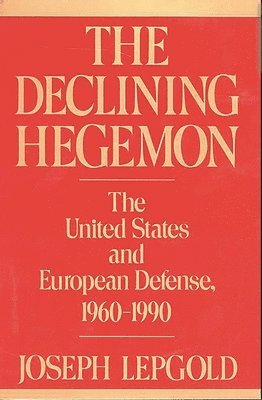
    Joseph Lepgold is Associate Professor of International Affairs and Government at Georgetown University. He is the author of Friends in Need: Burdensharing in the Persian Gulf War and The Declining Hegemon: The United States and European Defense, 1960-1990. Thomas G. Weiss is Associate Director of the Thomas J. Watson Jr. Institute for International Studies, Brown University and Executive Director of the Academic Council on the United Nations System (ACUNS). He is the editor of several books, including The United Nations and Civil Wars and Collective Security in a Changing World.

    Recensioner i media

    "This is an excellent collection. The material is of a uniformly high quality along three dimensions: good writing, identification of important empirical problems relating to collective security and peacekeeping (or, using the term the volume authors prefer, collective conflict management), and good, logical reasoning."There is no question but that the issue of collective conflict management is highly topical both for the academic study of international relations and for real-world foreign policy making, including and especially on the part of the United States." — Joseph M. Grieco, Duke University"This book is very helpful in making sense of the potential for multilateral military action in the post Cold War world. In particular, the chapters on the UN, NATO and the American military were very well done and informative. They provided conceptual background and solid empirical study."I came away with a much better understanding of the future for collective conflict management—both the specific tools available to states and the international community and the international political context in which those actions might take place." — Elizabeth Kier, University of California, Berkeley

    Innehållsförteckning

    • List of Tables and FiguresList of AbbreviationsPrefacePart One:Collective Conflict Management: Theoretical and Historical Perspectives1 Collective Conflict Management and Changing World Politics: An OverviewJoseph Lepgold and Thomas G. Weiss2 Theoretical and Historical Perspectives on Collective Security: The Intellectual Roots of Contemporary Debates about Collective Conflict ManagementAlan C. LambornPart Two:Collective Conflict Management: Military Operations and Political Interests3 NATO's Post-Cold War Conflict Management RoleJoseph Lepgold4 The Limits of Peacekeeping, Spheres of Influence, and the Future of the United NationsMichael N. Barnett5 Constraints on Adaptation in the American Military to Collective Conflict Management MissionsRobert B. McCalla6 Somalia, Bosnia, and Haiti: What Went Right, What Went Wrong?Andrew BennettPart Three:Collective Conflict Management: The Humanitarian Impulse7 Changing Norms of Sovereignty and Multilateral InterventionBruce Cronin8 Military Intervention and the Organization of International PoliticsMartha Finnemore9 Collective Humanitarian Conflict Management: More or Less than the Millennium?Thomas G. WeissAbout the AuthorsIndex