Joseph Moretz – författare
Visar alla böcker från författaren Joseph Moretz. Handla med fri frakt och snabb leverans.
6 produkter
6 produkter
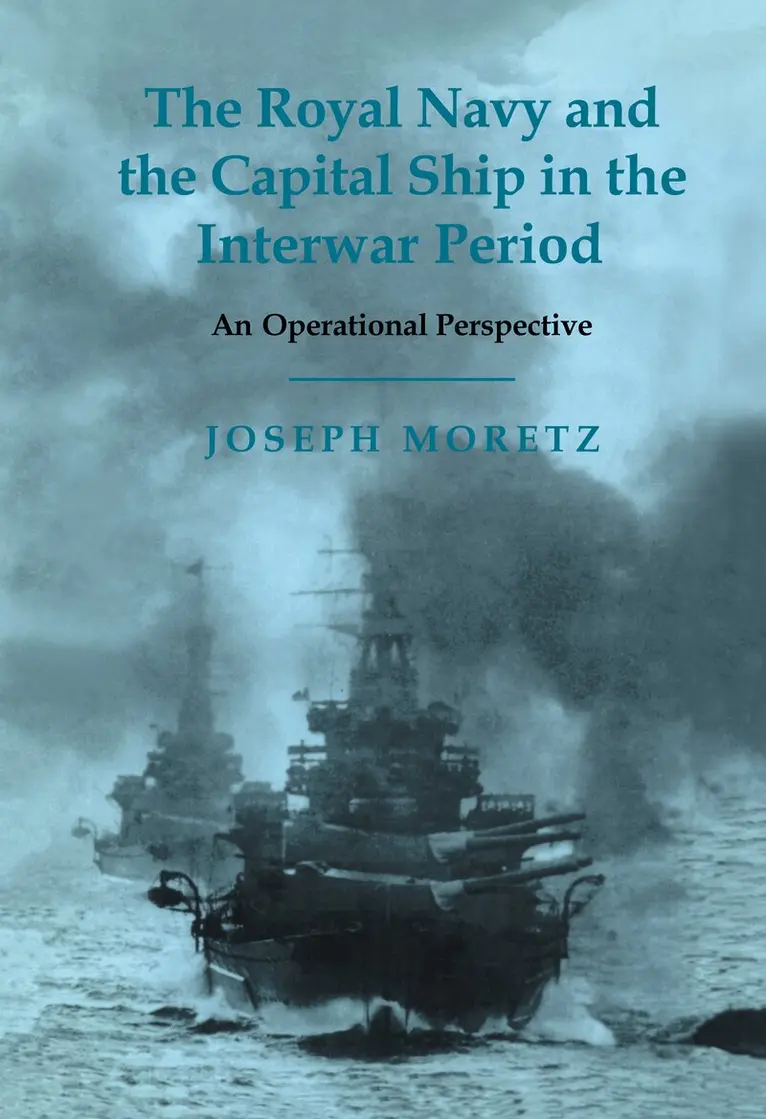
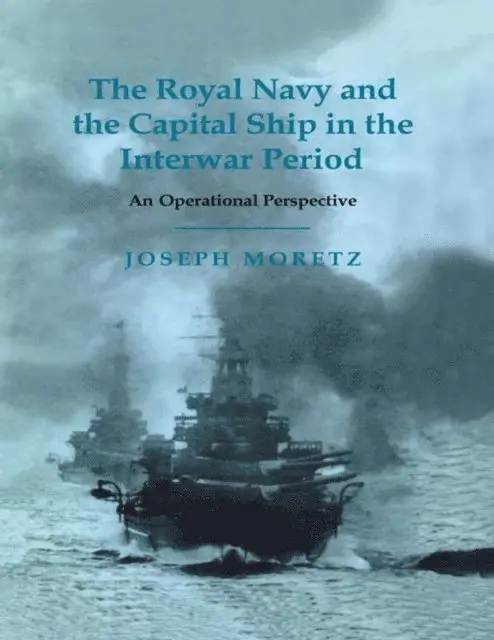
Royal Navy and the Capital Ship in the Interwar Period
An Operational Perspective
Inbunden, Engelska, 2002
2 346 kr
Skickas inom 10-15 vardagar
Joseph Moretz's innovative work focuses on what battleships actually did in the inter-war years and what its designed war role in fact was. In doing so, the book tells us much about British naval policy and planning of the time. Drawing heavily on official Admiralty records and private papers of leading officers, the author examines the navy's operational experience and the evolution of its tactical doctrine during the interwar period. He argues that operational experience, combined with assumptions about the nature of a future naval war, were more important in keeping the battleship afloat than conservatism in Navy.
265 kr
Skickas
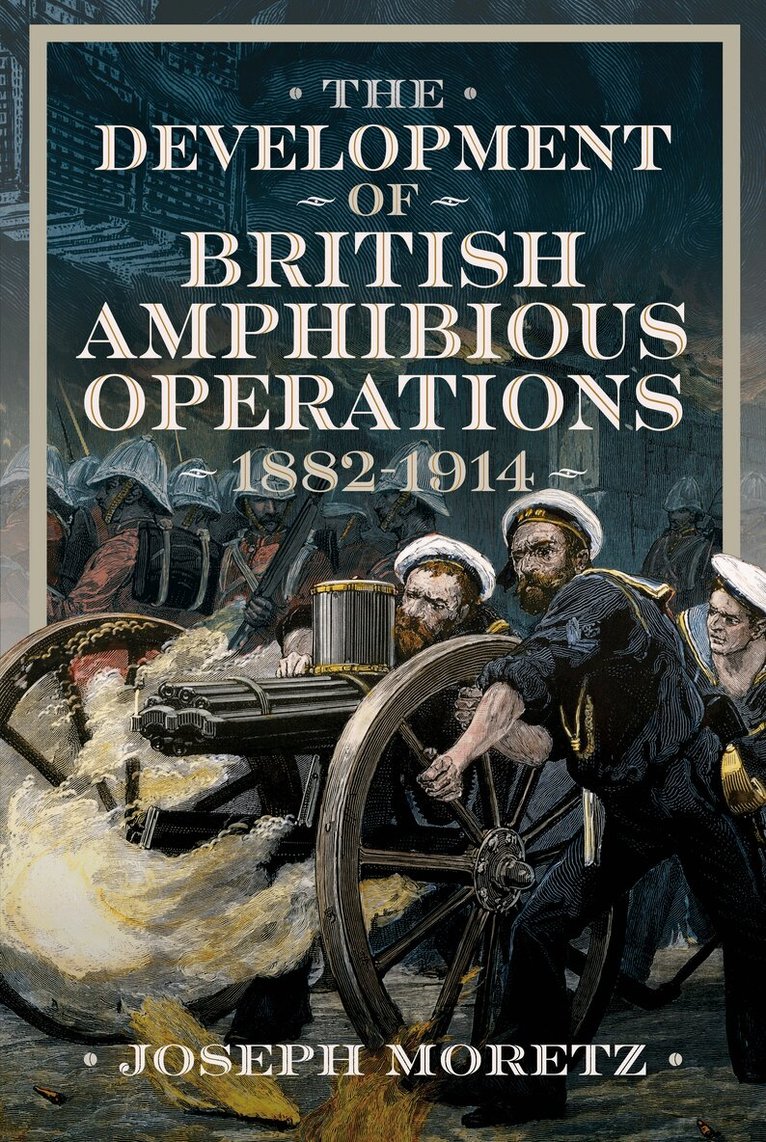
The projecting of military force to a distant shore has come to be seen as a uniquely British way of waging war. To be sure, many of these operations would now be classed as administrative landings with battle, if occurring at all, only following sometimes afterward. Others, of course, merit the label of opposed landings. To contemporaries of the period covered by this study, the evolutions went by the appellation of conjoint or combined operations. Less important than how they were styled remains the thought and the purpose giving rise to these ventures. In the decades before the First World War, professionals appreciated the myriad difficulties and dangers associated with amphibious operations. The laity, including statesmen, thought rather less of these matters but could recount numerous examples of their occurrence before 1914. Indeed, whatever operational failings Britain demonstrated during the World War a corpus of relevant experience was the least of these.What is now styled joint amphibious operations were difficult because they were never of a single type. Naval support to a military force standing on the defensive, raids, feints, blocking operations, riverine operations, and, yes, an opposed landing, spoke to a series of joint operations of ever-increasing complexity. Meanwhile, as every operation must at some point end, even the manner of evacuation came to be viewed as a special type of combined operation to be understood and learned. Finally, it remained that in a campaign of the grandest scale, examples of each might feature at differing moments along the way. Landings before 1914 were difficult and what military and naval authorities thought feasible before the onset of the World War in the realm of joint operations is a neglected field of study—a surprising omission given the ink that has been spilt retelling the debacles experienced at Gallipoli, Mesopotamia, and East Africa. Every campaign has its context—operational and strategic to be sure—but also political, doctrinal, and bureaucratic. How Britain elected to wage war in 1914 proved a product of these variables just as surely as the military and naval capabilities it could muster. Tying the strands of pre-war military experience and thought in the realm of joint operations is the chief purpose of this study which takes as its starting point 1882 and the British assault against Egypt. The choice is far from arbitrary as the moment saw several earning their spurs who would later play a central role in the amphibious operations executed during the Great War.To the extent learning is more than the product of self-experience, this work pays special attention to the Russo-Japanese War. Thinking officers appreciated that fundamental changes were occurring in the nature and style of war. A learned public also appreciated this courtesy of works such as Ivan Bloch’s Is War Now Possible? Notwithstanding what British officers understood on the eve of the World War, the problem of time and scale remained. This alone should give one pause before chiding others over past mistakes. This study looks at what was thought, what was taught, what was expected, and what occurred in the thirty years before Britain found herself facing a scale of conflict not witnessed in a century.
265 kr
Skickas
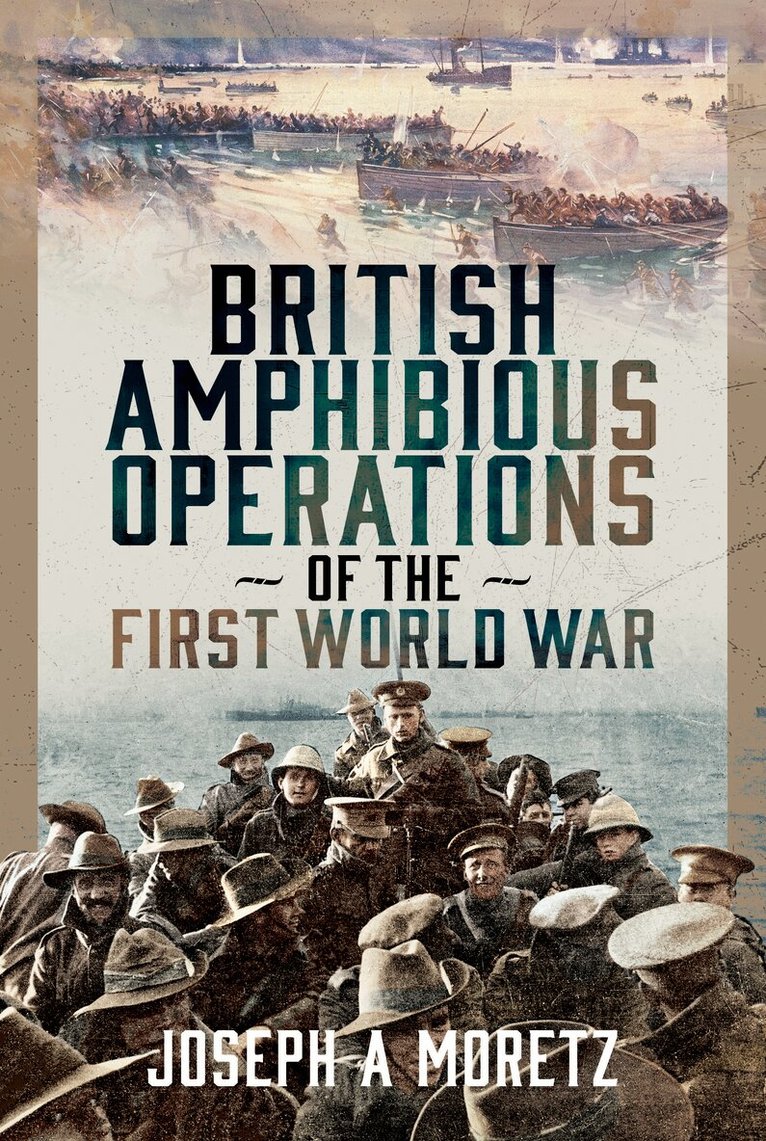
The failure experienced at Gallipoli has become a byword for the misapplication of amphibious operations. In truth, the British experience of joint amphibious operations during the World War was always more than Gallipoli. If success elsewhere seemed elusive, too, then the underlying ability of Britain to execute such operations remains largely undiscussed. The monograph takes the discussion of amphibious operations beyond caricature by examining the genesis and execution of three operations: Tanga, German East Africa; Mesopotamia; and the Dardanelles-Gallipoli campaign and measures the results against the experience and development of amphibious warfare in the immediate prewar period. In short, the work answers the question of the state of British amphibious warfare on the eve of the First World War and the reasons for the failures—and, yes, the successes experienced.British East Africa and Zanzibar stood exposed in 1914, and while doing nothing possessed a certain logic, denying German cruisers the means of resupply mixed with the unsettled temperament of Kenya argued for removing the German threat presented. A tertiary object sought by tertiary British and Indian forces came, saw and was vanquished in short order. As a result, the War Office assumed responsibility for British operations in East Africa from Simla. Though the experience might have served as an object lesson for the campaign about to unfold in Mesopotamia, it did not. There, British arms met with initial success, but soon inadequate means married to unlimited aims told otherwise, culminating in the siege and surrender of the Indian Sixth Division at Kut-al-Amara. In time, the amphibious first entry executed nearly flawlessly became a joint operation anchored on indifferent rivers with memories of the Boxer rebellion and the relief of General Gordon not far removed. Mesopotamia is a reminder that if the enemy gets a vote in war, even more does nature.Beginning as a naval demonstration, the Dardanelles operation morphed into an amphibious landing that never truly became joint when General Sir Hamilton’s forces landed on the Gallipoli peninsula. Eight months later, evacuation of the Allied force beckoned. Operationally, the Allies were stymied, yet strategically the campaign offered a rare instance in the World War where the side operating on the offensive inflicted greater losses on the defender. Patience is rarely offered as a principle of war, but maintenance of the aim implies a degree of patience. Collectively, the case studies presented in British Amphibious Operations of the First World War offer a corrective to our understanding of British joint amphibious operations and the lessons digested—and not.
Royal Navy and the Capital Ship in the Interwar Period
An Operational Perspective
Häftad, Engelska, 2014
843 kr
Skickas inom 10-15 vardagar
Joseph Moretz's innovative work focuses on what battleships actually did in the inter-war years and what its designed war role in fact was. In doing so, the book tells us much about British naval policy and planning of the time. Drawing heavily on official Admiralty records and private papers of leading officers, the author examines the navy's operational experience and the evolution of its tactical doctrine during the interwar period. He argues that operational experience, combined with assumptions about the nature of a future naval war, were more important in keeping the battleship afloat than conservatism in Navy.
Del 2 - Modern Military Studies
Thinking Wisely, Planning Boldly
The Higher Education and Training of Royal Navy Officers, 1919-39
Inbunden, Engelska, 2015
899 kr
Tillfälligt slut
Towards A Wider War
British Strategic Decision-Making And Military Effectiveness In Scandinavia, 1939-40
Inbunden, Engelska, 2017
470 kr
Skickas