Joseph Petraglia - Böcker
Visar alla böcker från författaren Joseph Petraglia. Handla med fri frakt och snabb leverans.
6 produkter
6 produkter
1 088 kr
Tillfälligt slut
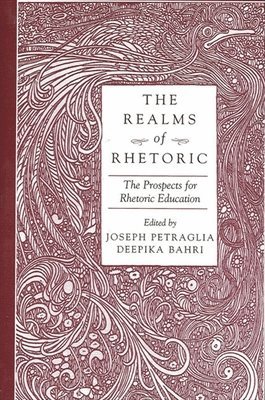
Argues for a more theoretically-informed and cogent curricular space for rhetoric in the academy.In The Realms of Rhetoric, contributors from a wide range of disciplines explore the challenges and opportunities faced in building a curricular space in the academy for rhetoric. Although rhetoric education has its roots in ancient times, the modern era has seen it fragmented into composition and public speaking, obscuring concepts, theories, and skills. Petraglia and Bahri consider the prospects for rhetoric education outside of narrow disciplinary constraints and, together with leading scholars, examine opportunities that can propel and revitalize rhetoric education at the beginning of the millennium.
394 kr
Tillfälligt slut
Argues for a more theoretically-informed and cogent curricular space for rhetoric in the academy.In The Realms of Rhetoric, contributors from a wide range of disciplines explore the challenges and opportunities faced in building a curricular space in the academy for rhetoric. Although rhetoric education has its roots in ancient times, the modern era has seen it fragmented into composition and public speaking, obscuring concepts, theories, and skills. Petraglia and Bahri consider the prospects for rhetoric education outside of narrow disciplinary constraints and, together with leading scholars, examine opportunities that can propel and revitalize rhetoric education at the beginning of the millennium.
2 039 kr
Skickas inom 10-15 vardagar
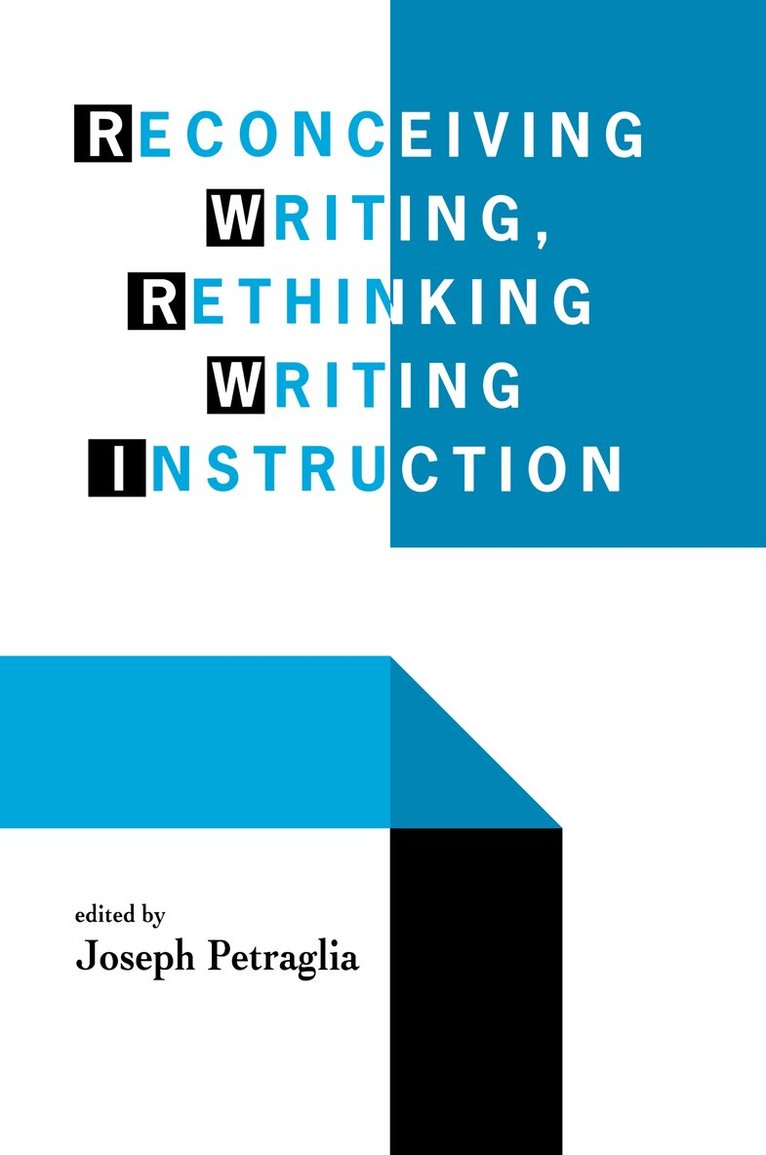
To a degree unknown in practically any other discipline, the pedagogical space afforded composition is the institutional engine that makes possible all other theoretical and research efforts in the field of rhetoric and writing. But composition has recently come under attack from many within the field as fundamentally misguided. Some of these critics have been labelled "New Abolitionists" for their insistence that compulsory first-year writing should be abandoned. Not limiting itself to first-year writing courses, this book extends and modifies calls for abolition by taking a closer look at current theoretical and empirical understandings of what contributors call "general writing skills instruction" (GWSI): the curriculum which an overwhelming majority of writing instructors is paid to teach, that practically every composition textbook is written to support, and the instruction for which English departments are given resources to deliver.The vulnerability of GWSI is hardly a secret among writing professionals and its intellectual fragility has been felt for years and manifested in several ways: * in persistently low status of composition as a study both within and outside of English departments;* in professional journal articles and conference presentations that are growing both in theoretical sophistication and irrelevance to the composition classroom; and * in the rhetoric and writing field's ever-increasing attention to nontraditional sites of writing behavior.But, to date, there has been relatively little concerted discussion within the writing field that focuses specifically on the fundamentally awkward relationship of writing theory and writing instruction.This volume is the first to explicitly focus on the gap in the theory and practice that has emerged as a result of the field's growing professionalization. The essays anthologized offer critiques of GWSI in light of the discipline's growing understanding of the contexts for writing and their rhetorical nature. Writing from a wide range of cognitivist, critical-theoretical, historical, linguistic and philosophical perspectives, contributors call into serious question basic tenets of contemporary writing instruction and provide a forum for articulating a sort of zeitgeist that seems to permeate many writing conferences, but which has, until recently, not found a voice or a name.
668 kr
Skickas inom 10-15 vardagar
To a degree unknown in practically any other discipline, the pedagogical space afforded composition is the institutional engine that makes possible all other theoretical and research efforts in the field of rhetoric and writing. But composition has recently come under attack from many within the field as fundamentally misguided. Some of these critics have been labelled "New Abolitionists" for their insistence that compulsory first-year writing should be abandoned. Not limiting itself to first-year writing courses, this book extends and modifies calls for abolition by taking a closer look at current theoretical and empirical understandings of what contributors call "general writing skills instruction" (GWSI): the curriculum which an overwhelming majority of writing instructors is paid to teach, that practically every composition textbook is written to support, and the instruction for which English departments are given resources to deliver.The vulnerability of GWSI is hardly a secret among writing professionals and its intellectual fragility has been felt for years and manifested in several ways: * in persistently low status of composition as a study both within and outside of English departments;* in professional journal articles and conference presentations that are growing both in theoretical sophistication and irrelevance to the composition classroom; and * in the rhetoric and writing field's ever-increasing attention to nontraditional sites of writing behavior.But, to date, there has been relatively little concerted discussion within the writing field that focuses specifically on the fundamentally awkward relationship of writing theory and writing instruction.This volume is the first to explicitly focus on the gap in the theory and practice that has emerged as a result of the field's growing professionalization. The essays anthologized offer critiques of GWSI in light of the discipline's growing understanding of the contexts for writing and their rhetorical nature. Writing from a wide range of cognitivist, critical-theoretical, historical, linguistic and philosophical perspectives, contributors call into serious question basic tenets of contemporary writing instruction and provide a forum for articulating a sort of zeitgeist that seems to permeate many writing conferences, but which has, until recently, not found a voice or a name.
2 039 kr
Skickas inom 10-15 vardagar
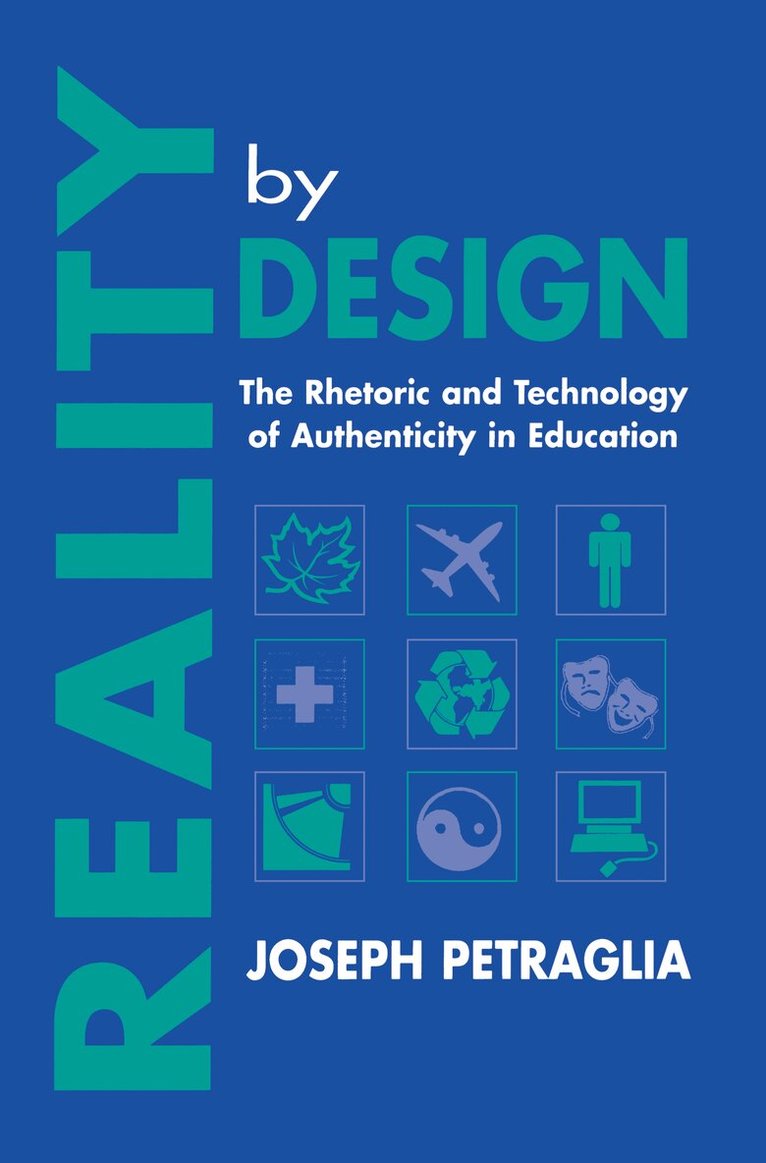
In the first paragraphs of this volume, the author identifies an "authenticity paradox": that the purported real-worldedness of a learning environment, technique, or task is so rhetorically potent that educators frequently call attention to it in pedagogical conversations to legitimize their undertakings, while at the same time, terms such as "real-world" and "authentic" do not require (and even resist) precise delineation.Using the language of authenticity as a keyhole through which to view contemporary educational theory, Petraglia draws on theories of cognition, education, and knowledge to articulate the interdisciplinarity of "constructivism" and to expose the unsettling combination of constructivism's social scientific and epistemological commitments. He argues that a full-bodied embrace of constructivist theory requires that educators forgo "knowledge as we know it" and recommends a "rhetorical" approach to constructivist instruction that recognizes the cultural, social, and behavioral practices which play an enormous role in defining learners' "real worlds." Applying this critique to the field of educational technology, the author does not merely lament constructivist theory's current shortcomings, but offers a means by which these shortcomings can be engaged and, perhaps, overcome.
549 kr
Skickas inom 10-15 vardagar
In the first paragraphs of this volume, the author identifies an "authenticity paradox": that the purported real-worldedness of a learning environment, technique, or task is so rhetorically potent that educators frequently call attention to it in pedagogical conversations to legitimize their undertakings, while at the same time, terms such as "real-world" and "authentic" do not require (and even resist) precise delineation.Using the language of authenticity as a keyhole through which to view contemporary educational theory, Petraglia draws on theories of cognition, education, and knowledge to articulate the interdisciplinarity of "constructivism" and to expose the unsettling combination of constructivism's social scientific and epistemological commitments. He argues that a full-bodied embrace of constructivist theory requires that educators forgo "knowledge as we know it" and recommends a "rhetorical" approach to constructivist instruction that recognizes the cultural, social, and behavioral practices which play an enormous role in defining learners' "real worlds." Applying this critique to the field of educational technology, the author does not merely lament constructivist theory's current shortcomings, but offers a means by which these shortcomings can be engaged and, perhaps, overcome.