Joseph R. Hayden - Böcker
Visar alla böcker från författaren Joseph R. Hayden. Handla med fri frakt och snabb leverans.
5 produkter
5 produkter
1 071 kr
Skickas inom 10-15 vardagar
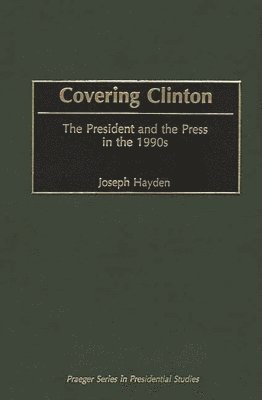
The end of the 1990s saw increasing criticism of the media's treatment of the scandals in Washington. Critics complained that journalists either had not covered the political crisis well, that they had bungled it, or that they had simply blown it out of proportion. Some went so far as to call the situation Pressgate. As Hayden points out, however, the larger question remained: What was Clinton's overall relationship with the media?Hayden examines presidential-press relationships in the 1990s, focusing first on the 1992 campaign, then on issues and events over Clinton's two terms. He analyzes the press response to the programs of the Clinton era as well as the scandals, the roles of consultants like James Carville, the effectiveness of various press secretaries, and the use of pollsters like Dick Morris. He also examines the fate of the First Amendment in the 1990s and how Clinton responded to freedom of expression concerns. This analysis will be of interest to media specialists as well as the general public concerned with contemporary Washington politics and journalism.
760 kr
Skickas inom 3-6 vardagar
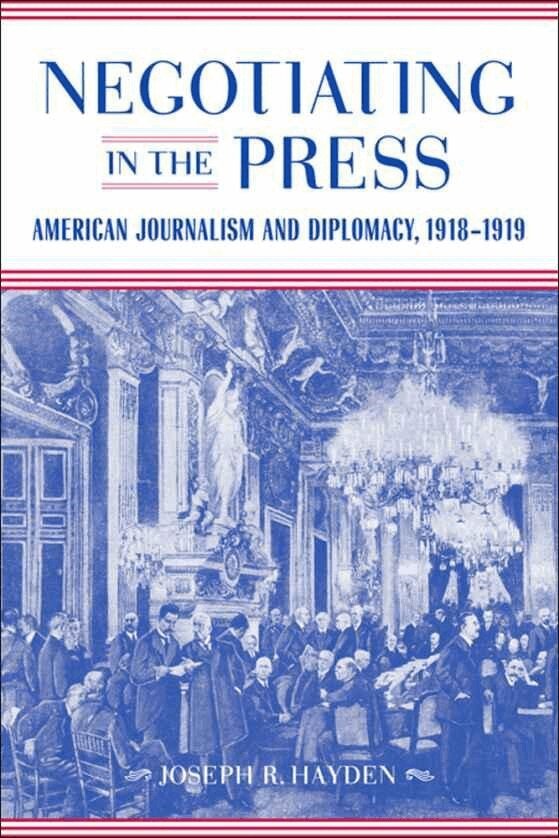
Negotiating in the Press offers a new interpretation of an otherwise dark moment in American journalism. Rather than emphasise the familiar story of lost journalistic freedom during World War I, Joseph R. Hayden describes the press's newfound power in the war's aftermath - that seminal moment when journalists discovered their ability to help broker peace talks. He examines the role of the American press at the Paris Peace Conference of 1919, looking at journalists' influence on the peace process and their relationship to heads of state and other delegation members. Challenging prevailing historical accounts that assume the press was peripheral to the quest for peace, Hayden demonstrates that journalists instead played an integral part in the talks, by serving as ""public ambassadors."" During the late 1910s, as World War I finally came to a close, American journalists and diplomats found themselves working in unlikely proximity, with correspondents occasionally performing diplomatic duties and diplomats sometimes courting publicity. The efforts of both groups to facilitate the peace talks at Versailles arose amidst the vision of a ""new diplomacy,"" one characterized by openness, information sharing, and public accountability. Using evidence from memoirs, official records, and contemporary periodicals, Hayden reveals that participants in the Paris Peace Conference continually wrestled with ideas about the roles of the press and, through the press, the people. American journalists reported on an abundance of information in Paris, and negotiators could not resist the useful leverage that publicity provided. Peacemaking via publicity, a now-obscure dimension of progressive statecraft, provided a powerful ideological ethos. It hinted at dynamically altered roles for journalists and diplomats, offered hope for a world desperate for optimism and order, and, finally, suggested that the fruits of America's great age of reform might be shared with a Europe exhausted by war. The peace conference of 1919, Hayden demonstrates, marked a decisive stage in the history of American journalism, a coming of age for many news organisations. By detailing what journalists did before, during, and after the Paris talks, he tells us a great deal about how the negotiators and the Wilson administration worked throughout 1919. Ultimately, he provides a richer integrative view of peacemaking as a whole. An engaging analysis of diplomacy and the Fourth Estate, Negotiating in the Press offers a fascinating look at how leading nations democratized foreign policy a century ago and ushered in the dawn of public diplomacy.
577 kr
Skickas inom 10-15 vardagar
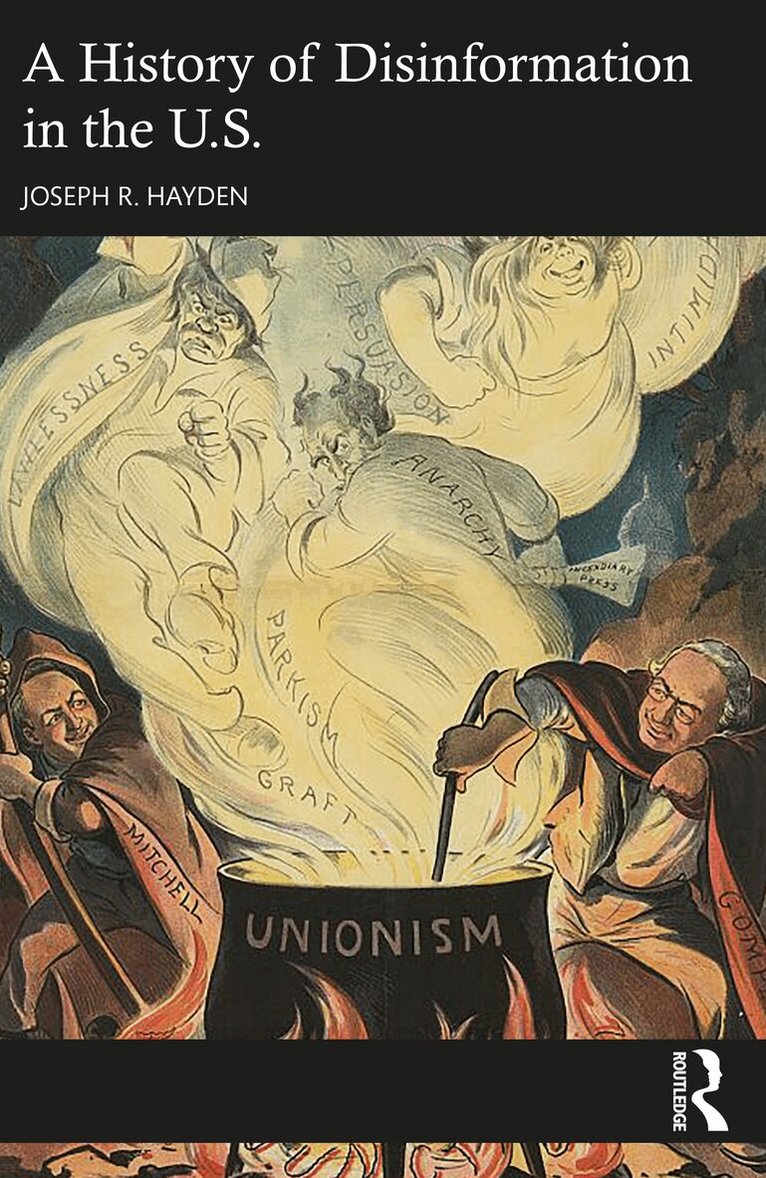
This volume recounts notable episodes of distortion throughout American media history. It examines several of the lurid hoaxes and conspiracy theories that have inspired press coverage, as well as some of the political lies promoted by partisan gladiators, whether of the eighteenth century or today.The book moves beyond the sensational stories to show the enduring and systemic nature of media manipulation that occurs on far more consequential issues. It exposes persistent and deeply destructive falsehoods that have been told about women, people of color, immigrants, the LGBTQ+ community, unions, commercial products, highlighting how longstanding “bipartisan” myths have effectively marginalized certain groups of Americans. Alongside these cases, the author carefully dissects the changing nature of institutions, technologies, and practices of journalism in America. Attention is given to the evolution of newspapers in the eighteenth and nineteenth centuries, the role of broadcasting in the twentieth, and the impact of the internet and social media at the dawn of the twenty-first.This book will appeal to readers interested in American history, journalism, communication studies, political science and sociology.
2 162 kr
Skickas inom 10-15 vardagar
This volume recounts notable episodes of distortion throughout American media history. It examines several of the lurid hoaxes and conspiracy theories that have inspired press coverage, as well as some of the political lies promoted by partisan gladiators, whether of the eighteenth century or today.The book moves beyond the sensational stories to show the enduring and systemic nature of media manipulation that occurs on far more consequential issues. It exposes persistent and deeply destructive falsehoods that have been told about women, people of color, immigrants, the LGBTQ+ community, unions, commercial products, highlighting how longstanding “bipartisan” myths have effectively marginalized certain groups of Americans. Alongside these cases, the author carefully dissects the changing nature of institutions, technologies, and practices of journalism in America. Attention is given to the evolution of newspapers in the eighteenth and nineteenth centuries, the role of broadcasting in the twentieth, and the impact of the internet and social media at the dawn of the twenty-first.This book will appeal to readers interested in American history, journalism, communication studies, political science and sociology.
550 kr
Skickas inom 10-15 vardagar
During the American Civil War, several newspapers remained Confederate sympathizers despite their locations being occupied by Union troops. Examining these papers, the authors explore what methods of suppression occupiers used, how occupation influenced the editorial and business sides of the press, and how occupation impacted freedom of the press.