Joseph R. McElrath Jr. - Böcker
Visar alla böcker från författaren Joseph R. McElrath Jr.. Handla med fri frakt och snabb leverans.
4 produkter
4 produkter
300 kr
Skickas inom 7-10 vardagar
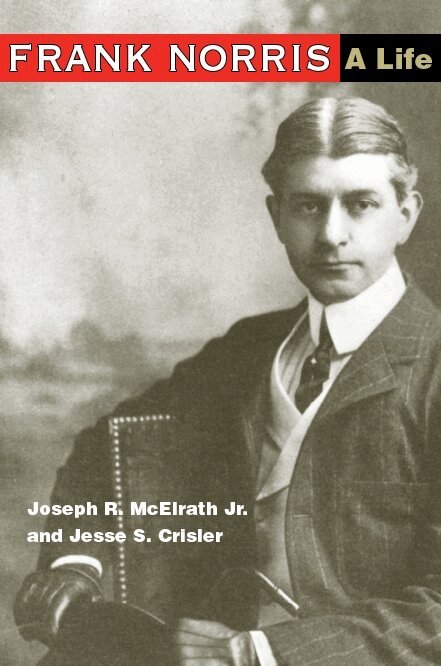
Born in Chicago in 1870, Frank Norris led a life of adventure and art. He moved to San Francisco at fifteen, spent two years in Paris painting, returned to San Francisco to become an internationally famous author, and died at age thirty-two from a ruptured appendix. During his short life, he wrote an inspired series of novels about the United States coming of age, including The Octopus, The Pit, and McTeague. Until recently, various obstacles prevented a comprehensive biography of Norris: the writer burned most of his correspondence, the 1906 San Francisco earthquake and fire devoured more, and his brother and widow dispersed his surviving papers as gifts. Joseph R. McElrath Jr. and Jesse S. Crisler spent over thirty years amassing the material necessary for this truly full-scale portrait of Norris.
823 kr
Skickas inom 3-6 vardagar
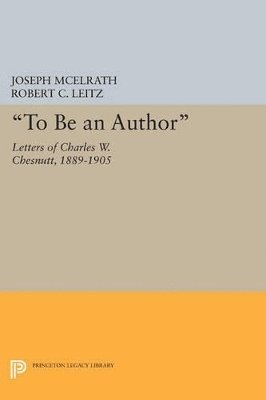
Collected in this volume are the 1889--1905 letters of one of the first African-American literary artists to cross the "color line" into the de facto segregated American publishing industry of the turn of the century. Selected for inclusion are those chronicling the rise of Charles W. Chesnutt (1858-1932), an attorney and businessman in Cleveland, Ohio, who achieved prominence as a novelist, short story writer, essayist, and lecturer despite the obstacles faced by a man of color during the "Jim Crow" period. In his insightful commentaries on his own situation, Chesnutt provides as well a special perspective on life-at-large in America during the Gilded Age, the "gay '90s" (which were not so gay for African Americans), and the Progressive era. Like his black correspondents--Booker T. Washington, W.E.B. Du Bois, T. Thomas Fortune, and William M. Trotter--he was one of the major commentators on what was then termed the "Negro Problem."His most distinguished novels, The House Behind the Cedars (1900) and The Marrow of Tradition (1901), were published by major "white" presses of the time; not only did his editors and publishers but then-preeminent black and white critics greet these literary protests against racism as proof of the intellectual and artistic excellence of which a long-oppressed people were capable when afforded equal opportunity. Since the 1960s, when the rediscovery of his genius began in earnest, Chesnutt has received even more recognition than he enjoyed by the early 1900s. Joseph R. McElrath, Jr., and Robert C. Leitz, III, have surveyed every collection of Chesnutt's papers and those of his correspondents in order to reconstruct the story of his most vital years as an author. Their introduction contextualizes the letters in light of Chesnutt biography and the less-than-promising prospects faced by a would-be literary artist of his racial background.Their encyclopedic annotations explaining contemporary events to which Chesnutt responds and what was then transpiring in both black and white cultural environments illuminate not only Chesnutt's character but those of many now unfamiliar figures who also contributed to what Chesnutt termed the "cause." Provided in this first-ever edition of Chesnutt's letters is a detailed portrait of one of the pioneers in the African-American literary tradition and a panorama of American life a century ago. Originally published in 1997. The Princeton Legacy Library uses the latest print-on-demand technology to again make available previously out-of-print books from the distinguished backlist of Princeton University Press. These editions preserve the original texts of these important books while presenting them in durable paperback and hardcover editions. The goal of the Princeton Legacy Library is to vastly increase access to the rich scholarly heritage found in the thousands of books published by Princeton University Press since its founding in 1905.
1 855 kr
Skickas inom 3-6 vardagar
Collected in this volume are the 1889--1905 letters of one of the first African-American literary artists to cross the "color line" into the de facto segregated American publishing industry of the turn of the century. Selected for inclusion are those chronicling the rise of Charles W. Chesnutt (1858-1932), an attorney and businessman in Cleveland, Ohio, who achieved prominence as a novelist, short story writer, essayist, and lecturer despite the obstacles faced by a man of color during the "Jim Crow" period. In his insightful commentaries on his own situation, Chesnutt provides as well a special perspective on life-at-large in America during the Gilded Age, the "gay '90s" (which were not so gay for African Americans), and the Progressive era. Like his black correspondents--Booker T. Washington, W.E.B. Du Bois, T. Thomas Fortune, and William M. Trotter--he was one of the major commentators on what was then termed the "Negro Problem."His most distinguished novels, The House Behind the Cedars (1900) and The Marrow of Tradition (1901), were published by major "white" presses of the time; not only did his editors and publishers but then-preeminent black and white critics greet these literary protests against racism as proof of the intellectual and artistic excellence of which a long-oppressed people were capable when afforded equal opportunity. Since the 1960s, when the rediscovery of his genius began in earnest, Chesnutt has received even more recognition than he enjoyed by the early 1900s. Joseph R. McElrath, Jr., and Robert C. Leitz, III, have surveyed every collection of Chesnutt's papers and those of his correspondents in order to reconstruct the story of his most vital years as an author. Their introduction contextualizes the letters in light of Chesnutt biography and the less-than-promising prospects faced by a would-be literary artist of his racial background.Their encyclopedic annotations explaining contemporary events to which Chesnutt responds and what was then transpiring in both black and white cultural environments illuminate not only Chesnutt's character but those of many now unfamiliar figures who also contributed to what Chesnutt termed the "cause." Provided in this first-ever edition of Chesnutt's letters is a detailed portrait of one of the pioneers in the African-American literary tradition and a panorama of American life a century ago. Originally published in 1997. The Princeton Legacy Library uses the latest print-on-demand technology to again make available previously out-of-print books from the distinguished backlist of Princeton University Press. These editions preserve the original texts of these important books while presenting them in durable paperback and hardcover editions. The goal of the Princeton Legacy Library is to vastly increase access to the rich scholarly heritage found in the thousands of books published by Princeton University Press since its founding in 1905.
551 kr
Skickas inom 7-10 vardagar
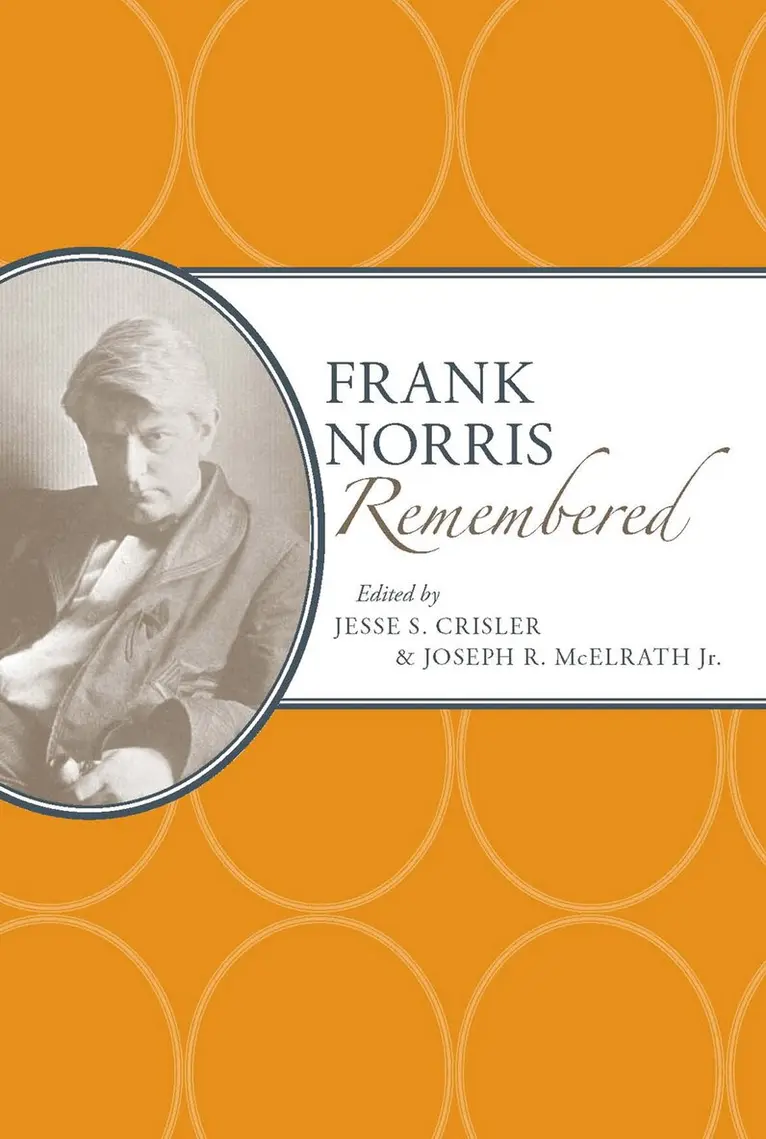
Frank Norris Remembered is a collection of reminiscences by Norris’s contemporaries, friends, and family that illuminate the life of one of America’s most popular novelists.Considering his undergraduate education spent studying art at Académie Julian in Paris and creative writing at Harvard and his journalism career reporting from the far reaches of South Africa and Cuba, it is difficult to fathom how Frank Norris also found time to compose seven novels during the course of his brief life. But despite his adventures abroad, Norris turned out novels at a dizzying pace. He published Moran of the Lady Letty in 1888, McTeague early in 1899, Blix later that year, A Man’s Woman in February 1900, and The Octopus, the first in his ultimately unfinished “Epic of the Wheat” trilogy, in 1901. By informing his novels with his own experiences abroad, Norris composed works that were politically charged and culturally relevant and that made considerable contributions to the character of American literature in the twentieth century.Frank Norris died at the age of thirty-two in 1902 from peritonitis resulting from a burst appendix, leaving behind a wife, a daughter, and an unfinished series of novels (two of which, The Pit and Vandover and the Brute, were published posthumously). The aim of Frank Norris Remembered, edited by Jesse S. Crisler and Joseph R. McElrath Jr., is to re-create the short, spectacular life of this American author through the eyes of those who knew him best. The fifty reminiscences included in this book feature the voices of Frank N. Doubleday; William Dean Howells; Hamlin Garland; Norris’s wife, Jeannette; and many others who were lucky enough to form a relationship with this vital twentieth-century American author, artist, and adventurer.