Joseph Scarpaci - Böcker
Visar alla böcker från författaren Joseph Scarpaci. Handla med fri frakt och snabb leverans.
3 produkter
3 produkter
2 584 kr
Skickas inom 10-15 vardagar
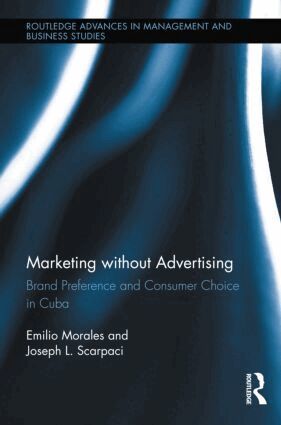
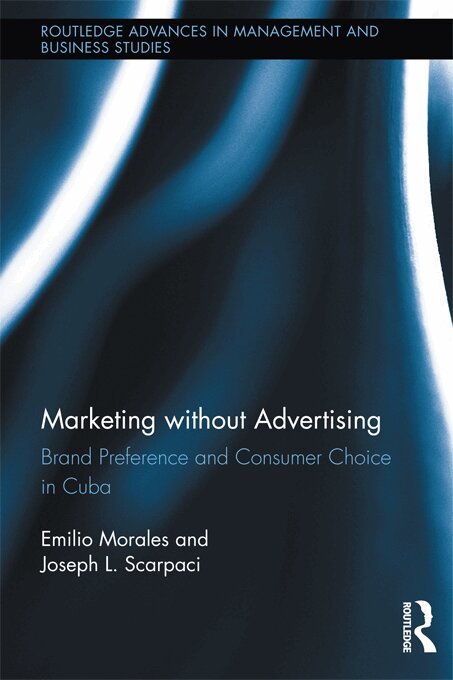
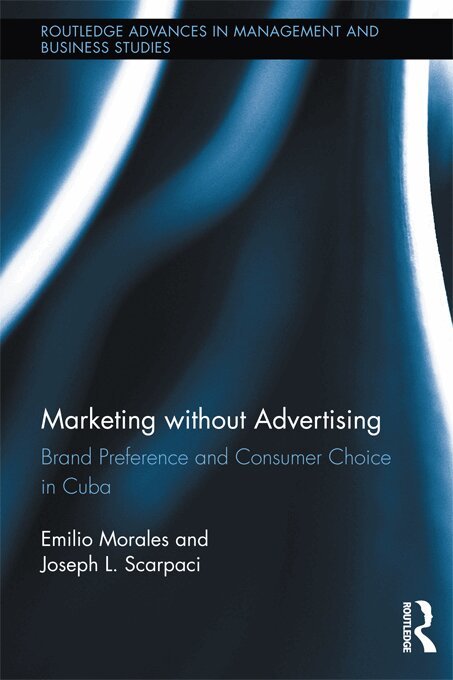
In 1993, in order to stop an economic freefall on the island of Cuba, Fidel Castro’s government reluctantly instituted a series of reforms to compensate for the demise of foreign aid from Moscow. These policies ushered in a broad spectrum of national and international consumer products and services previously unknown to islanders. In a few short years, Cubans were seeing foreign brands among consumer durables and a broad array of logos brought in by tourists. Today, nearly two decades into these limited market reforms, no systematic research has explored consumer brand awareness among 11 millions Cubans living just 90 miles from the United States. The paucity of academic research stems from the challenges of conducting public/consumer opinion, and official state policy contends that consumer wants and needs are satisfied by either a series of generic and Cuban-made brands, or by independent entrepreneurs who provide brandless products and services.Marketing without Advertising analyzes the role, narratives, and behaviour of consumption in Cuba since 1959. It documents how consumer behaviour has changed since the pre-revolutionary period, with special focus on the early 1990s. The book documents the shift from moral-based rewards in the early years of the Revolution, to the rise of material-based incentives. Cubans have long been exposed to foreign mass media in the form of movies, music videos, cable television shows. Although the Internet is highly regulated, the Cuban Diaspora in exile brings back clothing, personal care products, electronic goods, and magazines that increase the awareness of brand logos, jingles, products, and services. These and related findings from the authors' primary research are ripe with marketing implications such as substitution effects, price elasticity, latent demand for certain products and services, and consumer behaviour.
Pittsburgh and the Appalachians
Cultural and Natural Resources in a Postindustrial Age
Inbunden, Engelska, 2006
821 kr
Skickas inom 7-10 vardagar
Few American cities reflect the challenges and promise of a twenty-first-century economy better than Pittsburgh and its surrounding region. Once a titan of the industrial age, Pittsburgh flourished from the benefits of its waterways, central location, and natural resources-bituminous coal to fire steel furnaces; salt and sand for glass making; gas, oil, and just enough ore to spark an early iron industry. Today, like many cities located in the manufacturing triangle that stretches from Boston to Duluth to St. Louis, Pittsburgh has made the transition to a service-based economy.Pittsburgh and the Appalachians presents a collection of eighteen essays that explore the advantages and disadvantages that Pittsburgh and its surrounding region face in the new global economy, from the perspectives of technology, natural resources, workforce, and geography. It offers an extensive examination of the processes and factors that have transformed much of industrial America during the past half-century, and shows how other cities can learn from the steps Pittsburgh has taken through redevelopment, green space acquisition, air and water quality improvement, cultural revival, and public-private partnerships to create a more livable, economically viable region for future populations.
831 kr
Skickas inom 10-15 vardagar
In 1993, in order to stop an economic freefall on the island of Cuba, Fidel Castro’s government reluctantly instituted a series of reforms to compensate for the demise of foreign aid from Moscow. These policies ushered in a broad spectrum of national and international consumer products and services previously unknown to islanders. In a few short years, Cubans were seeing foreign brands among consumer durables and a broad array of logos brought in by tourists. Today, nearly two decades into these limited market reforms, no systematic research has explored consumer brand awareness among 11 millions Cubans living just 90 miles from the United States. The paucity of academic research stems from the challenges of conducting public/consumer opinion, and official state policy contends that consumer wants and needs are satisfied by either a series of generic and Cuban-made brands, or by independent entrepreneurs who provide brandless products and services.Marketing without Advertising analyzes the role, narratives, and behaviour of consumption in Cuba since 1959. It documents how consumer behaviour has changed since the pre-revolutionary period, with special focus on the early 1990s. The book documents the shift from moral-based rewards in the early years of the Revolution, to the rise of material-based incentives. Cubans have long been exposed to foreign mass media in the form of movies, music videos, cable television shows. Although the Internet is highly regulated, the Cuban Diaspora in exile brings back clothing, personal care products, electronic goods, and magazines that increase the awareness of brand logos, jingles, products, and services. These and related findings from the authors' primary research are ripe with marketing implications such as substitution effects, price elasticity, latent demand for certain products and services, and consumer behaviour.