Joshua B. Freeman – författare
Visar alla böcker från författaren Joshua B. Freeman. Handla med fri frakt och snabb leverans.
8 produkter
8 produkter
1 383 kr
Skickas inom 11-20 vardagar
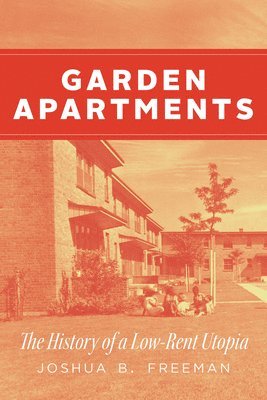
How a form of multifamily housing with idealistic roots became a ubiquitous model promoted by both public entities and private developers. Eminent historian Joshua Freeman rescues garden apartments—typically low-rise multifamily residences that enclose or are surrounded by landscaped gardens—from their invisibility in the American landscape. He details their outsized influence on housing policy and social policy as they helped upgrade living standards for working people. Inspired by the architectural innovations and socialist politics of British garden cities, Red Vienna, and German modernist housing in the 1920s, these large, centrally managed projects were mostly not public housing, but their capitalist developers worked with governments to keep down rents. The results were often relatively small apartments and large communal spaces, aimed at fostering actual American community.
426 kr
Kommande
How a form of multifamily housing with idealistic roots became a ubiquitous model promoted by both public entities and private developers. Eminent historian Joshua Freeman rescues garden apartments—typically low-rise multifamily residences that enclose or are surrounded by landscaped gardens—from their invisibility in the American landscape. He details their outsized influence on housing policy and social policy as they helped upgrade living standards for working people. Inspired by the architectural innovations and socialist politics of British garden cities, Red Vienna, and German modernist housing in the 1920s, these large, centrally managed projects were mostly not public housing, but their capitalist developers worked with governments to keep down rents. The results were often relatively small apartments and large communal spaces, aimed at fostering actual American community.
1 147 kr
Skickas inom 7-10 vardagar
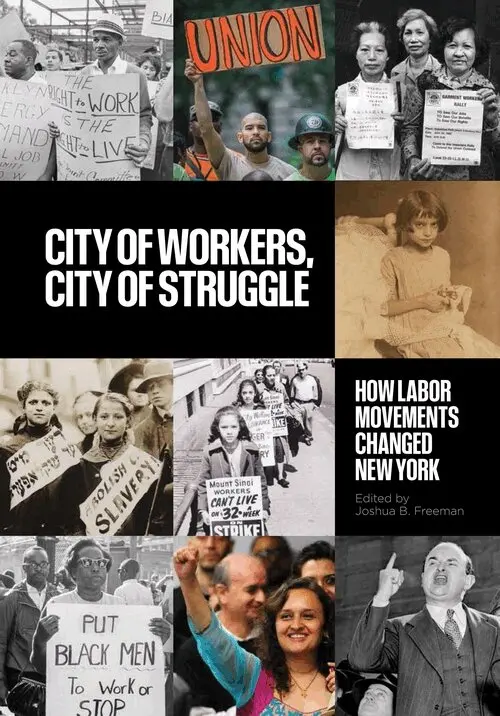
From the founding of New Amsterdam until today, working people have helped create and re-create the City of New York through their struggles. Starting with artisans and slaves in colonial New York and ranging all the way to twenty-first-century gig-economy workers, this book tells the story of New York’s labor history anew.City of Workers, City of Struggle brings together essays by leading historians of New York and a wealth of illustrations, offering rich descriptions of work, daily life, and political struggle. It recounts how workers have developed formal and informal groups not only to advance their own interests but also to pursue a vision of what the city should be like and whom it should be for. The book goes beyond the largely white, male wage workers in mainstream labor organizations who have dominated the history of labor movements to look at enslaved people, indentured servants, domestic workers, sex workers, day laborers, and others who have had to fight not only their masters and employers but also labor groups that often excluded them. Through their stories—how they fought for inclusion or developed their own ways to advance—it recenters labor history for contemporary struggles. City of Workers, City of Struggle offers the definitive account of the four-hundred-year history of efforts by New York workers to improve their lives and their communities.In association with the exhibition City of Workers, City of Struggle: How Labor Movements Changed New York at the Museum of the City of New York
292 kr
Skickas inom 7-10 vardagar
From the founding of New Amsterdam until today, working people have helped create and re-create the City of New York through their struggles. Starting with artisans and slaves in colonial New York and ranging all the way to twenty-first-century gig-economy workers, this book tells the story of New York’s labor history anew.City of Workers, City of Struggle brings together essays by leading historians of New York and a wealth of illustrations, offering rich descriptions of work, daily life, and political struggle. It recounts how workers have developed formal and informal groups not only to advance their own interests but also to pursue a vision of what the city should be like and whom it should be for. The book goes beyond the largely white, male wage workers in mainstream labor organizations who have dominated the history of labor movements to look at enslaved people, indentured servants, domestic workers, sex workers, day laborers, and others who have had to fight not only their masters and employers but also labor groups that often excluded them. Through their stories—how they fought for inclusion or developed their own ways to advance—it recenters labor history for contemporary struggles. City of Workers, City of Struggle offers the definitive account of the four-hundred-year history of efforts by New York workers to improve their lives and their communities.In association with the exhibition City of Workers, City of Struggle: How Labor Movements Changed New York at the Museum of the City of New York
259 kr
Skickas inom 7-10 vardagar
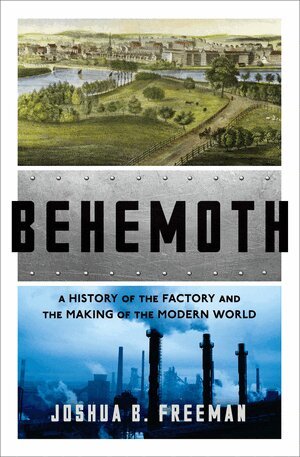
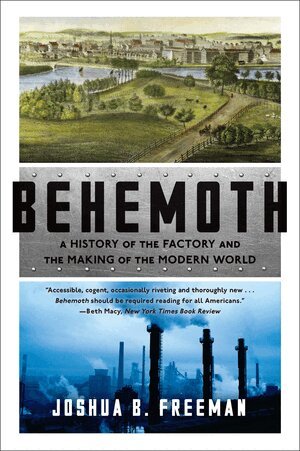
Factories, with their ingenious machinery and miraculous productivity, are celebrated as modern wonders of the world. Yet from William Blake’s “dark Satanic mills” they have also fuelled our fears of the future.Telling the story of the factory, Joshua B. Freeman takes readers from the textile mills in England that powered the Industrial Revolution to the steel and car plants of twentieth-century America, Eastern Europe and the Soviet Union, to today’s behemoths making trainers, toys and iPhones in China and Vietnam. He traces arguments about factories and social progress through such critics and champions as Marx, Ford and Stalin. And he explores the representation of factories in the work of Margaret Bourke-White, Charlie Chaplin and Diego Rivera.
178 kr
Skickas inom 7-10 vardagar
Factories, with their ingenious machinery and miraculous productivity, are celebrated as modern wonders of the world. Yet from William Blake’s “dark Satanic mills” they have also fuelled our fears of the future.Telling the story of the factory, Joshua B. Freeman takes readers from the textile mills in England that powered the Industrial Revolution to the steel and car plants of twentieth-century America, Eastern Europe and the Soviet Union, to today’s behemoths making trainers, toys and iPhones in China and Vietnam. He traces arguments about factories and social progress through such critics and champions as Marx, Ford and Stalin. And he explores the representation of factories in the work of Margaret Bourke-White, Charlie Chaplin and Diego Rivera.
231 kr
Skickas inom 5-8 vardagar
378 kr
Skickas inom 3-6 vardagar
A “lucid, detailed, and imaginative analysis” (The Nation) of the model city that working-class New Yorkers created after World War II—and its tragic demiseMore than any other city in America, New York in the years after the Second World War carved out an idealistic and equitable path to the future. Largely through the efforts of its working class and the dynamic labor movement it built, New York City became the envied model of liberal America and the scourge of conservatives everywhere: cheap and easy-to-use mass transit, work in small businesses and factories that had good wages and benefits, affordable public housing, and healthcare for all. Working-Class New York is an “engrossing” (Dissent) account of the birth of that ideal and the way it came crashing down. In what Publishers Weekly calls “absorbing and beautifully detailed history,” historian Joshua Freeman shows how the anticommunist purges of the 1950s decimated the ranks of the labor movement and demoralized its idealists, and how the fiscal crisis of the mid-1970s dealt another crushing blow to liberal ideals as the city’s wealthy elite made a frenzied grab for power. A grand work of cultural and social history, Working-Class New York is a moving chronicle of a dream that died but may yet rise again.