Joshua D. Rothman - Böcker
Visar alla böcker från författaren Joshua D. Rothman. Handla med fri frakt och snabb leverans.
6 produkter
6 produkter
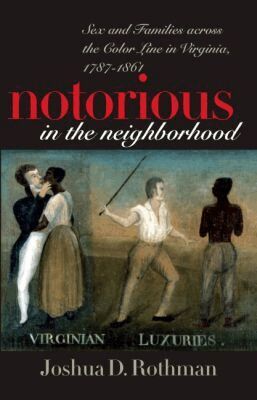
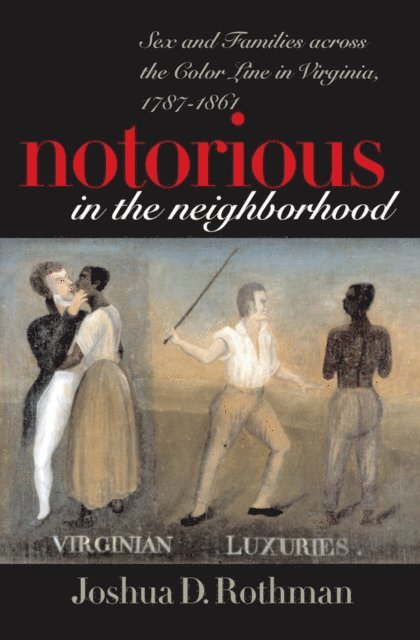
Notorious in the Neighborhood
Sex and Families Across the Color Line in Virginia, 1787-1861
Häftad, Engelska, 2003
458 kr
Skickas inom 10-15 vardagar
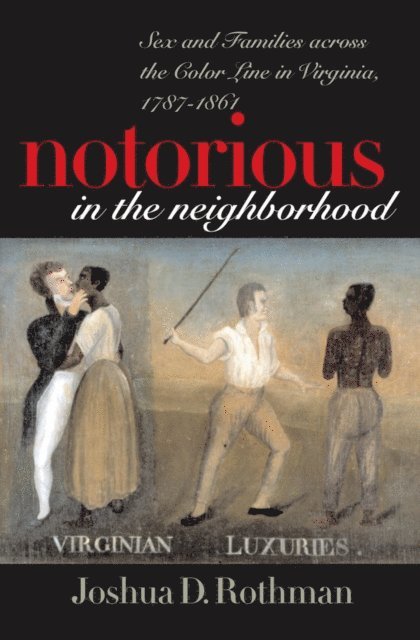
Laws and cultural norms militated against interracial sex in Virginia before the Civil War, and yet it was ubiquitous in cities, towns, and plantation communities throughout the state. In Notorious in the Neighborhood, Joshua Rothman examines the full spectrum of interracial sexual relationships under slavery - from Thomas Jefferson, Sally Hemings, and the intertwined interracial families of Monticello and Charlottesville to commercial sex in Richmond, the routinized sexual exploitation of enslaved women, and adultery across the color line. He explores the complex considerations of legal and judicial authorities who handled cases involving illicit sex and describes how the customary toleration of sex across the color line both supported and undermined racism and slavery in the early national and antebellum South. White Virginians allowed for an astonishing degree of flexibility and fluidity within a seemingly rigid system of race and interracial relations, Rothman argues, and the relationship between law and custom regarding racial intermixture was always shifting. As a consequence, even as whites never questioned their own racial supremacy, the meaning and significance of racial boundaries, racial hierarchy, and ultimately of race itself always stood on unstable ground - a reality that whites understood and about which they demonstrated increasing anxiety as the nation's sectional crisis intensified.
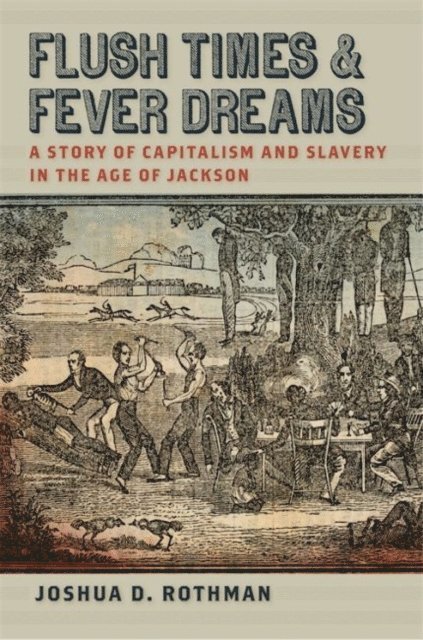
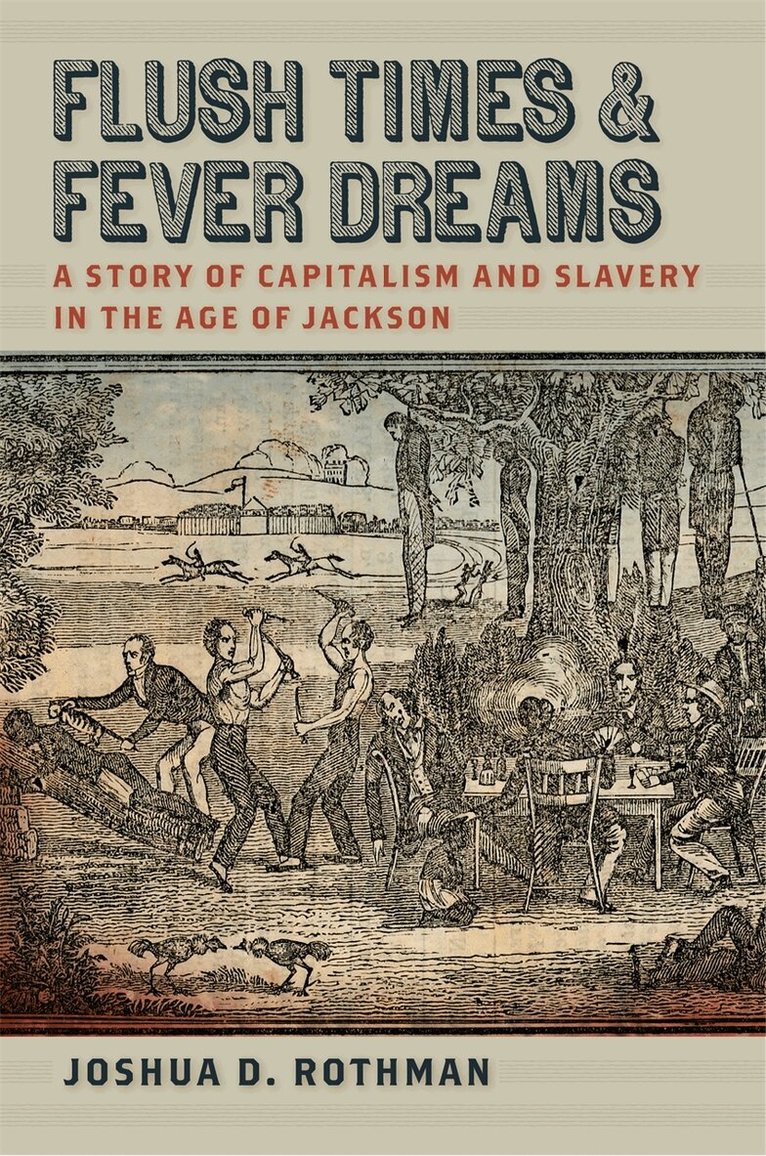
Flush Times and Fever Dreams
A Story of Capitalism and Slavery in the Age of Jackson
Häftad, Engelska, 2014
371 kr
Skickas inom 3-6 vardagar
In 1834 Virgil Stewart rode from western Tennessee to a territory known as the “Arkansas morass” in pursuit of John Murrell, a thief accused of stealing two slaves. Stewart’s adventure led to a sensational trial and a wildly popular published account that would ultimately help trigger widespread violence during the summer of 1835, when five men accused of being professional gamblers were hanged in Vicksburg, nearly a score of others implicated with a gang of supposed slave thieves were executed in plantation districts, and even those who tried to stop the bloodshed found themselves targeted as dangerous and subversive. Using Stewart’s story as his point of entry, Joshua D. Rothman details why these events, which engulfed much of central and western Mississippi, came to pass. He also explains how the events revealed the fears, insecurities, and anxieties underpinning the cotton boom that made Mississippi the most seductive and exciting frontier in the Age of Jackson.As investors, settlers, slaves, brigands, and fortune-hunters converged in what was then America’s Southwest, they created a tumultuous landscape that promised boundless opportunity and spectacular wealth. Predicated on ruthless competition, unsustainable debt, brutal exploitation, and speculative financial practices that looked a lot like gambling, this landscape also produced such profound disillusionment and conflict that it contained the seeds of its own potential destruction. Rothman sheds light on the intertwining of slavery and capitalism in the period leading up to the Panic of 1837, highlighting the deeply American impulses underpinning the evolution of the slave South and the dizzying yet unstable frenzy wrought by economic flush times. It is a story with lessons for our own day.Published in association with the Library Company of Philadelphia’s Program in African American History. A Sarah Mills Hodge Fund Publication.
2 102 kr
Skickas inom 3-6 vardagar
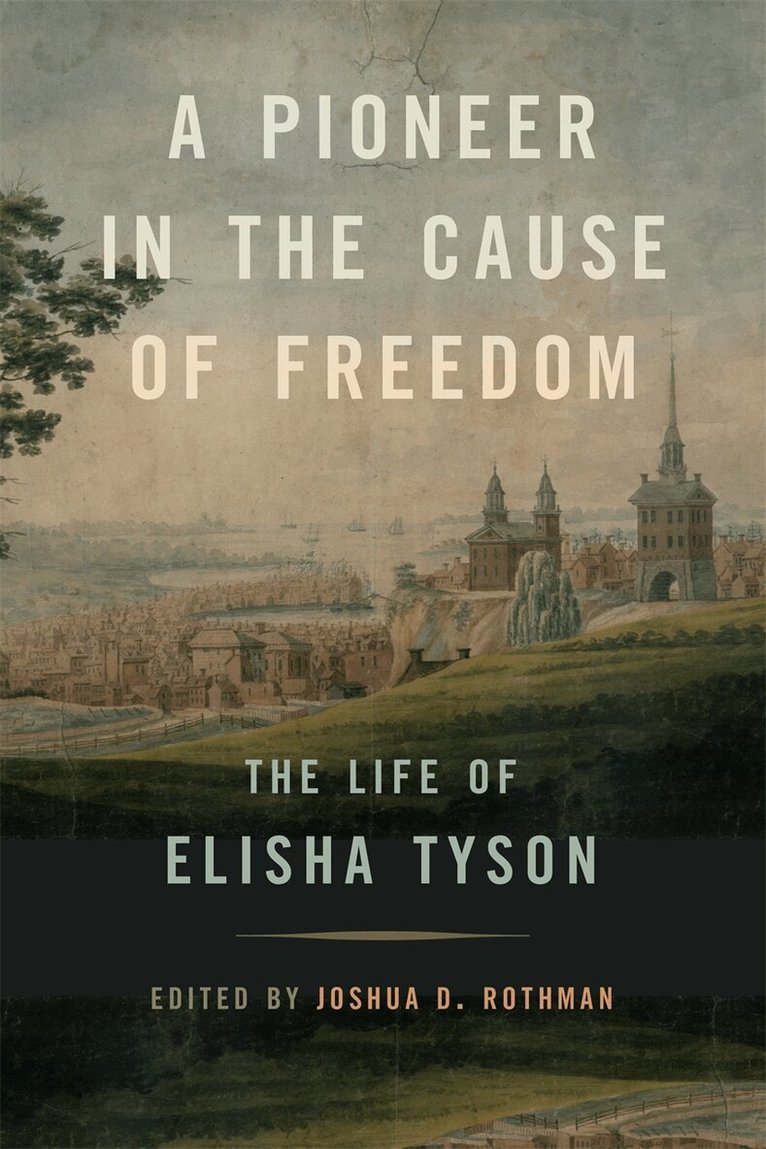
Descended from German Quakers who immigrated to Pennsylvania in the late seventeenth century, Elisha Tyson was born in 1749. As a young man he became wealthy in the milling business in northeastern Maryland before moving in the early 1780s to Baltimore, where he grew even wealthier and established a reputation as a prominent member of the city’s business community. Over the course of more than three decades in the late eighteenth and early nineteenth centuries, Tyson helped found abolition societies, supported schools for free Black children, and contributed to the creation of numerous Black institutions and benevolent societies. He filed freedom petitions on behalf of enslaved people and pushed for the passage of liberalized manumission laws in Maryland. He used some of his fortune to assist Black people who claimed they were illegally held in bondage to sue for their liberty, and he confronted slave traders who kidnapped free Black Americans with the aim of selling them into slavery. By the time he died in February 1824, Elisha Tyson had personally aided in the liberation of perhaps two thousand Black people.Yet the only biography published about this remarkable man was penned shortly after his death by John Shoemaker Tyson, Elisha Tyson’s nephew. In A Pioneer in the Cause of Freedom, Joshua D. Rothman—a preeminent historian of slavery and abolition—seeks to remedy that silence. Along with an annotated version of that nineteenth-century biography, Rothman provides a thorough introduction to Elisha Tyson’s religious, political, and ideological worlds as well as a set of selected documents that illuminate some of Tyson’s work.
395 kr
Skickas inom 7-10 vardagar
Descended from German Quakers who immigrated to Pennsylvania in the late seventeenth century, Elisha Tyson was born in 1749. As a young man he became wealthy in the milling business in northeastern Maryland before moving in the early 1780s to Baltimore, where he grew even wealthier and established a reputation as a prominent member of the city’s business community. Over the course of more than three decades in the late eighteenth and early nineteenth centuries, Tyson helped found abolition societies, supported schools for free Black children, and contributed to the creation of numerous Black institutions and benevolent societies. He filed freedom petitions on behalf of enslaved people and pushed for the passage of liberalized manumission laws in Maryland. He used some of his fortune to assist Black people who claimed they were illegally held in bondage to sue for their liberty, and he confronted slave traders who kidnapped free Black Americans with the aim of selling them into slavery. By the time he died in February 1824, Elisha Tyson had personally aided in the liberation of perhaps two thousand Black people.Yet the only biography published about this remarkable man was penned shortly after his death by John Shoemaker Tyson, Elisha Tyson’s nephew. In A Pioneer in the Cause of Freedom, Joshua D. Rothman—a preeminent historian of slavery and abolition—seeks to remedy that silence. Along with an annotated version of that nineteenth-century biography, Rothman provides a thorough introduction to Elisha Tyson’s religious, political, and ideological worlds as well as a set of selected documents that illuminate some of Tyson’s work.
182 kr
Skickas inom 7-10 vardagar
An award-winning historian's "searing" (Wall Street Journal) account of America's internal slave trade-and its role in the making of AmericaSlave traders are peripheral figures in most histories of American slavery. But these men-who trafficked and sold over half a million enslaved people from the Upper South to the Deep South-were essential to slavery's expansion and fuelled the growth and prosperity of the United States.In The Ledger and the Chain, acclaimed historian Joshua D. Rothman recounts the shocking story of the domestic slave trade by tracing the lives and careers of Isaac Franklin, John Armfield, and Rice Ballard, who built the largest and most powerful slave-trading operation in American history. Far from social outcasts, they were rich and widely respected businessmen, and their company sat at the centre of capital flows connecting southern fields to north-eastern banks. Bringing together entrepreneurial ambition and remorseless violence toward enslaved people, domestic slave traders produced an atrocity that forever transformed the nation.
317 kr
Skickas inom 7-10 vardagar
In The Ledger and the Chain, prize-winning historian Joshua D. Rothman tells the disturbing story of the Franklin and Armfield company and the men who built it into the largest and most powerful slave trading company in the United States. In so doing, he reveals the central importance of the domestic slave trade to the development of American capitalism and the expansion of the American nation.Few slave traders were more successful than Isaac Franklin, John Armfield, and Rice Ballard, who ran Franklin and Armfield, and none were more influential. Drawing on source material from more than thirty archives in a dozen states, Rothman follows the three traders through their first meetings, the rise of their firm, and its eventual dissolution. Responsible for selling between 8,000 and 12,000 slaves from the Upper South to Deep South plantations over a period of eight years in the 1830s, they ran an extensive and innovative operation, with offices in New Orleans and Alexandria in Louisiana and Natchez in Mississippi. They advertised widely, borrowed heavily from bankers and other creditors, extended long term credit to their buyers, and had ships built to take slaves from Virginia down to New Orleans. Slavers are often misremembered as pariahs of more cultivated society, but as Rothman argues, the men who perpetrated the slave trade were respected members of prominent social and business communities and understood themselves as patriotic Americans.By tracing the lives and careers of the nation's most notorious slave traders, The Ledger and the Chain shows how their business skills and remorseless violence together made the malevolent entrepreneurialism of the slave trade. And it reveals how this horrific, ubiquitous trade in human beings shaped a growing nation and corrupted it in ways still powerfully felt today.