Joshua J. Dyck - Böcker
Visar alla böcker från författaren Joshua J. Dyck. Handla med fri frakt och snabb leverans.
4 produkter
4 produkter
929 kr
Skickas inom 7-10 vardagar
In The Power of Partisanship, Joshua J. Dyck and Shanna Pearson-Merkowitz argue that the growth in partisan polarization in the United States, and the resulting negativity voters feel towards their respective opposition party, has far-reaching effects on how Americans behave both inside and outside the realm of politics. In fact, no area of social life in the United States is safe from partisan influence. As a result of changes in the media landscape and decades of political polarization, voters are stronger partisans than in the past and are more likely to view the opposition party with a combination of confusion, disdain, and outright hostility. Yet, little of this hostility is grounded in specific policy preferences. Even ideology lacks meaning in the United States: conservative and liberal are what Republicans and Democrats have labeled "conservative" and "liberal."Dyck and Pearson-Merkowitz show how partisanship influences the electorate's support for democratic norms, willingness to engage in risk related to financial and healthcare decisions, interracial interactions, and previously non-political decisions like what we like to eat for dinner. Partisanship prevents people from learning from their interactions with friends or the realities of their neighborhoods, and even makes them oblivious to their own economic hardship. The intensity and pervasiveness of partisanship in politics today has resulted in "political knowledge" becoming an endogenous feature of strong partisanship and a poor proxy for anything but partisan behavior. Dyck and Pearson-Merkowitz present evidence that pure independents are, in fact, very responsive to information because they are not biased by partisan elite cues and important and relevant political information is often local, contextual, and personal. Drawing on a series of original surveys and experiments conducted between 2014 and 2020, Dyck and Pearson-Merkowitz show how the dominance of partisanship as a decision cue has fundamentally transformed our understanding of both political and non-political behavior.
268 kr
Skickas inom 5-8 vardagar
In The Power of Partisanship, Joshua J. Dyck and Shanna Pearson-Merkowitz argue that the growth in partisan polarization in the United States, and the resulting negativity voters feel towards their respective opposition party, has far-reaching effects on how Americans behave both inside and outside the realm of politics. In fact, no area of social life in the United States is safe from partisan influence. As a result of changes in the media landscape and decades of political polarization, voters are stronger partisans than in the past and are more likely to view the opposition party with a combination of confusion, disdain, and outright hostility. Yet, little of this hostility is grounded in specific policy preferences. Even ideology lacks meaning in the United States: conservative and liberal are what Republicans and Democrats have labeled "conservative" and "liberal."Dyck and Pearson-Merkowitz show how partisanship influences the electorate's support for democratic norms, willingness to engage in risk related to financial and healthcare decisions, interracial interactions, and previously non-political decisions like what we like to eat for dinner. Partisanship prevents people from learning from their interactions with friends or the realities of their neighborhoods, and even makes them oblivious to their own economic hardship. The intensity and pervasiveness of partisanship in politics today has resulted in "political knowledge" becoming an endogenous feature of strong partisanship and a poor proxy for anything but partisan behavior. Dyck and Pearson-Merkowitz present evidence that pure independents are, in fact, very responsive to information because they are not biased by partisan elite cues and important and relevant political information is often local, contextual, and personal. Drawing on a series of original surveys and experiments conducted between 2014 and 2020, Dyck and Pearson-Merkowitz show how the dominance of partisanship as a decision cue has fundamentally transformed our understanding of both political and non-political behavior.
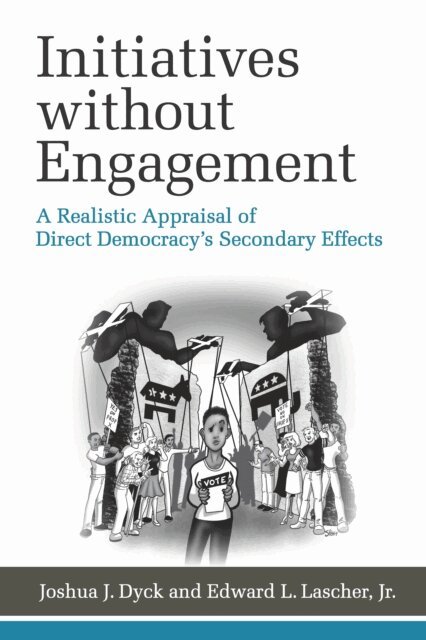
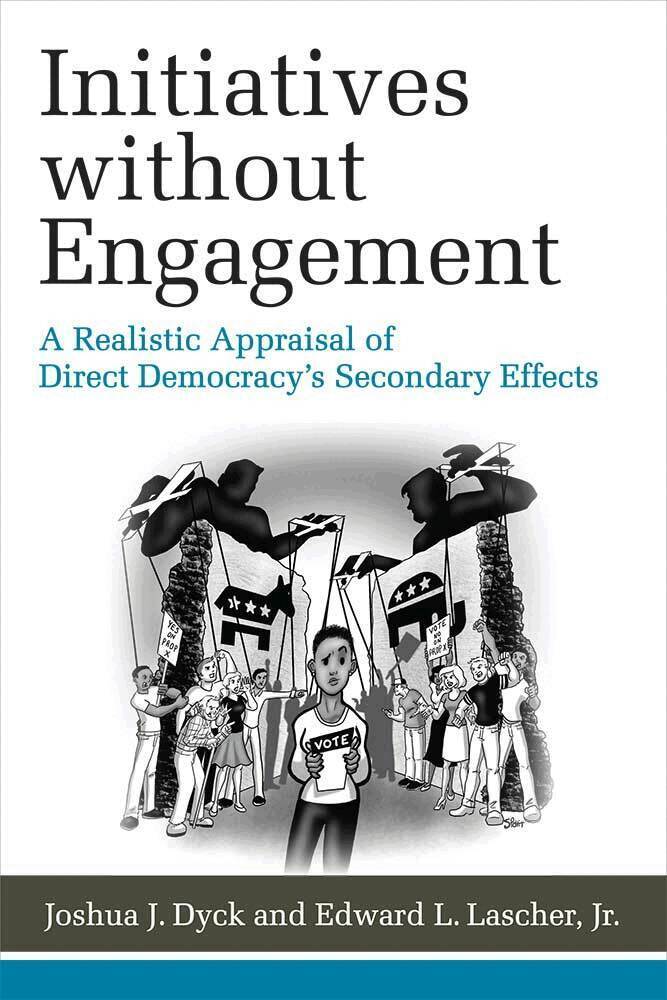
Initiatives without Engagement
A Realistic Appraisal of Direct Democracy’s Secondary Effects
Inbunden, Engelska, 2019
1 056 kr
Skickas inom 7-10 vardagar
Arguments about the American ballot initiative process date back to the Progressive Era, when processes allowing citizens to decide policy questions directly were established in about half of the states.When political scientists began to systematically examine whether the state ballot initiative process had spillover consequences, they found the initiative process had a positive impact on civic engagement. Recent scholarship casts doubt on these conclusions, determining the ballot initiative process did not make people believe they could influence the political process, trust the government, or be more knowledgeable about politics in general. However, in some circumstances, it got them to show up at the polls, and increased interest groups’ participation in the political arena. In Initiatives without Engagement, Dyck and Lascher develop and test a theory that can explain the evidence that the ballot initiative process fails to provide the civic benefits commonly claimed for it, and the evidence that it increases political participation. This theory argues that the basic function of direct democracy is to create more conflict in society.
3 370 kr
Skickas inom 3-6 vardagar
No previous book has pulled together into one place a single, comprehensive volume that provides up-to-date coverage of state government and politics, along with the states’ current and future public policies. This new book does just that, offering students, scholars, citizens, policy advocates, and state specialists accessible information on state politics and policy in 33 topical chapters written by experts in the field. The guide provides contemporary analysis of state institutions, processes, and public policies, along with both historical and theoretical perspectives that help readers develop a comprehensive understanding of the 50 U.S. states’ complex and changing political spheres. Those who use this volume—from experienced scholars to neophytes—can rely upon the guide to provide: Basic factual information on state politics and policy; Core explanatory frameworks and competing arguments; and Insightful coverage of major policy areas as they have played out in the states.