Joshua O'Driscoll - Böcker
Visar alla böcker från författaren Joshua O'Driscoll. Handla med fri frakt och snabb leverans.
3 produkter
3 produkter
345 kr
Skickas inom 7-10 vardagar
From the classical encyclopedias of Pliny to famous tales such as The Travels of Marco Polo, historical travel writing has had a lasting impact, despite the fact that it was based on a curious mixture of truth, legend, and outright superstition. One foundational medieval source that expands on the ancient idea of the "wonders of the world" is the fifteenth-century French Book of the Marvels of the World, an illustrated guide to the globe filled with oddities, curiosities, and wonders-tales of fantasy and reality intended for the medieval armchair traveler. The fifty-six locales featured in the manuscript are presented in a manner that suggests authority and objectivity but are rife with stereotypes and mischaracterizations, meant to simultaneously instill a sense ofwonder and fear in readers.In this volume, the authors explore the tradition of encyclopedias and travel writing, examining the various sources for geographic knowledge in the Middle Ages. They look closely at the manuscript copies of the French text and its complex images, delving into their origins, style, content, and meaning. Ultimately, this volume seeks to unpack how medieval white Christian Europeans saw their world and how the fear of difference-so pervasive in society today-is part of a long tradition stretching back millennia.“Like the richly illuminated medieval travel guides it describes, this beautifully illustrated publication takes the reader-viewer on a journey to distant and exotic lands and, with great sensitivity, highlights fifteenth-century European reactions to human difference, fantastic animals, and unfamiliar cultural practices that they found both fascinating and disturbing. With engaging essays that situate these remarkable manuscripts in their broader historical, artistic, and ideological contexts, the authors invite us to consider them in relation to the long traditions of travel-writing and cultural stereotypes, and most importantly, remind us that ‘otherness’ is always in the eye of the beholder.”—Debra Higgs Strickland, Professor of Medieval Art History, University of Glasgow
485 kr
Skickas inom 7-10 vardagar
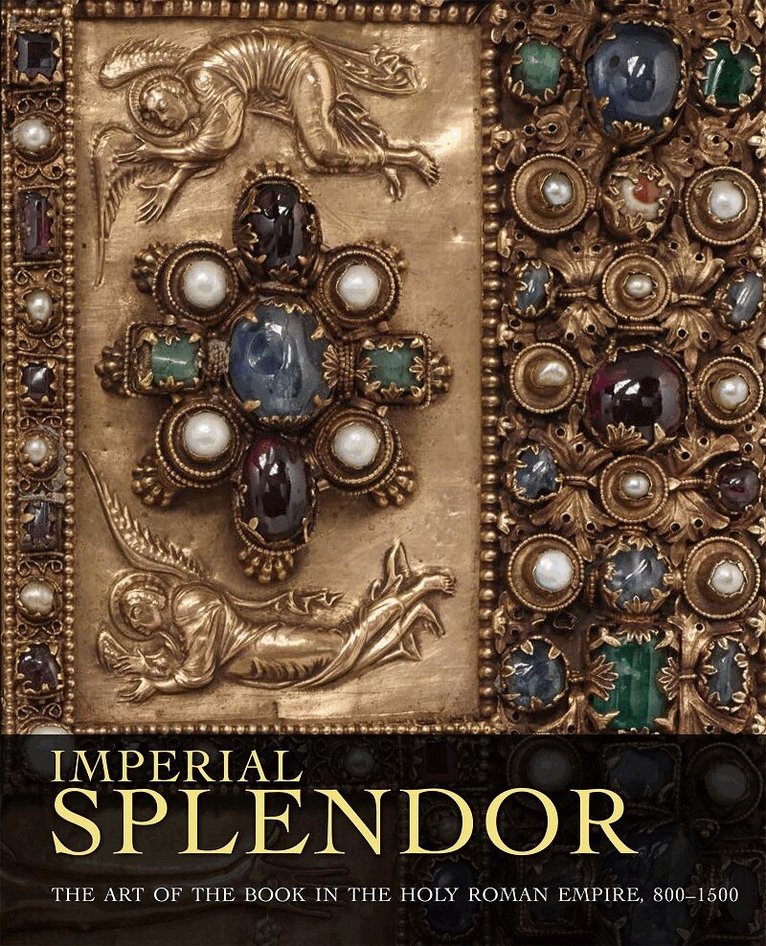
Focusing on production and patronage, this new volume features over 150 images of magnificently illustrated books and precious bindings, drawn largely from North American collections. The book's three sections are arranged chronologically, yet in each case with a different thematic focus. Opening with a look at the precedents set by the Carolingian forerunners of the Empire, the first section considers deluxe imperial manuscripts associated with the Ottonian emperors. The second section examines the role of imperial monasteries in the production of manuscripts, considering in particular the patronage of aristocratic elites. The final section offers a tour of imperial cities in the fourteenth and fifteenth centuries, from Vienna and Prague to Augsburg and Nuremberg. This final stop considers the impact of Albrecht Durer and humanism on the arts of the book. The volume features a glossary, indexes, and maps showing the shifting borders of the Empire over 700 years.
462 kr
Kommande
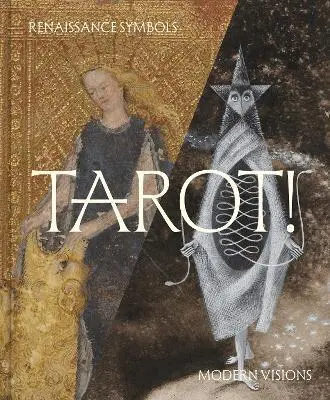
This beautiful book presents valuable new information and context about how tarot has developed, evolved, and been reimagined by artists, mystics, and writers over the centuries, from its origins as a fifteenth-century card game in Renaissance Italy to its profound transformations into tools for divination, artistic creation, and storytelling. This new volume fills a very real - and timely - gap in the currently available published material on the history and artistic development of tarot, its symbolism, and its source of inspiration for contemporary artists.An illustrated introduction plus six other richly illustrated essays explore the extensive history of tarot, the origins of the cards, their iconography, the idea of individual engagement in fortune and divination, as well as the highly personal aspects in much of the imagery. A main plates section features twenty-two spreads of tarot cards, comparing the same character or virtue cards across three Renaissance decks as well as the extraordinary range of imaginative tarot imagery.