Joshua Parens - Böcker
Visar alla böcker från författaren Joshua Parens. Handla med fri frakt och snabb leverans.
8 produkter
8 produkter
1 057 kr
Tillfälligt slut
Parens argues that Alfarabi, the tenth-century Muslim philosopher, demonstrated that Plato is not the originator of Western metaphysics, and that what appears to be Plato's metaphysics was intended as a rhetorical defense of his politics.The most widely accepted view in the West today, particularly among postmodernists, is that Plato attempted to ground politics on a rational metaphysics and initiated the tradition of foundationalism that has given rise to systems of oppression ranging from racism, sexism, and ethnocentrism to the technological mastery of the earth. Metaphysics as Rhetoric controverts this view, arguing that Plato was not the originator of this metaphysical tradition. Using as a basis the tenth-century Muslim philosopher Alfarabi's interpretation of Plato, especially his Summary of Plato's "Laws", Parens shows that what appears to be Plato's metaphysics was intended as a rhetorical defense of his politics. Parens demonstrates that rather than seek to establish politics on the definitive metaphysical ground, Alfarabi's Plato analyzes politics on its own terms, phenomenologically.
376 kr
Tillfälligt slut
Parens argues that Alfarabi, the tenth-century Muslim philosopher, demonstrated that Plato is not the originator of Western metaphysics, and that what appears to be Plato's metaphysics was intended as a rhetorical defense of his politics.The most widely accepted view in the West today, particularly among postmodernists, is that Plato attempted to ground politics on a rational metaphysics and initiated the tradition of foundationalism that has given rise to systems of oppression ranging from racism, sexism, and ethnocentrism to the technological mastery of the earth. Metaphysics as Rhetoric controverts this view, arguing that Plato was not the originator of this metaphysical tradition. Using as a basis the tenth-century Muslim philosopher Alfarabi's interpretation of Plato, especially his Summary of Plato's "Laws", Parens shows that what appears to be Plato's metaphysics was intended as a rhetorical defense of his politics. Parens demonstrates that rather than seek to establish politics on the definitive metaphysical ground, Alfarabi's Plato analyzes politics on its own terms, phenomenologically.
1 057 kr
Tillfälligt slut
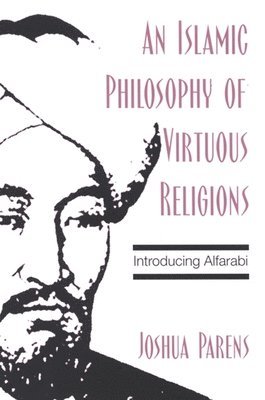
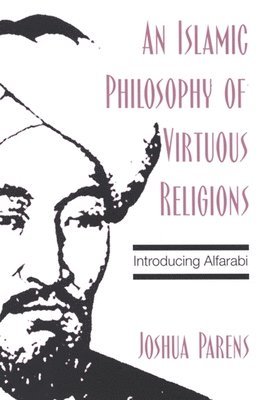
Explores the approach to peaceful religious coexistence offered by Alfarabi, the greatest Islamic political philosopher.Joshua Parens provides an introduction to the thought of Alfarabi, a tenth-century Muslim political philosopher whose writings are particularly relevant today. Parens focuses on Alfarabi's Attainment of Happiness, in which he envisions the kind of government and religion needed to fulfill Islam's ambition of universal acceptance. Parens argues that Alfarabi seeks to temper the hopes of Muslims and other believers that one homogeneous religion might befit the entire world and counsels acceptance of the possibility of a multiplicity of virtuous religions. Much of Alfarabi's approach is built upon Plato's Republic, which Parens also examines in order to provide the necessary background for a proper understanding of Alfarabi's thought.
376 kr
Tillfälligt slut
Explores the approach to peaceful religious coexistence offered by Alfarabi, the greatest Islamic political philosopher.Joshua Parens provides an introduction to the thought of Alfarabi, a tenth-century Muslim political philosopher whose writings are particularly relevant today. Parens focuses on Alfarabi's Attainment of Happiness, in which he envisions the kind of government and religion needed to fulfill Islam's ambition of universal acceptance. Parens argues that Alfarabi seeks to temper the hopes of Muslims and other believers that one homogeneous religion might befit the entire world and counsels acceptance of the possibility of a multiplicity of virtuous religions. Much of Alfarabi's approach is built upon Plato's Republic, which Parens also examines in order to provide the necessary background for a proper understanding of Alfarabi's thought.
1 529 kr
Skickas inom 10-15 vardagar
"This updated collection is as timely now as it was back then: few students of political theory are sufficiently conversant with the rich medieval tradition of reflection on such problems as 'reason and revelation' or ‘natural and divine law.’... One cannot argue with the enduring relevance of this work for the study of political philosophy. Summing Up: Highly recommended."― ChoiceMedieval Political Philosophy: A Sourcebook, edited by Ralph Lerner and Muhsin Mahdi, has been a classroom favorite since its publication in 1963. When it first appeared, it was the only anthology of medieval political philosophy to contain major texts from all three Western monotheistic traditions-Christianity, Judaism, and Islam-and that claim remains true today. This new edition of this classic text of political philosophy-revised and enlarged by Joshua Parens and Joseph C. Macfarland-will make accessible to today’s students the insights of these profound medieval thinkers.Prior to the modern separation of religion from politics, these medieval thinkers explored a variety of approaches to the relation between religion and politics-approaches that prompted renewed interest in a world divided over how best to relate the two. For the authors gathered in this volume-including Alfarabi, Alghazali, Averroes, Maimonides, Judah Halevi, Thomas Aquinas, Boethius of Dacia, and Dante Alighieri among many others-there was a greater uniformity of general intention than at any other period. All of these authors studied the works of classical political philosophy and considered in a variety of ways the implications of this political thought for their contemporary situation in a monotheistic religious community.
424 kr
Skickas inom 10-15 vardagar
"This updated collection is as timely now as it was back then: few students of political theory are sufficiently conversant with the rich medieval tradition of reflection on such problems as 'reason and revelation' or ‘natural and divine law.’... One cannot argue with the enduring relevance of this work for the study of political philosophy. Summing Up: Highly recommended."― ChoiceMedieval Political Philosophy: A Sourcebook, edited by Ralph Lerner and Muhsin Mahdi, has been a classroom favorite since its publication in 1963. When it first appeared, it was the only anthology of medieval political philosophy to contain major texts from all three Western monotheistic traditions-Christianity, Judaism, and Islam-and that claim remains true today. This new edition of this classic text of political philosophy-revised and enlarged by Joshua Parens and Joseph C. Macfarland-will make accessible to today’s students the insights of these profound medieval thinkers.Prior to the modern separation of religion from politics, these medieval thinkers explored a variety of approaches to the relation between religion and politics-approaches that prompted renewed interest in a world divided over how best to relate the two. For the authors gathered in this volume-including Alfarabi, Alghazali, Averroes, Maimonides, Judah Halevi, Thomas Aquinas, Boethius of Dacia, and Dante Alighieri among many others-there was a greater uniformity of general intention than at any other period. All of these authors studied the works of classical political philosophy and considered in a variety of ways the implications of this political thought for their contemporary situation in a monotheistic religious community.
776 kr
Tillfälligt slut
Del 1 - Rochester Studies in Medieval Political Thought
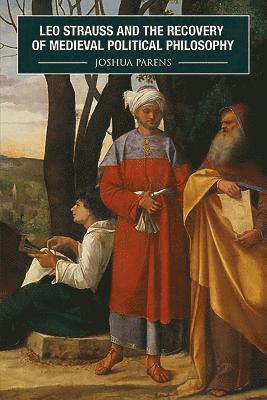
Leo Strauss and the Recovery of Medieval Political Philosophy
Häftad, Engelska, 2019
326 kr
Skickas inom 10-15 vardagar
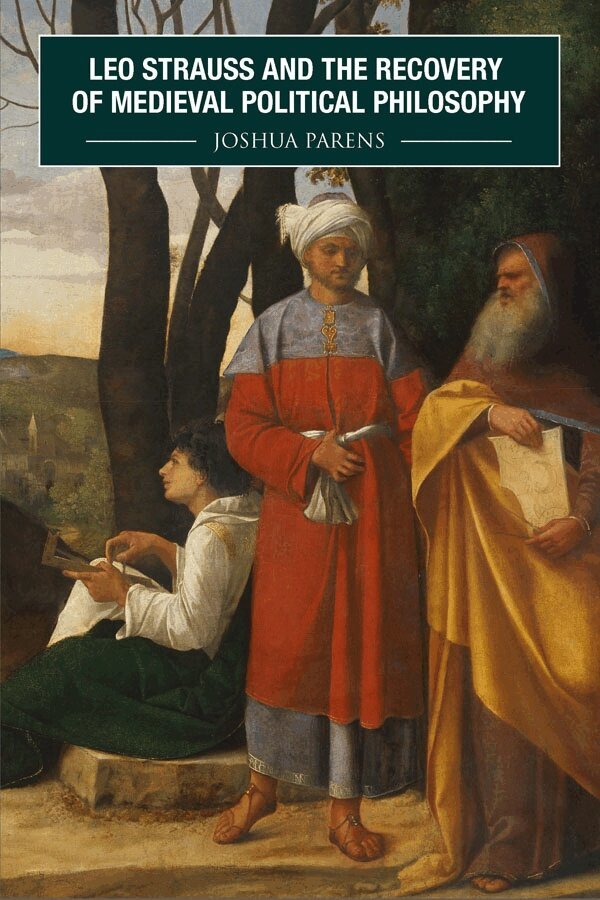
A thorough treatment of Leo Strauss's controversial interpretation of medieval political thoughtLeo Strauss is known primarily for reviving classical political philosophy. Strauss recovered that great tradition of thought largely lost to the West by beginning his study of classical thought with its teaching on politics rather than its metaphysics. What brought Strauss to this way of reading the classics, however, was a discovery he made as a young political scientist studying the obscure texts of Islamic and Jewish medieval political thought.In this volume, Joshua Parens examines Strauss's investigations of medieval political philosophy, offering interpretations of his writings on the great thinkers of that tradition, including interpretations of his most difficult writings on Alfarabi and Maimonides. In addition Parens explicates Strauss's statements on Christian medieval thought and his argument for rejecting the Scholastic paradigm as a method for interpreting Islamic and Jewish thought. Contrasting Scholasticism with Islamic and Jewish medieval political philosophy, Parens clarifies the theme of Strauss's thought, what Strauss calls the "theologico-political problem," and reveals the significance of medieval political philosophy in the Western tradition.Joshua Parens is professor of philosophy and politics and dean of the Braniff Graduate School at the University of Dallas.