Joshua Schuster - Böcker
Visar alla böcker från författaren Joshua Schuster. Handla med fri frakt och snabb leverans.
5 produkter
5 produkter
474 kr
Skickas inom 7-10 vardagar
The Ecology of Modernism explores the unexpected absence of an environmental ethic in American modernist and avant-garde poetics, given its keen concern with an ecological esthetic. Joshua Schuster explains why American modernism was never green.In The Ecology of Modernism, Joshua Schuster examines the relationships of key modernist writers, poets, and musicians to nature, industrial development, and pollution. He posits that that the curious failure of modernist poets to develop an environmental ethnic was a deliberate choice and not an inadvertent omission.In his opening passage, Schuster boldly invokes lines from Walt Whitman’s “Crossing Brooklyn Ferry,” which echo as a paean to pollution: “Burn high your fires, foundry chimneys! cast black shadows at nightfall!” Schuster labels this theme “regeneration through pollution” and demonstrates how this motif recurs in modernist compositions. This tolerance for, if not actual exultation of, the by-products of industrialization hindered modernist American artists, writers, and musicians from embracing environmentalist agendas.Schuster provides specific case studies about Marianne Moore and her connection of fables with animal rights; Gertrude Stein and concepts of nature in her avant-garde poetics; early blues music and poetry and the issue of how environmental disasters (floods, droughts, pestilence) affected black farmers and artists in the American South; and John Cage, who extends the modernist avant-garde project formally but critiques it at the same time for failing to engage with ecology. A fascinating afterword about the role of oil modernist literary production rounds out this work.Schuster masterfully shines a light on the modernist interval between the writings of bucolic and nature-extolling Romantics and the emergence of a self-conscious green movement in the 1960s. This rewarding work shows that the reticence of modernist poets in the face of resource depletion, pollution, animal rights, and other ecological traumas is highly significant.
125 kr
Skickas inom 7-10 vardagar
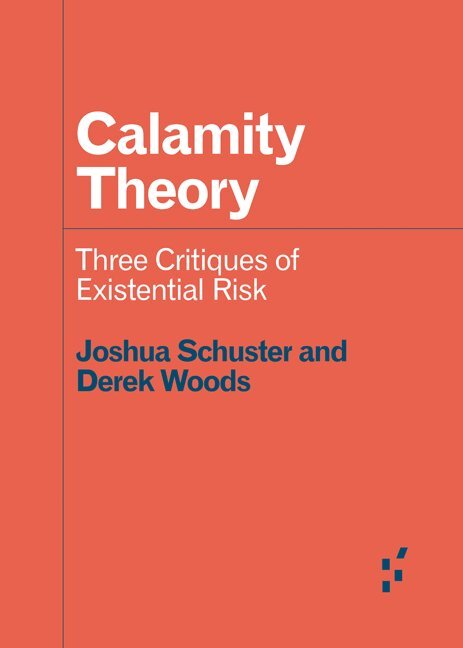
What are the implications of how we talk about apocalypse?A new philosophical field has emerged. “Existential risk” studies any real or hypothetical human extinction event in the near or distant future. This movement examines catastrophes ranging from runaway global warming to nuclear warfare to malevolent artificial intelligence, deploying a curious mix of utilitarian ethics, statistical risk analysis, and, controversially, a transhuman advocacy that would aim to supersede almost all extinction scenarios. The proponents of existential risk thinking, led by Oxford philosopher Nick Bostrom, have seen their work gain immense popularity, attracting endorsement from Bill Gates and Elon Musk, millions of dollars, and millions of views. Calamity Theory is the first book to examine the rise of this thinking and its failures to acknowledge the ways some communities and lifeways are more at risk than others and what it implies about human extinction.Forerunners: Ideas First is a thought-in-process series of breakthrough digital publications. Written between fresh ideas and finished books, Forerunners draws on scholarly work initiated in notable blogs, social media, conference plenaries, journal articles, and the synergy of academic exchange. This is gray literature publishing: where intense thinking, change, and speculation take place in scholarship.
1 289 kr
Skickas inom 10-15 vardagar
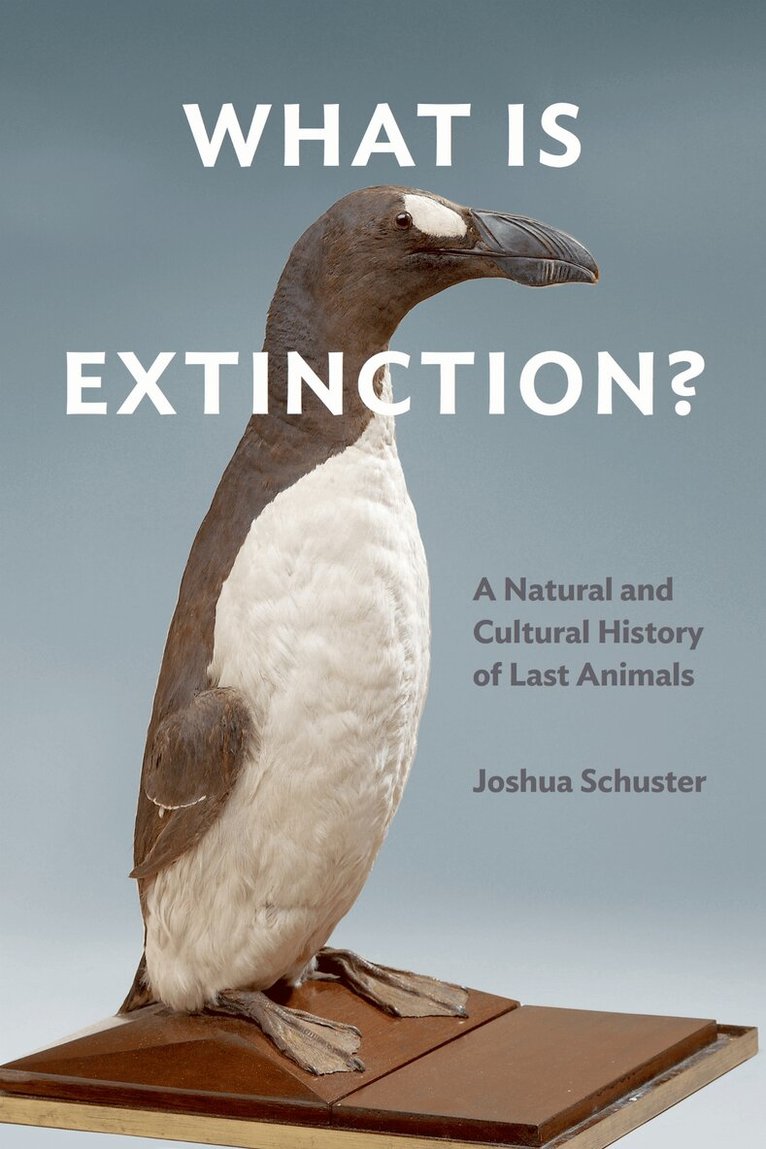
WINNER, 25th ANNUAL SUSANNE M. GLASSCOCK BOOK PRIZELife on Earth is facing a mass extinction event of our own making. Human activity is changing the biology and the meaning of extinction. What Is Extinction? examines several key moments that have come to define the terms of extinction over the past two centuries, exploring instances of animal and human finitude and the cultural forms used to document and interpret these events.Offering a critical theory for the critically endangered, Joshua Schuster proposes that different discourses of limits and lastness appear in specific extinction events over time as a response to changing attitudes toward species frailty. Understanding these extinction events also involves examining what happens when the conceptual and cultural forms used to account for species finitude are pressed to their limits as well. Schuster provides close readings of several case studies of extinction that bring together environmental humanities and multispecies methods with media-specific analyses at the terminus of life.What Is Extinction? delves into the development of last animal photography, the anthropological and psychoanalytic fascination with human origins and ends, the invention of new literary genres of last fictions, the rise of new extreme biopolitics in the Third Reich that attempted to change the meaning of extinction, and the current pursuit of de-extinction technologies. Schuster offers timely interpretations of how definitions and visions of extinction have changed in the past and continue to change in the present.
354 kr
Skickas inom 7-10 vardagar
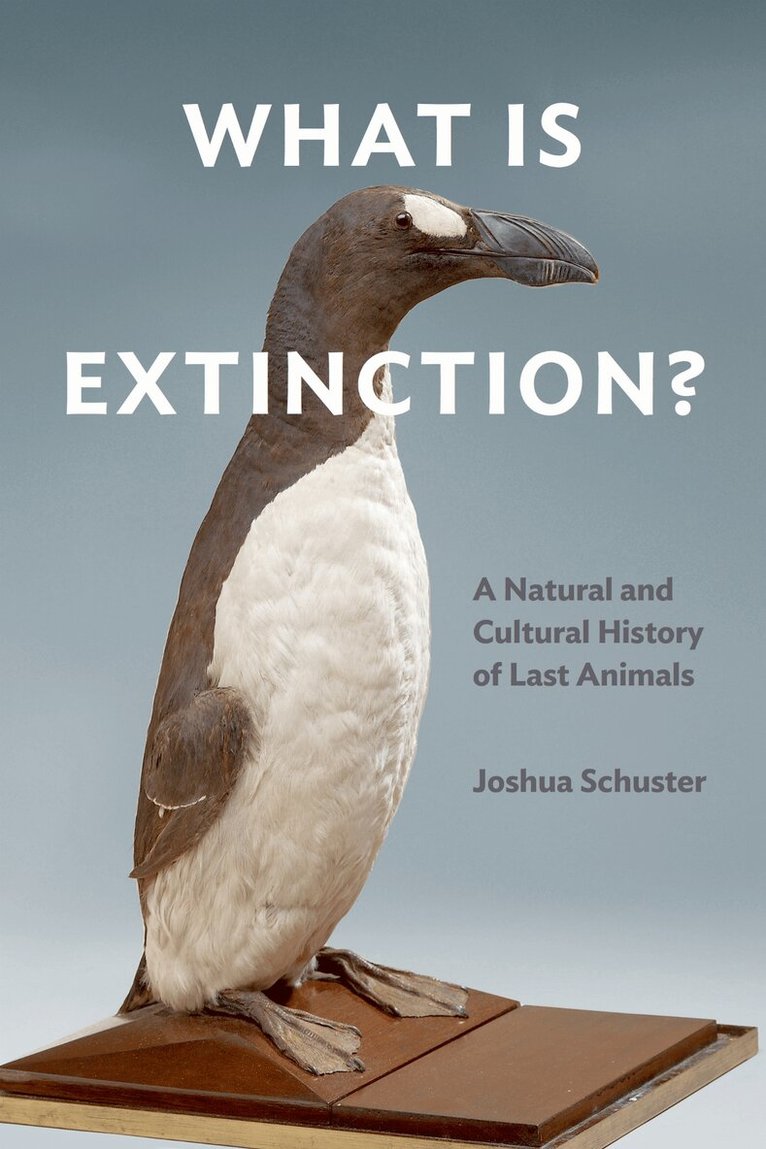
WINNER, 25th ANNUAL SUSANNE M. GLASSCOCK BOOK PRIZELife on Earth is facing a mass extinction event of our own making. Human activity is changing the biology and the meaning of extinction. What Is Extinction? examines several key moments that have come to define the terms of extinction over the past two centuries, exploring instances of animal and human finitude and the cultural forms used to document and interpret these events.Offering a critical theory for the critically endangered, Joshua Schuster proposes that different discourses of limits and lastness appear in specific extinction events over time as a response to changing attitudes toward species frailty. Understanding these extinction events also involves examining what happens when the conceptual and cultural forms used to account for species finitude are pressed to their limits as well. Schuster provides close readings of several case studies of extinction that bring together environmental humanities and multispecies methods with media-specific analyses at the terminus of life.What Is Extinction? delves into the development of last animal photography, the anthropological and psychoanalytic fascination with human origins and ends, the invention of new literary genres of last fictions, the rise of new extreme biopolitics in the Third Reich that attempted to change the meaning of extinction, and the current pursuit of de-extinction technologies. Schuster offers timely interpretations of how definitions and visions of extinction have changed in the past and continue to change in the present.
1 621 kr
Skickas inom 10-15 vardagar
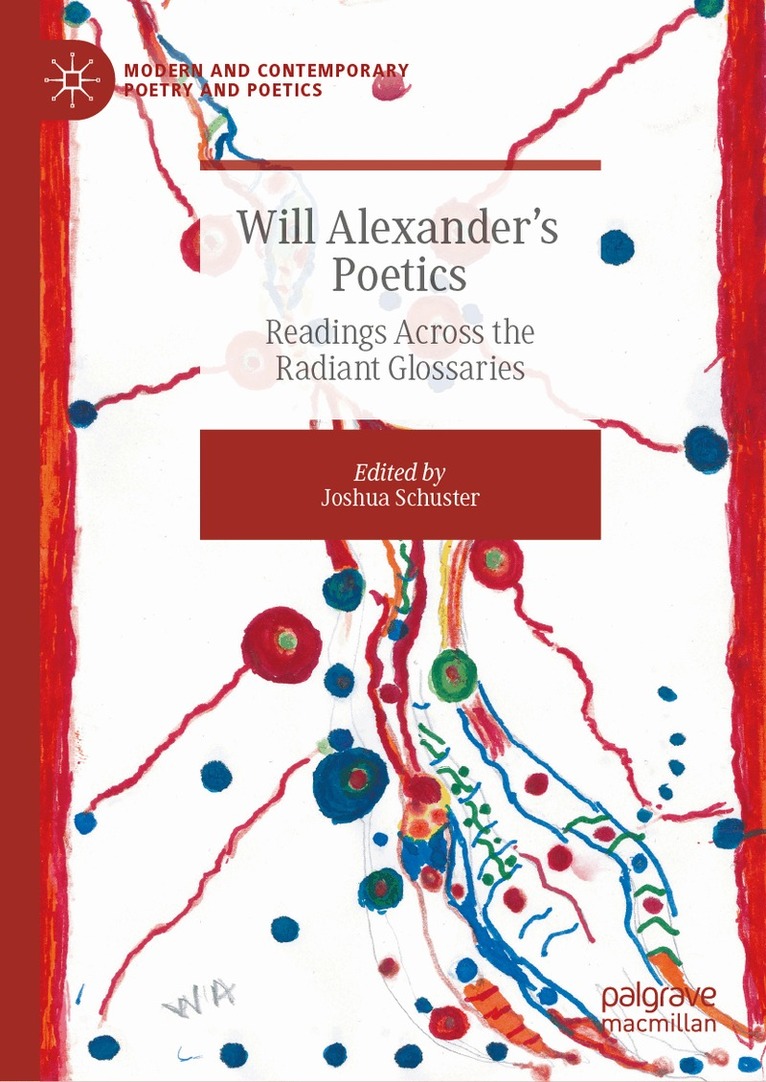
This volume brings together academic and poetic essays which focus on Will Alexander’s complete oeuvre. The collection explores Alexander’s long career in African American avant-garde poetry, and sheds light on other genres of Alexander’s work in addition to poetry, including: essays, plays, aphorisms, novels, dialogues and drawings. Each contribution contextualizes Alexander’s work in the many traditions and literatures his work draws from, including African American poetics, ecopoetics, post-colonial and anti-colonial poetics, bio and geo-histories, and global practices of consciousness raising and spiritual transformation, among other topics. The volume also includes a new interview with Alexander, as well as one of his long unpublished poems. Alexander’s writings are multi-generic and traverse many fields and states of consciousness. This edited collection thus provides a deep and sustained engagement with Alexander’s work, surveying how it has transformed the landscape of poetics, the avant-garde, and the individual reader.