Josiah Heyman - Böcker
Visar alla böcker från författaren Josiah Heyman. Handla med fri frakt och snabb leverans.
3 produkter
3 produkter
410 kr
Skickas inom 5-8 vardagar
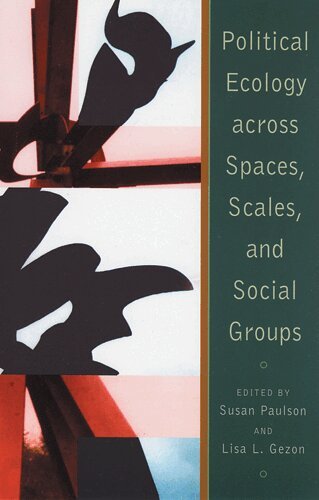
Environmental issues have become increasingly prominent in local struggles, national debates, and international policies. In response, scholars are paying more attention to conventional politics and to more broadly defined relations of power and difference in the interactions between human groups and their biophysical environments. Such issues are at the heart of the relatively new interdisciplinary field of political ecology, forged at the intersection of political economy and cultural ecology.This volume provides a toolkit of vital concepts and a set of research models and analytic frameworks for researchers at all levels. The two opening chapters trace rich traditions of thought and practice that inform current approaches to political ecology. They point to the entangled relationship between humans, politics, economies, and environments at the dawn of the twenty-first century and address challenges that scholars face in navigating the blurring boundaries among relevant fields of enquiry. The twelve case studies that follow demonstrate ways that culture and politics serve to mediate human-environmental relationships in specific ecological and geographical contexts. Taken together, they describe uses of and conflicts over resources including land, water, soil, trees, biodiversity, money, knowledge, and information; they exemplify wide-ranging ecological settings including deserts, coasts, rainforests, high mountains, and modern cities; and they explore sites located around the world, from Canada to Tonga and cyberspace.
1 466 kr
Skickas inom 7-10 vardagar
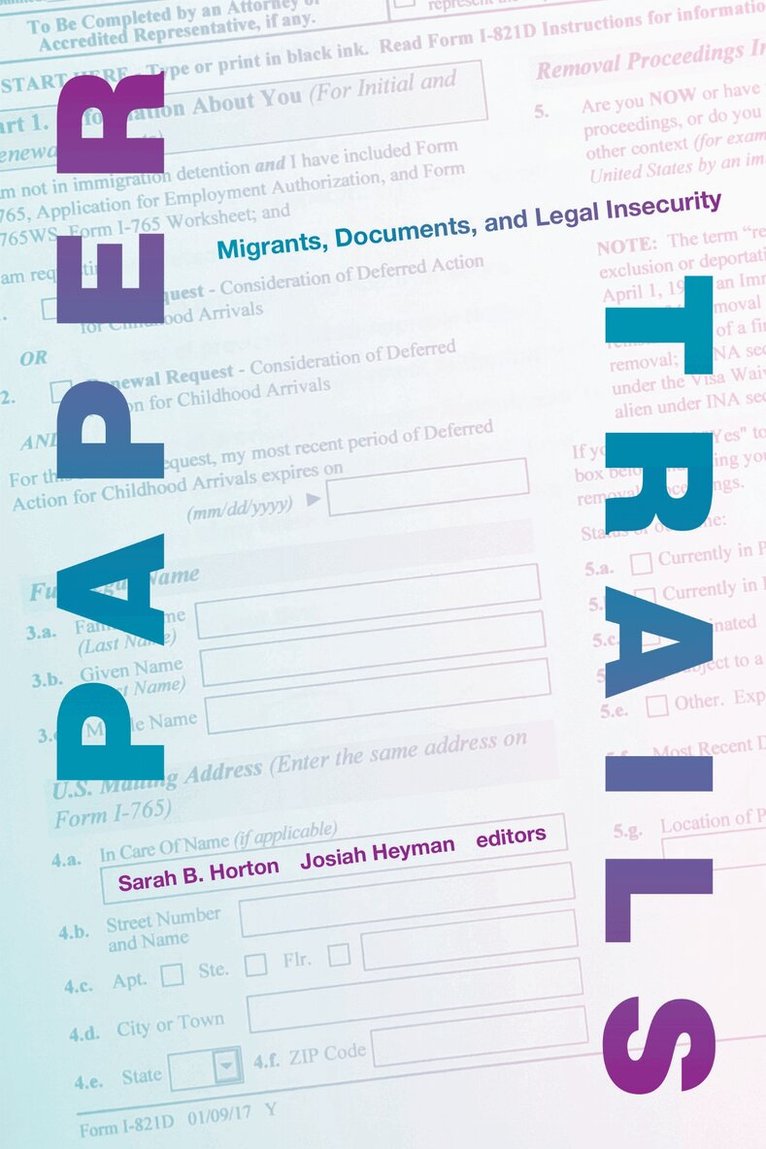
Across the globe, states have long aimed to control the movement of people, identify their citizens, and restrict noncitizens' rights through official identification documents. Although states are now less likely to grant permanent legal status, they are increasingly issuing new temporary and provisional legal statuses to migrants. Meanwhile, the need for migrants to apply for frequent renewals subjects them to more intensive state surveillance. The contributors to Paper Trails examine how these new developments change migrants' relationship to state, local, and foreign bureaucracies. The contributors analyze, among other toics, immigration policies in the United Kingdom, the issuing of driver's licenses in Arizona and New Mexico, the Deferred Action for Childhood Arrivals program, and community know-your-rights campaigns. By demonstrating how migrants are inscribed into official bureaucratic systems through the issuance of identification documents, the contributors open up new ways to understand how states exert their power and how migrants must navigate new systems of governance.Contributors. Bridget Anderson, Deborah A. Boehm, Susan Bibler Coutin, Ruth Gomberg-MuÑoz, Sarah B. Horton, Josiah Heyman, Cecilia MenjÍvar, Juan Thomas OrdÓÑez, Doris Marie Provine, Nandita Sharma, Monica Varsanyi
362 kr
Skickas inom 7-10 vardagar
Across the globe, states have long aimed to control the movement of people, identify their citizens, and restrict noncitizens' rights through official identification documents. Although states are now less likely to grant permanent legal status, they are increasingly issuing new temporary and provisional legal statuses to migrants. Meanwhile, the need for migrants to apply for frequent renewals subjects them to more intensive state surveillance. The contributors to Paper Trails examine how these new developments change migrants' relationship to state, local, and foreign bureaucracies. The contributors analyze, among other toics, immigration policies in the United Kingdom, the issuing of driver's licenses in Arizona and New Mexico, the Deferred Action for Childhood Arrivals program, and community know-your-rights campaigns. By demonstrating how migrants are inscribed into official bureaucratic systems through the issuance of identification documents, the contributors open up new ways to understand how states exert their power and how migrants must navigate new systems of governance.Contributors. Bridget Anderson, Deborah A. Boehm, Susan Bibler Coutin, Ruth Gomberg-MuÑoz, Sarah B. Horton, Josiah Heyman, Cecilia MenjÍvar, Juan Thomas OrdÓÑez, Doris Marie Provine, Nandita Sharma, Monica Varsanyi