Joyce Antler - Böcker
Visar alla böcker från författaren Joyce Antler. Handla med fri frakt och snabb leverans.
8 produkter
8 produkter
876 kr
Skickas inom 5-8 vardagar
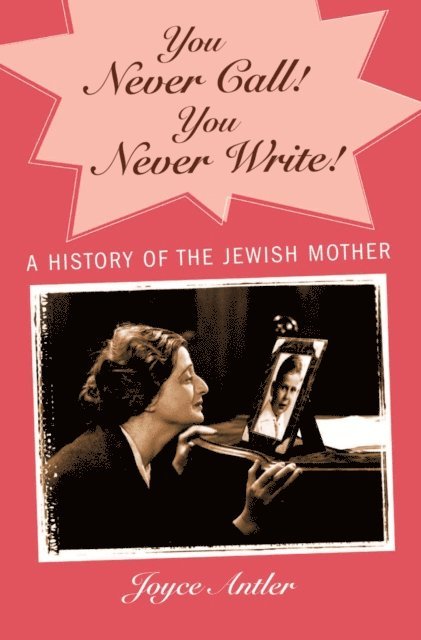
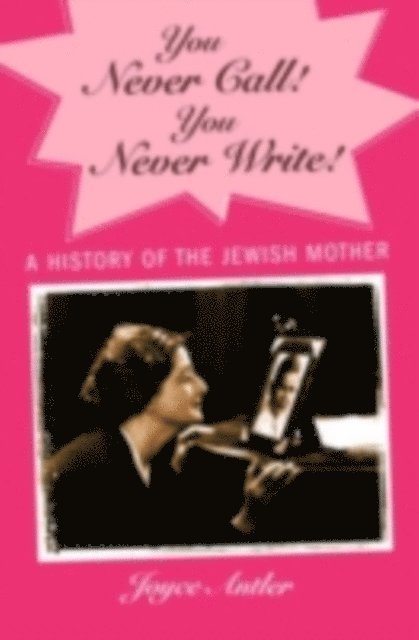
In You Never Call, You Never Write, Joyce Antler provides an illuminating and often amusing history of one of the best-known figures in popular culture--the Jewish Mother. Whether drawn as self-sacrificing or manipulative, in countless films, novels, radio and television programs, stand-up comedy, and psychological and historical studies, she appears as a colossal figure, intensely involved in the lives of her children. Antler traces the odyssey of this compelling personality through decades of American culture. She reminds us of a time when Jewish mothers were admired for their tenacity and nurturance, as in the early twentieth-century image of the "Yiddishe Mama," a sentimental figure popularized by entertainers such as George Jessel, Al Jolson, and Sophie Tucker, and especially by Gertrude Berg, whose amazingly successful "Molly Goldberg" ruled American radio and television for over 25 years. Antler explains the transformation of this Jewish Mother into a "brassy-voiced, smothering, and shrewish" scourge (in Irving Howe's words), detailing many variations on this negative theme, from Philip Roth's Portnoy's Complaint and Woody Allen's Oedipus Wrecks to television shows such as "The Nanny," "Seinfeld," and "Will and Grace." But she also uncovers a new counter-narrative, leading feminist scholars and stand-up comediennes to see the Jewish Mother in positive terms. Continually revised and reinvented, the Jewish Mother becomes in Antler's expert hands a unique lens with which to examine vital concerns of American Jews and the culture at large.A joy to read, You Never Call, You Never Write will delight anyone who has ever known or been nurtured by a "Jewish Mother," and it will be a special source of insight for modern parents. As Antler suggests, in many ways "we are all Jewish Mothers" today.
191 kr
Skickas inom 5-8 vardagar
Antler examines the cultural history and iconography of images of Jewish mothers through the twentieth century. The book begins with the Yiddish Mama of the early immigrant families, the popular radio and TV personality Molly Goldberg of the 30's and 40's, the evil and good mothers penned and films by their second-generation sons including Philip Roth, Arthur Miller, Woody Allen and Mel Brooks. Antler discusses how, in the prewar and immediate postwar period, psychoanalysis and pop culture reshaped the Jewish mother into a source of neurosis and manipulation; while in the 1960's, feminist daughters rebelled against, what Betty Friedan described as 'her mother and her discontent." This cultural history provides an engaging look at issues of gender, class, ethnicity and the role of the mother, anchoring Jewish assimilation in the American life while providing a foil for reliving the tensions that acculturation caused. The dominant images of the Jewish mother from each era change over time, as they align with new social relations. As Jews successfully acculturated to mainstream norms, joking about old ways, old values, and Old World characters like the outsized Jewish mother could help alleviate the tensions of modernization. Jewish mother routines have traveled from the "Borscht Belt" to the contemporary stand-up of Larry David, Judy Gold, and Sara Silverman. At the same time, new social conditions are altering the experience of real-life Jewish mothers, who are a much more diverse group in terms of their racial, religious, educational and marital backgrounds than their predecessors a generation ago. Antler ends with a look at contemporary "intensive mothering" and the convergence of the new parenting style with cultural ideas about Jewish motherhood.
309 kr
Skickas inom 7-10 vardagar
This path-breaking anthology illuminates the lives of ten influential twentieth-century American women and looks at the challenges experienced by the women who have written about them. Exploring the frequently complicated dialogue between writer and subject, the contributors discuss tools appropriate to writing women's biography while their riveting accounts reveal how feminist scholarship led them to approach the study of women's lives in unconventional ways."This wonderful collection demonstrates the significance of women's biography as a central part of feminist scholarship. The feminist biographer inserts a second life into a biography, her own, giving us yet another layer of depth and insight."--Ann J. Lane, author of To "Herland" and Beyond: The Life and Work of Charlotte Perkins Gilman
1 027 kr
Tillfälligt slut
391 kr
Tillfälligt slut
544 kr
Skickas inom 5-8 vardagar
1 090 kr
Skickas inom 10-15 vardagar
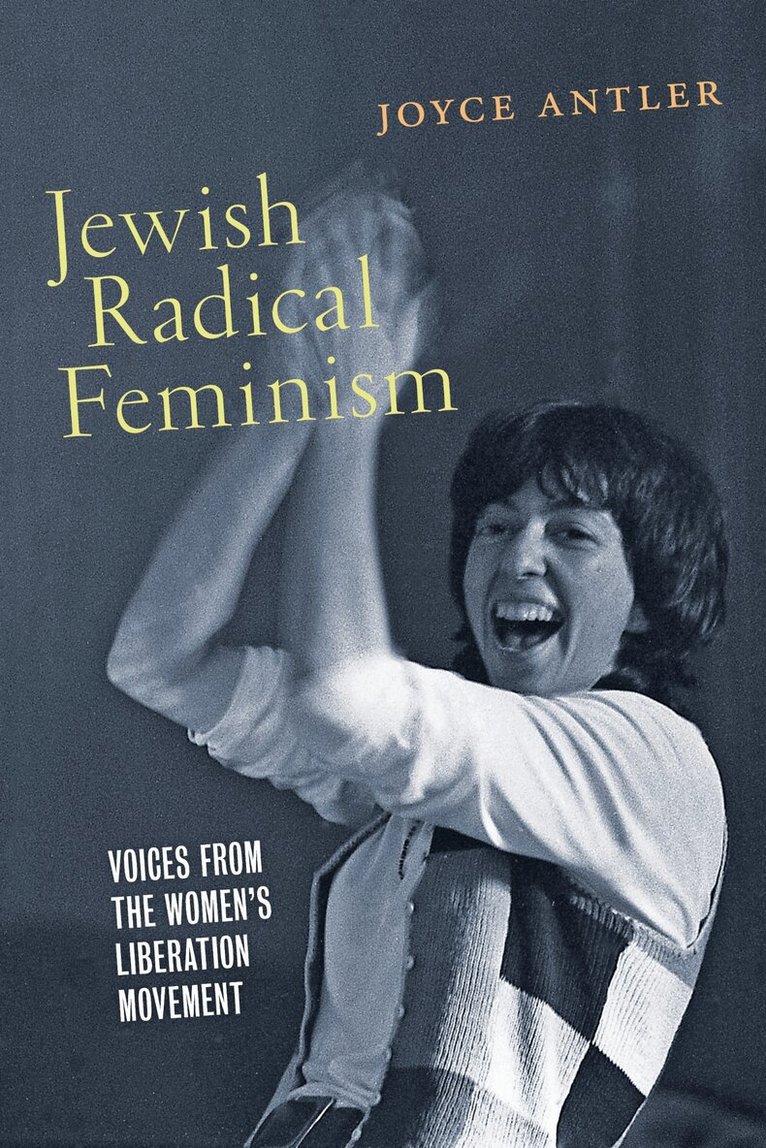
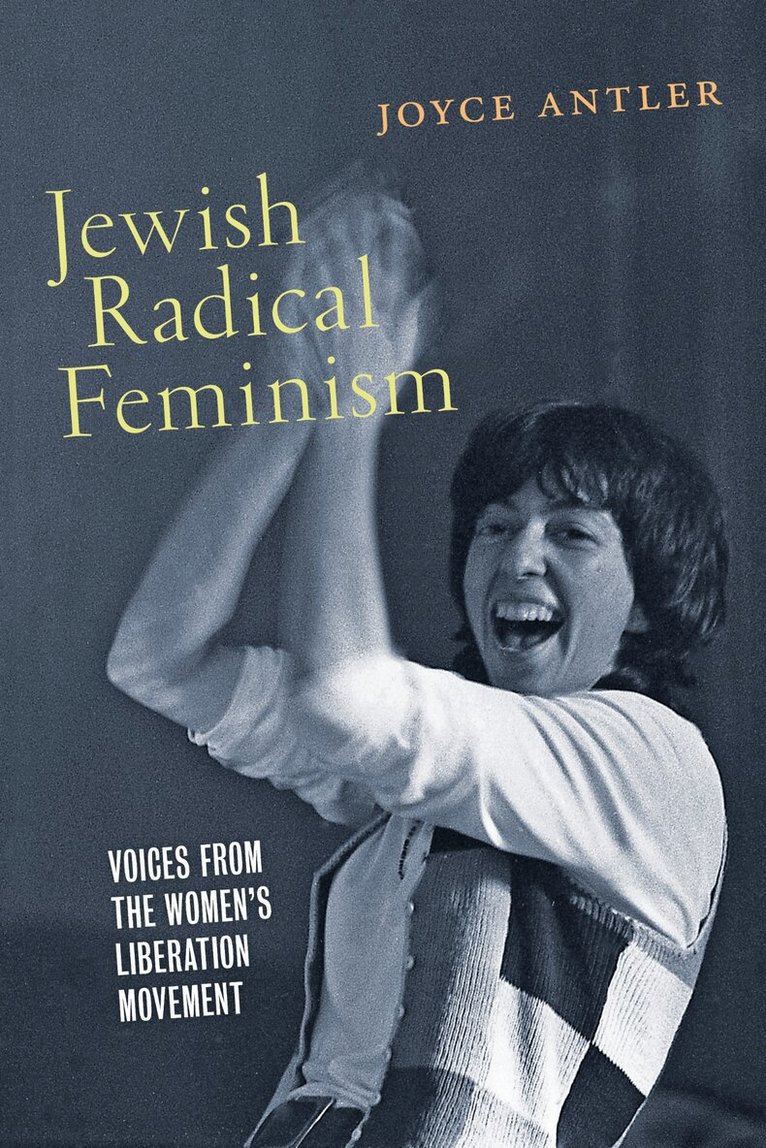
Finalist, 2019 PROSE Award in Biography, given by the Association of American PublishersFifty years after the start of the women's liberation movement, a book that at last illuminates the profound impact Jewishness and second-wave feminism had on each other Jewish women were undeniably instrumental in shaping the women's liberation movement of the 1960s, 70s, and 80s. Yet historians and participants themselves have overlooked their contributions as Jews. This has left many vital questions unasked and unanswered—until now. Delving into archival sources and conducting extensive interviews with these fierce pioneers, Joyce Antler has at last broken the silence about the confluence of feminism and Jewish identity.Antler's exhilarating new book features dozens of compelling biographical narratives that reveal the struggles and achievements of Jewish radical feminists in Chicago, New York and Boston, as well as those who participated in the later, self-consciously identified Jewish feminist movement that fought gender inequities in Jewish religious and secular life. Disproportionately represented in the movement, Jewish women's liberationists helped to provide theories and models for radical action that were used throughout the United States and abroad. Their articles and books became classics of the movement and led to new initiatives in academia, politics, and grassroots organizing. Other Jewish-identified feminists brought the women's movement to the Jewish mainstream and Jewish feminism to the Left. For many of these women, feminism in fact served as a "portal" into Judaism.Recovering this deeply hidden history, Jewish Radical Feminism places Jewish women's activism at the center of feminist and Jewish narratives. The stories of over forty women's liberationists and identified Jewish feminists—from Shulamith Firestone and Susan Brownmiller to Rabbis Laura Geller and Rebecca Alpert—illustrate how women's liberation and Jewish feminism unfolded over the course of the lives of an extraordinary cohort of women, profoundly influencing the social, political, and religious revolutions of our era.
291 kr
Skickas inom 7-10 vardagar
Finalist, 2019 PROSE Award in Biography, given by the Association of American PublishersFifty years after the start of the women's liberation movement, a book that at last illuminates the profound impact Jewishness and second-wave feminism had on each other Jewish women were undeniably instrumental in shaping the women's liberation movement of the 1960s, 70s, and 80s. Yet historians and participants themselves have overlooked their contributions as Jews. This has left many vital questions unasked and unanswered—until now. Delving into archival sources and conducting extensive interviews with these fierce pioneers, Joyce Antler has at last broken the silence about the confluence of feminism and Jewish identity.Antler's exhilarating new book features dozens of compelling biographical narratives that reveal the struggles and achievements of Jewish radical feminists in Chicago, New York and Boston, as well as those who participated in the later, self-consciously identified Jewish feminist movement that fought gender inequities in Jewish religious and secular life. Disproportionately represented in the movement, Jewish women's liberationists helped to provide theories and models for radical action that were used throughout the United States and abroad. Their articles and books became classics of the movement and led to new initiatives in academia, politics, and grassroots organizing. Other Jewish-identified feminists brought the women's movement to the Jewish mainstream and Jewish feminism to the Left. For many of these women, feminism in fact served as a "portal" into Judaism.Recovering this deeply hidden history, Jewish Radical Feminism places Jewish women's activism at the center of feminist and Jewish narratives. The stories of over forty women's liberationists and identified Jewish feminists—from Shulamith Firestone and Susan Brownmiller to Rabbis Laura Geller and Rebecca Alpert—illustrate how women's liberation and Jewish feminism unfolded over the course of the lives of an extraordinary cohort of women, profoundly influencing the social, political, and religious revolutions of our era.