Joyce Weil - Böcker
Visar alla böcker från författaren Joyce Weil. Handla med fri frakt och snabb leverans.
8 produkter
8 produkter
New Neighborhood Senior Center
Redefining Social and Service Roles for the Baby Boom Generation
Häftad, Engelska, 2014
434 kr
Skickas inom 10-15 vardagar
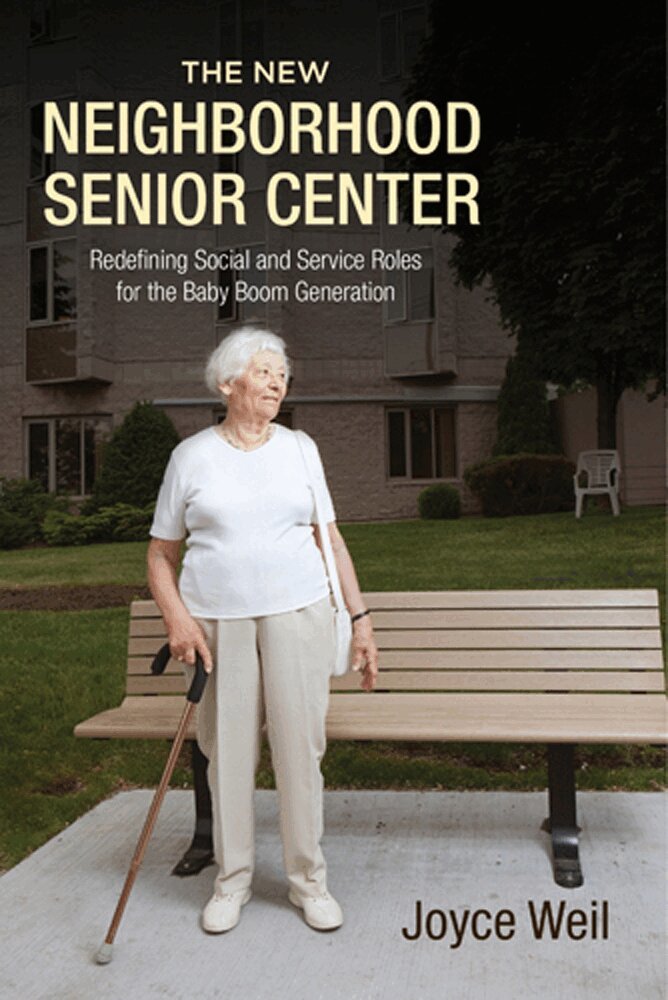
In 2011, seven thousand American “baby boomers” (those born between 1946 and 1964) turned sixty-five daily. As this largest U.S. generation ages, cities, municipalities, and governments at every level must grapple with the allocation of resources and funding for maintaining the quality of life, health, and standard of living for an aging population. In The New Neighborhood Senior Center, Joyce Weil uses in-depth ethnographic methods to examine a working-class senior center in Queens, New York. She explores the ways in which social structure directly affects the lives of older Americans and traces the role of political, social, and economic institutions and neighborhood processes in the decision to close such centers throughout the city of New York. Many policy makers and gerontologists advocate a concept of “aging in place,” whereby the communities in which these older residents live provide access to resources that foster and maintain their independence. But all “aging in place” is not equal and the success of such efforts depends heavily upon the social class and availability of resources in any given community. Senior centers, expanded in part by funding from federal programs in the 1970s, were designed as focal points in the provision of community-based services. However, for the first wave of “boomers,” the role of these centers has come to be questioned. Declining government support has led to the closings of many centers, even as the remaining centers are beginning to “rebrand” to attract the boomer generation. However, The New Neighborhood Senior Centerdemonstrates the need to balance what the boomers’ want from centers with the needs of frailer or more vulnerable elders who rely on the services of senior centers on a daily basis. Weil challenges readers to consider what changes in social policies are needed to support or supplement senior centers and the functions they serve.
New Neighborhood Senior Center
Redefining Social and Service Roles for the Baby Boom Generation
Inbunden, Engelska, 2014
1 570 kr
Skickas inom 10-15 vardagar
In 2011, seven thousand American “baby boomers” (those born between 1946 and 1964) turned sixty-five daily. As this largest U.S. generation ages, cities, municipalities, and governments at every level must grapple with the allocation of resources and funding for maintaining the quality of life, health, and standard of living for an aging population. In The New Neighborhood Senior Center, Joyce Weil uses in-depth ethnographic methods to examine a working-class senior center in Queens, New York. She explores the ways in which social structure directly affects the lives of older Americans and traces the role of political, social, and economic institutions and neighborhood processes in the decision to close such centers throughout the city of New York. Many policy makers and gerontologists advocate a concept of “aging in place,” whereby the communities in which these older residents live provide access to resources that foster and maintain their independence. But all “aging in place” is not equal and the success of such efforts depends heavily upon the social class and availability of resources in any given community. Senior centers, expanded in part by funding from federal programs in the 1970s, were designed as focal points in the provision of community-based services. However, for the first wave of “boomers,” the role of these centers has come to be questioned. Declining government support has led to the closings of many centers, even as the remaining centers are beginning to “rebrand” to attract the boomer generation. However, The New Neighborhood Senior Centerdemonstrates the need to balance what the boomers’ want from centers with the needs of frailer or more vulnerable elders who rely on the services of senior centers on a daily basis. Weil challenges readers to consider what changes in social policies are needed to support or supplement senior centers and the functions they serve.
576 kr
Skickas inom 10-15 vardagar
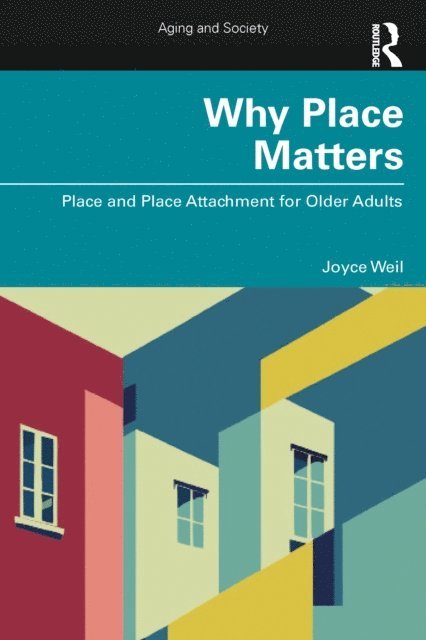
Why Place Matters reassesses what is known and traditionally understood about the relationship older adults have with place over time and in later life. Building from notions that affirm there is no single "right" place to age or grow older, Joyce Weil fixes her analytical focus on older adults’ agency in assessing place, the ways a person's fit in a place evolves over time, and the complexity and nuance of how older adults derive and also attach meanings to place. Even in the presence of a rich literature and ongoing body of research on older adults and their relationship to place, this book argues for more attention to be paid to the ways in which the interaction of person and place is fluid and dependent on personal and individual circumstances as well as societal and structural ones. Drawing upon theoretical explanations and quantitative models, including the author's own integrated measure, and a range of lived experiences and personal accounts of place, this book unpacks and broadens the meanings ascribed to place in later life. Readers across the fields of gerontology, sociology, geography, planning, and health and social care will find a fresh perspective and truly innovative and comprehensive way of thinking about place and aging.
2 088 kr
Skickas inom 10-15 vardagar
Why Place Matters reassesses what is known and traditionally understood about the relationship older adults have with place over time and in later life. Building from notions that affirm there is no single "right" place to age or grow older, Joyce Weil fixes her analytical focus on older adults’ agency in assessing place, the ways a person's fit in a place evolves over time, and the complexity and nuance of how older adults derive and also attach meanings to place. Even in the presence of a rich literature and ongoing body of research on older adults and their relationship to place, this book argues for more attention to be paid to the ways in which the interaction of person and place is fluid and dependent on personal and individual circumstances as well as societal and structural ones. Drawing upon theoretical explanations and quantitative models, including the author's own integrated measure, and a range of lived experiences and personal accounts of place, this book unpacks and broadens the meanings ascribed to place in later life. Readers across the fields of gerontology, sociology, geography, planning, and health and social care will find a fresh perspective and truly innovative and comprehensive way of thinking about place and aging.
Research Design in Aging and Social Gerontology
Quantitative, Qualitative, and Mixed Methods
Häftad, Engelska, 2025
970 kr
Skickas inom 10-15 vardagar
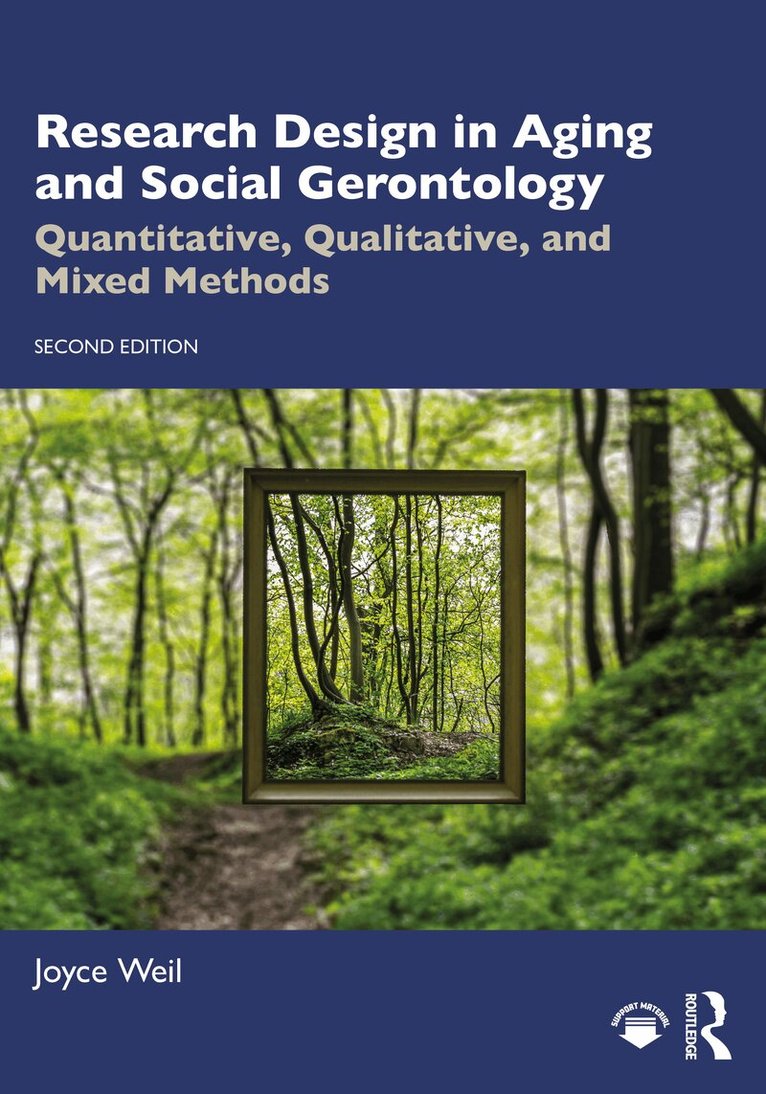
This comprehensive book provides a review across methodological approaches and data-collection methods commonly used with older adults in real-life settings. It addresses the role of normative age-related sensory, cognitive, and functional changes, as well as the influence of generational cohort (age-period-cohort).Fully updated, this second edition reflects recent changes in gerontology and includes more information about equity, diversity and inclusion; the impact of the COVID-19 pandemic; the use of virtual research methods; discussion about the researcher’s reflexivity; the role of theory in research; qualitative research developments; an expansion of secondary analysis of data;and the use of artificial intelligence in research.Features include:Descriptions, evaluations, and applications of a wide range of methodological approaches and methods used to collect data about older persons (quantitative, qualitative, mixed, and emergent methods: photovoice, virtual environments, etc.)Ways to match research questions to selection of method without a preconceived methodological preference or dominanceReal-world and applied examples along with cases from the gerontological literature"How to" sections about reading output/software reports and qualitative-analysis screenshots (from NVivo) and quantitative (SPSS) output and interpretationPedagogical tools in every chapter such as text boxes, case studies, definitions of key terms, discussion questions, and references for further reading on chapter topicsGlossary of key terms, complete sample research report, and an overview of past methodological research design work in gerontologyThis text is intended for upper-level undergraduates and masters students in aging and gerontology as well as students in human development, applied anthropology, psychology, public health, sociology, and social work settings. Healthcare professionals, social workers, and care managers who work with older adults will also find this text a valuable resource.At www.routledge.com/cw/weil instructors will find PowerPoint presentations, additional discussion questions, suggestions for in-class activities and assessments and a sample syllabus; and students will find flashcards based on glossary terms, a downloadable copy of the sample research report in the text, links to data sets, related websites, online videos and podcasts, further reading, select gerontological journals and multiple choice and true or false questions.
Research Design in Aging and Social Gerontology
Quantitative, Qualitative, and Mixed Methods
Inbunden, Engelska, 2025
2 150 kr
Skickas inom 10-15 vardagar
This comprehensive book provides a review across methodological approaches and data-collection methods commonly used with older adults in real-life settings. It addresses the role of normative age-related sensory, cognitive, and functional changes, as well as the influence of generational cohort (age-period-cohort).Fully updated, this second edition reflects recent changes in gerontology and includes more information about equity, diversity and inclusion; the impact of the COVID-19 pandemic; the use of virtual research methods; discussion about the researcher’s reflexivity; the role of theory in research; qualitative research developments; an expansion of secondary analysis of data;and the use of artificial intelligence in research.Features include:Descriptions, evaluations, and applications of a wide range of methodological approaches and methods used to collect data about older persons (quantitative, qualitative, mixed, and emergent methods: photovoice, virtual environments, etc.)Ways to match research questions to selection of method without a preconceived methodological preference or dominanceReal-world and applied examples along with cases from the gerontological literature"How to" sections about reading output/software reports and qualitative-analysis screenshots (from NVivo) and quantitative (SPSS) output and interpretationPedagogical tools in every chapter such as text boxes, case studies, definitions of key terms, discussion questions, and references for further reading on chapter topicsGlossary of key terms, complete sample research report, and an overview of past methodological research design work in gerontologyThis text is intended for upper-level undergraduates and masters students in aging and gerontology as well as students in human development, applied anthropology, psychology, public health, sociology, and social work settings. Healthcare professionals, social workers, and care managers who work with older adults will also find this text a valuable resource.At www.routledge.com/cw/weil instructors will find PowerPoint presentations, additional discussion questions, suggestions for in-class activities and assessments and a sample syllabus; and students will find flashcards based on glossary terms, a downloadable copy of the sample research report in the text, links to data sets, related websites, online videos and podcasts, further reading, select gerontological journals and multiple choice and true or false questions.
Research Design in Aging and Social Gerontology
Quantitative, Qualitative, and Mixed Methods
Inbunden, Engelska, 2017
1 674 kr
Tillfälligt slut
Research Design in Aging and Social Gerontology provides a review of methodological approaches and data-collection methods commonly used with older adults in real-life settings. It addresses the role of normative age-related sensory, cognitive, and functional changes, as well as the influence of generational cohort (age-period-cohort) upon each design. It discusses the role of older adults as true co-researchers; issues uniquely related to studies of persons residing in community-based, assisted, skilled, and memory-care settings; and ethical concerns related to cognitive status changes. The text concludes with detailed guidelines for improving existing data collection methods for older persons and selecting the best fitting methodologies for use in planning research on aging.Features of Research Design in Aging and Social Gerontology include: Descriptions and evaluations of a wide range of methodological approaches, and methods used to collect data about older persons (quantitative, qualitative, mixed, and emergent methods: photovoice, virtual environments, etc.) Ways to match research questions to selection of method without a preconceived methodological preference or dominance Real-world and applied examples along with cases from the gerontological literature "How to" sections about reading output/software reports and qualitative-analysis screenshots (from ATLAS.ti) and quantitative (SPSS) output and interpretation Pedagogical tools in every chapter such as text boxes, case studies, definitions of key terms, discussion questions, and references for further reading on chapter topics Glossary of key terms, complete sample research report, and an overview of past methodological research design work in gerontology Companion website at www.routledge.com/cw/Weil where instructors will find PowerPoint presentations, additional discussion questions, and a sample syllabus; and students will find flashcards based on glossary terms, a downloadable copy of the sample research report in the text, and links to data sets, related websites, further reading, and select gerontological journalsThis text is intended for upper-level undergraduates and masters students in aging and gerontology as well as students in human development, applied anthropology, psychology, public health, sociology, and social-work settings. Health care professionals, social workers, and care managers who work with older adults will also find this text a valuable resource.
Research Design in Aging and Social Gerontology
Quantitative, Qualitative, and Mixed Methods
Häftad, Engelska, 2017
648 kr
Tillfälligt slut
Research Design in Aging and Social Gerontology provides a review of methodological approaches and data-collection methods commonly used with older adults in real-life settings. It addresses the role of normative age-related sensory, cognitive, and functional changes, as well as the influence of generational cohort (age-period-cohort) upon each design. It discusses the role of older adults as true co-researchers; issues uniquely related to studies of persons residing in community-based, assisted, skilled, and memory-care settings; and ethical concerns related to cognitive status changes. The text concludes with detailed guidelines for improving existing data collection methods for older persons and selecting the best fitting methodologies for use in planning research on aging.Features of Research Design in Aging and Social Gerontology include: Descriptions and evaluations of a wide range of methodological approaches, and methods used to collect data about older persons (quantitative, qualitative, mixed, and emergent methods: photovoice, virtual environments, etc.) Ways to match research questions to selection of method without a preconceived methodological preference or dominance Real-world and applied examples along with cases from the gerontological literature "How to" sections about reading output/software reports and qualitative-analysis screenshots (from ATLAS.ti) and quantitative (SPSS) output and interpretation Pedagogical tools in every chapter such as text boxes, case studies, definitions of key terms, discussion questions, and references for further reading on chapter topics Glossary of key terms, complete sample research report, and an overview of past methodological research design work in gerontology Companion website at www.routledge.com/cw/Weil where instructors will find PowerPoint presentations, additional discussion questions, and a sample syllabus; and students will find flashcards based on glossary terms, a downloadable copy of the sample research report in the text, and links to data sets, related websites, further reading, and select gerontological journalsThis text is intended for upper-level undergraduates and masters students in aging and gerontology as well as students in human development, applied anthropology, psychology, public health, sociology, and social-work settings. Health care professionals, social workers, and care managers who work with older adults will also find this text a valuable resource.