J.S. Eades - Böcker
Visar alla böcker från författaren J.S. Eades. Handla med fri frakt och snabb leverans.
5 produkter
5 produkter
1 860 kr
Skickas inom 3-6 vardagar
Based on field research carried out over two decades, the author surveys the development of the anthropology of tourism and its significance, using case studies drawn from Indonesia, New Guinea and Japan. He argues that tourism, once seen as rather peripheral by anthropologists, has to be treated as a phenomenon of major importance, both because the size of the flows of people and capital involved, and because it is one of the major sites in which the meeting and hybridization of culture takes place. Tourism, he suggests, leads not to the destruction of local cultures, as many critics have implied, but rather to the emergence of new cultural forms.The central part of the book presents a detailed case-study of the island of Bali in Indonesia. It traces the development of tourism there during the colonial period, and the ways in which "Balinese traditional culture" was developed first by western artists and scholars in the colonial period, and more recently by Balinese government officials in the guise of "cultural tourism." The general theme of the "presentation of tradition" is also discussed in relation to Toraja funerals in the Indonesian province of Sulawesi, western visitors to the Sepik River in Papua-New-Guinea, and the small city of Tono in northern Japan which has become a center for the study of folk-lore.
2 164 kr
Skickas inom 3-6 vardagar
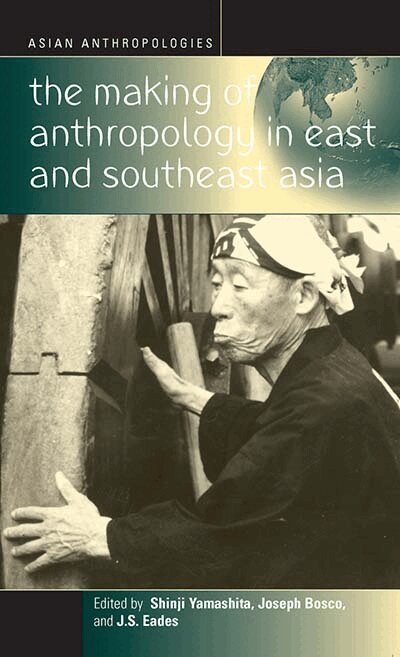
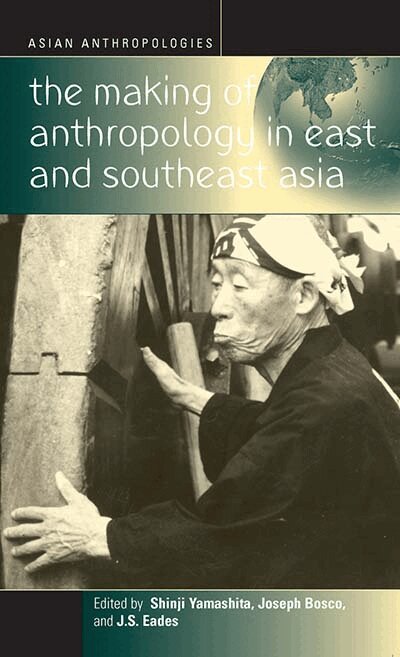
CHOICE OUTSTANDING BOOK OF THE YEAR 2005Despite the growth of interest in the history of anthropology as a over the last two decades, surprisingly little has been published in English on the development of anthropology in East and Southeast Asia and its relationship to the rest of the academic "world-system." The anthropological experience in this region has been varied. Japanese anthropology developed early, and ranks second only to that of the United States in terms of size. Anthropology in China has finally recovered from the experience of invasion, war, and revolution, and now flourishes both on the mainland and in Taiwan. Scholars in Korea, Malaysia, and the Philippines have also attempted to break with the legacy of colonialism and develop research relevant to their own national needs.This book includes accounts of these developments by some of the most distinguished scholars in the region. Also discussed are issues of language, authorship, and audience; and the effects these have on writing by anthropologists, whether "native" or "foreign." The book will be invaluable to anyone with an interest in the anthropology of East and Southeast Asia or the development of anthropology as a global discipline.
635 kr
Skickas inom 3-6 vardagar
CHOICE OUTSTANDING BOOK OF THE YEAR 2005Despite the growth of interest in the history of anthropology as a over the last two decades, surprisingly little has been published in English on the development of anthropology in East and Southeast Asia and its relationship to the rest of the academic "world-system." The anthropological experience in this region has been varied. Japanese anthropology developed early, and ranks second only to that of the United States in terms of size. Anthropology in China has finally recovered from the experience of invasion, war, and revolution, and now flourishes both on the mainland and in Taiwan. Scholars in Korea, Malaysia, and the Philippines have also attempted to break with the legacy of colonialism and develop research relevant to their own national needs.This book includes accounts of these developments by some of the most distinguished scholars in the region. Also discussed are issues of language, authorship, and audience; and the effects these have on writing by anthropologists, whether "native" or "foreign." The book will be invaluable to anyone with an interest in the anthropology of East and Southeast Asia or the development of anthropology as a global discipline.
566 kr
Skickas inom 3-6 vardagar
Based on field research carried out over two decades, the author surveys the development of the anthropology of tourism and its significance, using case studies drawn from Indonesia, New Guinea and Japan. He argues that tourism, once seen as rather peripheral by anthropologists, has to be treated as a phenomenon of major importance, both because the size of the flows of people and capital involved, and because it is one of the major sites in which the meeting and hybridization of culture takes place. Tourism, he suggests, leads not to the destruction of local cultures, as many critics have implied, but rather to the emergence of new cultural forms.The central part of the book presents a detailed case-study of the island of Bali in Indonesia. It traces the development of tourism there during the colonial period, and the ways in which "Balinese traditional culture" was developed first by western artists and scholars in the colonial period, and more recently by Balinese government officials in the guise of "cultural tourism." The general theme of the "presentation of tradition" is also discussed in relation to Toraja funerals in the Indonesian province of Sulawesi, western visitors to the Sepik River in Papua-New-Guinea, and the small city of Tono in northern Japan which has become a center for the study of folk-lore.
271 kr
Skickas inom 5-8 vardagar