Juan Diego Díaz – författare
Visar alla böcker från författaren Juan Diego Díaz. Handla med fri frakt och snabb leverans.
3 produkter
3 produkter
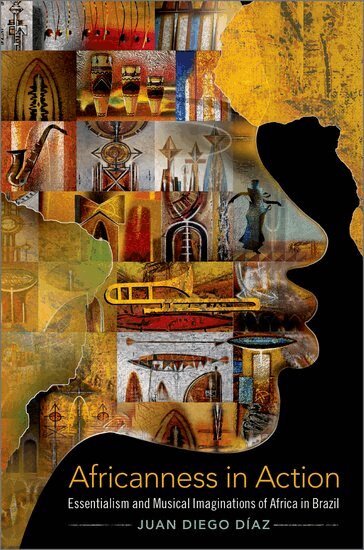
Africanness in Action
Essentialism and Musical Imaginations of Africa in Brazil
Inbunden, Engelska, 2021
1 461 kr
Skickas inom 5-8 vardagar
When many people think of African music, the first ideas that come to mind are often of rhythm, drums, and dancing. These perceptions are rooted in emblematic African and African-derived genres such as West African drumming, funk, salsa, or samba and, more importantly, essentialized notions about Africa which have been fueled over centuries of contact between the "West," Africa, and the African diaspora. These notions, of course, tend to reduce and often portray Africa and the diaspora as primitive, exotic, and monolithic.In Africanness in Action, author Juan Diego Díaz explores this dynamic through the perspectives of Black musicians in Bahia, Brazil, a site imagined by many as a diasporic epicenter of African survivals and purity. Black musicians from Bahia, Díaz argues, assert Afro-Brazilian identities, promote social change, and critique racial inequality by creatively engaging essentialized tropes about African music and culture. Instead of reproducing these notions, musicians demonstrate agency by strategically emphasizing or downplaying them.
Africanness in Action
Essentialism and Musical Imaginations of Africa in Brazil
Häftad, Engelska, 2021
482 kr
Skickas inom 5-8 vardagar
When many people think of African music, the first ideas that come to mind are often of rhythm, drums, and dancing. These perceptions are rooted in emblematic African and African-derived genres such as West African drumming, funk, salsa, or samba and, more importantly, essentialized notions about Africa which have been fueled over centuries of contact between the "West," Africa, and the African diaspora. These notions, of course, tend to reduce and often portray Africa and the diaspora as primitive, exotic, and monolithic.In Africanness in Action, author Juan Diego Díaz explores this dynamic through the perspectives of Black musicians in Bahia, Brazil, a site imagined by many as a diasporic epicenter of African survivals and purity. Black musicians from Bahia, Díaz argues, assert Afro-Brazilian identities, promote social change, and critique racial inequality by creatively engaging essentialized tropes about African music and culture. Instead of reproducing these notions, musicians demonstrate agency by strategically emphasizing or downplaying them.
Echoes of Brazil
The Musical Experiences of Brazilian Ancestry in West Africa
Inbunden, Engelska, 2026
870 kr
Kommande
The stretch of coast between Accra and Lagos is home to four distinct national communities who identify as descendants of Brazilians: the Tabom in Ghana, the Brésiliens in Togo, the Agudas in Benin, and the Amaros in Nigeria. These communities were established by people who migrated from Brazil to West Africa in the eighteenth and nineteenth centuries, forming what is arguably Brazil's oldest diaspora. Despite their historical, cultural, and physical separation from Brazil, they maintain a strong sense of Brazilianness through music, dance, and religious practices. Echoes of Brazil explores how these communities use music and dance to preserve, celebrate, and negotiate their complex allegiances--to Brazil, to the ethnic groups they have integrated into, to their West African nations, and to the broader Black Atlantic community. Juan Diego Díaz argues that music is an ideal medium for the emergence of experiences where sound, emotion, and discourse about Brazilian ancestry can coalesce and reinforce one another. The diasporic condition of Brazilian-descendant communities in West Africa is therefore primarily grounded in deeply embodied experiences, rather than solely in discourse. To support this argument, Díaz adopts a phenomenological approach, focusing on people's embodied experiences during both inter- and intra-community musical encounters. He documents how musicians from these communities deploy their signature genres--agbe, burrinha, and the characteristic combination of gbókùs and meboi--at home, during visits to each other, and even on trips to Brazil. This is the first study to examine these four communities in tandem rather than separately. Echoes of Brazil underscores the importance of transnational connections within West Africa, Brazil, and the Black Atlantic, challenging conventional notions of home and diaspora.